Post by : Michael Darzi
Today, cinema is a big part of life in India. People enjoy movies in many ways—from modern multiplexes in big cities to old single-screen theatres in small towns. Going to the cinema is a common joy for families, friends, and movie lovers. But very few people know where and when India’s first cinema hall was built, and how that single place changed the way Indians watched stories on screen.
The story of India’s first cinema hall is not just about movies. It is about curiosity, new technology, and the beginning of a new form of entertainment. This article is written in simple and clear English, with a natural tone, so that even 8th-class students can easily read and understand it.
Cinema came to India in the late 19th century, not long after it started in Europe. At that time, the idea of moving pictures was completely new. People had never seen images move on a screen, so the experience felt surprising and exciting.
The first film show in India was held in 1896 at Watson’s Hotel in Bombay (now Mumbai). Short films made by the Lumière Brothers from France were shown. People who watched these films were amazed, but cinema was still seen as something temporary, not a regular form of entertainment.
For many years after this first show, films were screened in tents, theatres, or halls that were mainly used for stage plays and events. India still did not have a cinema hall built only for showing movies.
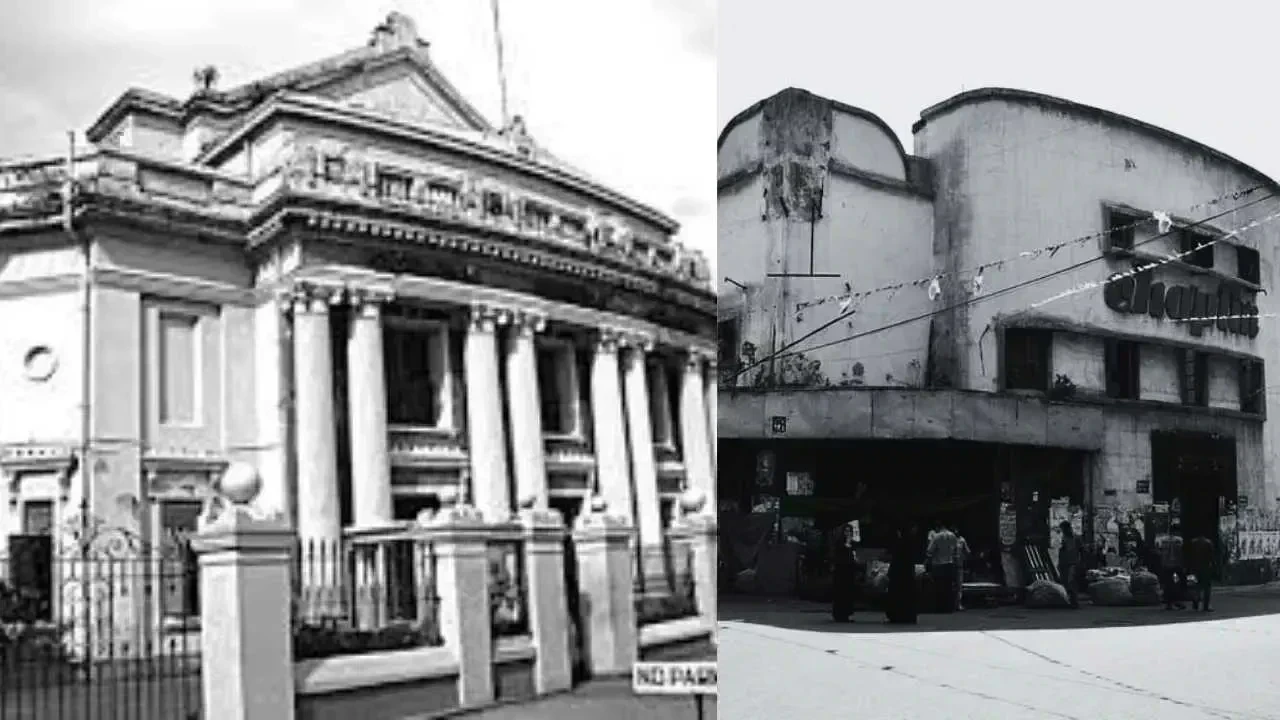
A major change came in 1907, when India’s first permanent cinema hall was built in Calcutta (now Kolkata). It was called Elphinstone Picture Palace, and later it became known as Chaplin Cinema.
This cinema hall was started by Jamshedji Framji Madan, a well-known theatre owner and film distributor of that time. He believed that cinema had a strong future in India and that films needed a proper place to be shown regularly.
Elphinstone Picture Palace was special because it was built only for cinema. Unlike earlier places, it was not a temporary setup. This made it the first true cinema hall in the country and marked the real beginning of cinema culture in India.
In the early 1900s, Calcutta was the capital of British India. It was an important cultural and social centre. The city had a strong theatre tradition and people who were open to new ideas and technology.
Because of this open mindset, Calcutta became the right place for India’s first cinema hall. People from different backgrounds came to Elphinstone Picture Palace to watch films. Slowly, going to the cinema became a regular habit and a shared public experience.
In the beginning, films shown at Elphinstone Picture Palace (later Chaplin Cinema) were silent and very short. There was no dialogue, no recorded sound, and no songs. To make the experience more enjoyable, live music was often played inside the hall during film shows.
Most of the films were from Europe. Indian-made films came later. Even so, these early film shows created interest among Indian audiences and helped cinema grow step by step in the country.
The opening of India’s first cinema hall changed entertainment in a big way. Before this, people mainly depended on stage plays, folk shows, and traditional performances. Cinema offered something different—stories told through moving pictures.
As interest grew, more cinema halls were built in other cities. Indian filmmakers started making local films, and cinema slowly became an important part of Indian culture and storytelling.
From silent films to sound films, from black-and-white movies to colour films, and now to digital cinema, the long journey of Indian cinema began with that one hall in Calcutta.
Elphinstone Picture Palace (later Chaplin Cinema) started the age of single-screen theatres in India. For many years, single screens were the main places where people watched movies together. Families, friends, and neighbours sat in the same hall and shared the joy of cinema.
With time, technology improved and multiplex theatres appeared. Even though cinema halls have changed in style and comfort, the excitement of watching a movie on the big screen has remained the same.
Learning about India’s first cinema hall helps us understand how Indian cinema began and how much effort went into building this industry. It shows that big changes often start with small but important steps.
What started in 1907 with Elphinstone Picture Palace (later Chaplin Cinema) slowly grew into one of the largest film industries in the world.
India’s first cinema hall, Elphinstone Picture Palace (later Chaplin Cinema), built in 1907 in Calcutta, marked the beginning of cinema culture in the country. It turned films from a short attraction into a regular form of entertainment.
Today, when people enjoy movies in modern theatres, it is worth remembering where it all started—with one cinema hall, one screen, and a simple dream to tell stories in a new way.
This article is provided for general information and educational purposes only. The historical details mentioned are based on widely available records, publications, and public sources, which may differ slightly across references. While every effort has been made to present accurate information, readers are encouraged to consult verified history books, academic research, museum archives, or official cultural records for in-depth study and confirmation. The publisher does not claim absolute authority on historical interpretation and is not responsible for any updates, revisions, or differing viewpoints that may emerge after publication.

UAE Celebrates Sustainability Champions at EEG Gala
Dubai's EEG gala honored 52 organizations for their sustainability efforts, highlighting the pivotal

Iranian Crude Tanker Shifts Course from India to China
Ping Shun, under US sanctions, changes its destination from India's Vadinar Port to China amid payme

UAE Foils Missile, Drone Attacks from Iran
United Arab Emirates intercepts Iranian missiles and drones; authorities confirm safety and urge res

Bahrain Thwarts Drone and Missile Assaults Amid Iranian Hostilities
Bahrain's defense thwarted 188 missiles and 445 drones from Iran, underscoring heightened regional s
Drone Assault Targets Major Kuwait Oil Refinery
A drone attack on Mina al-Ahmadi Refinery triggered fires, but no injuries reported, according to Ku

Al Najd Farmers Kick Off Wheat Harvest Season
Wheat harvesting begins in Al Najd, with anticipated production of 8,000 tons thanks to government b

Oman Celebrates World Autism Awareness Day 2026
Dubai’s Ministry emphasizes empowerment and understanding for autism during a lively community event


UAE Art Show in Seoul Challenges Stereotypes
Exhibition in Seoul highlights diverse UAE art, moving beyond luxury stereotypes to explore identity

Starbucks Strikes Major Partnership for China Growth
Starbucks teams with Boyu Capital, selling a majority stake in China unit to ramp up store growth an

Couple Among Three Charged in Massive Meth Trafficking Case in Malaysia
Three charged in Malaysia for trafficking 510kg of meth; if convicted, they could face severe penalt

Murder Suspect Returns to Geylang Crime Scene for Investigation
Singapore police revisit Geylang as a 48-year-old suspect faces charges in the fatal stabbing of a 7

NASA Launches Artemis II Crew for 10-Day Lunar Mission
NASA launches Artemis II with four astronauts for a 10-day Moon mission, marking the first crewed lu

Dubai RTA, Ministry Partner for Family First Programme
Dubai RTA and Ministry of Family partner to enhance transport, urban spaces, and services under Fami

Bank of Baroda Faces Abu Dhabi Legal Battle over NMC Collapse
Bank of Baroda’s involvement in Abu Dhabi litigation tied to the NMC Healthcare collapse raises repu
Top Museum Openings of 2026 Set to Transform Global Tourism
From Los Angeles to Abu Dhabi and Brussels, 2026 brings major museum launches—Lucas Museum, Guggenhe