Post by : Michael Darzi
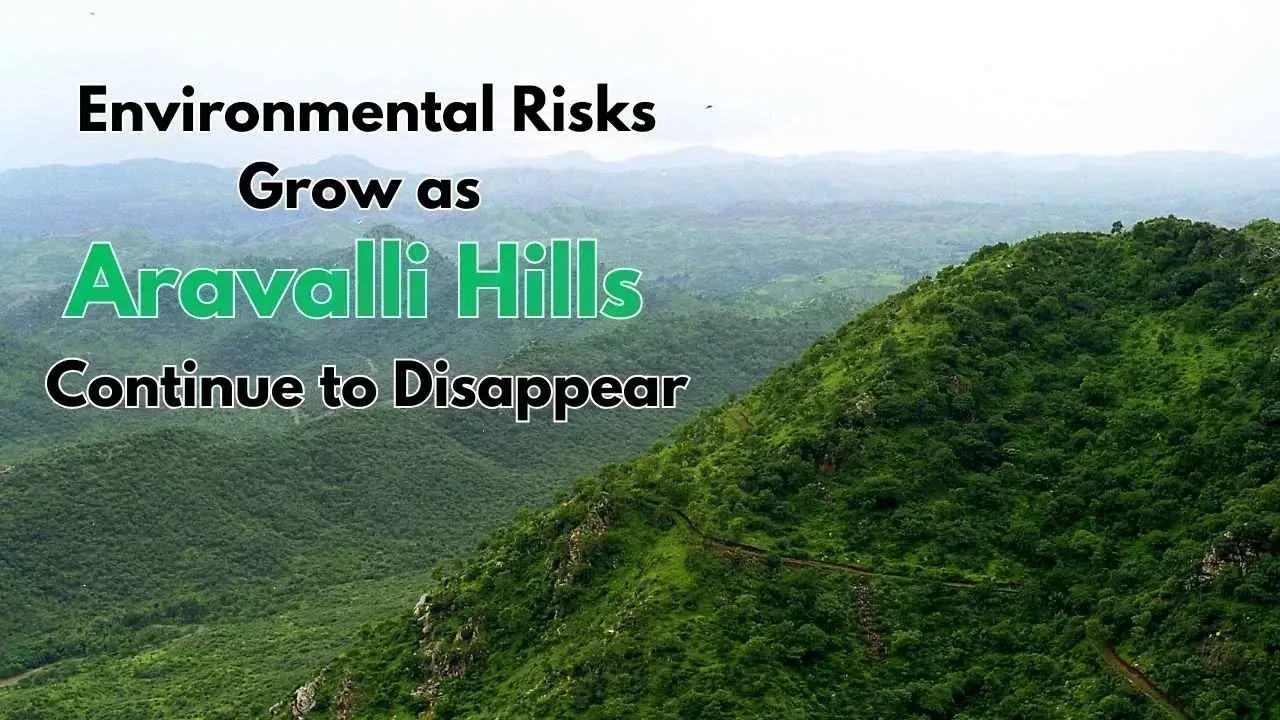
The Aravalli hills are one of the greatest natural treasures of North India. They are not just mountains but one of the oldest mountain ranges in the world. Scientists believe these hills are nearly 1.5 to 2 billion years old, making them much older than the Himalayas. The Aravalli range stretches across Rajasthan, Haryana, Delhi, and Gujarat, quietly protecting the region for thousands of years.
Today, this natural protection system is slowly breaking down. Large parts of the Aravalli hills have been damaged or completely removed due to human activities. Environmental experts warn that if this continues, the damage will not affect only Rajasthan. Delhi, Haryana, and nearby regions could face serious environmental problems very soon.
The Aravalli hills were formed millions of years ago due to movements deep inside the Earth. Over time, wind, rain, and changing weather shaped them into the hills we see today. For centuries, these hills worked as a natural wall, stopping desert sand from spreading from Rajasthan toward greener parts of North India.
In the past, the Aravalli region was rich in forests and wildlife. Many ancient communities lived near these hills and depended on them for water, wood, minerals, and safety. Old trade routes also passed through the Aravallis. Even today, several underground water sources and seasonal rivers are connected to this mountain range.
The Aravalli hills play a key role in keeping the environment balanced in North India. Their importance is not just historical but also practical for daily life.
The Aravallis help to:
Stop desert land from spreading
Reduce dust storms and air pollution
Store rainwater and recharge groundwater
Support forests and wildlife
Control local temperature and rainfall
Cities like Delhi, Gurugram, Faridabad, and many parts of Haryana depend on the Aravalli hills for cleaner air and cooler surroundings. The forests of this range are often called the “green lungs” because they help reduce pollution and heat.
Despite their importance, the Aravalli hills have suffered heavy damage over the last few decades. The main reasons include:
Illegal mining for stones and minerals
Cutting down forests for roads and buildings
Unplanned urban growth
Expansion of highways, housing colonies, and factories
In many areas, entire hills have been flattened. Trees have been removed, and natural water paths have been blocked. Because of this, the Aravallis are losing their ability to protect nearby regions.
As the Aravalli hills continue to disappear, experts say the environmental risks are becoming more serious.
Rising Air Pollution:
With fewer trees and hills to stop dust, pollution levels are increasing. Dust storms are becoming more common, especially in Delhi and nearby areas.
Desert Spread:
The Thar Desert may slowly move toward Haryana and Delhi, turning fertile land dry and unusable.
Falling Groundwater Levels:
The Aravallis help store rainwater underground. Their destruction has caused water levels to drop faster, leading to water shortages.
Increasing Heat and Heatwaves:
Loss of green cover raises temperatures, making summers hotter and more dangerous.
Loss of Wildlife:
Many animals, birds, and plant species are losing their natural homes, leading to a decline in biodiversity.
Experts warn that if this damage continues, the region could face long-term environmental problems that may take many years to repair.
Delhi and Haryana already face challenges like pollution, water shortage, and extreme weather. The loss of the Aravalli hills is making these problems worse.
Air quality in Delhi may decline further
Water shortages could increase
Farming land in Haryana may become drier
Flooding during heavy rain may rise due to poor water absorption
Environmental scientists say the Aravallis act like a protective shield. Removing this shield exposes millions of people to climate and health risks.
Saving the remaining Aravalli hills is now extremely important. Experts suggest the following steps:
Strong action against illegal mining
Large-scale tree planting programs
Limiting construction in sensitive areas
Strict enforcement of environmental laws
Public awareness is also necessary. People must understand that the Aravallis are not empty land for development but a lifeline for North India.
The Aravalli hills are a priceless natural heritage that has protected Rajasthan, Delhi, and Haryana for billions of years. Their long history proves how important they are for climate balance, water security, and environmental safety.
The ongoing destruction of this ancient mountain range is not just a local issue. It is a serious warning for the future. If urgent steps are not taken now, the damage may become permanent.
Protecting the Aravallis means protecting the environment, public health, and the future of millions of people. What remains of this ancient range must be saved before it is too late.
This article is published for general awareness and informational purposes only. The content is based on publicly available reports, environmental studies, and expert opinions available at the time of writing. Environmental conditions, policies, and conservation efforts may change over time. Readers are advised to follow official government sources and verified environmental authorities for the most accurate and updated information. The article does not intend to create fear or misinterpretation but aims to responsibly highlight environmental concerns.

UAE Celebrates Sustainability Champions at EEG Gala
Dubai's EEG gala honored 52 organizations for their sustainability efforts, highlighting the pivotal

Iranian Crude Tanker Shifts Course from India to China
Ping Shun, under US sanctions, changes its destination from India's Vadinar Port to China amid payme

UAE Foils Missile, Drone Attacks from Iran
United Arab Emirates intercepts Iranian missiles and drones; authorities confirm safety and urge res

Bahrain Thwarts Drone and Missile Assaults Amid Iranian Hostilities
Bahrain's defense thwarted 188 missiles and 445 drones from Iran, underscoring heightened regional s
Drone Assault Targets Major Kuwait Oil Refinery
A drone attack on Mina al-Ahmadi Refinery triggered fires, but no injuries reported, according to Ku

Al Najd Farmers Kick Off Wheat Harvest Season
Wheat harvesting begins in Al Najd, with anticipated production of 8,000 tons thanks to government b

Oman Celebrates World Autism Awareness Day 2026
Dubai’s Ministry emphasizes empowerment and understanding for autism during a lively community event


UAE Art Show in Seoul Challenges Stereotypes
Exhibition in Seoul highlights diverse UAE art, moving beyond luxury stereotypes to explore identity

Starbucks Strikes Major Partnership for China Growth
Starbucks teams with Boyu Capital, selling a majority stake in China unit to ramp up store growth an

Couple Among Three Charged in Massive Meth Trafficking Case in Malaysia
Three charged in Malaysia for trafficking 510kg of meth; if convicted, they could face severe penalt

Murder Suspect Returns to Geylang Crime Scene for Investigation
Singapore police revisit Geylang as a 48-year-old suspect faces charges in the fatal stabbing of a 7

NASA Launches Artemis II Crew for 10-Day Lunar Mission
NASA launches Artemis II with four astronauts for a 10-day Moon mission, marking the first crewed lu

Dubai RTA, Ministry Partner for Family First Programme
Dubai RTA and Ministry of Family partner to enhance transport, urban spaces, and services under Fami

Bank of Baroda Faces Abu Dhabi Legal Battle over NMC Collapse
Bank of Baroda’s involvement in Abu Dhabi litigation tied to the NMC Healthcare collapse raises repu

Top Museum Openings of 2026 Set to Transform Global Tourism
From Los Angeles to Abu Dhabi and Brussels, 2026 brings major museum launches—Lucas Museum, Guggenhe