Post by : Anis Karim
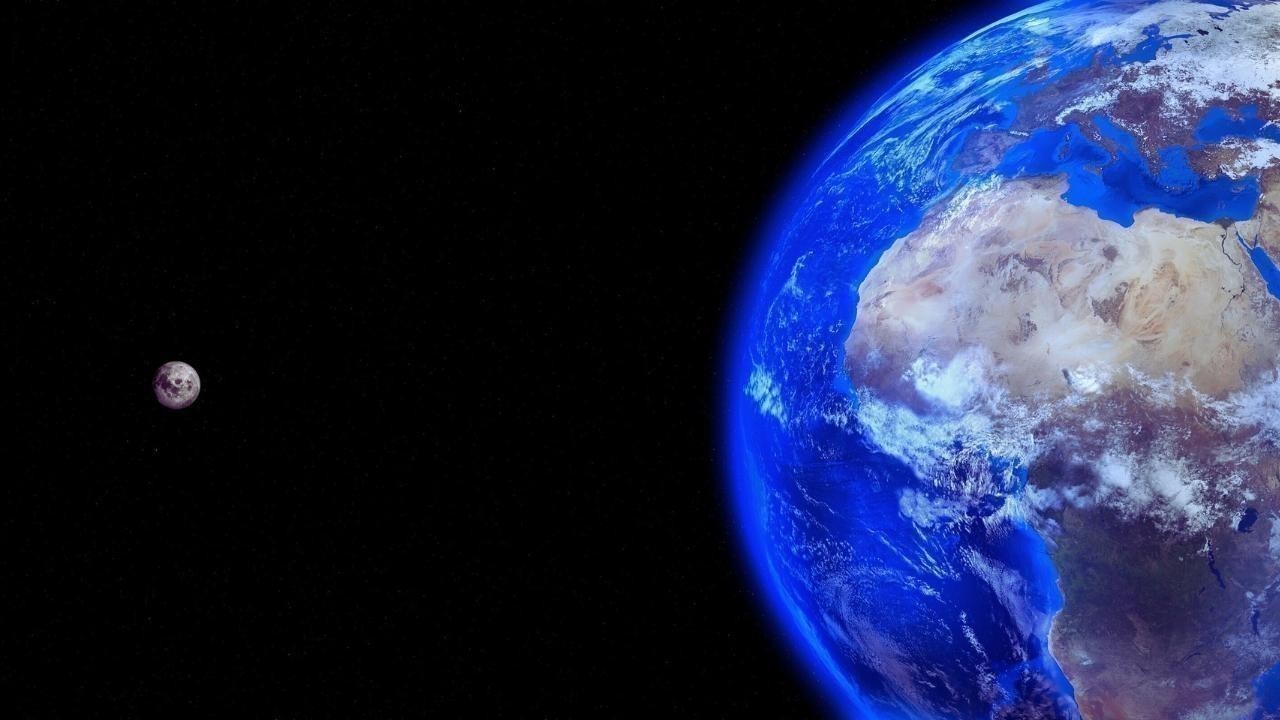
For billions of years, the Moon has been Earth’s constant companion, lighting up our night sky, guiding ancient calendars, and influencing tides. But what if this seemingly loyal satellite is slowly leaving us? It’s not a science-fiction plot — it’s reality. Astronomers have confirmed that the Moon is drifting away from Earth at an average rate of 3.8 centimeters per year. This gradual separation might not be noticeable in our lifetime, but over millions and billions of years, it will significantly change Earth’s rhythm and even its habitability.
The idea that the Moon might not be permanently locked in place came from scientific measurements rather than guesswork. Using laser beams bounced off reflectors left on the Moon during the Apollo missions, researchers have been able to measure the distance between Earth and its satellite with extreme accuracy. Over decades, the data revealed a steady increase — a cosmic farewell in slow motion.
The mechanism behind this drift isn’t random. It’s deeply tied to the physics of tidal forces — the gravitational pull between Earth and the Moon. As our oceans bulge toward the Moon due to its gravity, Earth’s rotation drags these tidal bulges slightly ahead of the Moon’s orbit. This transfer of energy causes the Moon to gain momentum, pushing it farther away.
Think of Earth and the Moon as dance partners. Earth spins, creating tides, and the Moon’s gravity tugs at them. But Earth is spinning faster than the Moon orbits — meaning our oceans’ tidal bulges are always a little ahead of where the Moon is. These bulges pull the Moon forward in its orbit, giving it a speed boost. And just like a figure skater extending their arms to slow down, the Moon moves farther away when it gains that momentum.
This energy exchange works both ways. While the Moon is drifting away, Earth’s rotation is gradually slowing down. Our days are getting longer — though only by about 1.7 milliseconds per century. Millions of years from now, this will add up to noticeably longer days.
Interestingly, the Moon hasn’t always been at its current distance of about 384,400 kilometers. Geological evidence from ancient tidal patterns preserved in rock formations suggests that around 1.4 billion years ago, the Moon was much closer — and Earth’s days were only about 18 hours long.
Over time, the gravitational tug-of-war has pushed the Moon farther out, slowing Earth’s spin and lengthening our days. The process has been gradual but relentless, shaping the planet’s natural rhythms and possibly even influencing the evolution of life.
While the idea of the Moon “escaping” might sound dramatic, it’s happening on such a slow scale that it poses no immediate threat. Even millions of years from now, the Moon will still be orbiting Earth, just farther away.
However, there will be noticeable changes over geological timeframes:
Longer Days — As the Moon drifts away, Earth’s rotation will continue to slow. In hundreds of millions of years, a day on Earth could last much longer than 24 hours.
Weaker Tides — The Moon’s gravitational influence will decrease, leading to smaller tidal ranges. This could affect coastal ecosystems and marine life that rely on strong tides for breeding and feeding cycles.
Climatic Changes — Tides play a subtle role in ocean circulation, which impacts climate. Reduced tidal forces could slightly alter these patterns over time.
The Moon isn’t just drifting because of Earth’s tides — the Sun also plays a part. Solar tides, although weaker, interact with the Earth-Moon system and can influence the rate of separation. Over billions of years, as the Sun evolves and eventually becomes a red giant, the dynamics of the Earth-Moon relationship will change drastically.
In theory, if the process continued indefinitely without any external changes, the Moon could eventually reach a point where it no longer orbits Earth. But in reality, other cosmic factors will intervene long before that happens. The most significant is the Sun’s lifecycle — in about 5 billion years, the Sun will expand into a red giant, possibly engulfing both Earth and the Moon. So, while the Moon’s gradual drift is fascinating, it’s not the end of our lunar story anytime soon.
The Moon has been central to human history — from guiding navigation to inspiring myths, poetry, and scientific exploration. A slowly receding Moon won’t erase its cultural significance, but it might subtly change how future generations experience it. In the far future, the Moon could appear slightly smaller in the sky, potentially ending total solar eclipses when it no longer perfectly covers the Sun from Earth’s perspective.
This cosmic drift is more than a curiosity — it’s a reminder of how dynamic our universe is. Even systems that feel permanent are in constant motion. The Earth-Moon relationship shows how gravitational interactions shape the cosmos over unimaginable timescales.
It also highlights the importance of space science in understanding our planet’s past and future. By studying the Moon’s drift, scientists gain insights into planetary formation, orbital mechanics, and even the history of Earth’s rotation.
The Moon’s slow departure is part of a larger pattern seen across the solar system. Other moons, such as those around Jupiter and Saturn, also experience tidal interactions with their planets — some moving outward, others spiraling inward to eventual destruction.
These dynamics reveal that celestial relationships aren’t fixed — they evolve. And in the grand timeline of the universe, even seemingly unchanging night skies are works in progress.
The Moon is slowly leaving Earth, but it’s not something to lose sleep over. This gradual change is part of the natural life cycle of planetary systems. It’s a silent, slow-motion event that connects our present to a deep past and an unimaginably distant future.
By studying it, we’re reminded that Earth is not isolated but part of a cosmic network of forces and motions — a tiny chapter in an ever-changing universe.
This article is based on current scientific understanding of the Earth-Moon system. Future discoveries or refined measurements may adjust these estimates. All astronomical timelines mentioned are on scales far beyond human lifespans, and no immediate risks to Earth or its inhabitants are posed by the Moon’s gradual drift.

Iranian Crude Tanker Shifts Course from India to China
Ping Shun, under US sanctions, changes its destination from India's Vadinar Port to China amid payme

UAE Foils Missile, Drone Attacks from Iran
United Arab Emirates intercepts Iranian missiles and drones; authorities confirm safety and urge res

Bahrain Thwarts Drone and Missile Assaults Amid Iranian Hostilities
Bahrain's defense thwarted 188 missiles and 445 drones from Iran, underscoring heightened regional s

Drone Assault Targets Major Kuwait Oil Refinery
A drone attack on Mina al-Ahmadi Refinery triggered fires, but no injuries reported, according to Ku

Al Najd Farmers Kick Off Wheat Harvest Season
Wheat harvesting begins in Al Najd, with anticipated production of 8,000 tons thanks to government b

Oman Celebrates World Autism Awareness Day 2026
Dubai’s Ministry emphasizes empowerment and understanding for autism during a lively community event

Sonam Kapoor Shares Post After Second Baby
Sonam Kapoor shares first glimpse after welcoming second son, thanks hospital team and doctors for c


UAE Art Show in Seoul Challenges Stereotypes
Exhibition in Seoul highlights diverse UAE art, moving beyond luxury stereotypes to explore identity

Starbucks Strikes Major Partnership for China Growth
Starbucks teams with Boyu Capital, selling a majority stake in China unit to ramp up store growth an

Couple Among Three Charged in Massive Meth Trafficking Case in Malaysia
Three charged in Malaysia for trafficking 510kg of meth; if convicted, they could face severe penalt

Murder Suspect Returns to Geylang Crime Scene for Investigation
Singapore police revisit Geylang as a 48-year-old suspect faces charges in the fatal stabbing of a 7
NASA Launches Artemis II Crew for 10-Day Lunar Mission
NASA launches Artemis II with four astronauts for a 10-day Moon mission, marking the first crewed lu

Dubai RTA, Ministry Partner for Family First Programme
Dubai RTA and Ministry of Family partner to enhance transport, urban spaces, and services under Fami

Bank of Baroda Faces Abu Dhabi Legal Battle over NMC Collapse
Bank of Baroda’s involvement in Abu Dhabi litigation tied to the NMC Healthcare collapse raises repu

Top Museum Openings of 2026 Set to Transform Global Tourism
From Los Angeles to Abu Dhabi and Brussels, 2026 brings major museum launches—Lucas Museum, Guggenhe