
Post by : Anis Karim
Dubai is no longer just about skyscrapers, tourism, and trade. Over the last few years, it has begun transforming into something deeper—a knowledge economy. This means that instead of relying only on physical goods or natural resources, Dubai wants to build a future that runs on ideas, innovation, research, and advanced skills. Universities, research centers, start-ups, and tech hubs are all becoming more important than ever. And at the heart of this vision lies something often overlooked—academic freedom.
This freedom is not just a buzzword; it’s the oxygen for thinking minds. When students, researchers, and educators can explore topics without fear, challenge existing norms, and ask bold questions, they are more likely to produce knowledge that matters. For a city like Dubai, which wants to become a regional leader in education, science, and technology, the need for academic freedom is becoming more urgent.
Academic freedom is the right of scholars and students to pursue knowledge wherever it may lead, without unreasonable interference. It includes the freedom to research, to publish, to teach controversial topics, and to discuss issues openly within the classroom and in public. But it also includes the responsibility to remain respectful, ethical, and fact-based.
In Dubai’s context, this concept must be adapted to the local culture while still encouraging creative thought and fearless inquiry. Dubai has already shown the world that it can take bold decisions in architecture, tourism, sustainability, and even space exploration. Now it’s time for it to take bold steps in academia too.
To become a global hub for innovation, Dubai must attract the world’s best minds—scientists, engineers, philosophers, economists, educators, and artists. But talented people don’t just look for high salaries or modern campuses. They look for places where their ideas are heard and where they are free to question and experiment.
Universities around the world compete fiercely for talent. Cities like Boston, Berlin, and Singapore have become magnets for smart minds because they encourage debate, respect diverse opinions, and support research without fear. If Dubai wants to match or surpass them, it must cultivate the same environment.
When thinkers are limited or censored, innovation slows. Creativity requires risk-taking, and risk-taking requires freedom. If professors feel that certain topics are off-limits or students feel they must stay silent on sensitive issues, the whole purpose of higher education is lost.
It’s easy to see academic freedom as a philosophical issue, but it is deeply connected to Dubai’s future economic growth. As industries shift toward artificial intelligence, biotechnology, green energy, and advanced manufacturing, they need deep research and long-term scientific inquiry. Businesses are built on the findings of universities. Without vibrant academic debate, there will be fewer breakthroughs, fewer patents, and fewer new companies.
A university that allows open discussion is more likely to produce graduates who think critically, work creatively, and adapt easily to change. These are exactly the kind of people Dubai’s economy needs. Whether it’s solving traffic problems, designing new apps, or building the next clean energy solution, academic freedom helps create thinkers who don’t follow instructions blindly—but instead, find new paths.
Another often overlooked benefit is that academic freedom doesn’t just lead to more innovation—it leads to more responsible innovation. When people can openly study the social effects of technology, they can predict potential harms and suggest improvements. In areas like AI ethics, environmental science, or public health, open discussion is critical. You cannot solve a public problem without hearing from every side.
In a knowledge economy, ideas are products, and questioning norms is the first step in building something better. If researchers are afraid to speak out against flawed systems or outdated regulations, progress will stall. But if they’re encouraged to raise tough questions, solutions come faster—and they come from inside the region, not just imported from elsewhere.
Dubai’s growing list of universities—both homegrown and international—are shaping more than just careers. They are shaping the national identity. Campuses are where the next generation learns how to think, argue, lead, and create. What kind of leaders will Dubai produce if its universities limit what can be studied or discussed?
When students are allowed to think for themselves, they grow more confident. They don’t just memorize facts—they apply them. They start companies, write books, design better policies, and influence change in their communities. And all of this adds to the UAE’s global image as a forward-thinking, modern society.
Dubai doesn’t need to copy anyone blindly. It can set its own rules while still making space for freedom of thought. This means:
Encouraging universities to create safe spaces for discussion
Promoting academic journals that allow honest critique
Training teachers to welcome different viewpoints
Ensuring that student voices are heard in policy-making
Supporting research even when the findings are uncomfortable
Small steps like these can make a big difference. They send a message that Dubai trusts its scholars and values their role in shaping the future.
Some people worry that too much freedom in universities might lead to chaos or disrespect. But academic freedom doesn’t mean anything goes. It’s about balance. It’s about asking difficult questions while maintaining mutual respect. It’s not about attacking culture or politics; it’s about examining them with care, honesty, and a spirit of growth.
Others may fear that freedom will lead to criticism. But constructive criticism is a strength, not a threat. It is what makes systems stronger. Avoiding criticism leads to blind spots, and blind spots lead to failure.
Dubai has always been confident in charting its own course. Its openness to global investment, tourism, and trade has paid off. Now is the time to apply that same bold vision to education.
When people see that a country trusts its academics, they begin to trust its education system. This builds credibility. International students are more likely to enroll. Global universities are more likely to collaborate. Private companies are more likely to invest in research. And society as a whole becomes more engaged and better informed.
Trust is the invisible fuel of the knowledge economy. And academic freedom builds it. It says, “We are not afraid of big ideas.” It says, “We are ready to listen and learn.”
Dubai has already proven it can lead. It has launched missions to Mars, hosted global expos, and built one of the world’s most admired urban brands. Now it has a chance to become a role model in academic development. By showing that it values knowledge not just as a product but as a process—messy, honest, and sometimes uncomfortable—it will stand out on the world stage.
The real test of a knowledge economy is not how many graduates it produces, but how well it encourages thought that changes the world. Dubai is in the perfect position to embrace this shift. Academic freedom isn’t just a Western idea. It’s a global necessity.
This editorial article is part of DXB News Network’s commitment to open dialogue on topics shaping Dubai’s future. The views expressed are intended to provoke thought and reflect a broad spectrum of perspectives on educational and policy development. They do not reflect any political stance or legal endorsement by the publication or its partners.

Danube Launches Signature Master-Planned Community
Danube Properties unveils Greenz By Danube in Dubai, offering luxury villas, townhouses, 50+ ameniti
Neoterra breaks ground on ELMORA, unveils new project
Neoterra begins ELMORA construction in Jumeirah Garden City and announces a new residential project

WINGIE Launches AI Refund System for Airline Travelers
WINGIE introduces AI-driven refund technology, enabling seamless, fully digital airline refund proce
Dubai property sales surge to AED176.7B in Q1 2026
Dubai records AED176.7B property sales in Q1 2026, with rising values, steady transaction growth and

Russia Strikes Northeast Ukraine, 4 Killed, 11 Injured
Russian drone and missile attacks on northeast Ukraine killed 4 and injured 11, with major strikes r

Selena Gomez Leads Candy Pink Trend in 2026 Fashion
Selena Gomez embraces candy pink fashion at a Rare Beauty event, highlighting 2026’s biggest color t
Dubai Aquatics Championship 2026 Begins with Record Turnout
Dubai Aquatics Championship 2026 kicks off with 1,670 swimmers from 100+ nationalities, making it on

UAE Art Show in Seoul Challenges Stereotypes
Exhibition in Seoul highlights diverse UAE art, moving beyond luxury stereotypes to explore identity

Starbucks Strikes Major Partnership for China Growth
Starbucks teams with Boyu Capital, selling a majority stake in China unit to ramp up store growth an

Couple Among Three Charged in Massive Meth Trafficking Case in Malaysia
Three charged in Malaysia for trafficking 510kg of meth; if convicted, they could face severe penalt
Murder Suspect Returns to Geylang Crime Scene for Investigation
Singapore police revisit Geylang as a 48-year-old suspect faces charges in the fatal stabbing of a 7
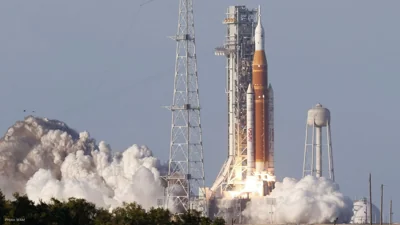
NASA Launches Artemis II Crew for 10-Day Lunar Mission
NASA launches Artemis II with four astronauts for a 10-day Moon mission, marking the first crewed lu
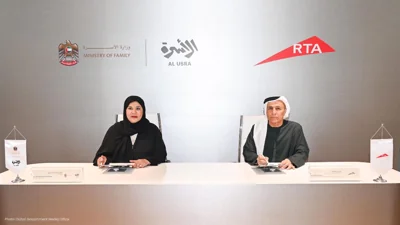
Dubai RTA, Ministry Partner for Family First Programme
Dubai RTA and Ministry of Family partner to enhance transport, urban spaces, and services under Fami

Bank of Baroda Faces Abu Dhabi Legal Battle over NMC Collapse
Bank of Baroda’s involvement in Abu Dhabi litigation tied to the NMC Healthcare collapse raises repu

Top Museum Openings of 2026 Set to Transform Global Tourism
From Los Angeles to Abu Dhabi and Brussels, 2026 brings major museum launches—Lucas Museum, Guggenhe