Post by : Sam Jeet Rahman
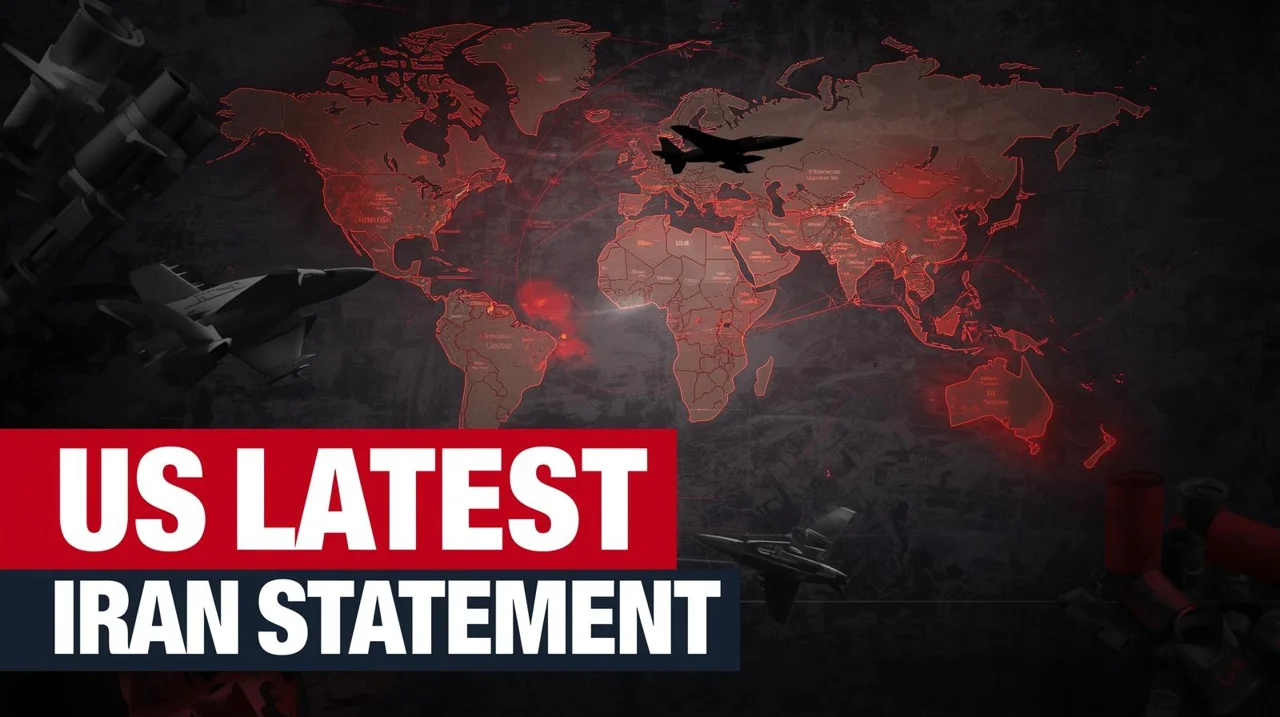
The latest remarks by Donald Trump regarding Iran have ignited intense debate across governments, political circles, and global markets. His comments—ranging from strong military warnings to hints of possible negotiations—have triggered widespread reactions both inside the United States and internationally.
The escalating tensions between the United States and Iran have already become one of the most significant geopolitical developments of recent times. Trump’s latest statement has added another layer of uncertainty, forcing policymakers, analysts, and citizens to ask a critical question: What does this mean for the future of US foreign policy, global stability, and America’s role in the Middle East?
To understand the full impact, it is important to examine the broader context of the crisis, the strategic motivations behind Washington’s stance, and the reactions emerging worldwide.
The recent statement from Donald Trump came at a time when tensions in the Middle East are already elevated. He warned that the United States could take serious military action against key Iranian infrastructure if disruptions in the region continue, particularly around vital oil routes.
At the center of this situation is the Strait of Hormuz—a strategically critical waterway through which nearly 20% of global oil supply passes daily. Any disruption here has immediate consequences for energy markets, global trade, and economic stability.
Trump’s message carried two key signals:
At the same time, he suggested that a diplomatic path is still possible, leaving room for negotiations under certain conditions.
This mix of pressure and flexibility reflects a strategy aimed at forcing movement while maintaining leverage.
Inside the United States, Trump’s statement has sparked strong and divided reactions.
Some political leaders have expressed concern that such aggressive rhetoric could increase the chances of a broader conflict. Critics argue that targeting infrastructure or escalating military threats could lead to unintended consequences and long-term instability.
On the other hand, supporters believe that a firm stance is necessary to protect US interests. They argue that Iran’s actions in the region threaten global trade and that strong messaging is required to prevent further escalation.
This divide highlights a larger debate in American politics:
These questions are becoming increasingly important as the situation evolves.
Trump’s statement has not only influenced domestic politics but also triggered reactions across the world.
Major global powers have expressed concern about the rapid escalation of tensions in the Middle East. Many governments fear that continued conflict could destabilize the region and have far-reaching consequences for global security.
Some countries are urging restraint and emphasizing the importance of diplomatic solutions, while others support stronger measures to maintain stability in key trade routes.
The situation highlights how interconnected global politics has become. A single statement can influence:
The current crisis is being closely monitored by governments, businesses, and financial markets worldwide.
The Strait of Hormuz remains one of the most critical factors in this conflict.
This narrow waterway connects the Persian Gulf to the open ocean and serves as a major transit route for global oil shipments.
Every day:
If this route becomes unstable, the consequences can include:
This is why the United States has historically maintained a strong military presence in the region to ensure the security of this route.
Trump’s statement also signals potential military implications for the United States.
The US already has significant resources deployed in the region, including naval fleets and air capabilities. If tensions escalate further, possible actions could include:
However, escalation comes with serious risks. A wider conflict could:
Military experts often caution that conflicts in this region can grow rapidly beyond initial expectations, making careful decision-making crucial.
The economic implications of Trump’s statement are equally significant.
Rising tensions have already caused volatility in global oil markets, which directly affects fuel prices and overall economic stability.
For the United States, this could mean:
Even though the US produces significant energy domestically, it is still closely tied to global markets. Any disruption in supply chains can have ripple effects across the economy.
Economic stability often plays a key role in shaping public opinion, making this an important factor for policymakers.
Despite the strong tone of Trump’s statement, the possibility of diplomacy has not been ruled out.
There are indications that negotiations could still take place under certain conditions. However, reaching an agreement will not be easy.
The relationship between the United States and Iran has long been shaped by:
These factors have created deep mistrust, making negotiations complex and challenging.
Still, diplomatic efforts remain crucial. A peaceful resolution would benefit not only the two countries involved but also the global community.
Trump’s statement also influences how the United States is perceived globally.
Foreign policy decisions play a major role in shaping a country’s international reputation.
Supporters argue that strong statements demonstrate power and leadership, reinforcing the US position on the global stage.
Critics, however, believe that aggressive rhetoric could:
Balancing strength with diplomacy is essential for maintaining long-term global influence.
The latest statement by Donald Trump has once again placed the US-Iran conflict at the center of global attention. By combining strong warnings with the possibility of negotiations, the approach reflects a strategy aimed at maintaining pressure while keeping diplomatic options open.
However, the situation remains highly uncertain. With tensions around the Strait of Hormuz continuing to impact global markets and geopolitical stability, the stakes are extremely high.
For the United States, this moment is not just about one conflict—it is about defining its role in global leadership, its approach to international crises, and its long-term strategic direction.
The coming weeks will be critical in determining whether the situation moves toward de-escalation or further confrontation, with consequences that could shape the global landscape for years to come.
This article is for informational purposes only and reflects current global developments. The situation may change rapidly based on geopolitical decisions and events.

Inferno Engulfs 4,000 Acres in California
California's wildfire forces evacuations amid strong winds and extreme heat, creating hazardous cond
Interest Grows in ₹500 Biogas Cylinder Offer
The intriguing ₹500 gobar gas cylinder claim prompts interest in biogas as a cheaper, eco-friendly e

Surge in Electric Truck Sales in China Amid Energy Challenges
China's electric truck sales are spiking due to rising fuel prices and global tensions, leading to a

Tragic Road Crash Claims Life in Taungoo
A fatal collision between a truck and a motorcycle in Taungoo has left a 23-year-old man dead, spotl

Tragic Loss of Civilians Amid Heavy Shelling in Myanmar
Heavy weapon attacks in Myanmar have resulted in civilian casualties, sparking major concerns over s

Sri Lanka Unveils National QR Payment Initiative
Sri Lanka introduces a national QR payment initiative, eliminating fees for small transactions to en

Sri Lanka Enlists Belarus for Transport Enhancement
Sri Lanka seeks Belarusian assistance to elevate transport systems and foster bilateral ties in tech


UAE Art Show in Seoul Challenges Stereotypes
Exhibition in Seoul highlights diverse UAE art, moving beyond luxury stereotypes to explore identity

Starbucks Strikes Major Partnership for China Growth
Starbucks teams with Boyu Capital, selling a majority stake in China unit to ramp up store growth an

Couple Among Three Charged in Massive Meth Trafficking Case in Malaysia
Three charged in Malaysia for trafficking 510kg of meth; if convicted, they could face severe penalt
Murder Suspect Returns to Geylang Crime Scene for Investigation
Singapore police revisit Geylang as a 48-year-old suspect faces charges in the fatal stabbing of a 7
NASA Launches Artemis II Crew for 10-Day Lunar Mission
NASA launches Artemis II with four astronauts for a 10-day Moon mission, marking the first crewed lu
Dubai RTA, Ministry Partner for Family First Programme
Dubai RTA and Ministry of Family partner to enhance transport, urban spaces, and services under Fami

Bank of Baroda Faces Abu Dhabi Legal Battle over NMC Collapse
Bank of Baroda’s involvement in Abu Dhabi litigation tied to the NMC Healthcare collapse raises repu

Top Museum Openings of 2026 Set to Transform Global Tourism
From Los Angeles to Abu Dhabi and Brussels, 2026 brings major museum launches—Lucas Museum, Guggenhe