Post by : Anis Karim
Sociologist Ray Oldenburg defined "third places" as the informal public gathering spots beyond home (first place) and work (second place). Cafés, libraries, parks, pubs, community centers, gyms—they’re the everyday venues that foster conversation, camaraderie, and creativity.
In his seminal book The Great Good Place, Oldenburg argued these spaces are vital for democracy, community cohesion, and social equality. His latest edition in 2025 (co-authored with Karen Christensen) frames third places as solutions to loneliness, political polarization, and even climate resilience.
Today, as work-from-home blurs life boundaries and digital life isolates us further, third places are reclaiming their central role in our social infrastructure.
Psychologists argue third places are game-changers for mental well-being:
They help combat loneliness by offering consistent, low-pressure settings for casual social interaction and "commercial friendships"—like chats with baristas or fellow visitors.
They improve quality of life by fostering a sense of belonging, opportunity for shared experiences, emotional support, and community rituals.
They serve as spaces for relaxation and decompression away from the stresses of home and work, offering restorative downtime in a comfortable public setting.
Academic studies, including a survey of university students, equate the psychological benefits of cafés to those of urban parks—restorative, pleasant, and mentally refreshing.
Social researchers like Robert Putnam also highlight the link between shared social spaces and social capital—trust, civic engagement, and collective harmony.
Lockdowns and remote work fragmented traditional social routines. In the U.S., the decline of third places coincided with growing loneliness, social isolation, and political anxiety. Experts and policymakers now view these spaces as vital to rebuilding social resilience.
Gen Z is now choosing offline gatherings—run clubs, book clubs, supper clubs—over purely digital communities, seeking sincere face-to-face connection.
Coffee shops and pop-up social events are transforming themselves. Coffee-fueled, alcohol-free dance parties like San Francisco’s “coffee parties” and Sydney’s Maple Social Club morning raves show how social venues are morphing into daytime community hubs.
These events emphasize inclusivity, sobriety, and shared experience over traditional nightlife excess.
Coworking venues—what was once a desk rental model—is becoming a wellness‑infused experience. Soft design, biophilic interiors, nap pods, sound baths, and community rituals are redefining coworking as a lifestyle hub rather than just a workspace.
In urban India, remote workers in cities like Kolkata increasingly favor cafés and coworking hubs over traditional offices—especially during hot summer months—turning them into community lifelines.
Retail spaces are becoming multi-use "social destinations". Bookstore cafés like Tsutaya in Japan combine retail, novels, and cafés, encouraging lingering, shared experiences, and community building.
Mixed-use developments now frequently include communal lounges, coworking spaces, and event zones to maximize utility and emotional engagement.
According to Oldenburg’s classic framework, modern third places uphold these traits:
Accessible and inclusive—you don’t need an invitation.
Comfortable and informal, with light-hearted, playful ambience.
Unpretentious, affordable, and open to diverse patrons.
Regulars and hosts create familiarity and warmth.
Conversation is central, inviting spontaneous interaction and connection.
Today's third places may stretch this original model but amplify its essence—embedding wellness, flexibility, and adaptability in design.
From Hi NRG’s San Francisco coffee parties to Sydney’s Maple Social Club rave-brunches, third place events are moving into daylight hours with DJ sets, dance, and social mixers—all alcohol-free and emotionally engaging.
Gen Z and millennials are leading run clubs, book clubs, suppertime salons, and wellness meetups, deliberately organizing offline gatherings to heal digital fatigue and forge real relationships.
Hosts like Jasmine Douglas (Babes on Waves, Busy Babes) are becoming new style-setters—trusted community influencers who curate IRL spaces rather than just online personas.
Coworking facilities now offer meditation pods, nutritious snacks, movement breaks, and sensory calming zones—not just Wi-Fi and coffee. Their design prioritizes emotional and cognitive tranquility alongside productivity.
Time-based “anti-cafés” where you pay per minute have existed for years in cities like Bangalore and Moscow—but now fit seamlessly into coworking-inspired third place models for creatives and nomadic professionals.
Spaces like The Ruby in San Francisco blend coworking, art, meals, public events, and DIY programming, building real-world creative and emotional communities—inclusive and non-hierarchical.
In 2025, over half of Gen Z say their mental health is suffering—loneliness, poor sleep, stress caused by finances and social media are common. Solid third places offer a non-digital balm.
One study found that when a Starbucks opens in a neighborhood lacking a café, entrepreneurship picks up by nearly 12%. Third places not only build community—they spur business growth and local economic vitality.
Shared public spaces have been shown to increase emotional resilience, cross-cultural trust, and civic engagement, reinforcing democracy and social cohesion.
Locate welcoming environments: parks, independent cafés, libraries, local gyms, or coworking hubs.
Forge a habit: visit regularly to build comfort and connection.
Attend events: find community gatherings—run clubs, open mics, book circles—to meet others naturally.
Host micro-events: start digital‑promoted IRL meetups to activate groups with shared interests.
Support independent venues: local cafés, bookstores, art spaces and markets often serve as stronger third places than large‑chain franchises.
Commercialization and elitism: high rents and over-designed "Instagrammable" venues may exclude or alienate real community users.
Digital hollowing: some venues offer Wi-Fi but discourage real interaction, reducing the social impact of these spaces.
Gentrification: revitalizing neighborhoods with third places may inadvertently push out long-time residents or alter local culture.
Burnout of event leaders: grassroots organizers may face pressure or commercialization that undermines authenticity.
If 2025 is the rebirth of the third place, the future will likely include:
Community‑hosted micro-events as culture drivers, led by trusted local hosts rather than brands.
Hybrid spaces blending physical and digital—book café by day, VR workshop by night.
Design-first emotional architecture: neuroarchitecture, chromatherapy, biophilic design emerging not just for aesthetics but well-being.
Localized work‑social networks: mini coworking hubs near transit or homes reduce traffic and foster neighbourhood resilience.
Policy support: city-wide third‑space initiatives, subsidies, zoning for public hive spaces, and “night mayors” advocating for inclusive social venues.
Third places are no longer quaint relics of the past—they’re essential infrastructure for connection, mental health, and civic life. Whether it’s a quiet café in the afternoon, a pop‑up morning rave, a welcoming coworking hub, or grassroots supper club, these neutral, shared spaces are being reinvented for 2025.
As digital life grows more pervasive and work stretches into every corner, these in-person spaces offer something irreplaceable: presence, conversation, community.
In finding your third place—or maybe even creating one—you’re choosing belonging. You’re choosing life beyond screens. You’re choosing that moment of human connection in the middle of routine.
And that choice might just change everything.
This article is for general informational purposes only. It draws on recent research and trends as of mid-2025, but local experiences and policies may differ. Readers are advised to explore local third‑place venues, community initiatives, and public health recommendations for context-specific details.
Indonesia's Trash Crisis Escalates Amid Landfill Failures
Rising waste and landfill challenges threaten Jakarta, while innovative community recycling models s

Hardik Pandya Lauds Rising Star After RR Triumphs Over MI
After an electrifying IPL match, Hardik Pandya commends young talent Vaibhav Sooryavanshi for his im

Intel Teams Up with Elon Musk for Groundbreaking AI Chip Initiative
Intel collaborates with Elon Musk on Terafab to create AI chips for robotics and electric vehicles.

Vegetable Production Surges in Dashoguz
Farmers in Dashoguz are ramping up vegetable production with advanced techniques and dedicated land
Turkmenistan Amplifies Energy Partnerships at OTC Asia 2026
At OTC Asia 2026, Turkmenistan forges new energy partnerships focusing on innovation and technology
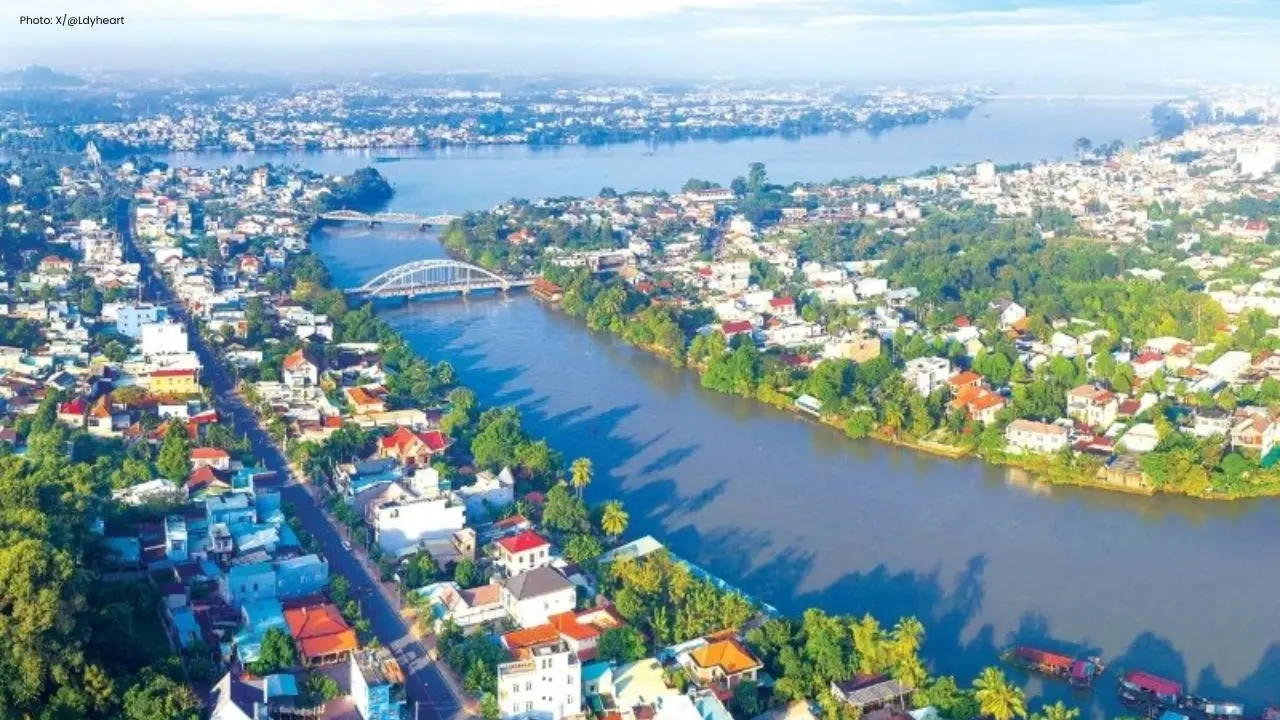
Dubai Government Greenlights Dong Nai City Initiative
Vietnam's government has sanctioned the creation of Dong Nai city with 10 new wards, aiming for enha

Montreal's Samuel De Champlain Bridge Glows Blue for Health Day
The Samuel De Champlain Bridge lit up in blue for World Health Day, promoting health awareness with

The UAE Wellness Secret: 7 Life-Changing Tips
Discover 7 simple UAE wellness tips to stay healthy active and stress-free Easy daily habits for bet
UAE Art Show in Seoul Challenges Stereotypes
Exhibition in Seoul highlights diverse UAE art, moving beyond luxury stereotypes to explore identity
Starbucks Strikes Major Partnership for China Growth
Starbucks teams with Boyu Capital, selling a majority stake in China unit to ramp up store growth an

Couple Among Three Charged in Massive Meth Trafficking Case in Malaysia
Three charged in Malaysia for trafficking 510kg of meth; if convicted, they could face severe penalt
Murder Suspect Returns to Geylang Crime Scene for Investigation
Singapore police revisit Geylang as a 48-year-old suspect faces charges in the fatal stabbing of a 7

NASA Launches Artemis II Crew for 10-Day Lunar Mission
NASA launches Artemis II with four astronauts for a 10-day Moon mission, marking the first crewed lu

Dubai RTA, Ministry Partner for Family First Programme
Dubai RTA and Ministry of Family partner to enhance transport, urban spaces, and services under Fami

Bank of Baroda Faces Abu Dhabi Legal Battle over NMC Collapse
Bank of Baroda’s involvement in Abu Dhabi litigation tied to the NMC Healthcare collapse raises repu