Post by : Anis Karim
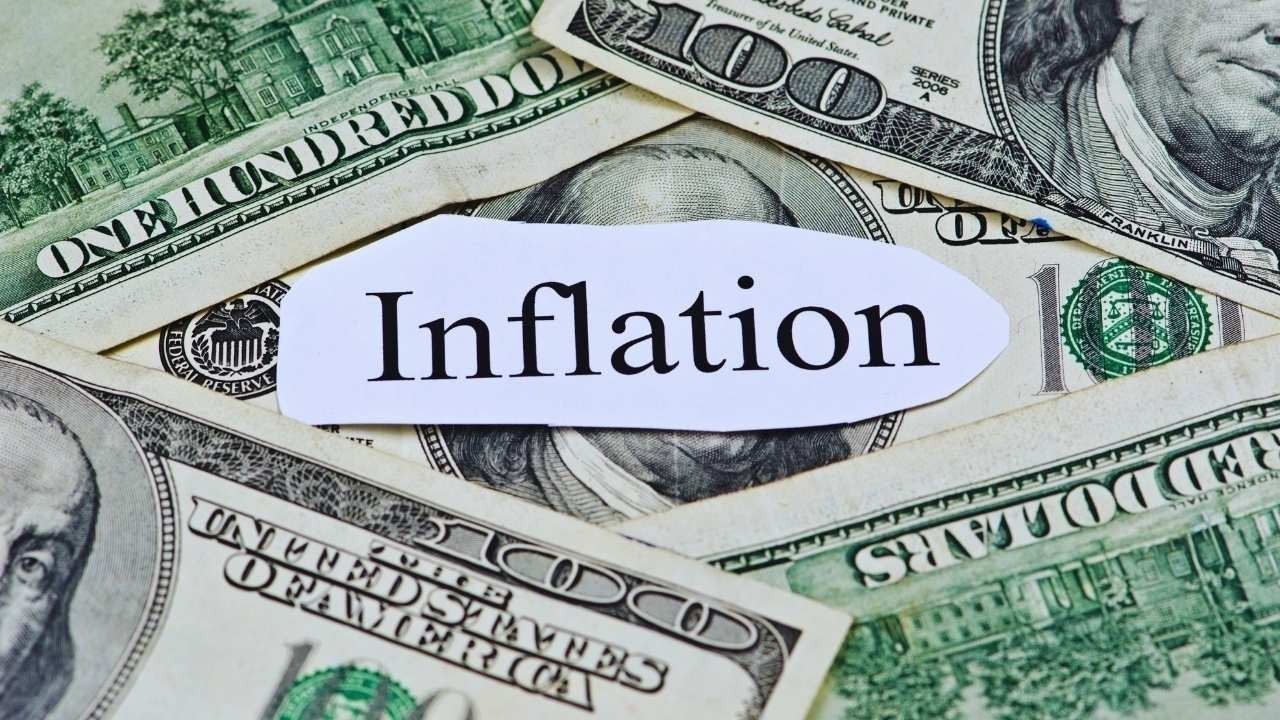
In late 2024 and through 2025, a striking pattern has reemerged across continents: as inflation intensifies and basic costs spiral upward, millions feel the squeeze. Households are being stretched beyond limits. Inequality, long simmering, is flaring up again. In this volatile mix, social discontent finds fuel. Protests, strikes, and political backlash are no longer anomalies — they are symptoms of deeper structural pressures.
This article traces how rising costs, poverty, and inequality interplay to destabilize societies globally. We explore root causes, real-world flashpoints, political ramifications, and possible strategies to ease the tensions before they boil over.
When prices of essentials rise faster than wages, it is everyday people who endure the heaviest burden. Food, energy, housing — these are non-negotiables in any household budget. When these climb steeply, discretionary spending vanishes.
Global inflation remains uneven but persistent. Some regions are seeing headline inflation in the range of 4 to 6 percent or higher, driven by supply shocks, commodity price swings, and trade barriers. Central banks across the world are scrambling to contain inflation through tighter monetary policy. Yet that path is fraught: higher interest rates raise borrowing costs, which can further weaken growth and stress vulnerable segments of society.
One recent IMF analysis warns that rising interest rates—while necessary to curb inflation—might themselves sow financial instability if banks or firms are overexposed.
In such a dynamic, the window for policy that balances stability, growth, and equity becomes ridiculously narrow.
When inflation eats into incomes, people at the margins—those already vulnerable—are pushed deeper into poverty. Subsidies, social welfare schemes, and public services often lag behind the pace of price rises, leaving gaps. Moreover, informal sector workers, day laborers, and those with unstable income sources rarely have buffers.
In many countries, the poorest segments now allocate a huge share of their total income to food and energy. As a result, even small price upticks become existential threats. In such conditions, households reduce nutritional diversity, skip medical care, or cut down on essential expenditures. Over time, these coping strategies damage human capital, entrench inequality, and weaken social resilience.
Climate shocks, conflict, and supply chain disruptions exacerbate this vulnerability. For instance, extreme weather events may reduce crop yields, pushing food prices upward in countries already under economic strain.
Inequality is not simply an add-on; it amplifies the pain of inflation and poverty. When the wealthy are largely insulated (via financial assets, real estate, global investments), they feel shocks less. The poor and middle classes, however, face full exposure.
In many places, inequality has grown over decades. The wealth and income gap between top and bottom strata widens steadily. That means that as costs rise, the pain is vastly uneven — fueling perception of unfairness and resentment.
Even more critically, inequality can erode trust in institutions. When people feel that the system privileges elites — that tax policy, state contracts, subsidies, or bailouts disproportionately favor the well connected — their tolerance shrinks. The result: demands for accountability, redistribution, or revolt.
In mid-2025, Iran witnessed protests by bakers across multiple cities. The underlying spark was that bread and staple inputs had surged in cost, while subsidies and government support lagged behind. Bakers demanded permission to raise prices in line with production costs. Their grievances included skyrocketing fuel, electricity, raw material, and utility costs, severe inflation in food items, and delayed subsidy payments.
Because bread is a staple, its price is extremely politically sensitive. When it moves, people respond. In controlling regimes, that response becomes a pressure valve.
In July 2025, Angola — despite being a major oil producer — cut fuel subsidies and steeply raised the price of diesel. That decision triggered protests across cities. Public transportation workers, taxi drivers, and everyday commuters saw their costs spike overnight. The backlash was swift, with strikes and demonstrations turning violent in some instances.
This case encapsulates the fragile balance between fiscal austerity and social tolerance: governments often push subsidy cuts to ease fiscal burdens, but the public may push back if the timing or severity feels unjust.
In the Eurozone, food prices have surged sharply over recent years. Households in parts of Europe have experienced food cost increases over 30 percent (or more) since 2019. In many cases, food inflation has outpaced general inflation. Because food is a necessity, this has considerable political salience.
In such settings, even in stable democracies, pressure mounts for the state to intervene — through price controls, subsidies, tax rebates, or social welfare top-ups. Failure to do so risks public discontent, protests, and political fallout.
Analysts observe that 2025 is marking a resurgence of political disruption globally. Populist, far-right, or anti-establishment parties are gaining traction, often riding discontent over rising costs, inequality, and perceptions of elite capture. Traditional centrist governments, burdened by slow growth or limited tools, struggle to respond effectively.
Across the globe, when economic hardship converges with institutional weakness or corruption, social unrest becomes risk material.
To understand why some countries see protests and others hold steady, consider the following progression:
Cost Shock & Core Pressure
Sharp rises in food, energy, housing, or transport cost shock households. Because many of these are inelastic, consumers absorb the pain.
Coping Measures & Decline in Living Standards
Households cut non-essentials, reduce consumption, accumulate debt, or draw down savings. Over time, quality of life erodes.
Perceptions of Injustice
When the burden is uneven, or when elites are seen as shielded, resentment grows. This is aggravated if the state response appears indifferent, corrupt, or partial.
Mobilization & Protest
Civil society, opposition parties, unions, or local leaders frame grievances, coordinate actions (strikes, marches), and contest legitimacy.
Political Feedback Loops
Governments respond with repression, concessions, or policy shifts. But if response is inadequate or mismanaged, unrest spreads, institutions weaken, and instability deepens.
Some countries break the cycle; others spiral into crisis.
Not all countries facing inflation see unrest. The ones more vulnerable typically share characteristics:
Weak social safety nets: nations without robust welfare, unemployment insurance, or food subsidies have fewer buffers for citizens.
High inequality & concentration of wealth: where elites dominate politics, people feel their voice is muted.
Weak institutions & corruption: when trust in judiciary, media, or public administration is low, legitimacy erodes quickly.
Dependence on imports or single commodities: nations reliant on food imports or commodity exports feel inflation and global shocks more acutely.
Fiscal pressure and debt stress: when governments are squeezed, they cut subsidies or public spending — precisely when citizens need support.
Recent or ongoing shocks: wars, climate disasters, pandemics amplify discontent.
While the pressures are intense, there are ways governments and institutions can mitigate the unrest spiral.
Use targeted subsidies or transfers (e.g. food vouchers, direct cash support) to buffered low-income households rather than blanket price controls.
Avoid over-tightening monetary policy to the point of strangling growth; balance inflation control with support for vulnerable sectors.
Design progressive taxation: taxing those best able to pay can finance relief without deepening inequality.
Expand social programs temporarily during high inflation episodes.
Improve delivery mechanisms so support reaches intended groups.
Scale public works or guaranteed employment schemes to absorb displaced labor.
Use buffers, strategic reserves, and commodity procurement to smooth food and fuel price volatility.
In critical cases, temporary price caps or subsidies may be warranted, though long-term reliance is unsustainable.
Open channels for civil grievance and participation. Trust erodes fastest when citizens feel excluded.
Publish transparent data on price trends, policy rationale, and fiscal constraints to reduce misinformation and resentment.
Reduce dependence on commodity exports or single supply chains.
Support local agriculture, food security, and climate-resilient farming to blunt global price shocks.
Invest in human capital: education, skills, social mobility to reduce inequality over time.
Global institutions can support low-income nations via concessional loans, grants, or food aid during crunch periods.
Regional trade pacts that safeguard food supply chains help stabilize prices across borders.
If rising costs and inequality persist without meaningful response, dangers multiply:
Chronic protests & instability: recurring civil unrest drains resources and legitimacy.
Political polarization & breakdown: democracy may give way to authoritarian backlash or populist regimes.
Economic stagnation: investments drop, capital flees, growth stalls — a vicious loop.
Social fragmentation: inequality fractures cohesion, fueling tension across class, region, or identity lines.
Human suffering: malnutrition, poor health, education loss deepen generational inequities.
It’s a fraught moment. The collision of inflation, poverty, and inequality is no longer an abstract academic topic. It’s real lives being stretched, communities being tested, trust in institutions being eroded.
The pressure is global, but the responses must be local, smart, and human. No magic formula exists — but success lies in balancing immediate relief with longer-term structural reforms. Strengthening institutions, investing in social equity, diversifying economies, and restoring public trust can defuse the discontent time bombs before they detonate.
The history of 2025 may well be written in how nations respond to this triple challenge.
This article offers a synthesized interpretation of current global trends in inflation, poverty, inequality, and social unrest. It draws on public research and media reporting but does not provide financial, economic, or political advice. The situations described are complex and evolving; interpretations or projections may change as new data emerges.

Qatar, Italy Leaders Discuss Regional Stability & Energy Ties
Qatar’s Emir and Italy’s Prime Minister discuss regional stability, energy security, and economic co

Danube Launches Signature Master-Planned Community
Danube Properties unveils Greenz By Danube in Dubai, offering luxury villas, townhouses, 50+ ameniti

Neoterra breaks ground on ELMORA, unveils new project
Neoterra begins ELMORA construction in Jumeirah Garden City and announces a new residential project

WINGIE Launches AI Refund System for Airline Travelers
WINGIE introduces AI-driven refund technology, enabling seamless, fully digital airline refund proce
Dubai property sales surge to AED176.7B in Q1 2026
Dubai records AED176.7B property sales in Q1 2026, with rising values, steady transaction growth and
Russia Strikes Northeast Ukraine, 4 Killed, 11 Injured
Russian drone and missile attacks on northeast Ukraine killed 4 and injured 11, with major strikes r

Selena Gomez Leads Candy Pink Trend in 2026 Fashion
Selena Gomez embraces candy pink fashion at a Rare Beauty event, highlighting 2026’s biggest color t


UAE Art Show in Seoul Challenges Stereotypes
Exhibition in Seoul highlights diverse UAE art, moving beyond luxury stereotypes to explore identity

Starbucks Strikes Major Partnership for China Growth
Starbucks teams with Boyu Capital, selling a majority stake in China unit to ramp up store growth an

Couple Among Three Charged in Massive Meth Trafficking Case in Malaysia
Three charged in Malaysia for trafficking 510kg of meth; if convicted, they could face severe penalt
Murder Suspect Returns to Geylang Crime Scene for Investigation
Singapore police revisit Geylang as a 48-year-old suspect faces charges in the fatal stabbing of a 7
NASA Launches Artemis II Crew for 10-Day Lunar Mission
NASA launches Artemis II with four astronauts for a 10-day Moon mission, marking the first crewed lu

Dubai RTA, Ministry Partner for Family First Programme
Dubai RTA and Ministry of Family partner to enhance transport, urban spaces, and services under Fami

Bank of Baroda Faces Abu Dhabi Legal Battle over NMC Collapse
Bank of Baroda’s involvement in Abu Dhabi litigation tied to the NMC Healthcare collapse raises repu

Top Museum Openings of 2026 Set to Transform Global Tourism
From Los Angeles to Abu Dhabi and Brussels, 2026 brings major museum launches—Lucas Museum, Guggenhe