
Post by : Anis Karim
The concept of the “Cold War” stirs historical memories of divided nations, ideological divides, proxy wars, and perpetual nuclear dread. Recently, the term has reemerged in discussions—now qualified as the “New Cold War.” Though history often varies, this comparison indicates a rising sentiment that global politics has entered yet another drawn-out phase of rivalry.
Today's geopolitical landscape is distinct due to its nuance. There are no clear dividing lines or barriers splitting the world neatly. Instead, competition materializes through economic strategies, tech supremacy, influence in global institutions, and narrative control. This modern age might appear calm on the surface, yet its impact is profound.
Today’s global climate features lingering tensions devoid of overt large-scale conflict between major powers. Disputes simmer within commerce, security, technology, and overall influence, yet direct clashes are cautiously avoided.
This reflects a notable quality of the original Cold War: rivalry tempered by a shared acknowledgment of catastrophic consequences. The lack of blatant conflict does not equate to peace; it signifies restraint driven by fear.
Unlike temporary spurts of crises, the prevailing tensions feel systemic. They are ingrained in long-term strategies rather than quick reactions. Countries are gearing up for protracted rivalry, reinforcing the notion that we have entered a new cold period rather than experiencing a fleeting standoff.
The Cold War of yesteryear was defined by stark ideological contrasts. Modern tensions, however, are characterized by ambiguity. The competition isn’t solely about promoting a single ideology but about gaining influence, stability, and strategic advantages.
Nations frequently engage in economic collaborations while simultaneously maneuvering for strategic dominance, creating a complex interdependence absent in prior decades.
Today’s adversaries are closely entwined economically, making complete separation nearly impossible. Trade, investments, and supply chain ties link rivals together, acting as both a stabilizing force and a potential weapon.
Economic linkages may deter outright conflict, yet they also introduce vulnerabilities that could be manipulated through restrictions.
Technology has risen as a pivotal arena of rivalry. Mastery of advanced technologies shapes economic strength, military potential, and global standing.
The struggle extends beyond technological advancement to establishing standards that dictate industry norms. The power to set these rules provides long-term leverage.
Cyber activities now dominate modern rivalry. Operations such as espionage and disinformation campaigns persist without public acknowledgment, allowing nations to compete vigorously while maintaining a guise of plausible deniability.
In contemporary geopolitics, economic tactics often eclipse traditional military strategies. Measures such as sanctions and trade restrictions have become essential tools of diplomacy.
These actions aim to economically impair adversaries and manipulate their behavior without escalating to armed conflict.
Control over vital supply chains underscores a nation’s power. By dictating access to essential goods, countries can impose pressures that extend well beyond their borders.
While military maneuvers retain significance in today’s geopolitical tensions, they are tactically orchestrated. Exercises and deployments showcase strength without escalating tensions.
Rather than engaging directly, rival nations often influence opposing sides in regional conflicts. These proxy battles allow competition to manifest without direct clashes among the principal players.
Governments vie for control over information, investing in narrative-shaping domestically and globally, acknowledging the role perception plays in power dynamics.
Influence stretches beyond news to culture and education, utilizing soft-power strategies to foster empathy and legitimacy.
International bodies, initially designed to enhance cooperation, now face challenges in reaching a consensus. Disagreements among powerful nations hamper their efficiency.
Countries are crafting new partnerships in response to this environment, creating alternatives that signal a growing distrust in existing structures.
Smaller nations often find themselves balancing pressures from larger powers. Aligning closely with one could invite retaliation from the other, leading many to seek strategic independence.
Ironically, competition among major powers can elevate the influence of smaller states, granting them critical negotiating capabilities.
The global economy is evolving rather than collapsing. Nations are reevaluating exposure to geopolitical risks, giving precedence to reliable partnerships.
While economic fragmentation raises costs and stifles efficiency, countries are willing to accept these trade-offs for enhanced security and resilience.
Unlike the rigid standoff of the past, modern tensions embed continuous low-grade conflicts. Events like cyber incidents and diplomatic spats occur regularly.
The blurred lines of peace and war complicate responses and elevate escalation risks.
Global tensions resonate in prices, employment, and growth rates. Disruptions in trade and supply chains ultimately impact consumer costs.
Competition influences the availability and governance of technologies, affecting consumers through various platforms.
Mitigating conflict necessitates balance, underscored by clear communication and mutual understanding. History reveals that rivalry can coexist with stability when effectively managed.
Even during tense periods, open communication is essential to minimize miscalculations, even if it doesn’t foster trust.
Previous Cold War experiences offer insights on restraint and the importance of managing crises; however, today's context requires new approaches.
Simplifying modern tensions through historical comparisons overlooks the complexities and fluidity of the present.
Indicators suggest that global tensions will remain rather than resolve swiftly. This continual competition is emerging as a staple of international relations.
Countries and societies must evolve, focusing on resilience and flexibility as foundational to navigating rivalry.
Today’s rivalries echo the structure of a Cold War without mirroring its forms. Lacking definitive blocs or ideologies, competition unfolds across economic, technological, and informational realms—perpetually and quietly.
Labeling it the “New Cold War” highlights the ongoing rivalry but fails to capture its complexity. This era is characterized by simultaneous overlap and opposition, as cooperation stands alongside conflict. Acknowledging this reality is critical because the primary risk lies not in confrontation but in misjudging a world where peace and competition coexist.
Disclaimer:
This article is provided for informational and analytical purposes and does not constitute political, diplomatic, or strategic advice. Global geopolitical conditions may evolve over time.

Aryna Sabalenka Survives Tough Battle at Miami Open
World No.1 Aryna Sabalenka wins a tight match vs Ann Li at Miami Open. Top seeds Alcaraz, Rybakina,

Abu Dhabi Opens Two New Bridges to Cut Traffic by 60%
DMT launches two high-capacity bridges linking Al Reem Island to E‑12, reducing travel time by 15 mi

Family Wins “Family of the Year 2026” at Noor Al Quran Event in Ras Al Khaimah
A family honored at the Noor Al Quran initiative in Ras Al Khaimah for Quran memorization and strong
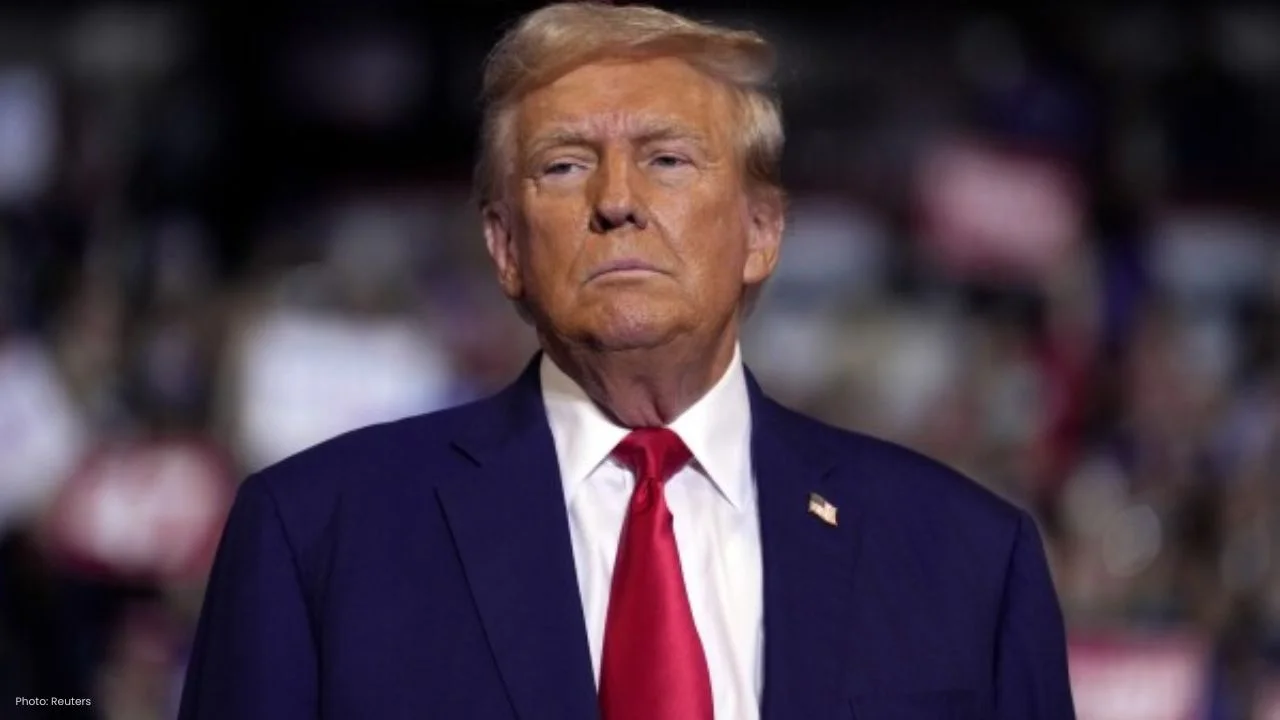
US Approves $16.5B Arms Deal Amid Iran War Escalation
US approves $16.5B arms sale to Gulf allies and $7B to UAE, boosting defence amid Iran tensions whil

UAE Busts Hezbollah-Iran Terror Network, Members Held
UAE authorities have broken a terror network linked to Hezbollah and Iran, arresting members accused

Swiatek Stunned by Linette in Miami Open Upset Shock
Iga Swiatek suffered a shocking defeat to Magda Linette at the Miami Open, marking her first opening

UAE Orphan Fund Raises AED 3.3 Billion in Ramadan Drive
UAE’s Mother of the Nation Orphan Fund raises AED 3.3B in Ramadan, boosting support for education, h


Bank of Baroda Faces Abu Dhabi Legal Battle over NMC Collapse
Bank of Baroda’s involvement in Abu Dhabi litigation tied to the NMC Healthcare collapse raises repu

Top Museum Openings of 2026 Set to Transform Global Tourism
From Los Angeles to Abu Dhabi and Brussels, 2026 brings major museum launches—Lucas Museum, Guggenhe

UAE Tour Highlights UAE’s Strength in Hosting Global Sports Events
Abu Dhabi Sports Council says the successful UAE Tour reflects the UAE’s leading role in hosting maj

EU Seeks Clarity from US After Supreme Court IEEPA Ruling
European Commission urges full transparency from the US on steps after Supreme Court ruling, emphasi
SpaceX Launches 53 New Satellites for Expanding Starlink Network
SpaceX launches 53 Starlink satellites in two Falcon 9 missions, breaking reuse records and expandin

RTA Awards Contract for Phase II of Hessa Street Upgrade in Dubai
Phase II of Hessa Street Development to add bridges, tunnel, and upgraded intersections, doubling ca

UAE Gold Prices Today, Monday 16 February 2026: Dubai & Abu Dhabi Updated Rates
Gold prices in UAE on 16 Feb 2026 updated: 24K around AED 599.75/gm, 22K AED 555.25/gm, and 18K AED

Over 25 Ahmedabad Schools Receive Bomb Threat Email, Authorities Investigate
More than 25 schools in Ahmedabad evacuated after bomb threat emails mentioning Khalistan. Authoriti