Post by : Naveen Mittal
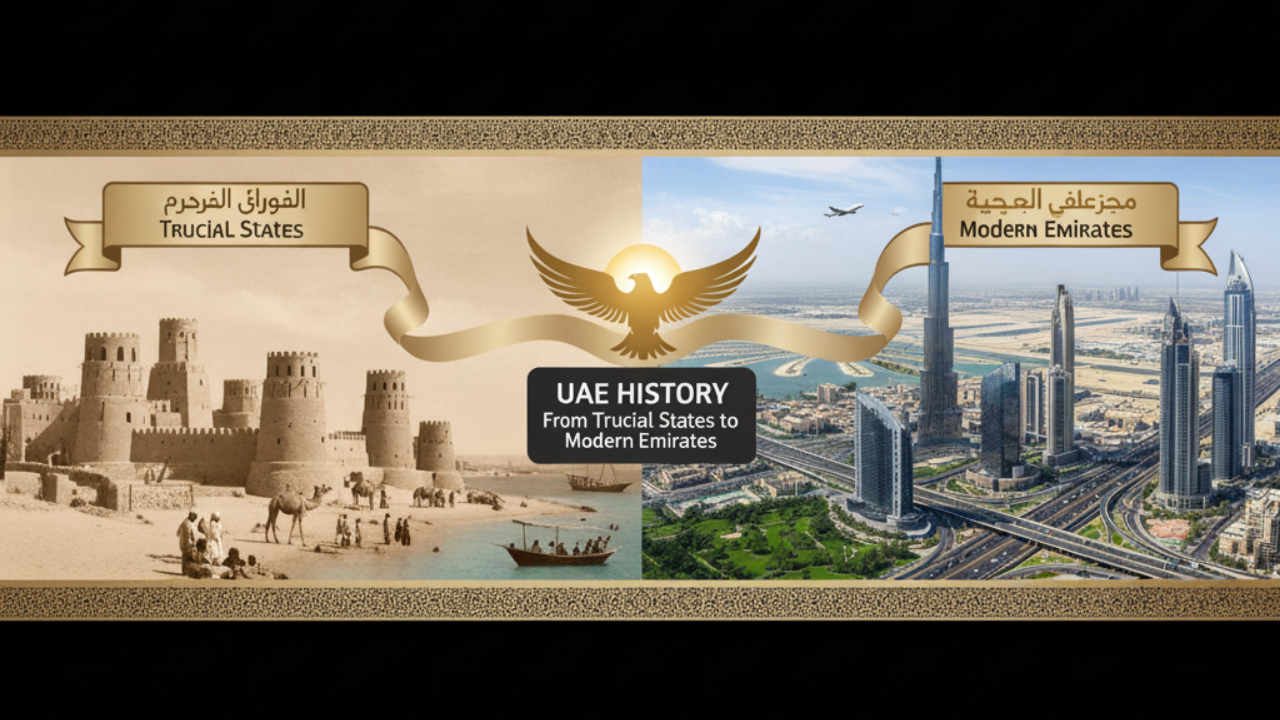
The United Arab Emirates (UAE) is today a symbol of rapid modernization, stunning skyscrapers, global business hubs, and cultural ambition. Yet its story is rooted in desert tribes, pearling coasts, British treaties, and visionary leadership. This article traces how the region evolved from the Trucial States into a modern federation — with special focus on Dubai and Abu Dhabi — weaving in trending search terms like UAE formation, Trucial States history, Dubai transformation, Abu Dhabi rise, Gulf federation.
Long before the modern borders, the lands of present-day UAE were inhabited by nomadic tribes, fishermen, and pearl divers. Archaeological finds show settlement in this region since the Bronze Age and links to ancient Mesopotamian and Indus Valley trade routes. The harsh desert environment, oasis communities, seasonal migration, and coastal trade defined early life. Over centuries, a mix of tribal alliances, shifting allegiances, and maritime trade shaped the foundations on which modern states would emerge.
By the 19th century, the Gulf’s coast was contested — piracy, inter-emirate raids, and maritime insecurity threatened trade routes. In 1820, the British signed the General Maritime Treaty with several sheikhdoms to suppress piracy and maintain safe navigation. This marked the beginning of a continuum of treaties. Later, in 1853, the Perpetual Maritime Truce established lasting peace at sea among the coastal rulers.
Gradually, these emirates became known as the “Trucial States” — a loose British protectorate where rulers ceded foreign policy control to Britain in exchange for defense and recognition. In 1892, the Exclusive Agreement bound the sheikhs to not cede territory to other powers or engage foreign relations without British consent, reinforcing colonial influence.
Under this arrangement, each emirate retained local autonomy — in internal affairs — but external security and diplomacy were handled by the British. The Trucial States Council, founded in 1952, became a forum for coordination among rulers, though with limited policy power. During this period, economic life centered on pearling, fishing, desert trade, and limited agriculture. Oil had not yet transformed the landscape.
In the mid-20th century, global shifts and internal pressures began changing the Gulf. After World War II, British influence waned, and the region saw modernization pressures. The rulers started investing in infrastructure, education, and basic services. The discovery and development of oil reserves — especially in Abu Dhabi and gradually in Dubai — altered the economic axis. Oil revenues provided the capital to build roads, ports, utilities, and social services, setting the stage for rapid change.
In 1968, Britain announced its planned withdrawal east of Suez by 1971. That departure created a political vacuum. In response, the rulers of Abu Dhabi and Dubai met in 1968 and agreed on a union. Over the next few years, negotiations ensued among the emirates. Bahrain and Qatar initially joined discussions but later opted for independent statehood. By July 1971, six emirates committed to federation; Ras Al Khaimah joined a few months later, completing the seven. On 2 December 1971, the United Arab Emirates was formally established, with Sheikh Zayed bin Sultan Al Nahyan as its first President and Sheikh Rashid as Vice President and Prime Minister.
This union was remarkable: seven distinct sheikhdoms creating a federal structure, balancing traditional authority and modern state institutions. The federation began issuing uniform currency, building federal institutions, and coordinating infrastructure and governance.
As the largest emirate by area and with the most substantial oil reserves, Abu Dhabi took on a central role. Under Sheikh Zayed’s leadership, oil wealth was used to modernize rural areas, invest in education, healthcare, and infrastructure, and balance development across the federation. Abu Dhabi became the seat of the federal government and a principal funder of federal projects.
Dubai, lacking the same oil wealth, leveraged its strategic location and entrepreneurial spirit. The rule of Sheikh Rashid Al Maktoum and his successors prioritized ports, trade, free zones, aviation, tourism, and a liberal business environment. Dubai’s growth as a logistics, tourism, and finance hub complemented Abu Dhabi’s stability and resources. The emirate adapted fast — building Al Maktoum Port, large commercial districts, and later iconic projects that attracted global capital.
The synergy of Abu Dhabi’s capital and Dubai’s ambition created balance in the federation: one as anchor, the other as driver of global engagement.
Since the late 20th century, the UAE has aggressively diversified beyond oil. Key developments included:
Massive infrastructure investments: airports, metros, roads, seaports, urban skylines
Diversification of economy: tourism, finance, real estate, technology, logistics
Global branding: hosting expos, cultural events, building record-breaking architecture
Innovation & sustainability: investing in renewables, AI, blockchain, smart cities (e.g. Masdar)
A strong social contract: high living standards, public services, foreign labor policy
The UAE’s global ambition also means soft power: diplomacy, international investment, and regional influence.
Still, challenges remain: balancing economic diversification, managing demographic pressures, environmental sustainability, and navigating regional geopolitics.
The transformation from tribal sheikhdoms to advanced modern states in under a century is remarkable.
The model of union — preserving local identities while pooling resources — offers lessons in federal design.
The UAE’s strategy of diversification and leveraging limited natural endowments is instructive for many emerging states.
Dubai and Abu Dhabi together showcase complementary development models: one centered on resource wealth, the other on enterprise and trade.
The UAE’s history is still guiding narratives about identity, integration, modernization, and global positioning.
From treaty-bound coasts to a dynamic federation, the UAE’s story embodies ambition, adaptation, and strategic leadership.
Disclaimer:
This article is intended for educational and informational purposes. It is based on publicly available historical accounts and research as of 2025. Some details may vary across sources or evolve with new scholarship.
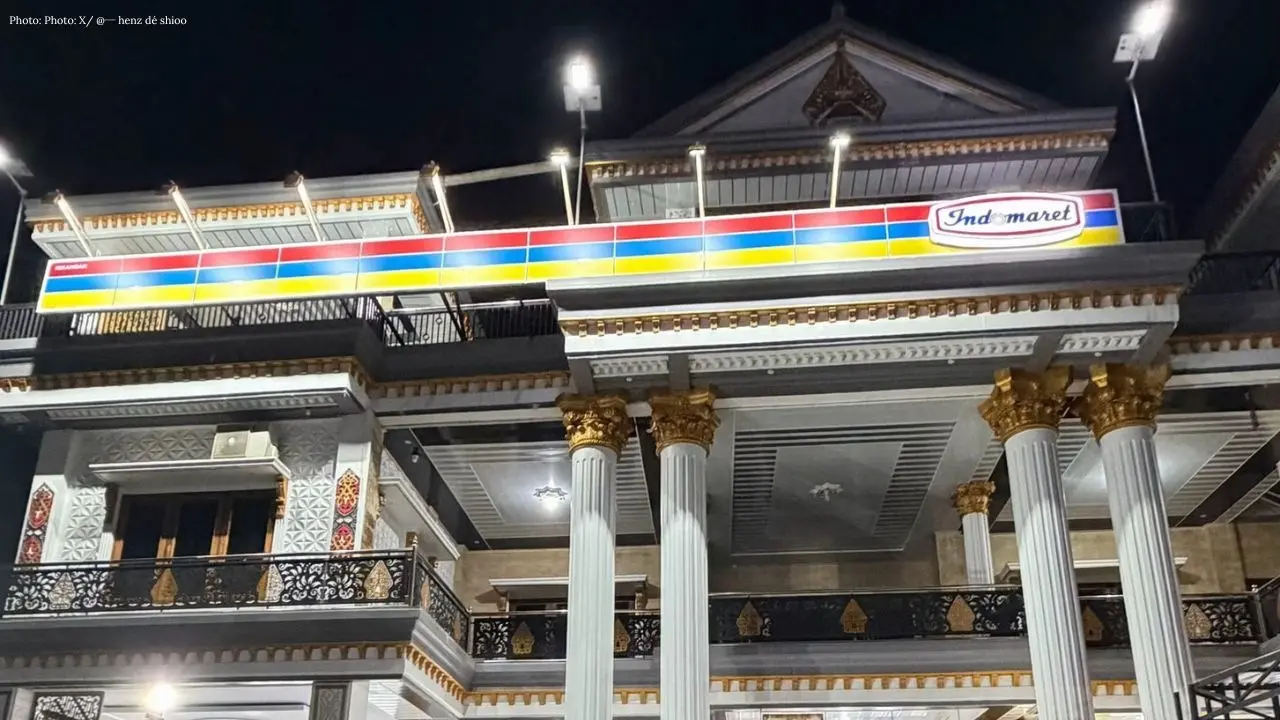
West Sumatra Imposes Restrictions on Retail Chains
West Sumatra curtails Alfamart and Indomaret's expansion to bolster local SMEs and stimulate economi
Taiwan Enhances Defense Strategy for Pratas Islands Amid Rising Chinese Pressure
Taiwan is strengthening defenses on the Pratas Islands due to increased maritime pressure from China

Starbucks Strikes Major Partnership for China Growth
Starbucks teams with Boyu Capital, selling a majority stake in China unit to ramp up store growth an

Abu Dhabi Launches Advanced Biobank for Smart Healthcare
Abu Dhabi launches a cutting-edge biobank linking genomic, clinical and lifestyle data to enable ear
Tesla Aims for Leadership in Japan's Automotive Sector
Tesla is set to expand in Japan with new stores and the Model Y L launch, aiming to capture the elec

Fuel Prices Soar in Pakistan Amid Ongoing Middle East Conflict
Pakistan sees petrol and diesel price hikes as global oil prices rise due to conflicts disrupting su

Couple Among Three Charged in Massive Meth Trafficking Case in Malaysia
Three charged in Malaysia for trafficking 510kg of meth; if convicted, they could face severe penalt


Starbucks Strikes Major Partnership for China Growth
Starbucks teams with Boyu Capital, selling a majority stake in China unit to ramp up store growth an

Couple Among Three Charged in Massive Meth Trafficking Case in Malaysia
Three charged in Malaysia for trafficking 510kg of meth; if convicted, they could face severe penalt

Murder Suspect Returns to Geylang Crime Scene for Investigation
Singapore police revisit Geylang as a 48-year-old suspect faces charges in the fatal stabbing of a 7
NASA Launches Artemis II Crew for 10-Day Lunar Mission
NASA launches Artemis II with four astronauts for a 10-day Moon mission, marking the first crewed lu
Dubai RTA, Ministry Partner for Family First Programme
Dubai RTA and Ministry of Family partner to enhance transport, urban spaces, and services under Fami

Bank of Baroda Faces Abu Dhabi Legal Battle over NMC Collapse
Bank of Baroda’s involvement in Abu Dhabi litigation tied to the NMC Healthcare collapse raises repu

Top Museum Openings of 2026 Set to Transform Global Tourism
From Los Angeles to Abu Dhabi and Brussels, 2026 brings major museum launches—Lucas Museum, Guggenhe

UAE Tour Highlights UAE’s Strength in Hosting Global Sports Events
Abu Dhabi Sports Council says the successful UAE Tour reflects the UAE’s leading role in hosting maj