Post by : Zayd Kamal
Science has been the backbone of human progress, leading to groundbreaking discoveries that have transformed the way we live. From medicine and technology to physics and space exploration, scientific breakthroughs have shaped civilizations, improved life expectancy, and unlocked mysteries of the universe. This article delves into some of the most famous scientific discoveries and their impact on humanity, proving that knowledge is the key to progress.
One of the most famous scientific discoveries in history is Sir Isaac Newton’s law of gravity. The story goes that Newton observed an apple falling from a tree, which led him to formulate the concept of gravitational force. His work, published in Principia Mathematica, explained how objects are attracted to each other based on mass and distance. This discovery revolutionized physics, enabling scientists to develop modern mechanics, space exploration, and even GPS technology. Without Newton’s insights, our understanding of planetary motion and astrophysics would not have been possible.
Before the germ theory of disease, people had little understanding of what caused illnesses. Louis Pasteur proved that microorganisms, rather than bad air or imbalances in the body, were responsible for infections. His discoveries led to pasteurization, a process that kills harmful bacteria in food and drinks. This groundbreaking discovery changed the course of medical science, leading to better hygiene, the development of vaccines, and antibiotics that have saved millions of lives. Thanks to Pasteur, the world witnessed a significant drop in mortality rates and an increase in life expectancy.
Charles Darwin’s On the Origin of Species introduced the world to the concept of evolution by natural selection. His theory suggested that all species evolve over time due to environmental changes and survival advantages passed down through generations. This discovery transformed biological and medical sciences, providing a scientific basis for genetics, anthropology, and psychology. Darwin’s work not only explained the diversity of life on Earth but also influenced medical research, helping scientists understand diseases, genetics, and adaptation in organisms.
One of the most life-saving scientific discoveries of all time was Alexander Fleming’s accidental discovery of penicillin. While studying bacteria, he noticed that a mold called Penicillium notatum killed bacterial colonies. This led to the creation of the first antibiotic, which revolutionized medicine by treating bacterial infections that were once deadly. Before penicillin, even minor infections could be fatal, but this breakthrough paved the way for the development of more antibiotics, saving millions of lives and making modern surgery and healthcare much safer.
The discovery of DNA’s double-helix structure by James Watson and Francis Crick unlocked the mysteries of genetic information. Their findings explained how genetic traits are passed down and how DNA replicates, transforming the fields of genetics, medicine, and forensic science. This discovery led to breakthroughs in gene therapy, the Human Genome Project, and personalized medicine, helping scientists understand hereditary diseases and develop targeted treatments. Today, DNA research continues to shape medical advancements, improving diagnostics and disease prevention.
Albert Einstein’s theory of relativity changed the world’s understanding of space, time, and gravity. His famous equation, E=mc², explained the relationship between energy and mass, which later played a crucial role in nuclear energy. This discovery not only led to the development of nuclear power but also influenced advancements in space exploration, GPS technology, and theoretical physics. Einstein’s work continues to shape scientific research, deepening our understanding of black holes, time dilation, and the universe’s expansion.
The Big Bang Theory explains the origins of the universe, proposing that it began as a singularity and expanded over billions of years. Georges Lemaître first suggested this idea, which was later supported by Edwin Hubble’s observations of an expanding universe. This discovery revolutionized cosmology, providing a scientific explanation for the universe’s formation. It laid the foundation for space exploration, inspiring missions to study distant galaxies, dark matter, and the potential for extraterrestrial life. The Big Bang Theory remains one of the most profound scientific discoveries in our quest to understand existence.
While Benjamin Franklin’s famous kite experiment demonstrated that lightning was a form of electricity, it was Michael Faraday’s work in electromagnetism that led to the development of electricity generation and transmission. Their discoveries transformed human civilization, enabling the invention of electric power, lighting, and electronic devices that shape our daily lives. From powering homes and industries to enabling computers and the internet, electricity has become the backbone of modern technology. Without this discovery, the world as we know it would not exist.
Quantum mechanics revolutionized physics by explaining the behavior of particles at the smallest scales. Max Planck’s quantum theory and later contributions by scientists like Schrödinger and Heisenberg reshaped science and technology. This discovery led to the development of semiconductors, transistors, and laser technology, which form the foundation of modern computing, telecommunications, and medical imaging. Quantum mechanics continues to drive advancements in artificial intelligence, quantum computing, and nanotechnology, paving the way for futuristic innovations.
One of the greatest scientific discoveries in modern times was the Human Genome Project, which successfully mapped the entire human DNA sequence. This international effort revolutionized medicine and genetic research, improving diagnostics and treatments for genetic disorders. Scientists can now identify genes linked to diseases, develop targeted therapies, and personalize medicine based on individual DNA. The project also contributed to advancements in cancer research, forensic science, and biotechnology, making it one of the most significant achievements in medical history.
Science has revolutionized the world through famous scientific discoveries and their impact on humanity. From Newton’s law of gravity to Einstein’s theory of relativity, these breakthroughs have reshaped our understanding of the universe. The germ theory of disease by Louis Pasteur led to better hygiene and medical advancements, while Alexander Fleming’s discovery of penicillin saved millions of lives. Watson and Crick’s identification of DNA’s structure transformed genetics and medicine, while the Human Genome Project unlocked new possibilities in personalized treatments. The Big Bang Theory helped explain the universe's origins, and quantum mechanics paved the way for modern computing and technology. Each of these discoveries has left a lasting impact, shaping the way we live, work, and explore the mysteries of existence.
The information provided in this article is for educational and informational purposes only. DXB News Network does not claim to provide medical, scientific, or professional advice. Readers are encouraged to seek expert opinions before making any decisions based on the content. While we strive for accuracy, we do not guarantee the completeness or reliability of the information.

BTS Returns With Comeback Concert at Seoul’s Gwanghwamun
BTS will hold a free comeback concert at Seoul’s Gwanghwamun, performing songs from their new album

Philippines Qualify for Women’s World Cup 2027
Philippines beat Uzbekistan 2-0 in playoffs to qualify for the 2027 Women’s World Cup in Brazil, mar

UAE Joins Nations Condemning Iran Missile Attacks
UAE and regional nations condemn Iran’s missile and drone attacks, urge de-escalation, respect for i
Samsung to Invest $73B in AI Semiconductor Expansion
Samsung Electronics will invest over $73 billion in 2026 to boost AI chip production, expand R&D, an

Doraemon Director Tsutomu Shibayama Dies at 84
Veteran Doraemon director Tsutomu Shibayama died at 84 after battling lung cancer. Fans mourn the lo

Messi Hits 900 Goals, Joins Ronaldo in Elite Club
Lionel Messi scores his 900th career goal for Inter Miami but the team exits the Concacaf Champions

Pop Mart and Sony Announce Labubu Movie Project
Pop Mart partners with Sony Pictures to create a Labubu movie. The live-action and CGI film aims to


Bank of Baroda Faces Abu Dhabi Legal Battle over NMC Collapse
Bank of Baroda’s involvement in Abu Dhabi litigation tied to the NMC Healthcare collapse raises repu

Top Museum Openings of 2026 Set to Transform Global Tourism
From Los Angeles to Abu Dhabi and Brussels, 2026 brings major museum launches—Lucas Museum, Guggenhe

UAE Tour Highlights UAE’s Strength in Hosting Global Sports Events
Abu Dhabi Sports Council says the successful UAE Tour reflects the UAE’s leading role in hosting maj
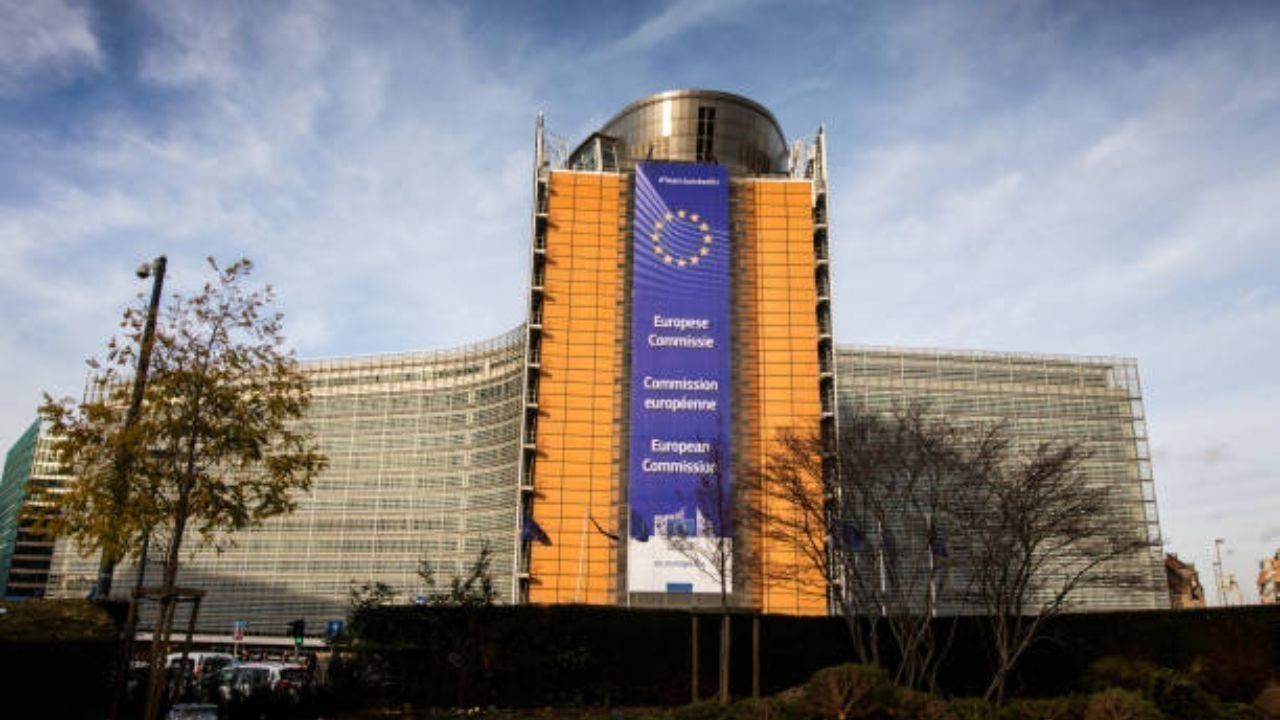
EU Seeks Clarity from US After Supreme Court IEEPA Ruling
European Commission urges full transparency from the US on steps after Supreme Court ruling, emphasi
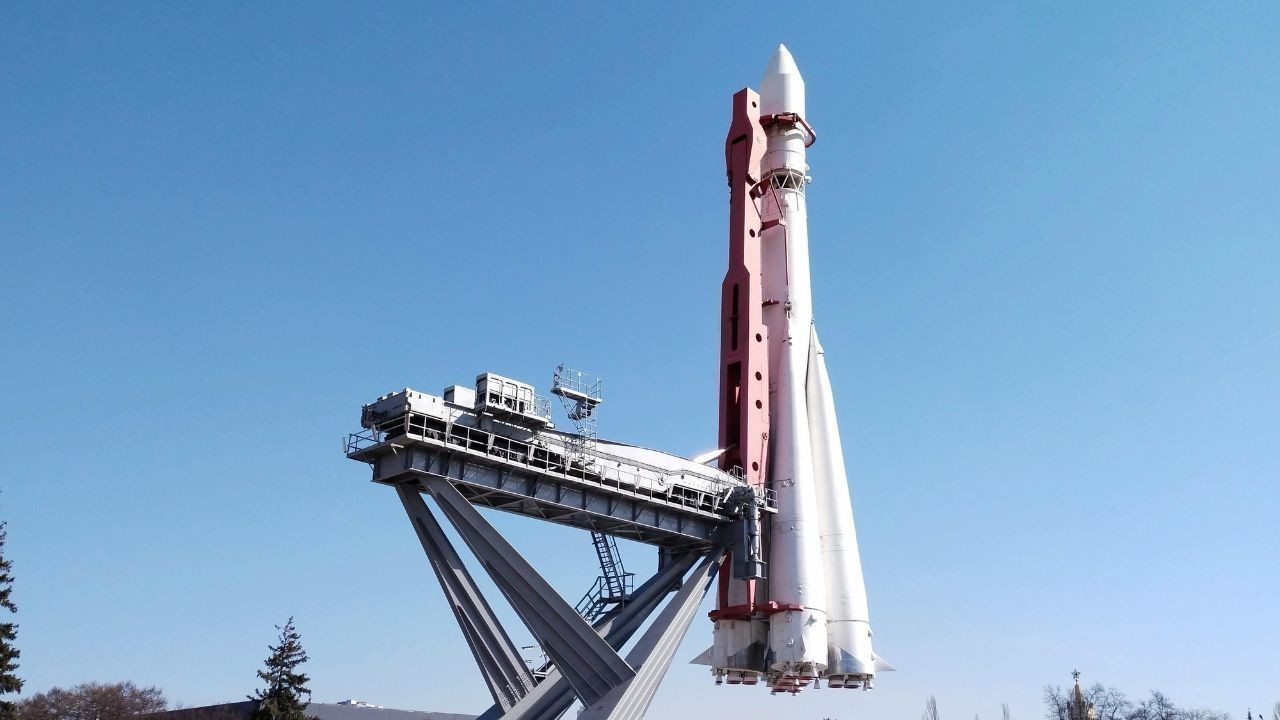
SpaceX Launches 53 New Satellites for Expanding Starlink Network
SpaceX launches 53 Starlink satellites in two Falcon 9 missions, breaking reuse records and expandin

RTA Awards Contract for Phase II of Hessa Street Upgrade in Dubai
Phase II of Hessa Street Development to add bridges, tunnel, and upgraded intersections, doubling ca

UAE Gold Prices Today, Monday 16 February 2026: Dubai & Abu Dhabi Updated Rates
Gold prices in UAE on 16 Feb 2026 updated: 24K around AED 599.75/gm, 22K AED 555.25/gm, and 18K AED

Over 25 Ahmedabad Schools Receive Bomb Threat Email, Authorities Investigate
More than 25 schools in Ahmedabad evacuated after bomb threat emails mentioning Khalistan. Authoriti