Post by : Sam Jeet Rahman
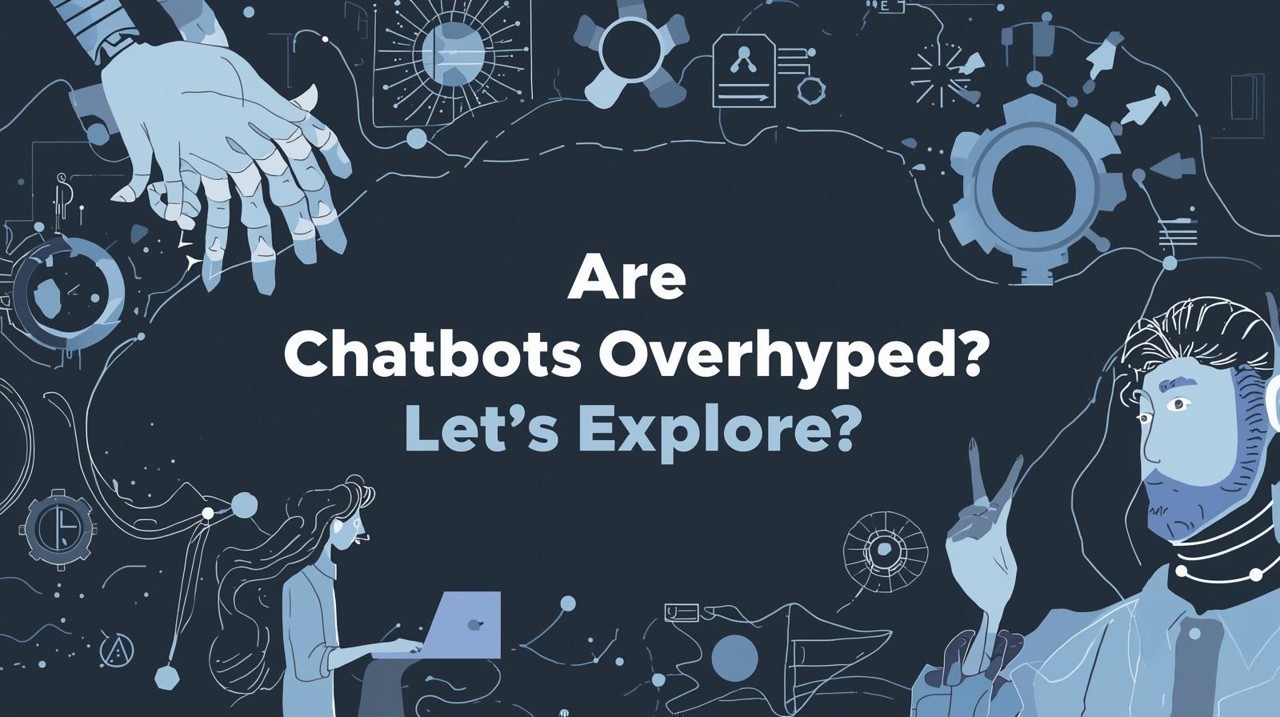
In the past few years, chatbots have been everywhere — on websites, banking apps, e-commerce platforms, and even in healthcare. They’ve been marketed as the future of customer service and automation. But as the hype continues to grow, one question remains — are chatbots truly as revolutionary as they’re made out to be, or are they simply overhyped digital assistants?
Let’s take a balanced look at what chatbots really bring to the table — their strengths, their weaknesses, and what the future might hold for them.
At their core, chatbots are software programs designed to simulate human conversation. They can answer questions, process requests, or perform simple tasks — either through rule-based systems or advanced AI-driven natural language processing (NLP).
There are two main types:
Rule-based chatbots — These follow pre-written scripts. They work well for simple tasks like “track my order” or “reset my password.”
AI-powered chatbots — These use machine learning and NLP (like ChatGPT or Bard) to understand context and respond intelligently.
While both have value, their effectiveness depends on how they’re used and integrated.
Chatbots weren’t just a technological fad — their rise was driven by real needs in business and communication.
Unlike human agents, chatbots never sleep. They can handle customer inquiries round the clock, improving accessibility and reducing support costs.
Consumers expect quick answers. Chatbots deliver instant replies, eliminating long wait times for basic questions.
During busy seasons, businesses can serve thousands of customers simultaneously without hiring hundreds of agents.
A well-designed chatbot can significantly reduce operational expenses by automating repetitive tasks like FAQs and appointment bookings.
Chatbots gather valuable data from customer interactions — data that businesses can analyze to improve services and understand customer behavior.
For all their benefits, chatbots have clear limitations — and these are often overlooked in the hype.
Even the smartest chatbot can’t replicate empathy, humor, or emotional intelligence. When users face complex or sensitive issues, they want to talk to a real person.
Rule-based bots fail when users ask something outside their pre-programmed responses. This often leads to frustration and the dreaded “Sorry, I didn’t understand that.”
AI chatbots rely on training data and algorithms, which can sometimes misinterpret intent or context — especially with slang, sarcasm, or regional dialects.
Many users worry about how their chat data is collected and stored. Without clear data policies, this becomes a major trust issue.
Some companies market their chatbots as “human-like” when in reality, they’re only capable of handling basic queries. This mismatch between expectation and experience damages credibility.
The short answer: Yes and No.
Chatbots are overhyped when they’re sold as replacements for humans. They are not (yet) at that level. But they’re underrated as powerful support tools that can enhance efficiency and user experience when used wisely.
Here’s the truth:
A chatbot can handle volume, but not complexity.
It can automate, but not empathize.
It can save time, but not build relationships.
Businesses that understand these nuances get the best out of them — using chatbots for what they do well, while keeping humans in the loop for high-value interactions.
Despite the limitations, chatbots are evolving rapidly and finding genuine success in certain sectors:
They guide users through product catalogs, recommend items, and even help with checkout — increasing conversions and customer satisfaction.
Chatbots like Erica (Bank of America) or HDFC’s Eva assist customers with balance checks, transactions, and quick support, reducing pressure on call centers.
Chatbots like Babylon and Ada help users check symptoms or book appointments — though they stop short of providing medical diagnoses.
From booking flights to suggesting travel itineraries, bots simplify travel planning with instant, personalized support.
AI bots act as study companions, answering questions, giving feedback, and helping learners stay engaged.
As AI and natural language understanding advance, chatbots are becoming more conversational, accurate, and context-aware.
Here’s what’s next:
Emotionally aware chatbots that recognize tone and adjust responses accordingly.
Voice-based AI assistants integrated across devices and services.
Personalized AI agents that remember your preferences and offer proactive assistance.
Seamless human handover — when a bot can’t help, it smoothly connects you to a human agent without losing context.
Soon, chatbots will not just react — they’ll anticipate user needs.
So, are chatbots overhyped?
Maybe a little — but not without reason.
Chatbots are not perfect, but they’re becoming indispensable. The key is understanding their role: they’re tools, not teammates — helpers, not humans.
When businesses use them strategically — blending automation with human support — they create the best of both worlds: speed, efficiency, and empathy.

Bahrain & Saudi F1 Races Cancelled Amid Middle East Conflict
F1 cancels Bahrain and Saudi Grands Prix due to Middle East tensions, cutting the season to 22 races
Revolution Wind Starts Power Supply to New England Homes
Revolution Wind, halted under Trump, begins sending clean energy to New England, powering 350,000 ho

WADA May Bar Trump, US Officials from 2028 LA Olympics
WADA considers new rules that could block Trump and US officials from LA 2028 Olympics over unpaid d

Tshepo Balozwi’s Journey of Resilience and Starting Again in Dubaiz
From career advocate to starting again in Dubai, Tshepo Balozwi’s journey shows resilience, humility

Explosion Targets Jewish School Wall in Amsterdam
An overnight blast hit the outer wall of a Jewish school in Amsterdam. No injuries were reported. Po

Ghaitah Al Ain Festival 2026 to Celebrate Eid with Family Fun
Ghaitah Al Ain Festival returns from March 20–27, 2026 at ADNEC Al Ain Centre with live shows, famil

UAE, Ethiopia Leaders Boost Trade, Security Cooperation
Mohammed bin Rashid Al Maktoum meets Abiy Ahmed in the UAE to strengthen trade, investment and touri


Bank of Baroda Faces Abu Dhabi Legal Battle over NMC Collapse
Bank of Baroda’s involvement in Abu Dhabi litigation tied to the NMC Healthcare collapse raises repu

Top Museum Openings of 2026 Set to Transform Global Tourism
From Los Angeles to Abu Dhabi and Brussels, 2026 brings major museum launches—Lucas Museum, Guggenhe

UAE Tour Highlights UAE’s Strength in Hosting Global Sports Events
Abu Dhabi Sports Council says the successful UAE Tour reflects the UAE’s leading role in hosting maj

EU Seeks Clarity from US After Supreme Court IEEPA Ruling
European Commission urges full transparency from the US on steps after Supreme Court ruling, emphasi

SpaceX Launches 53 New Satellites for Expanding Starlink Network
SpaceX launches 53 Starlink satellites in two Falcon 9 missions, breaking reuse records and expandin

RTA Awards Contract for Phase II of Hessa Street Upgrade in Dubai
Phase II of Hessa Street Development to add bridges, tunnel, and upgraded intersections, doubling ca

UAE Gold Prices Today, Monday 16 February 2026: Dubai & Abu Dhabi Updated Rates
Gold prices in UAE on 16 Feb 2026 updated: 24K around AED 599.75/gm, 22K AED 555.25/gm, and 18K AED

Over 25 Ahmedabad Schools Receive Bomb Threat Email, Authorities Investigate
More than 25 schools in Ahmedabad evacuated after bomb threat emails mentioning Khalistan. Authoriti