Post by : Anis Karim
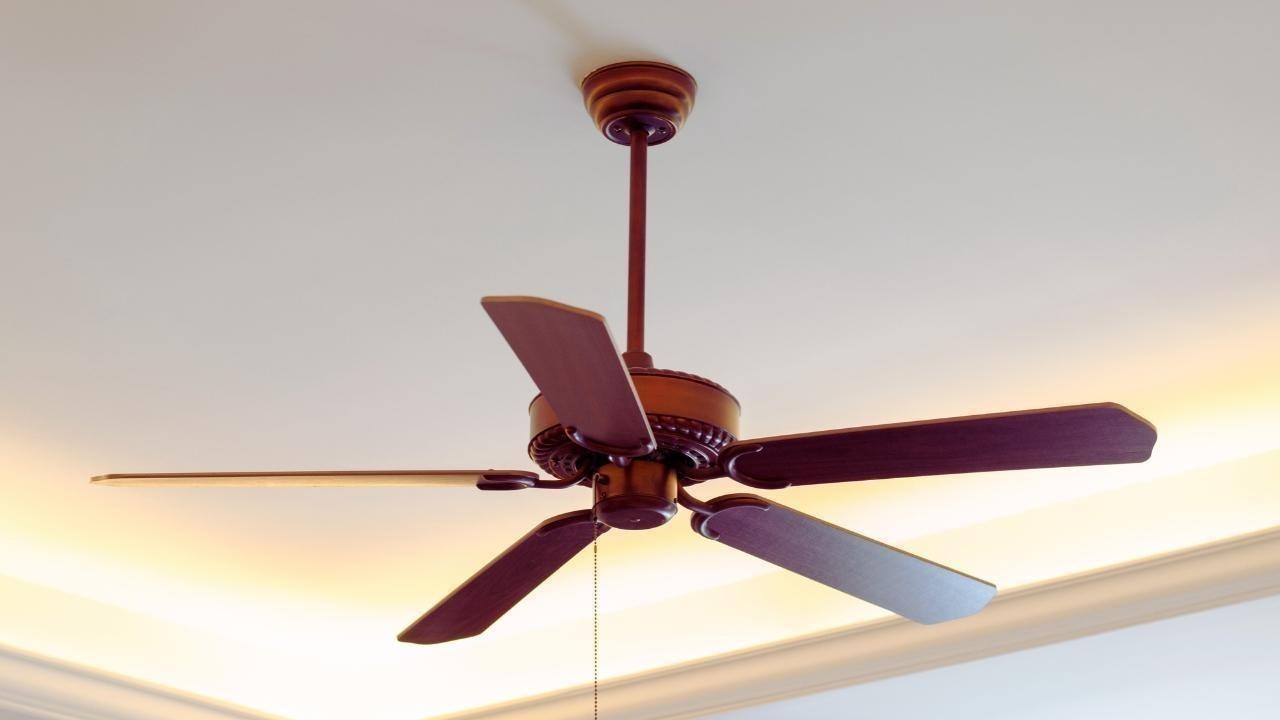
When you switch on a ceiling fan in summer and see it spinning anti-clockwise, it’s not just a design choice or coincidence. There’s science and comfort carefully engineered into that rotation. Most people don’t think twice about the direction their fan spins — they just care whether it cools them down. But the direction is crucial to how the fan performs, especially in different seasons.
In the summer, ceiling fans are designed to rotate anti-clockwise because it creates a wind-chill effect by pushing air down. This subtle but effective movement of air accelerates the evaporation of sweat, making our skin feel cooler — even though the actual temperature in the room remains unchanged. In contrast, a clockwise rotation (used in winters) pulls air upward, redistributing warm air that accumulates near the ceiling.
Understanding this minor but essential difference isn’t just about being informed — it also helps save energy and enhances comfort during different times of the year.
The anti-clockwise movement is carefully aligned with the blade angle (or pitch). Fan blades are tilted at a specific angle — usually between 12 to 15 degrees — to effectively push air downward when rotating anti-clockwise. When the fan spins in this direction, the leading edge of the blade cuts through the air and forces it downward.
This causes the air in the room to circulate in a cone-shaped pattern, ensuring air movement reaches you directly. This air movement helps your body cool itself naturally, even when the thermostat is set a few degrees higher. That’s why running ceiling fans in the summer can allow homeowners to raise the AC temperature without sacrificing comfort — saving both energy and money.
Many users don’t even realize their ceiling fan has a reverse switch. Located on the motor housing, this tiny switch lets you change the direction of the blade rotation. It's usually overlooked because the effects aren’t as visually obvious as other home appliance features. But the impact is substantial — especially in climates like the UAE, where air conditioning dominates indoor environments.
In summer, anti-clockwise rotation enhances cooling by creating a downdraft. In winter, the clockwise spin creates an updraft, which redistributes warm air that collects at the top of a room. Using fans smartly like this can help reduce overall energy consumption.
This becomes especially important in commercial buildings, high-ceiling residences, or any indoor space where maintaining comfort across all vertical levels is difficult.
Ceiling fans don’t cool the air — they cool people. That’s an important distinction. When you’re not in the room, leaving the fan on doesn’t lower the room’s temperature, it just wastes energy. But when used correctly, especially in coordination with HVAC systems, fans offer noticeable energy savings.
In summer, using a ceiling fan spinning anti-clockwise allows the room’s thermostat to be raised by 4-5 degrees Celsius without losing comfort. This reduces the workload on air conditioning units — particularly critical during the scorching summer months in places like Dubai or Abu Dhabi, where electricity consumption skyrockets.
Using ceiling fans in tandem with ACs can cut down electricity bills by as much as 30%, particularly in households that know how to switch fan directions seasonally. Despite its small size and relatively simple design, a ceiling fan — when used correctly — becomes a vital tool in energy conservation.
It can be tricky to identify which direction your fan is spinning just by looking at it. But here’s a quick tip: stand directly beneath the fan and observe the blades. If they are moving anti-clockwise and you feel a strong breeze, the fan is in summer mode. If it’s spinning clockwise and there’s little to no breeze, it’s in winter mode.
Some modern ceiling fans come with remote controls or smartphone apps that let you change directions with a button. Older models often have a manual switch on the side of the motor housing. Knowing how to locate and change the fan direction is a small step that can greatly improve indoor comfort across seasons.
Ceiling fans are an example of functional design where aesthetics meet utility. Most fans are made to be reversible, with motors that can handle rotation in both directions. The design of the blades plays an essential role too. The pitch or tilt of each blade determines how air is moved.
An improperly angled blade would either fail to circulate air effectively or might wobble, creating noise and inefficiency. Manufacturers invest heavily in testing blade angles, materials, and aerodynamics to ensure consistent airflow and balance.
The seemingly simple device spinning above your head is a product of physics, geometry, and design engineering — all working together to provide comfort.
In the UAE, where summer temperatures can easily exceed 45°C, the use of ceiling fans is somewhat limited compared to countries with more moderate climates. Most buildings, especially in urban areas like Dubai and Sharjah, rely on centralized air conditioning systems. However, there’s a growing trend in villas and eco-conscious communities toward combining ceiling fans with AC systems to reduce energy bills and improve ventilation.
Fans are also used in outdoor majlis settings and open patios, where air conditioning isn’t feasible. In these scenarios, having the fan spin in the correct direction is not just a matter of comfort — it’s a survival tactic during the oppressive summer months.
With the UAE’s drive toward sustainability, especially under initiatives like the Green Economy Vision 2030, even small habits — like reversing ceiling fans seasonally — can collectively have a big environmental impact.
Despite the benefits, many people don’t use the reverse feature of ceiling fans. Reasons include:
Lack of awareness – Most homeowners don’t know that the fan direction should be changed with seasons.
Poorly placed switches – The reverse switch is often located in hard-to-reach areas.
Aesthetic choices – In luxury homes, designers sometimes use non-functional decorative fans.
Reliance on AC – In heavily air-conditioned regions, ceiling fans are used more for circulation than for cooling.
Changing this behavior requires public awareness, inclusion in green building guidelines, and even product redesigns that make the reverse function more intuitive.
Besides direction, fan speed and blade count also impact performance. Contrary to popular belief, more blades don’t always mean more airflow. In fact, three or four blades are often more efficient than five or six because they encounter less air resistance.
Higher speeds combined with optimal blade angles produce stronger downdrafts in summer. But if a fan spins too fast, it might also become noisy. Engineers balance speed, pitch, and weight to deliver a product that operates smoothly at the right RPM (revolutions per minute) for both cooling and circulation.
Understanding these specs can help homeowners make better choices when purchasing fans — especially in a market flooded with designer models that may prioritize looks over function.
The future of ceiling fans is moving towards automation and integration with smart home systems. New-age fans come with occupancy sensors, temperature-based controls, and app connectivity that automatically adjust direction and speed based on the season or room temperature.
Imagine a fan that reverses direction automatically in November, or speeds up when it senses increased humidity — that’s already a reality with IoT-enabled home devices. In regions like the UAE, where energy management is critical, these smart fans can help users become more aware of their energy consumption and environmental impact.
If you live in the UAE or any hot climate:
Check Your Fan Direction – If it’s not blowing air downward in summer, switch it to anti-clockwise.
Use with AC – Let fans complement your air conditioning instead of working against it.
Clean Blades – Dusty blades reduce efficiency. Clean regularly.
Educate Others – Make your household aware of how fan direction matters.
Go Smart – If possible, upgrade to a smart fan with auto-reverse and energy monitoring features.
These simple steps not only enhance comfort but also promote sustainability — one ceiling fan at a time.
This article is intended for educational and informational purposes only. While every effort has been made to ensure accuracy, the content should not be used as a substitute for professional engineering, energy, or building advice. DXB News Network is not responsible for any technical or appliance-related decisions made based on this information.

Creative Lab Hosts Spring Media Workshops for Youth
Creative Lab hosted spring workshops in Abu Dhabi, training young students in storytelling, scriptwr

China’s Strategy in Asia 2026: Threat or Opportunity for Global Trade?
Explore China’s new strategy in Asia, its impact on global trade, Belt and Road Initiative, economic

UAE Issues Alert for Rough Seas, Strong Winds Till Apr 3
UAE weather authority warns of rough seas, 40 km/h winds, and rain until April 3, with possible heav
UAE Entry Rules Tightened for Iranian Nationals
Emirates bans Iranian nationals from UAE entry and transit, while Flydubai allows Golden Visa holder

ADEED Platform Boosts UAE Supply Chain Resilience Efforts
ADEED platform launched by 7X and Abu Dhabi partners to enhance supply chain resilience, ensure trad

KHDA Opens 333 Scholarships for Dubai Distinguished Students
KHDA invites applications for 333 scholarships under Dubai Distinguished Students Programme 2026–27,

Jannik Sinner Completes Sunshine Double With Miami Win
Jannik Sinner beats Jiri Lehecka 6-4, 6-4 to claim the Miami Open, becoming the first man to complet


Bank of Baroda Faces Abu Dhabi Legal Battle over NMC Collapse
Bank of Baroda’s involvement in Abu Dhabi litigation tied to the NMC Healthcare collapse raises repu

Top Museum Openings of 2026 Set to Transform Global Tourism
From Los Angeles to Abu Dhabi and Brussels, 2026 brings major museum launches—Lucas Museum, Guggenhe

UAE Tour Highlights UAE’s Strength in Hosting Global Sports Events
Abu Dhabi Sports Council says the successful UAE Tour reflects the UAE’s leading role in hosting maj

EU Seeks Clarity from US After Supreme Court IEEPA Ruling
European Commission urges full transparency from the US on steps after Supreme Court ruling, emphasi

SpaceX Launches 53 New Satellites for Expanding Starlink Network
SpaceX launches 53 Starlink satellites in two Falcon 9 missions, breaking reuse records and expandin
RTA Awards Contract for Phase II of Hessa Street Upgrade in Dubai
Phase II of Hessa Street Development to add bridges, tunnel, and upgraded intersections, doubling ca

UAE Gold Prices Today, Monday 16 February 2026: Dubai & Abu Dhabi Updated Rates
Gold prices in UAE on 16 Feb 2026 updated: 24K around AED 599.75/gm, 22K AED 555.25/gm, and 18K AED

Over 25 Ahmedabad Schools Receive Bomb Threat Email, Authorities Investigate
More than 25 schools in Ahmedabad evacuated after bomb threat emails mentioning Khalistan. Authoriti