Post by : Anis Karim
No nation exemplifies the clash of natural riches, international politics, and economic downfall quite like Venezuela. With the largest proven oil reserves globally, the country seems poised for energy dominance. However, it has transformed into a stark reminder of how governance, sanctions, and global rivalries can cripple even the most resource-abundant nations.
Currently, the spotlight shines anew on Venezuela’s oil. As energy security becomes pivotal in discussions from Washington to Brussels, oil markets are precariously balanced. The focus has shifted from whether Venezuela will play a role to how—and under which influences—it will re-integrate into global markets.
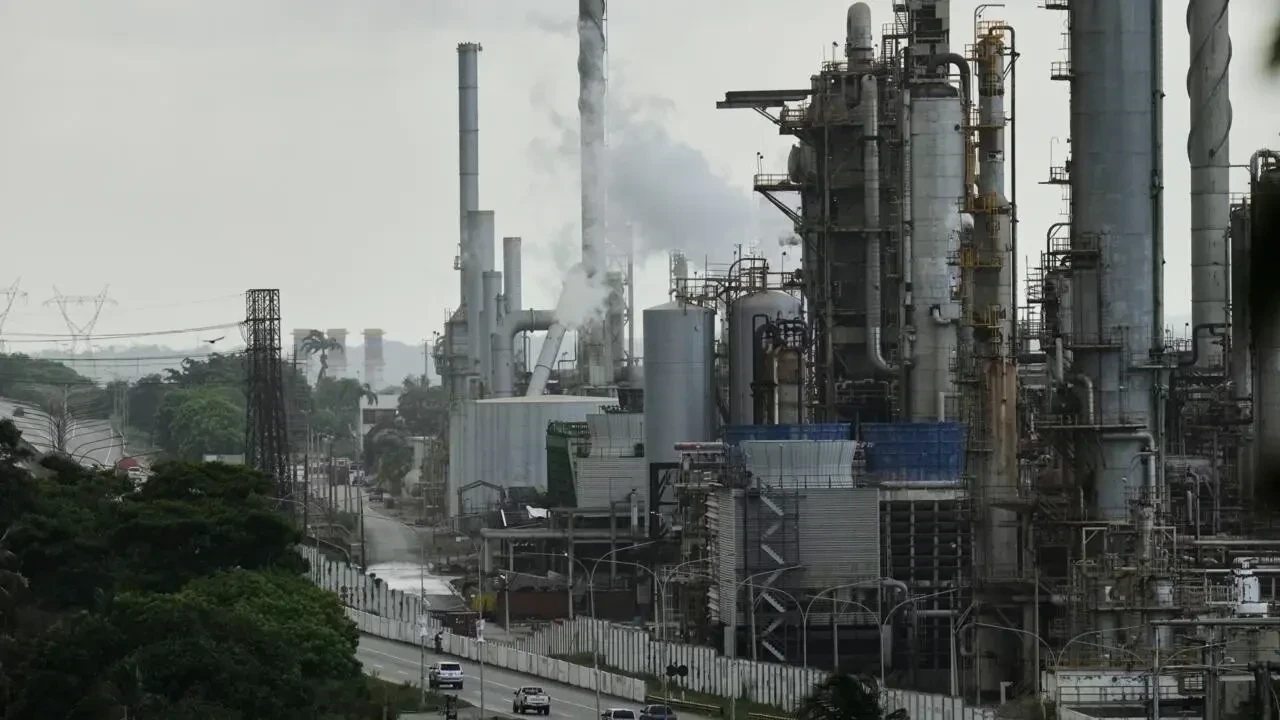
Officially, Venezuela boasts over 300 billion barrels of oil reserves, outstripping Saudi Arabia and Iran. Much of this resource is concentrated in the Orinoco Belt, a vast area with extra-heavy crude deposits which rival entire regions’ reserves.
For perspective:
Venezuela represents nearly 20% of global proven oil reserves
These reserves could potentially meet global oil demand for almost a decade
Even partial recovery of production could sway global supply-demand dynamics
Nevertheless, just having reserves does not equate to power. Factors like extraction, refining, investments, and global politics influence whether oil stays beneath the surface or makes its way to global markets.
Venezuela was producing over 3.2 million barrels per day at its peak in the late 1990s. Today, that figure is a mere fraction, fluctuating due to crumbling infrastructure, capital shortages, and export restrictions.
The decline was gradual, yet deeply rooted.
PDVSA, the state-owned oil firm, once revered worldwide, has suffered from years of political meddling, lack of investment, and a drain of expertise.
Refineries deteriorated, skilled personnel left the country, and equipment fell into disrepair. Though sanctions worsened the situation, the decline had already started.
The US has enforced far-reaching sanctions on Venezuela’s oil sector, hindering exports, financial transactions, and access to international markets. Aimed at exerting political pressure on Caracas, these measures have significantly altered global energy trends.
US refiners, once major consumers of Venezuelan crude, sought alternatives. Consequently, Venezuela turned to illicit trade networks and other buyers.
Recent adjustments in US policy have initiated limited openings for Venezuelan oil exports—albeit under stringent rules. These changes reflect a pragmatic approach rather than forgiveness.
The US clearly perceives one reality: the significance of Venezuelan oil cannot be ignored, especially during tight global supply periods.
The US does not possess Venezuelan oil fields; rather, its control manifests through:
Financial systems
Shipping insurance
Sanctions adherence
Access to Western technology
This indirect influence decides who can buy, sell, insure, or transport Venezuelan crude.
In today’s energy geopolitics, true control is less about flags planted on oil fields and more about access to the systems transporting oil from production sites to markets.
The global oil landscape remains highly sensitive. OPEC production cuts, tensions in the Middle East, and uncertainty about long-term demands have resulted in a delicate balance.
Even an increase of 500,000 barrels per day from Venezuela could:
Alleviate price pressures
Stabilize regional supply networks
Mitigate volatility during demand surges
Markets operate with foresight; Venezuela’s oil remains a potential supply—dormant but influential.
Following the closure of Western markets, Venezuela shifted towards non-Western allies. Key partners like China and Russia have stepped in using barter agreements, discounted deals, and alternative shipping strategies.
This shadow trading:
Ensures Venezuelan oil continues to move despite sanctions
Often involves steep discounts
Creates opacity in global oil transactions
While viable in the short run, these arrangements hinder Venezuela’s revenue potential and negotiation leverage.
Jumpstarting Venezuelan oil production is not as simple as a switch flip. Years of disregard imply:
Pipelines demand repairs
Refineries must be modernized
Storage facilities are deteriorating
Experts predict restoring production to 2 million barrels per day would necessitate billions in investments and several years.
Despite aggressive clean energy goals, oil remains essential for global transport, industry, and geopolitics. The transition to renewable energy is uneven, and fossil fuels still dominate global energy consumption.
Venezuela finds itself at the junction of this contradiction:
Vast oil reserves in a decarbonizing era
A chance for economic recovery through revenue
A risk of stranded resources if the shift accelerates
Timing is critical.
Limited sanction relief could enable Venezuela to:
Boost legal exports
Access Western technologies
Enhance transparency measures
This outcome would likely lead to stable global oil prices—rather than a crash.
If sanctions tighten again, Venezuela will stay locked into discounted, opaque trade routes, stunting both recovery and its international influence.
Venezuelan oil serves not just as an economic resource—but as geopolitical leverage. The entity that helps unlock it gains sway across Latin America, energy markets, and diplomatic avenues.
This reality is why Washington, Beijing, Moscow, and energy conglomerates keep their eyes fixed on Venezuela.
While oil remains central in discussions, Venezuela's economic strife has led to one of the world's most significant migration crises. Millions have fled in search of stability.
If managed wisely, oil revenues could:
Stabilize government finances
Restore essential services
Diminish outward migration trends
Yet historical precedents make investors and governments wary.
Despite being one of the world’s most significant yet constrained energy assets, Venezuela’s oil reserves remain dormant. While the US does not own them, it undeniably influences their market trajectory. Today, Venezuelan oil may not sway global prices; however, it is already a factor in tomorrow's supply discussions.
The oil is plentiful. The world is alert. The real question is not whether Venezuela's oil will make a comeback—but under whose conditions it will resurface.
Disclaimer:
This article aims to inform and analyze, not to provide financial, investment, or geopolitical advice. Readers should consult multiple sources and experts before drawing conclusions.
Family Wins “Family of the Year 2026” at Noor Al Quran Event in Ras Al Khaimah
A family honored at the Noor Al Quran initiative in Ras Al Khaimah for Quran memorization and strong
US Approves $16.5B Arms Deal Amid Iran War Escalation
US approves $16.5B arms sale to Gulf allies and $7B to UAE, boosting defence amid Iran tensions whil

UAE Busts Hezbollah-Iran Terror Network, Members Held
UAE authorities have broken a terror network linked to Hezbollah and Iran, arresting members accused

Swiatek Stunned by Linette in Miami Open Upset Shock
Iga Swiatek suffered a shocking defeat to Magda Linette at the Miami Open, marking her first opening

UAE Orphan Fund Raises AED 3.3 Billion in Ramadan Drive
UAE’s Mother of the Nation Orphan Fund raises AED 3.3B in Ramadan, boosting support for education, h

Ramadan in the UAE: Reflections on Humanity, Leadership, and Lasting Values
A heartfelt Ramadan reflection by Osama Regaah on UAE’s spirit of humility, unity, and leadership, a

Dhurandhar 2 Opens Big, Crosses ₹100 Cr on Day 1
Ranveer Singh starrer Dhurandhar 2 earns ₹102 Cr on day one despite delays, beating past Bollywood o


Bank of Baroda Faces Abu Dhabi Legal Battle over NMC Collapse
Bank of Baroda’s involvement in Abu Dhabi litigation tied to the NMC Healthcare collapse raises repu
Top Museum Openings of 2026 Set to Transform Global Tourism
From Los Angeles to Abu Dhabi and Brussels, 2026 brings major museum launches—Lucas Museum, Guggenhe

UAE Tour Highlights UAE’s Strength in Hosting Global Sports Events
Abu Dhabi Sports Council says the successful UAE Tour reflects the UAE’s leading role in hosting maj
EU Seeks Clarity from US After Supreme Court IEEPA Ruling
European Commission urges full transparency from the US on steps after Supreme Court ruling, emphasi
SpaceX Launches 53 New Satellites for Expanding Starlink Network
SpaceX launches 53 Starlink satellites in two Falcon 9 missions, breaking reuse records and expandin

RTA Awards Contract for Phase II of Hessa Street Upgrade in Dubai
Phase II of Hessa Street Development to add bridges, tunnel, and upgraded intersections, doubling ca

UAE Gold Prices Today, Monday 16 February 2026: Dubai & Abu Dhabi Updated Rates
Gold prices in UAE on 16 Feb 2026 updated: 24K around AED 599.75/gm, 22K AED 555.25/gm, and 18K AED
Over 25 Ahmedabad Schools Receive Bomb Threat Email, Authorities Investigate
More than 25 schools in Ahmedabad evacuated after bomb threat emails mentioning Khalistan. Authoriti