Post by : Anis Karim
Cities worldwide, including Indian urban centers, are facing critical mobility challenges. Traffic congestion has reached untenable levels, fuel prices fluctuate unpredictably, and air quality continues to decline. Urban governments face immense pressure to implement decisive regulations and projects that will transform daily commuting practices.
Transportation is no longer merely a personal preference but a pressing public concern with significant economic, health, and environmental ramifications. Authorities are beginning to rethink the role of roads and railways as systems in dire need of reform rather than simple conveniences. The focus has shifted from comfort to sustainability.
In the past, private vehicles symbolized freedom and success. However, as the number of vehicles surged and roads remained constant, this perceived independence devolved into a frustration rife with gridlock. Cities are now suffocated by congestion, leading to diminished productivity and growing public health concerns.
Policymakers now acknowledge that merely expanding roads fails to address traffic issues. Additional flyovers and wider roads only attract more cars. The shift in focus necessitates altering behavior, which cannot occur without the introduction of new regulations. Consequently, governments are enacting policies that make owning a car more costly while promoting public transport as a viable alternative.
Soaring fuel prices are not solely products of international markets; they are also intentionally deployed by governments to dissuade excess private vehicle usage. Many cities have dramatically increased parking fees, restricted roadside parking, and intensified penalties for noncompliance.
These measures aren’t punitive; they serve to manage traffic volume. As personal vehicle costs spiral, people begin reevaluating their travel choices. For example, a steep parking charge in a busy area compels a commuter to weigh their options, fostering shifts in behavior over time.
Historically perceived as a stopgap solution for those unable to own cars, public transport is evolving into a desirable choice. Initiatives like modern metros, eco-friendly buses, and integrated travel passes aim to draw even prior skeptics.
Cities are allocating substantial budget portions to enhance connectivity across metro, bus, and suburban rail systems. Mobile applications enable real-time tracking, digital ticketing streamlines access, and cleanliness campaigns coupled with security measures enhance safety. Comfortable and air-conditioned versions of public transport are redefining commuter experiences.
Public transport is increasingly being framed as the smart option, not just a backup plan.
Traditionally, a major barrier to convincing citizens to transition away from cars was comfort. While cars offered privacy and freedom, public transport was often associated with crowding and discomfort.
This disparity, however, is lessening.
Contemporary transit systems are committed to comfort alongside efficiency. Newer trains are quieter and feature air conditioning, while bus services benefit from reserved seating and cleanliness checks. Stations are evolving into fully accessible environments.
Public travel is no longer just about enduring a commute; it’s about experiencing it comfortably.
Electric vehicles were expected to simplify the car-versus-bus debate by providing a cleaner alternative. While they reduce tailpipe emissions, they do not alleviate congestion. Roads remain clogged, available parking is scarce, and travel times persist.
Consequently, the focus has shifted to prioritizing electric public transit fleets over promoting individual electric vehicles. This approach effectively enhances air quality while alleviating traffic congestion.
The discourse has transitioned from what fuels the vehicle to how many vehicles urban settings can accommodate.
Despite advancements, many individuals find it challenging to abandon personal vehicles. Factors such as habit, status, and convenience are deeply rooted. For families, cars symbolize safety, while for professionals, they represent flexibility.
Thus, policy changes often face pushback. Rising parking fees draw criticism, hikes in fuel prices incite outrage, and public transport developments can provoke temporary disruptions, adding to public frustration.
The path forward is laden with obstacles.
Nonetheless, cities are left with little choice.
A significant transformation has been the reconfiguration of urban designs around transportation corridors. New commercial hubs, residential areas, and office complexes are increasingly being sited near metro lines and bus routes. The objective is clear: design living spaces that revolve around transport rather than crafting transportation systems to fit the city.
This strategy shortens travel distances, diminishes car dependency, and organically encourages public transport use. Cities that plan effectively prioritize buses and trains as the go-to option, making the transition away from cars more seamless.
No policy will prevail without a sense of safety for its users. Governments are making substantial investments in surveillance, adequate lighting, dedicated compartments for women, and emergency support systems. Public perception of safety on transit systems is just as critical as actual safety statistics.
If citizens trust the system, they are more likely to utilize it.
Should that trust falter, incentives become ineffective.
Safety is foundational to mobility reforms.
Owning a vehicle is increasingly prohibitive, with costs extending beyond fuel. Expenses related to insurance, maintenance, parking, tolls, and depreciation create financial strain. Many families find that monthly car ownership charges rival or exceed their housing costs.
In contrast, public transport offers consistency. Monthly fares, pre-paid cards, and established routes present a stable alternative in an unpredictable cost landscape.
Logical financial decisions are gradually supplanting emotional attachments to vehicles.
Environmental imperatives have led to increased governmental focus on transportation solutions. Climate obligations and international benchmarks necessitate that urban policymakers tackle emissions proactively, given that transport is a significant contributor to urban pollution.
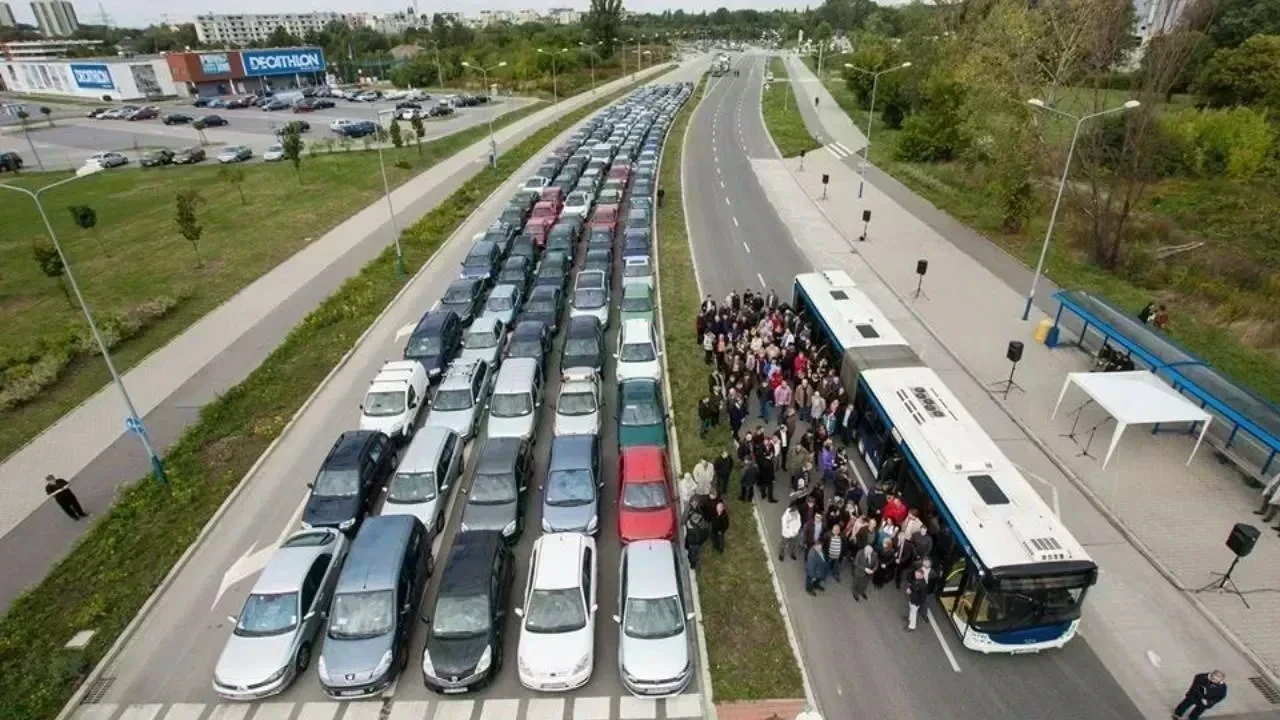
Public transport provides immediate benefits. A single bus can replace up to 40 cars, significantly lowering emissions. No other solution offers a faster resolution than simply decreasing the number of vehicles on the road.
Cities must act urgently; there’s little time to wait for revolutionary technologies.
Expect to see more restrictions in central areas,
congestion pricing implementations,
further adjustments to fuel prices,
expansion of metro networks,
dedicated bus lanes,
increased parking fees,
integrated ticketing options,
and electric public transportation initiatives.
Urban mobility is undergoing continuous evolution.
The era of unrestricted road usage is fading.
Governments are shifting from forceful bans to persuasive nudges. Today’s policies aim to encourage positive behavior rather than coerce it. When public transport offers speed, cleanliness, affordability, and safety, citizens naturally gravitate towards these options.
Mobility reforms triumph not through compulsion, but through conviction.
Cities are not waging war against private vehicles.
They are committed to preserving livability.
Urban environments should prioritize human needs over mere traffic. The choice is no longer between car and public transport; it’s a decision between disorder and organization.
While public transport may not be perfect, it is certainly vital.
The future belongs to collective transit, not individual ownership.
DISCLAIMER
This article serves as general informational content and is not intended as policy, legal, or transportation advice. Policies may differ by region and city; readers are encouraged to consult official government resources for accurate and current information.
Family Wins “Family of the Year 2026” at Noor Al Quran Event in Ras Al Khaimah
A family honored at the Noor Al Quran initiative in Ras Al Khaimah for Quran memorization and strong

US Approves $16.5B Arms Deal Amid Iran War Escalation
US approves $16.5B arms sale to Gulf allies and $7B to UAE, boosting defence amid Iran tensions whil

UAE Busts Hezbollah-Iran Terror Network, Members Held
UAE authorities have broken a terror network linked to Hezbollah and Iran, arresting members accused

Swiatek Stunned by Linette in Miami Open Upset Shock
Iga Swiatek suffered a shocking defeat to Magda Linette at the Miami Open, marking her first opening

UAE Orphan Fund Raises AED 3.3 Billion in Ramadan Drive
UAE’s Mother of the Nation Orphan Fund raises AED 3.3B in Ramadan, boosting support for education, h

Ramadan in the UAE: Reflections on Humanity, Leadership, and Lasting Values
A heartfelt Ramadan reflection by Osama Regaah on UAE’s spirit of humility, unity, and leadership, a

Dhurandhar 2 Opens Big, Crosses ₹100 Cr on Day 1
Ranveer Singh starrer Dhurandhar 2 earns ₹102 Cr on day one despite delays, beating past Bollywood o


Bank of Baroda Faces Abu Dhabi Legal Battle over NMC Collapse
Bank of Baroda’s involvement in Abu Dhabi litigation tied to the NMC Healthcare collapse raises repu
Top Museum Openings of 2026 Set to Transform Global Tourism
From Los Angeles to Abu Dhabi and Brussels, 2026 brings major museum launches—Lucas Museum, Guggenhe
UAE Tour Highlights UAE’s Strength in Hosting Global Sports Events
Abu Dhabi Sports Council says the successful UAE Tour reflects the UAE’s leading role in hosting maj
EU Seeks Clarity from US After Supreme Court IEEPA Ruling
European Commission urges full transparency from the US on steps after Supreme Court ruling, emphasi
SpaceX Launches 53 New Satellites for Expanding Starlink Network
SpaceX launches 53 Starlink satellites in two Falcon 9 missions, breaking reuse records and expandin
RTA Awards Contract for Phase II of Hessa Street Upgrade in Dubai
Phase II of Hessa Street Development to add bridges, tunnel, and upgraded intersections, doubling ca

UAE Gold Prices Today, Monday 16 February 2026: Dubai & Abu Dhabi Updated Rates
Gold prices in UAE on 16 Feb 2026 updated: 24K around AED 599.75/gm, 22K AED 555.25/gm, and 18K AED

Over 25 Ahmedabad Schools Receive Bomb Threat Email, Authorities Investigate
More than 25 schools in Ahmedabad evacuated after bomb threat emails mentioning Khalistan. Authoriti