Post by : Sam Jeet Rahman
Disclaimer: This article is for informational and educational purposes only. It does not constitute investment, legal, or financial advice. Readers should conduct their own due diligence before making any investment decisions.
In a region once defined by oil wealth, a new form of resource is shaping the Gulf Cooperation Council’s (GCC) economic future — data. As the world transitions into an era dominated by artificial intelligence (AI), cloud computing, and the Internet of Things (IoT), data centers have emerged as the new “gold mines” of digital infrastructure.
Countries like the UAE, Saudi Arabia, Qatar, and Oman are rapidly positioning themselves as digital powerhouses, investing billions in the development of data centers to serve the growing demand for cloud services, government digitization, fintech, and smart city projects.
The result? A new real estate frontier — data center real estate — is attracting investors, developers, and global tech giants at a record pace.
Governments across the GCC have launched ambitious national strategies to diversify away from oil and build knowledge-based economies. These initiatives — such as Saudi Vision 2030, UAE Digital Government Strategy 2025, and Qatar National Vision 2030 — all rely on one critical backbone: data infrastructure.
Key policies driving the surge include:
Government Cloud Mandates: Many ministries and public entities are migrating to secure local cloud platforms, creating immediate demand for new data centers.
Data Sovereignty Regulations: Countries are enforcing laws that require sensitive data — including financial, healthcare, and citizen data — to be stored locally, increasing the need for onshore storage and processing facilities.
Smart City Projects: Massive developments like NEOM (Saudi Arabia) and Masdar City (UAE) depend on advanced data networks for real-time analytics, AI-driven operations, and connected infrastructure.
In short, digital transformation is not optional — it’s policy. And that makes data centers a strategic national asset.
Unlike traditional commercial real estate, data centers combine technology, energy, and infrastructure. Their value doesn’t lie in foot traffic or luxury appeal but in connectivity, reliability, and uptime.
High Yields and Long-Term Leases: Data centers often secure tenants like cloud providers or telecom operators under 15- to 20-year contracts, ensuring stable cash flows.
Low Vacancy Rates: Demand far exceeds supply across most GCC cities. Once operational, centers tend to maintain near-full occupancy.
Resilience Against Market Fluctuations: Even during economic slowdowns, data usage rises — driven by e-commerce, remote work, and streaming demand.
Strategic Location Value: Properties close to undersea cable routes and energy hubs (like Dubai, Abu Dhabi, and Muscat) gain a premium edge.
As one Dubai-based analyst noted, “If traditional real estate is location, location, location — data center real estate is power, connectivity, and cooling.”
Tech giants like Amazon Web Services (AWS), Google Cloud, Microsoft Azure, and Oracle are leading the charge in regional expansion. However, due to regulatory and logistical requirements, they often partner with local developers and governments.
Examples include:
Microsoft’s UAE Cloud Regions (Dubai and Abu Dhabi), developed in collaboration with local telecom operators.
AWS’s Bahrain Data Center, which became the first operational hyperscale facility in the GCC.
Google Cloud’s Qatar Region, built in partnership with the Ministry of Communications and Information Technology.
These collaborations have set off a domino effect, encouraging regional investors and REITs (Real Estate Investment Trusts) to fund co-location and edge data center projects.
Building a data center in the desert presents unique challenges. Each facility requires massive, uninterrupted power, high-capacity fiber connectivity, and advanced cooling systems to maintain optimal temperatures.
Energy Supply: A typical data center can consume as much electricity as a small city. This is pushing countries like Saudi Arabia and the UAE to expand renewable energy projects (solar and green hydrogen) to power these facilities sustainably.
Cooling Systems: Innovations such as liquid cooling, heat reuse, and AI-based thermal management are being deployed to counter extreme GCC heat conditions.
Water Efficiency: Water-based cooling is being replaced with closed-loop systems that reduce evaporation and environmental impact.
The move toward green data centers aligns with national sustainability goals and makes such projects more attractive to ESG-focused investors.
The cost of building a Tier III or Tier IV data center in the GCC ranges from $8 million to $12 million per megawatt (MW), depending on land cost, connectivity, and power availability.
Colocation Services: Leasing rack space to enterprises and startups.
Cloud Hosting: Partnerships with service providers offering public and private cloud solutions.
Managed Services: Providing security, backup, and analytics infrastructure.
A well-located, fully operational data center can generate returns between 12–18% annually, significantly higher than conventional office or retail real estate.
Moreover, with regional data consumption projected to grow by over 35% annually, long-term demand remains strong — reducing investor risk.
Each GCC country is developing its own data center ecosystem based on strategic strengths:
UAE: Leading hub for multi-tenant and cloud facilities due to connectivity, stable regulation, and free zones like Dubai Internet City and Khalifa Industrial Zone Abu Dhabi (KIZAD).
Saudi Arabia: Rapidly scaling hyperscale centers tied to Vision 2030, with NEOM projected to host multiple AI-focused facilities.
Qatar: Positioning itself as a digital gateway for enterprise and sports data analytics, especially after hosting the 2022 FIFA World Cup.
Oman: Leveraging undersea cable landing points and strategic geography to become a data transit hub between Europe, Asia, and Africa.
Bahrain: Home to the GCC’s first hyperscale AWS data region and a thriving fintech infrastructure.
These emerging markets create a diversified ecosystem — from hyperscale developments to smaller, edge data centers closer to users for faster processing.
Sustainability is no longer optional for developers. With the GCC pledging net-zero goals (UAE by 2050, Saudi Arabia by 2060), data center projects must prioritize energy efficiency, carbon reduction, and waste management.
Current trends include:
Use of renewable energy sources and power purchase agreements (PPAs).
Construction of modular data centers that reduce waste and optimize land use.
Integration of AI-based energy monitoring systems to optimize cooling and server workloads.
Developers focusing on green infrastructure can expect higher investor confidence, easier financing, and long-term sustainability recognition.
Institutional investors, sovereign wealth funds, and private equity firms are all entering this space. The GCC’s stable regulatory climate, rising digital population, and supportive infrastructure policies make it an attractive alternative to traditional property markets.
Leading investors include:
Mubadala Investment Company (UAE): Partnering with global operators to expand digital infrastructure.
Saudi Public Investment Fund (PIF): Funding national-scale hyperscale projects.
Ooredoo and Etisalat: Expanding local cloud hosting capabilities.
Private real estate developers are also shifting their focus from retail and hospitality to data center parks, often within industrial or tech zones.
Experts predict that the GCC data center market will exceed $5 billion by 2030, with an annual growth rate of over 15%. The next phase of expansion will likely focus on:
AI and machine learning workloads requiring high-performance computing centers.
Edge computing to support autonomous vehicles, 5G, and IoT networks.
Cross-border connectivity, integrating GCC centers into the global data fabric connecting Europe, Africa, and Asia.
Additionally, data center REITs may soon emerge as a formal investment vehicle, providing retail investors access to this high-demand asset class.
Regulatory clarity in data localization and cybersecurity laws makes the GCC a secure market for digital infrastructure investments.
Power and land access remain critical bottlenecks — investors must prioritize sites with scalable energy and fiber capacity.
Sustainability credentials are increasingly a differentiator, not a luxury.
The region’s strategic location between Europe, Africa, and Asia offers unmatched connectivity advantages.
Partnerships with established operators (AWS, Microsoft, Oracle, Huawei) provide lower-risk entry points for first-time investors.
The GCC’s data center boom represents more than a technological shift — it’s a real estate revolution. Just as oil once fueled the region’s growth, data is now driving the next wave of economic diversification, innovation, and investment.
For investors seeking long-term, resilient opportunities, data center real estate offers a powerful blend of stability, scalability, and strategic value.
As digital transformation accelerates across every industry, the Gulf’s message is clear: data is the new gold — and the race to store it has already begun.
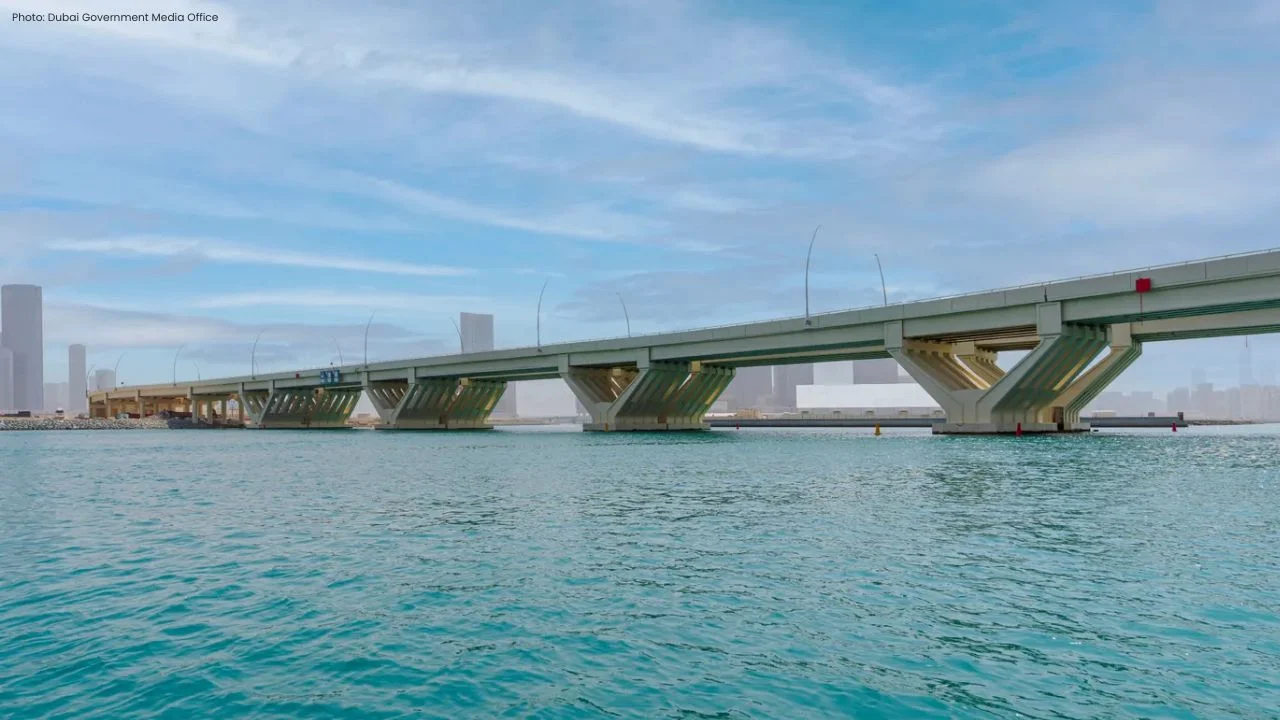
Abu Dhabi Opens Two New Bridges to Cut Traffic by 60%
DMT launches two high-capacity bridges linking Al Reem Island to E‑12, reducing travel time by 15 mi
Family Wins “Family of the Year 2026” at Noor Al Quran Event in Ras Al Khaimah
A family honored at the Noor Al Quran initiative in Ras Al Khaimah for Quran memorization and strong

US Approves $16.5B Arms Deal Amid Iran War Escalation
US approves $16.5B arms sale to Gulf allies and $7B to UAE, boosting defence amid Iran tensions whil

UAE Busts Hezbollah-Iran Terror Network, Members Held
UAE authorities have broken a terror network linked to Hezbollah and Iran, arresting members accused

Swiatek Stunned by Linette in Miami Open Upset Shock
Iga Swiatek suffered a shocking defeat to Magda Linette at the Miami Open, marking her first opening

UAE Orphan Fund Raises AED 3.3 Billion in Ramadan Drive
UAE’s Mother of the Nation Orphan Fund raises AED 3.3B in Ramadan, boosting support for education, h

Ramadan in the UAE: Reflections on Humanity, Leadership, and Lasting Values
A heartfelt Ramadan reflection by Osama Regaah on UAE’s spirit of humility, unity, and leadership, a


Bank of Baroda Faces Abu Dhabi Legal Battle over NMC Collapse
Bank of Baroda’s involvement in Abu Dhabi litigation tied to the NMC Healthcare collapse raises repu

Top Museum Openings of 2026 Set to Transform Global Tourism
From Los Angeles to Abu Dhabi and Brussels, 2026 brings major museum launches—Lucas Museum, Guggenhe

UAE Tour Highlights UAE’s Strength in Hosting Global Sports Events
Abu Dhabi Sports Council says the successful UAE Tour reflects the UAE’s leading role in hosting maj
EU Seeks Clarity from US After Supreme Court IEEPA Ruling
European Commission urges full transparency from the US on steps after Supreme Court ruling, emphasi
SpaceX Launches 53 New Satellites for Expanding Starlink Network
SpaceX launches 53 Starlink satellites in two Falcon 9 missions, breaking reuse records and expandin
RTA Awards Contract for Phase II of Hessa Street Upgrade in Dubai
Phase II of Hessa Street Development to add bridges, tunnel, and upgraded intersections, doubling ca

UAE Gold Prices Today, Monday 16 February 2026: Dubai & Abu Dhabi Updated Rates
Gold prices in UAE on 16 Feb 2026 updated: 24K around AED 599.75/gm, 22K AED 555.25/gm, and 18K AED

Over 25 Ahmedabad Schools Receive Bomb Threat Email, Authorities Investigate
More than 25 schools in Ahmedabad evacuated after bomb threat emails mentioning Khalistan. Authoriti