Post by : Anis Karim
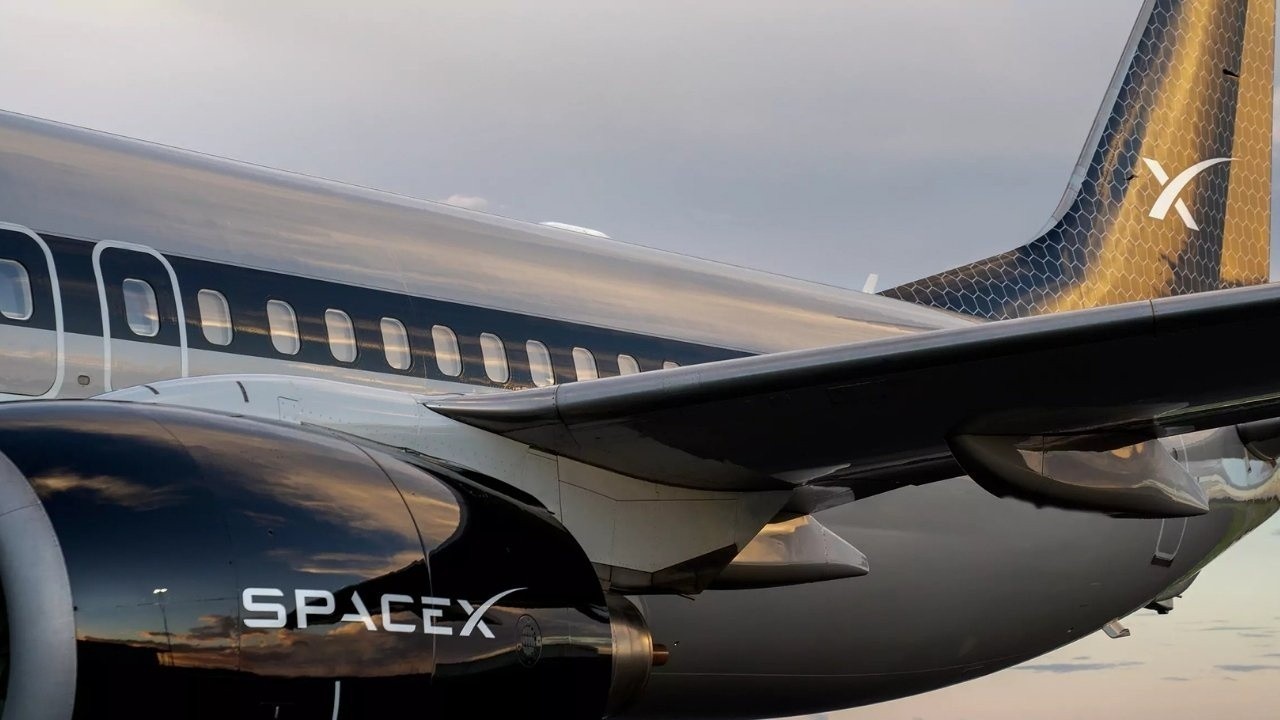
Inflight internet has long been one of the most inconsistent aspects of modern travel. While airports have embraced high-speed connectivity, the skies have not enjoyed the same progress. Slow speeds, unstable signals, high costs and patchy performance have frustrated travellers for years—even on premium airlines. This is why the recent announcement of Emirates moving ahead with cutting-edge Starlink-powered inflight Wi-Fi has sent waves across the global aviation industry.
Starlink, the satellite internet network developed by SpaceX, is expanding rapidly across regions and industries. But its entry into commercial aviation marks a new chapter—one where passengers may experience ground-like internet speeds even at cruising altitude. As one of the world’s most recognised airlines, Emirates adopting this solution signals a turning point, not just for the airline but for the future of inflight connectivity across the industry.
In this detailed article, we explore what Starlink is doing differently, why airlines like Emirates are adopting this technology now, what travellers should expect once the service rolls out, how this changes the competitive landscape and what the future of inflight connectivity looks like.
Traditional inflight internet depends on geostationary satellites—large spacecraft located extremely high above the Earth’s surface. While functional, these satellites come with limitations: significant latency, capacity bottlenecks and slow responsiveness. Starlink uses a different constellation structure. It places thousands of much smaller satellites in low Earth orbit, closer to the planet, making communication faster and more stable.
One of the major advantages of Starlink is its dramatically lower latency. This allows streaming, video calling, cloud usage and real-time applications to function better. For travellers, this could mean the difference between choppy video calls and smooth connectivity—even during long-haul flights.
Starlink’s updated antenna and onboard equipment are designed to work even when vehicles move at high speeds. That makes it ideal for aviation, maritime and land transport sectors. For airlines, this means no dependence on outdated systems that struggle above oceans, polar routes or remote skies.
Today’s travellers, especially business flyers and digital nomads, expect uninterrupted internet connectivity. Work no longer stops at the airport gate. With remote work expanding globally, the ability to stay productive in the sky has become a customer requirement.
Airlines around the world are upgrading cabins, introducing new seat designs and expanding entertainment options. Wi-Fi quality, once considered optional, is now a competitive differentiator. For Emirates—an airline known for premium service—partnering with Starlink helps maintain its leadership.
Emirates flies across continents, including remote polar paths and vast oceanic regions where traditional connectivity is weak. Starlink’s massive satellite network offers the kind of worldwide coverage that aligns with Emirates’ diverse route map.
As Starlink adds more satellites and improves throughput, performance will continue to evolve. Airlines that integrate Starlink early begin benefiting from future upgrades without completely overhauling hardware.
Starlink has already demonstrated internet speeds far superior to the legacy inflight systems. Travellers may soon experience streaming-quality internet even at 40,000 feet. This could allow:
Smooth video calls
HD streaming of sports, movies and online content
Seamless social media use
Real-time work on cloud platforms
Fast email and browsing
Such capabilities would dramatically change how time is spent onboard long-haul flights.
Traditional inflight connectivity often feels delayed or sluggish. Starlink’s lower-latency signal, bouncing through satellites closer to Earth, improves responsiveness. Web pages load quicker and online communication becomes smoother.
Families, groups of friends and business travellers often connect multiple devices. Older systems throttle speeds when too many devices connect. Starlink’s capacity may support more connections without frustrating performance drops.
While Emirates has not confirmed its pricing model for Starlink services, improved technology may drive down costs over time. Airlines may adopt tiered plans, offering basic internet free and premium speeds at a fee.
Airlines often face inconsistent connectivity depending on geographic location. Over oceans and under-served regions, connection drops are common. Starlink’s dense satellite network reduces these gaps, offering smoother coverage across most of the planet.
Airlines typically adopt new onboard technologies in phases, starting with select aircraft or routes. Emirates may begin installations on specific long-haul aircraft before expanding system-wide.
Starlink requires specific antenna equipment mounted on the aircraft. These antennas track satellites dynamically, enabling uninterrupted connections. Aircraft may need a cabin downtime window for installation and testing.
While Starlink may become the primary system, Emirates may continue integrating it with certain backup or legacy systems to ensure redundancy.
To ensure safety and stability, Emirates will perform rigorous testing—during climactic variations, over oceanic routes, across dense air-traffic corridors and across day/night cycles.
Once a major airline adopts cutting-edge technology, others tend to follow. Starlink’s entry into aviation may push global carriers to upgrade their own satellite connectivity services.
Legacy satellite companies will face competitive pressure to modernise their systems or enhance speed and reliability. This could accelerate innovation across the entire sector.
High-performance inflight Wi-Fi may soon become a standard rather than a luxury. Passengers flying on airlines with older systems may begin demanding better connectivity.
Just as flat-bed seats, gourmet meals and advanced inflight entertainment systems became selling points, high-speed internet may soon become an airline’s major marketing tool.
For business travellers attending remote meetings or working on deadlines, Starlink enables seamless productivity even during long-haul flights. This transforms the role of travel days.
With stable connectivity, virtual meetings, conference calls and collaborative sessions can take place mid-flight, reducing downtime.
Employees travelling internationally often work across time zones. High-speed inflight connectivity helps them stay aligned with corporate communications.
Travellers who rely on streaming services instead of onboard entertainment systems will have more freedom. Whether it's family-friendly content or personal streaming libraries, travellers can use the internet like they do at home.
Posting travel updates, sharing photos, or livestreaming from the sky may become easier and more common.
Passengers can plan arrival logistics, update hotel bookings, coordinate transport or adjust itineraries in real-time.
Installing new equipment across an entire fleet is time-consuming and can involve significant downtime, especially for large carriers like Emirates.
Although Starlink is more resilient than traditional systems, severe weather may still affect performance occasionally.
Airlines need to determine how to monetise or subsidise the service. High-speed internet requires significant investment.
Aviation regulators must approve onboard equipment and installation procedures. This process can sometimes be lengthy depending on region and jurisdiction.
Yes, and some already have. Starlink is in active discussions with multiple airlines globally. Once a high-profile carrier implements the service, momentum tends to spread quickly. Other long-haul airlines, especially those operating intercontinental routes with high business traveller demand, are likely to move toward adoption.
Future systems may combine low Earth orbit and geostationary satellites for even better performance.
High-speed connectivity could make real-time gaming, cloud-based software and live co-working platforms functional during flights.
Smart systems may soon manage bandwidth dynamically, optimising speed based on passenger usage patterns.
Beyond passenger use, airlines can use enhanced connectivity for:
Predictive maintenance
Real-time aircraft health monitoring
Cockpit and operations data optimisation
Emirates’ adoption of Starlink inflight connectivity represents a major leap forward in aviation technology. For decades, travellers have accepted slow, unstable inflight Wi-Fi as an unavoidable part of air travel. That era may soon end. With Starlink’s low-latency, high-speed satellite network, passengers could enjoy an inflight internet experience closer to what they enjoy on the ground.
This shift will redefine comfort, productivity and entertainment during flights. From real-time communication to seamless streaming, the passenger experience is set to transform. While implementation will take time and challenges remain, the direction is clear: the future of flying is connected, powerful and dramatically more digital.
This article is for informational and editorial purposes only. It does not represent official airline guidance or technical documentation. Travellers should refer to airline announcements for confirmed service details.

Family Wins “Family of the Year 2026” at Noor Al Quran Event in Ras Al Khaimah
A family honored at the Noor Al Quran initiative in Ras Al Khaimah for Quran memorization and strong

US Approves $16.5B Arms Deal Amid Iran War Escalation
US approves $16.5B arms sale to Gulf allies and $7B to UAE, boosting defence amid Iran tensions whil

UAE Busts Hezbollah-Iran Terror Network, Members Held
UAE authorities have broken a terror network linked to Hezbollah and Iran, arresting members accused

Swiatek Stunned by Linette in Miami Open Upset Shock
Iga Swiatek suffered a shocking defeat to Magda Linette at the Miami Open, marking her first opening

UAE Orphan Fund Raises AED 3.3 Billion in Ramadan Drive
UAE’s Mother of the Nation Orphan Fund raises AED 3.3B in Ramadan, boosting support for education, h

Ramadan in the UAE: Reflections on Humanity, Leadership, and Lasting Values
A heartfelt Ramadan reflection by Osama Regaah on UAE’s spirit of humility, unity, and leadership, a

Dhurandhar 2 Opens Big, Crosses ₹100 Cr on Day 1
Ranveer Singh starrer Dhurandhar 2 earns ₹102 Cr on day one despite delays, beating past Bollywood o


Bank of Baroda Faces Abu Dhabi Legal Battle over NMC Collapse
Bank of Baroda’s involvement in Abu Dhabi litigation tied to the NMC Healthcare collapse raises repu

Top Museum Openings of 2026 Set to Transform Global Tourism
From Los Angeles to Abu Dhabi and Brussels, 2026 brings major museum launches—Lucas Museum, Guggenhe

UAE Tour Highlights UAE’s Strength in Hosting Global Sports Events
Abu Dhabi Sports Council says the successful UAE Tour reflects the UAE’s leading role in hosting maj

EU Seeks Clarity from US After Supreme Court IEEPA Ruling
European Commission urges full transparency from the US on steps after Supreme Court ruling, emphasi

SpaceX Launches 53 New Satellites for Expanding Starlink Network
SpaceX launches 53 Starlink satellites in two Falcon 9 missions, breaking reuse records and expandin

RTA Awards Contract for Phase II of Hessa Street Upgrade in Dubai
Phase II of Hessa Street Development to add bridges, tunnel, and upgraded intersections, doubling ca

UAE Gold Prices Today, Monday 16 February 2026: Dubai & Abu Dhabi Updated Rates
Gold prices in UAE on 16 Feb 2026 updated: 24K around AED 599.75/gm, 22K AED 555.25/gm, and 18K AED

Over 25 Ahmedabad Schools Receive Bomb Threat Email, Authorities Investigate
More than 25 schools in Ahmedabad evacuated after bomb threat emails mentioning Khalistan. Authoriti