Post by : Anis Karim
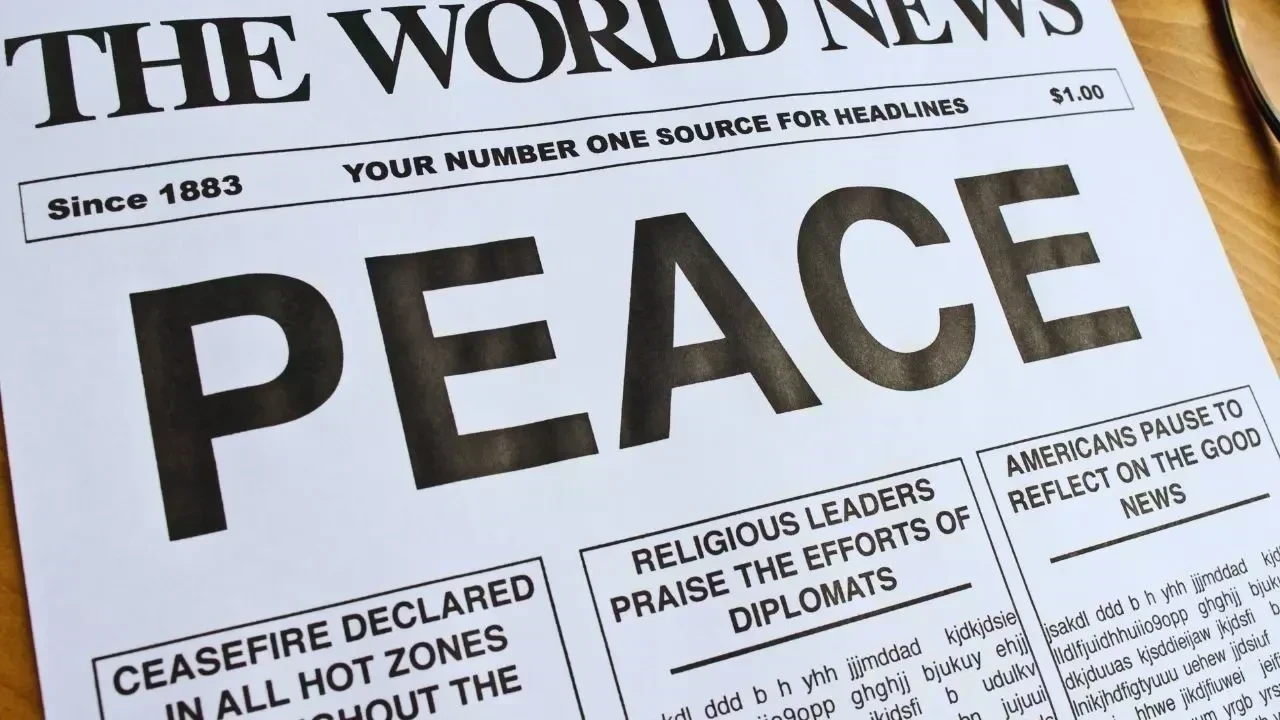
While wars make the headlines, peace is often negotiated quietly behind closed doors. It's shaped in private meetings and urgent calls between leaders, where even silence carries significant weight. The cacophony of war fades into the background as the quiet discussions of peace reshape the world.
In regions like West Asia and Eastern Europe, ceasefire talks are not merely a means to an end—they're pivotal in redefining global dynamics, reconfiguring alliances, and fostering shaky stability.
When talks commence, markets respond. Currencies fluctuate. Diplomatic relations change shape. Routes for refugees evolve. And for everyday individuals far removed from the conflict, the prices of groceries, air travel, fuel, and security policies gradually transform.
Peace is never isolated.
It resonates worldwide.
In the modern era, victory in war cannot be easily claimed. Even the most powerful militaries often find lasting peace elusive, turning negotiations into a critical tool rather than a signal of weakness.
Military engagement may dismantle structures.
While dialogue rebuilds them.
Negotiations establish frameworks for:
Control of borders
Sharing resources
Exchanging prisoners
Creating humanitarian corridors
Ensuring security
Rebuilding economies
Without conversation, wars spiral endlessly.
With it, they become chapters in history.
Assessing influence today is about who:
Is included at the negotiation table
Controls the narrative
Establishes compromises
Drafts agreements
Ensures adherence
True strength lies in the capacity to halt wars, not instigate them.
A ceasefire represents more than just a temporary halt in hostilities.
It sends a significant signal.
Market responses to ceasefires are immediate and potent:
Equities soar
Oil prices stabilize
Insurance risks diminish
Trade routes reopen
Currency fluctuations decrease
Conversely, a breakdown in negotiations leads to:
Exodus of investors
Surge in commodity prices
Tightened borders
Increased refugee movements
Escalation of military budgets
Peace initiatives mold economic landscapes quicker than central banks can react.
Conflicts are rarely contained within their borders.
Each war incites:
Population movements
Disruptions in food supply
Instability in fuel supply
Radical shifts in political ideology
Realignments in security
Peace agreements gradually reverse these effects but on a broad scale.
Ultimately, peace represents relief for the world at large.
Fuel and food remain the most sensitive commodities amid conflict.
Wars disrupt supply chains.
Emergence of peace revitalizes logistics.
Energy infrastructure often lies in conflict zones due to:
Oil fields near borders
Pipelines traversing unstable regions
Ports under military control
Increased insurance costs
Similarly, food supply is hampered by:
Damaged agricultural land
Closure of trade pathways
Shipping holdups
Currency challenges
Export restrictions
Negotiations reduce the risk premium on resources.
When hostilities decrease:
Prices stabilize.
A farmer from one nation can inadvertently feed a family elsewhere.
Yet, conflicts can sever such invisible links.
As negotiations commence:
Shipments can resume
Storage capacities increase
Trade confidence is restored
Price consistency returns
Political stability cultivates crops as much as the land itself.
In contemporary contexts, security encompasses:
Digital safety
Economic stability
Environmental considerations
Information transparency
Cyber defense
Modern negotiations now cover:
Protocols on cyber warfare
Collaboration on intelligence
Regulations on arms
Agreements on surveillance
Nuclear precautionary measures
Peace accords increasingly determine both the flow of information and the integrity of borders.
Military expenditures rise during conflicts.
Conversely, peace allows funds to be allocated toward:
Healthcare initiatives
Infrastructure projects
Educational systems
Job creation
Public welfare programs
Calm borders contribute to:
Reduction in weapons expenditures
Lower troop allocation
Diminished emergency financial support
Streamlined budget strategies
Peace offers significant economic benefits.
War creates enduring drain on finances.
Neutral entities often play a vital role in orchestrating peace.
Their contributions include:
Structuring discussions
Providing incentives
Enforcing pressure
Guaranteeing security
Overseeing reconstruction
Mediators may not triumph in battles.
But they pave the path to peace.
In heated discussions, adversaries often escalate their rhetoric.
Mediators transform discord into resolutions.
Without them, talks devolve into accusations.
Conflict inflates military budgets.
Meanwhile, peace reallocates resources to:
Healthcare systems
Infrastructure development
Educational enhancements
Employment opportunities
Public service
Stable borders result in:
Reduced military equipment acquisition
Decreased troop deployments
Lowered emergency funding
Enhanced fiscal management
Peace serves as a financial boon.
War embodies economic strife.
Diplomatic rhetoric can obscure the reality of suffering.
Negotiations often encompass:
Establishing safe zones
Creating relief routes
Facilitating aid distributions
Planning resettlement
Ensuring citizen protection
Yet behind these terms are:
Displaced households
Destroyed homes
Hungry children
Traumatized individuals
Peace reinstates dignity.
Not just reclaiming land.
Faith erodes when:
Discussions repeatedly fail
Leaders postpone resolutions
Violence resurfaces
Promises are broken
A belief takes root that force speaks more powerfully.
This mindset inadvertently prolongs conflicts far more than ideology.
Achieving peace demands:
Creativity
Endurance
Trust
Bravery
Without these elements, warfare becomes a lasting norm.
Negotiations are evolving beyond face-to-face meetings.
They now include:
Secured online platforms
Simulated scenarios
Data supported by AI
Monitoring via satellite
Verifications in cyberspace
Today's diplomacy unfolds in real-time.
No longer a matter of weeks.
But a matter of seconds.
Signing an agreement is only the first step.
Its implementation counts.
Verification involves:
On-ground witnesses
Satellite monitoring
Border oversight
Communication audits
Thorough investigations
Trust is rare.
Precision is paramount.
When lasting peace is realized:
Businesses flourish once more
Educational institutions reopen
Hospitals revive
Borders become more lenient
Tourism reemerges
Investment opportunities expand
Normalcy is a cause for celebration.
It may not be loud.
But its impact is undeniable.
Upcoming years will rely less on military might and more on:
Effective negotiation
Innovative diplomacy
Proactive conflict mitigation
Collaborative resource management
Political fortitude
Although warfare is primitive, establishing peace demands foresight.
Armed conflicts ignite quickly.
The pursuit of peace necessitates time.
Yet it is only peace that reshapes the narrative of history in a gentle manner.
Each ceasefire wields greater influence than a plethora of artillery.
Because bullets wreak havoc.
And words pave the way for recovery.
From today’s negotiation tables arise the borders, safety, and affluence of tomorrow.
When leaders converse, the globe listens.
And when the world pays attention…
The course of the future is altered.
DISCLAIMER
This article is designed for general information and educational purposes only. It does not signify political, legal, or strategic guidance. Readers should consult reliable international sources and specialists for comprehensive analysis and updates on global affairs.
Abu Dhabi Opens Two New Bridges to Cut Traffic by 60%
DMT launches two high-capacity bridges linking Al Reem Island to E‑12, reducing travel time by 15 mi

Family Wins “Family of the Year 2026” at Noor Al Quran Event in Ras Al Khaimah
A family honored at the Noor Al Quran initiative in Ras Al Khaimah for Quran memorization and strong
US Approves $16.5B Arms Deal Amid Iran War Escalation
US approves $16.5B arms sale to Gulf allies and $7B to UAE, boosting defence amid Iran tensions whil

UAE Busts Hezbollah-Iran Terror Network, Members Held
UAE authorities have broken a terror network linked to Hezbollah and Iran, arresting members accused

Swiatek Stunned by Linette in Miami Open Upset Shock
Iga Swiatek suffered a shocking defeat to Magda Linette at the Miami Open, marking her first opening

UAE Orphan Fund Raises AED 3.3 Billion in Ramadan Drive
UAE’s Mother of the Nation Orphan Fund raises AED 3.3B in Ramadan, boosting support for education, h

Ramadan in the UAE: Reflections on Humanity, Leadership, and Lasting Values
A heartfelt Ramadan reflection by Osama Regaah on UAE’s spirit of humility, unity, and leadership, a


Bank of Baroda Faces Abu Dhabi Legal Battle over NMC Collapse
Bank of Baroda’s involvement in Abu Dhabi litigation tied to the NMC Healthcare collapse raises repu

Top Museum Openings of 2026 Set to Transform Global Tourism
From Los Angeles to Abu Dhabi and Brussels, 2026 brings major museum launches—Lucas Museum, Guggenhe

UAE Tour Highlights UAE’s Strength in Hosting Global Sports Events
Abu Dhabi Sports Council says the successful UAE Tour reflects the UAE’s leading role in hosting maj
EU Seeks Clarity from US After Supreme Court IEEPA Ruling
European Commission urges full transparency from the US on steps after Supreme Court ruling, emphasi
SpaceX Launches 53 New Satellites for Expanding Starlink Network
SpaceX launches 53 Starlink satellites in two Falcon 9 missions, breaking reuse records and expandin

RTA Awards Contract for Phase II of Hessa Street Upgrade in Dubai
Phase II of Hessa Street Development to add bridges, tunnel, and upgraded intersections, doubling ca

UAE Gold Prices Today, Monday 16 February 2026: Dubai & Abu Dhabi Updated Rates
Gold prices in UAE on 16 Feb 2026 updated: 24K around AED 599.75/gm, 22K AED 555.25/gm, and 18K AED
Over 25 Ahmedabad Schools Receive Bomb Threat Email, Authorities Investigate
More than 25 schools in Ahmedabad evacuated after bomb threat emails mentioning Khalistan. Authoriti