Post by : Anis Karim
OpenAI has unveiled Prism, an innovative AI workspace tailored for scientific writing and collaboration. Dubbed an AI-native platform, Prism fundamentally transforms how researchers create, refine, and coordinate scientific documents like research papers and academic articles. Utilizing OpenAI's state-of-the-art GPT-5.2 model, it offers comprehensive reasoning capabilities alongside LaTeX integration, the recognized standard in academia. This pioneering tool is set to redefine scientific workflows by merging drafting, citation management, real-time teamwork, and AI support into a single platform.
Unlike conventional research tools that tackle specific components of the research process—like writing or citation—Prism pulls these essential functions into a unified cloud workspace, accessible from any location. This design aims to minimize the disruptions caused by switching between various platforms and manual formatting, which often inhibit progress in scientific writing. Initially available to anyone with a personal ChatGPT account and eventually accessible to institutional users through enterprise plans, Prism is offered free of charge with unlimited collaborators and projects, making it a resource for scientists at all career stages.
The realm of scientific research has long been marked by fragmentation. Many scholars report investing more time in managing citations and edits than making actual progress on their content. Crafting research manuscripts often requires juggling multiple tools, including version control systems and reference managers. Despite the presence of advanced tools, their disjointed nature heightens cognitive load and hampers efficiency for research teams.
Scientific articles go through several rounds of revisions, often involving multiple collaborators from various institutions and time zones. Tackling real-time co-editing, change tracking, and version management are prevalent issues. Additionally, creating intricate content such as equations or tables using conventional tools adds hours of formatting work for researchers facing tight deadlines. This backdrop has created a demand for AI-driven solutions like Prism that strive to simplify these core scientific workflow elements.
At its core, Prism is a cloud-based LaTeX workspace that effectively merges advanced AI with the familiar structure of scientific documents. LaTeX is widely embraced in STEM disciplines for its capability to manage equations, tables, and formatting intricacies, making it the preferred choice for academic writing. Prism embeds this environment within the cloud, overlaying powerful AI capabilities to understand the contextual flow of an active manuscript.
One of Prism's standout features is its AI-assisted drafting and revision capabilities. Utilizing GPT-5.2, the platform assists users with tasks such as summarizing sections, clarifying language, identifying citation needs, converting sketches into LaTeX code, and suggesting structural improvements. The AI also aids in exploring ideas, reasoning through complexities, and dynamically adjusting content based on user feedback.
Prism’s project-aware AI acknowledges the complete history of a document, including past drafts and revisions, leading to coherent suggestions and context-sensitive edits. For example, when enhancing a discussion section, the AI can refer back to earlier parts of the same manuscript rather than treating the section in isolation. This capability significantly cuts down on repetitive manual checks for consistency throughout the document.
A key feature of Prism is its support for unlimited collaborators, enabling research teams of any size to collaborate in real-time without limits or additional fees. This effectively addresses a major hurdle in collaborative research, as traditional models often restrict access and create version conflicts that complicate workflow. Within Prism, collaborators can view edits, comments, and annotations live, reducing misunderstandings and ensuring that all contributors are engaging with the latest version of the document simultaneously.
With unlimited projects and collaborators, research groups spanning institutions, disciplines, and locations can operate more flexibly. Graduate students, advisors, and peer reviewers can engage in the writing process without facing licensing limitations often found in paid platforms. By minimizing these obstacles, Prism aims to expand access to high-quality research tools and promote more inclusive collaboration.
LaTeX is esteemed for its precise formatting control and adept handling of complex mathematical expressions, establishing it as the gold standard for scientific formatting. The deep integration of LaTeX into Prism means researchers don’t require separate installations or offline editing systems. Prism automatically manages compilation, formatting, and previewing processes, benefitting from real-time document rendering without the delays or complexities of traditional LaTeX workflows.
In addition to basic LaTeX support, Prism features equation conversion, citation management, and automated error-checking, significantly lowering the manual workload. Instead of laboriously identifying formatting errors or broken references, the AI assists in locating and rectifying these concerns during the drafting phase. This integration upholds the rigor of LaTeX formatting while greatly enhancing user-friendliness for researchers who may lack extensive LaTeX knowledge.
Though Prism's primary focus is on drafting and formatting scientific content, its AI-assisted reasoning capabilities extend its utility beyond simple text editing. Researchers can interact with the platform to clarify arguments, sharpen hypotheses, validate logical coherence, or search and integrate relevant literature. Unlike standard text editors, Prism’s AI comprehends the semantic context of scientific claims and offers suggestions anchored in the broader narrative of a paper.
The platform's ability to conduct literature searches directly within the workspace simplifies the often arduous task of finding and formatting references. This feature eliminates the tedious need to switch tools. Furthermore, Prism’s reasoning capabilities help scientists explore concepts and test relationships—such as comparing models or evaluating the logical consistency between hypotheses and conclusions.
OpenAI has made Prism accessible to students, independent researchers, and seasoned scientists alike, requiring only a ChatGPT personal account for access. This reduces the barriers linked to paywalls, subscription fees, and institutional licenses. With its early access offer, Prism has emerged as a potential equalizer in academic research, granting smaller or underfunded teams access to powerful writing and collaboration tools that were once mainly available to those with financial resources.
The organization has also announced forthcoming organizational access—including options for businesses, enterprise, and education plans—that will enable broader institutional adoption of Prism's features. By supporting both individual creativity and collaboration among larger teams, the platform aims to cater to the full spectrum of academic users and research professionals.
Prism arrives at a time when AI-driven tools are increasingly shaping scientific inquiry, publication timings, and interdisciplinary cooperation. As global research output surges, the need for tools that streamline manuscript preparation and teamwork has become critical. Academic publishers, research organizations, and individual scientists may all benefit from Prism’s consolidated workspace, particularly as it alleviates the need to navigate multiple software and data management systems.
In addition to drafting manuscripts, Prism’s reasoning capabilities may accelerate iterative thinking and refining of hypotheses, potentially shortening the time needed from experimentation to publication. By providing a platform that cuts redundant administrative tasks, scientists can invest more energy into key intellectual challenges, conceptual exploration, and innovation.
Disruptive tools like Prism inevitably face scrutiny. Some critics argue that while Prism excels in writing and formatting assistance, it cannot supplant the deeper, domain-specific analytical processes essential to scientific discovery. Researchers still need to conduct experiments, analyze data, and apply critical judgment to their findings—areas where AI tools assist but don't independently operate.
Looking forward, subsequent iterations of Prism may integrate advanced capabilities such as automatic data visualization, deeper semantic searches across scientific literature databases, or connections to experimental design tools. These prospects hint at ongoing evolution toward more all-encompassing research platforms that support the complete lifecycle of scientific inquiry, beyond mere drafting and formatting.
OpenAI’s launch of Prism signifies a milestone in the integration of artificial intelligence into scientific research workflows. By offering a cohesive environment for writing, collaboration, formatting, citation management, and advanced AI support—all driven by the power of GPT-5.2—Prism presents a transformative alternative to conventional research tools. Its free access and unlimited collaboration model democratize access, potentially empowering a diverse range of researchers worldwide to make contributions to scientific advancement.
Through Prism, OpenAI is not merely releasing a tool; it’s redefining how scientific ideas are documented, polished, and disseminated. As its utilization increases, Prism is likely to influence the speed of scientific writing, collaboration across disciplines, and innovation in various fields.
Disclaimer: This article is based on current information from public sources and official announcements at the time of writing. It is for informational purposes only and does not serve as technical or professional advice.

Family Wins “Family of the Year 2026” at Noor Al Quran Event in Ras Al Khaimah
A family honored at the Noor Al Quran initiative in Ras Al Khaimah for Quran memorization and strong

US Approves $16.5B Arms Deal Amid Iran War Escalation
US approves $16.5B arms sale to Gulf allies and $7B to UAE, boosting defence amid Iran tensions whil

UAE Busts Hezbollah-Iran Terror Network, Members Held
UAE authorities have broken a terror network linked to Hezbollah and Iran, arresting members accused

Swiatek Stunned by Linette in Miami Open Upset Shock
Iga Swiatek suffered a shocking defeat to Magda Linette at the Miami Open, marking her first opening

UAE Orphan Fund Raises AED 3.3 Billion in Ramadan Drive
UAE’s Mother of the Nation Orphan Fund raises AED 3.3B in Ramadan, boosting support for education, h

Ramadan in the UAE: Reflections on Humanity, Leadership, and Lasting Values
A heartfelt Ramadan reflection by Osama Regaah on UAE’s spirit of humility, unity, and leadership, a

Dhurandhar 2 Opens Big, Crosses ₹100 Cr on Day 1
Ranveer Singh starrer Dhurandhar 2 earns ₹102 Cr on day one despite delays, beating past Bollywood o


Bank of Baroda Faces Abu Dhabi Legal Battle over NMC Collapse
Bank of Baroda’s involvement in Abu Dhabi litigation tied to the NMC Healthcare collapse raises repu
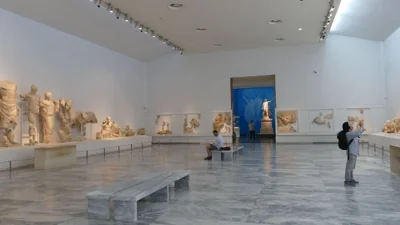
Top Museum Openings of 2026 Set to Transform Global Tourism
From Los Angeles to Abu Dhabi and Brussels, 2026 brings major museum launches—Lucas Museum, Guggenhe

UAE Tour Highlights UAE’s Strength in Hosting Global Sports Events
Abu Dhabi Sports Council says the successful UAE Tour reflects the UAE’s leading role in hosting maj

EU Seeks Clarity from US After Supreme Court IEEPA Ruling
European Commission urges full transparency from the US on steps after Supreme Court ruling, emphasi
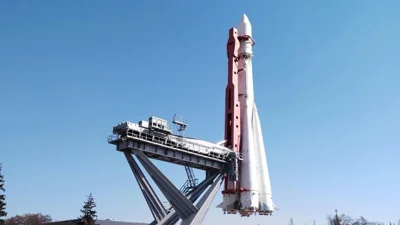
SpaceX Launches 53 New Satellites for Expanding Starlink Network
SpaceX launches 53 Starlink satellites in two Falcon 9 missions, breaking reuse records and expandin

RTA Awards Contract for Phase II of Hessa Street Upgrade in Dubai
Phase II of Hessa Street Development to add bridges, tunnel, and upgraded intersections, doubling ca

UAE Gold Prices Today, Monday 16 February 2026: Dubai & Abu Dhabi Updated Rates
Gold prices in UAE on 16 Feb 2026 updated: 24K around AED 599.75/gm, 22K AED 555.25/gm, and 18K AED

Over 25 Ahmedabad Schools Receive Bomb Threat Email, Authorities Investigate
More than 25 schools in Ahmedabad evacuated after bomb threat emails mentioning Khalistan. Authoriti