Post by : Anis Karim
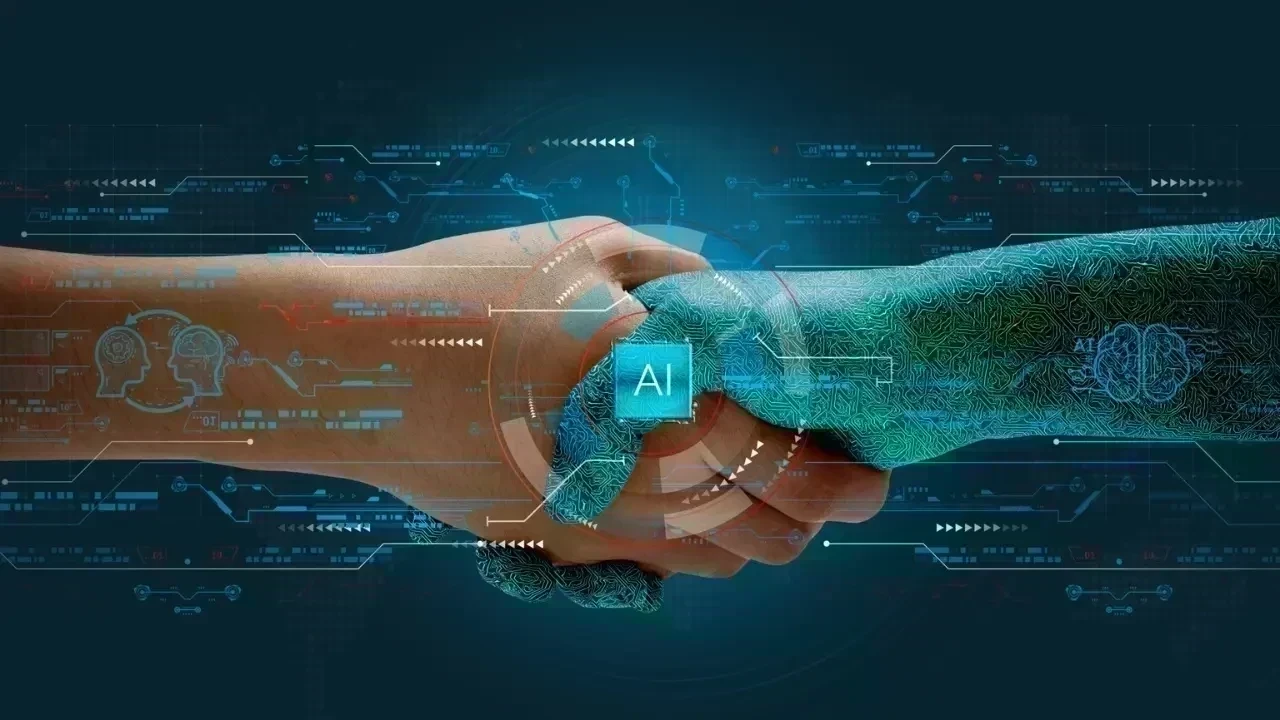
As artificial intelligence (AI) advances, it is fundamentally changing workplace dynamics. No longer a mere tool for automating tasks, AI is transforming into an essential collaborator within professional environments. Reports from key industry organizations, like Nasscom and Indeed, suggest that by 2027, human-AI partnerships will not just influence work; they will reshape it entirely. This evolution is already redefining roles, workflows, hiring practices, and skill requirements across various sectors, urging companies and individuals to rethink operational structures and performance metrics.
Traditionally, AI was viewed as a standalone tool—supporting tasks like data analysis and automation but remaining separate from human workflows. That perspective is changing dramatically. New research indicates that AI is set to be integrated into daily operations, allowing humans and machines to work together to achieve results that neither could accomplish alone.
In this collaborative environment, AI will manage routine tasks, enabling humans to concentrate on complex decision-making, creativity, and strategic oversight.
According to new insights from global research bodies, an impressive 97 percent of HR leaders anticipate that by 2027, AI will not merely coexist with human efforts but will be fully integrated into workflows across industries—from software and marketing to customer service and business processes.
In essence, job roles will be transformed rather than simply augmented with AI. Companies will begin seeing AI as a collaborator that amplifies creativity and productivity rather than as a potential replacement.
Current data shows that 20–40 percent of work in tech sectors is already performed with substantial AI support. In software development alone, up to 45 percent of coding tasks are aided or executed by AI technologies.
These AI capabilities—ranging from code generation and quality assurance to data processing—are allowing human workers to focus on strategic, innovative tasks that require human intuition and creativity.
The focus of job performance is transitioning from merely executing tasks to delivering tangible outcomes. In a collaborative workspace, employees will be assessed based on the value they create through innovative thinking and oversight, while AI manages data-heavy tasks.
While AI delivers speed and accuracy, human workers will need to utilize emotional intelligence, ethical reasoning, and creative problem-solving—attributes that machines cannot easily replicate.
Despite advancements in AI capabilities, the necessity for human oversight in validating and refining AI outputs remains critical. Over half of HR leaders identify the need for human intervention in order to maintain quality and ethical standards in impactful business decisions.
This emphasizes that human jobs will evolve rather than vanish, enhancing roles focused on strategic leadership, system architecture, and creative problem-solving—areas where nuanced judgment is vital.
As AI becomes entrenched in workflows, hiring criteria are evolving. Traditional measures like degrees and years of experience are increasingly being replaced by skills-based assessments, where demonstrated capability takes precedence over formal qualifications.
Currently, 85 percent of hiring managers prioritize skills and capabilities over traditional educational credentials, acknowledging the need for hybrid skill sets that mesh technical abilities with softer skills like communication and adaptability.
Upskilling and reskilling are emerging as vital necessities in the workplace. As AI undertakes routine tasks, human workers must develop skills that AI cannot replicate. Many organizations are launching internal reskilling initiatives aimed at preparing their workforce for collaborative roles between humans and AI, focusing on critical thinking, data literacy, and AI oversight.
The technology sector is taking the lead in AI integration. Presently, AI assists with more than 40 percent of coding jobs, optimizing efficiency and altering the skillset required for developers. Instead of solely writing code, programmers now find themselves guiding AI systems and evaluating their outcomes.
Critical tasks such as user experience design and system architecture are becoming central to human roles as AI handles more predictable functions.
In sectors like finance and law, where ethical considerations are paramount, AI can analyze large datasets, but human insight remains indispensable. Professionals are necessary to interpret AI findings within ethical boundaries and apply them to business strategies or client relations.
Roles focused on client engagement—like consulting and relationship management—will increasingly blend AI insights with uniquely human skills.
In more traditional sectors such as supply chain, marketing, and administration, AI is becoming a fixture in everyday operations. Predictive analytics and automated systems are streamlining processes, reducing manual tasks, and expediting decision-making. Quality control, interaction analysis, and trend forecasting—previously labor-intensive tasks—are increasingly becoming AI-enhanced functions.
The combination of human creativity and AI efficiency promises to increase productivity significantly. AI enhances data handling and trend recognition, while humans contribute contextual understanding and moral judgment. This collaboration can lead to accelerated innovation and improved decision-making across functions.
Rather than replacing jobs, AI can transform them. By relegating repetitive tasks to machines, employees will have more bandwidth for strategic and creative endeavors. This shift has the potential to improve job satisfaction and personal growth, provided that workers receive the necessary training.
Despite AI's bright prospects, organizations face meaningful challenges, particularly regarding skills gaps. Many employees report a lack of training for effectively leveraging AI tools. Mismatched readiness for AI integration could hinder progress unless a concerted effort to enhance skills is made.
Additionally, ethical concerns like data privacy and fairness must be addressed as AI takes on sensitive decisions. Effective human-AI partnerships will rely on solid frameworks to promote accountability and trust.
Continuous learning must become a priority for all. Employers and educators should focus on creating pathways that foster AI literacy, adaptability, and ethical understanding. A commitment to lifelong learning will be vital for thriving in a landscape where humans and AI work hand in hand.
Organizations must reevaluate job designs to facilitate AI's role in handling operational tasks, leaving strategy and creativity in human hands. Job redesign should aim to blend automation efficiencies with human value, ensuring roles are both productive and fulfilling.
For collaboration to succeed, trust in AI systems must be cultivated. Governing policies must be transparent, ethical guidelines clear, and communication inclusive. AI should be recognized as a partner, particularly supported by regulations that ensure privacy, fairness, and accountability.
By 2027, the landscape of work will not simply be influenced by AI; it will be transformed through deep collaboration between humans and machines. The future workplace will fully integrate technology into daily activities, reshaping roles and expectations. Human workers will excel in areas requiring judgment and innovation, while AI will manage tasks demanding precision and speed. Together, they will reinvent productivity, innovation, and the essence of work itself, leading us into a new era of opportunity and growth.
Disclaimer:
This article aggregates existing industry analyses concerning human-AI collaboration and the evolving work landscape. It serves informational purposes and should not be taken as professional advice. Developments in AI integration and work methodologies are subject to rapid changes and may vary by industry.

Family Wins “Family of the Year 2026” at Noor Al Quran Event in Ras Al Khaimah
A family honored at the Noor Al Quran initiative in Ras Al Khaimah for Quran memorization and strong

US Approves $16.5B Arms Deal Amid Iran War Escalation
US approves $16.5B arms sale to Gulf allies and $7B to UAE, boosting defence amid Iran tensions whil

UAE Busts Hezbollah-Iran Terror Network, Members Held
UAE authorities have broken a terror network linked to Hezbollah and Iran, arresting members accused

Swiatek Stunned by Linette in Miami Open Upset Shock
Iga Swiatek suffered a shocking defeat to Magda Linette at the Miami Open, marking her first opening

UAE Orphan Fund Raises AED 3.3 Billion in Ramadan Drive
UAE’s Mother of the Nation Orphan Fund raises AED 3.3B in Ramadan, boosting support for education, h

Ramadan in the UAE: Reflections on Humanity, Leadership, and Lasting Values
A heartfelt Ramadan reflection by Osama Regaah on UAE’s spirit of humility, unity, and leadership, a

Dhurandhar 2 Opens Big, Crosses ₹100 Cr on Day 1
Ranveer Singh starrer Dhurandhar 2 earns ₹102 Cr on day one despite delays, beating past Bollywood o


Bank of Baroda Faces Abu Dhabi Legal Battle over NMC Collapse
Bank of Baroda’s involvement in Abu Dhabi litigation tied to the NMC Healthcare collapse raises repu

Top Museum Openings of 2026 Set to Transform Global Tourism
From Los Angeles to Abu Dhabi and Brussels, 2026 brings major museum launches—Lucas Museum, Guggenhe

UAE Tour Highlights UAE’s Strength in Hosting Global Sports Events
Abu Dhabi Sports Council says the successful UAE Tour reflects the UAE’s leading role in hosting maj

EU Seeks Clarity from US After Supreme Court IEEPA Ruling
European Commission urges full transparency from the US on steps after Supreme Court ruling, emphasi
SpaceX Launches 53 New Satellites for Expanding Starlink Network
SpaceX launches 53 Starlink satellites in two Falcon 9 missions, breaking reuse records and expandin

RTA Awards Contract for Phase II of Hessa Street Upgrade in Dubai
Phase II of Hessa Street Development to add bridges, tunnel, and upgraded intersections, doubling ca

UAE Gold Prices Today, Monday 16 February 2026: Dubai & Abu Dhabi Updated Rates
Gold prices in UAE on 16 Feb 2026 updated: 24K around AED 599.75/gm, 22K AED 555.25/gm, and 18K AED

Over 25 Ahmedabad Schools Receive Bomb Threat Email, Authorities Investigate
More than 25 schools in Ahmedabad evacuated after bomb threat emails mentioning Khalistan. Authoriti