Post by : Anis Karim
Autonomous vehicle (AV) development has entered a phase of visible acceleration: this week brought several major test-deployments, multi-region collaborations, and regulatory shifts that indicate the industry is moving from proof-of-concept toward real-world scale. Key highlights include:
A prominent mobility provider announced new deployments of shared Level-4 autonomous shuttles in U.S. cities, marking the next stage of public-road testing in mixed traffic.
A global technology group launched a dedicated autonomous mobility arm in Japan, targeting deployment of Level-4 services across multiple locations this fiscal year.
A joint venture between Middle-East and South-Korean companies formed to speed up AV systems for the United Arab Emirates, signalling cross-border cooperation in autonomy.
Together these developments illustrate that AVs are no longer just technology demos; they are entering operational phases supported by backing, infrastructure and regulation.
One of the major updates this week comes from a deployment initiative in Florida (Altamonte Springs) and Georgia (Atlanta) involving shared autonomous shuttles. These vehicles use Level-4 autonomous driving software integrated with advanced sensor suites, and will operate on fixed routes in public traffic. The significance: this is a move beyond isolated test zones or private tracks, into mixed-road, real-world conditions.
In Japan, a major tech group has launched a new subsidiary focused entirely on autonomous mobility, with targets to deploy Level-4 services in dozens of locations by the end of fiscal year. This includes demonstrations, infrastructure rollout, public-road tests and regulatory alignment under a revised road-traffic act. The value: Japan’s testing ecosystem will grow rapidly, and Japanese cities will serve as key global proof points.
Another important move: a new joint venture between a South Korean AV firm and a Middle-East mobility company aims to deploy autonomous systems in the UAE. This marks a shift toward globalisation of AV testing: technology from one region, deployment in another, regulatory frameworks evolving accordingly. The UAE becomes an emerging hub for AV tests linked to smart-city ambitions.
These moves reflect a transition from closed-environment testing to real-world operational deployment. When shuttles operate in mixed traffic or vehicles test in new countries, companies demonstrate maturity. That maturity helps unlock commercial viability—and regulatory and infrastructure support.
In the U.S., Japan and Middle-East regions, regulatory frameworks are evolving to accommodate AVs. For example, Japan is permitting Level-4 driving under specific conditions. Infrastructure (mapping, 5G/V2X, sensor networks) is being rolled out alongside. That means the ecosystem is aligning—not only the vehicles.
Deployments across diverse geographies (U.S., Japan, UAE) show that AV testing isn’t limited to favourable conditions anymore (e.g., sunny US cities). Mixed traffic, variable weather, complex road conditions are being incorporated. The path to scale becomes more credible.
Many of these tests involve public-shuttle services, shared mobility, or urban transport routes—rather than purely passenger cars. That indicates autonomous vehicles will play a role in public mobility systems and not only ride-hail or premium vehicles. The mobility model is evolving.
In the U.S., companies are placing AV services in urban and suburban settings, testing real-world public-road conditions, and planning gradual expansion. The U.S. regulatory environment remains fragmented (states and cities), but these test moves accelerate trust and data acquisition for future commercial services.
Japan offers a unique context: dense cities, complex traffic, mixed human-machine road interaction, and strong government support. The ability to test Level-4 services here will yield learnings relevant to many Asian markets. For India, Southeast Asia and other dense urban settings, the Japanese test outcomes may provide strong templates.
In the Middle East, smart-city programmes, favorable regulation, and relative climate consistency (though unique weather conditions too: heat, sand) make the region attractive for AV testing. The joint-venture moves show global technology supply chains converging.
While testing advances are significant, handling rare or unpredictable situations remains difficult for AVs. Mixed pedestrian, cycling, animal or object behaviour (especially in non-U.S. contexts) continues to pose risk. Real-world testing in varied geographies is vital.
Deployments will succeed only if regulators and the public see safe, transparent operations. Incidents in earlier phases (unexpected vehicle behaviour, sensor failure) still cause concern. Companies must maintain strong safety, audit, transparency and incident-reporting processes.
High-fidelity maps, V2X communication, high-bandwidth networks, sensor redundancy—and maintenance of these at scale—remain significant cost and logistical challenges. Urban deployment in developing-economy contexts may face infrastructure gaps.
Initial deployments are expensive. For AVs to become mainstream, cost per vehicle, cost per mile must fall, maintenance and operations must integrate with mobility systems. Testing needs to convert into business models.
AVs tested in U.S. suburbs or controlled zones still face different conditions in cities like New Delhi, Jakarta, or even in less-structured traffic environments. The scaling from U.S./Japan markets to global diversity remains a challenge.
Wider deployment announcements: More cities will likely be added to the “test list” for new autonomous mobility services.
Regulatory approvals: Governments releasing frameworks or licences for commercial autonomous operations will be a strong signal.
Public-shuttle and fleet-models: Shared AV shuttles in urban transport systems will become more visible.
Cross-border technology transfer: Partnerships between countries, regions and vendors will increase.
Data transparency and safety metrics: As operations scale, companies will need to publish safety, performance and incident data to build trust.
India and South-Asia context: Countries like India will begin to host more AV tests or pilot zones, especially given urban growth and demand for smart mobility solutions.
For you as a writer covering technology and mobility, this week’s advances present several angles:
Feature story: Which city or region is leading, and why? What conditions enabled deployment this week?
Technical deep-dive: What Level of autonomy is each service using (e.g., Level-4)? What sensor stack and infrastructure make the test feasible?
Regulation and policy: How are laws adapting—e.g., Japan’s modified traffic act, U.S. state-level AV regulation.
Regional perspective: For Asia-Pacific readers, what do Japanese or UAE AV tests mean for India’s mobility future?
Human interest: How will local communities, employment, transport systems be affected? What do residents say about sharing roads with driverless vehicles?
Business model lens: Which companies are gaining advantage? How will fleet-shuttle services compete with ride-hail, public transit or delivery?
By combining global developments with local relevance, you’ll deliver stories that are current, credible and compelling for your audience at DXBNews Network and Newsiblke Asia.
This week marks a significant step forward in the autonomous vehicle story. From U.S. urban shuttles moving into shared public operations, to Japanese Level-4 mobility services scaling across locations, to Middle-East and Korean joint ventures bridging technology and deployment—autonomous testing is gaining real-world traction.
Yet, the journey from test to mainstream adoption is still complex. Safety, regulation, infrastructure, cost and public acceptance remain major variables. But what’s clear is that the era of quiet lab testing is being replaced by visible public road experiments—across cities, globally. For mobility watchers, policy makers, tech analysts and everyday citizens alike, that means this is the moment to pay attention.

Family Wins “Family of the Year 2026” at Noor Al Quran Event in Ras Al Khaimah
A family honored at the Noor Al Quran initiative in Ras Al Khaimah for Quran memorization and strong

US Approves $16.5B Arms Deal Amid Iran War Escalation
US approves $16.5B arms sale to Gulf allies and $7B to UAE, boosting defence amid Iran tensions whil

UAE Busts Hezbollah-Iran Terror Network, Members Held
UAE authorities have broken a terror network linked to Hezbollah and Iran, arresting members accused

Swiatek Stunned by Linette in Miami Open Upset Shock
Iga Swiatek suffered a shocking defeat to Magda Linette at the Miami Open, marking her first opening

UAE Orphan Fund Raises AED 3.3 Billion in Ramadan Drive
UAE’s Mother of the Nation Orphan Fund raises AED 3.3B in Ramadan, boosting support for education, h

Ramadan in the UAE: Reflections on Humanity, Leadership, and Lasting Values
A heartfelt Ramadan reflection by Osama Regaah on UAE’s spirit of humility, unity, and leadership, a

Dhurandhar 2 Opens Big, Crosses ₹100 Cr on Day 1
Ranveer Singh starrer Dhurandhar 2 earns ₹102 Cr on day one despite delays, beating past Bollywood o


Bank of Baroda Faces Abu Dhabi Legal Battle over NMC Collapse
Bank of Baroda’s involvement in Abu Dhabi litigation tied to the NMC Healthcare collapse raises repu

Top Museum Openings of 2026 Set to Transform Global Tourism
From Los Angeles to Abu Dhabi and Brussels, 2026 brings major museum launches—Lucas Museum, Guggenhe

UAE Tour Highlights UAE’s Strength in Hosting Global Sports Events
Abu Dhabi Sports Council says the successful UAE Tour reflects the UAE’s leading role in hosting maj

EU Seeks Clarity from US After Supreme Court IEEPA Ruling
European Commission urges full transparency from the US on steps after Supreme Court ruling, emphasi
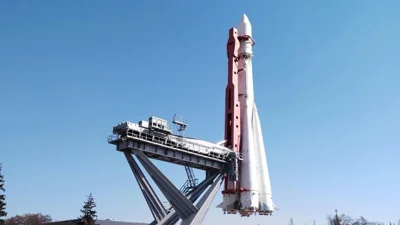
SpaceX Launches 53 New Satellites for Expanding Starlink Network
SpaceX launches 53 Starlink satellites in two Falcon 9 missions, breaking reuse records and expandin

RTA Awards Contract for Phase II of Hessa Street Upgrade in Dubai
Phase II of Hessa Street Development to add bridges, tunnel, and upgraded intersections, doubling ca

UAE Gold Prices Today, Monday 16 February 2026: Dubai & Abu Dhabi Updated Rates
Gold prices in UAE on 16 Feb 2026 updated: 24K around AED 599.75/gm, 22K AED 555.25/gm, and 18K AED

Over 25 Ahmedabad Schools Receive Bomb Threat Email, Authorities Investigate
More than 25 schools in Ahmedabad evacuated after bomb threat emails mentioning Khalistan. Authoriti