Post by : Bianca Qureshi
Photo: WAM
NASA has discovered a brand-new planet just 154 light-years away from Earth. This planet is called TOI‑1846 b, and it's being called a “Super-Earth.” That’s a special name scientists use for planets that are larger than Earth but smaller than gas giants like Neptune. What’s even more interesting is that this planet is giving off a strange and repeating signal—a flicker of light that shows up regularly. This has caught the attention of scientists all over the world.
Stay informed with the latest news. Follow DXB News Network on WhatsApp Channel
What Is a “Super-Earth”?
A Super-Earth is a planet that’s larger than Earth but not as big as planets like Neptune or Jupiter. It’s not just about size, though. These planets are often rocky like Earth and might even have water, an atmosphere, or other Earth-like features. However, Super-Earths are still very different from our home.
TOI-1846 b is about twice as wide as Earth and about four times as heavy. That makes it too big to be a regular rocky planet, but too small to be a giant gas ball. So it sits in what scientists call the “radius gap”—a rare size range between small rocky planets and big gas planets.
Where Did NASA Find It?
NASA found TOI‑1846 b in a part of the night sky known as the Lyra constellation, which you can see from the Northern Hemisphere. Every year around March, a small flicker of light would appear from a distant star. NASA’s TESS telescope (Transiting Exoplanet Survey Satellite) picked up this flicker.
TESS watches the sky closely and takes pictures every 30 minutes. It looks for tiny dips in the light from stars. These dips usually happen when a planet passes in front of a star and blocks some of its light—this is called a transit.
That’s how TESS found TOI‑1846 b. Each time the planet passed in front of its star, a little bit of the star’s light dimmed. These dimmings happened on a regular pattern, which helped scientists know that it was indeed a planet.
Who Helped Confirm the Discovery?
After TESS spotted the strange light flickers, a team of scientists around the world worked together to confirm it was a planet. Abderahmane Soubkiou and his team at the Oukaimeden Observatory in Morocco played a big part. They worked with other experts from four different continents to make sure this wasn’t just a one-time event or a mistake.
Soubkiou said:
“We have validated TOI‑1846 b using TESS and multicolor ground‑based photometric data, high‑resolution imaging, and spectroscopic observations.”
This means they used several tools and tests to check the planet’s size, orbit, and features. They didn’t rely on just one telescope—they used ground-based telescopes, high-resolution cameras, and detailed images to double-check everything.
The Planet’s Orbit and Temperature
TOI‑1846 b moves around its star very quickly. It takes less than four days to make a full circle around its star. That’s extremely fast compared to Earth, which takes 365 days to orbit the Sun.
The planet’s surface temperature is extremely hot—about 300 degrees Celsius (or 600 degrees Fahrenheit). That’s way hotter than boiling water! So at first glance, it seems impossible for life or even water to exist there.
Could There Still Be Water?
Even though it’s very hot, scientists believe water might still be present on this planet. Why? Because TOI‑1846 b might be tidally locked.
A tidally locked planet always shows the same side to its star—just like how the Moon always shows the same side to Earth. That means one side is always facing the star and is super hot, while the other side is always in darkness and is much cooler.
So, while one side may be burning hot, the dark side could be cool enough for water to exist, maybe as ice or even a shallow ocean. Some scientists think the planet might have a thin atmosphere and even a layer of ice under it. However, more research is needed to confirm this.
What Tools Will Help Study the Planet Further?
NASA and other scientists are now planning to study TOI‑1846 b more closely using advanced instruments.
1. MAROON‑X on the Gemini North Telescope in Hawai‘i
This tool will help confirm the planet’s mass (how heavy it is) and will also look for any other nearby planets.
2. James Webb Space Telescope (JWST)
This is one of the most powerful space telescopes ever made. It cost around $10 billion and is already discovering new planets. Scientists want to use infrared light with JWST to study the atmosphere of TOI‑1846 b. That might help them find out what gases are there—like oxygen, carbon dioxide, or water vapor.
Could There Be Life on TOI‑1846 b?
Right now, scientists think life is unlikely on this planet. The temperatures are very high, and we still don’t know enough about its atmosphere. Life as we know it needs water, and even if there is water, the extreme conditions may make it hard for life to survive.
But the planet is still very special. It’s in a rare size category, it’s giving off repeating light signals, and it might even have hidden water. All of this makes it worth studying more in the future.
Why Is This Discovery Important?
This discovery is important because it shows us how much more there is to learn about the universe. Planets like TOI‑1846 b help scientists understand how different kinds of planets form and how they behave. It also shows the power of teamwork—scientists from all over the world worked together to confirm this discovery.
The fact that we’re finding planets just 154 light-years away that could have water or atmospheres is exciting. It means that the universe may be filled with many more such planets, some of which could even support life in the future.
A Big Step in a Long Journey
The discovery of TOI‑1846 b is just one of many exciting steps in the journey to understand our universe. While life on this planet may not be likely, the tools and teamwork used to discover it show how far we’ve come in space exploration.
From small flickers of light to huge telescopes in space, scientists are using every method they can to learn what’s out there. And TOI‑1846 b proves that the cosmos still holds many secrets—just waiting to be uncovered.

Abu Dhabi Jiu-Jitsu Pro Announces Barcelona International
The Abu Dhabi Jiu-Jitsu Pro hosts Barcelona Championship, featuring top international athletes, mult

Dubai Launches Driverless Taxis with Baidu Apollo Go App
Dubai Taxi Company, in partnership with Baidu Apollo Go, launches commercial driverless taxis, marki

Tragic Shooting Claims Life of 7-Month-Old in Brooklyn
A 7-month-old girl lost her life in Brooklyn due to stray gunfire while in her stroller. Authorities

UAE Strengthens Global Maritime Role at IMO Session
UAE highlights maritime security, crew safety, and innovation at IMO session, proposing key reforms
ADNOC Reviews Crisis Plans Amid Regional Security Threats
Abu Dhabi Crown Prince reviews ADNOC’s crisis plans, ensuring energy supply continuity, staff safety

ADNOC wins 14 top honors at Oil & Gas Awards 2026
ADNOC bags 14 awards at Oil & Gas Middle East Awards 2026, showcasing excellence in innovation, sust

Apple’s 50-Year Journey: From Garage Startup to Giant
Apple marks 50 years from its humble garage beginnings to a $3.7 trillion tech giant, driven by inno

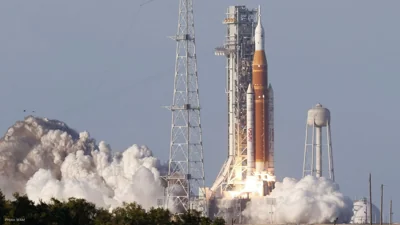
NASA Launches Artemis II Crew for 10-Day Lunar Mission
NASA launches Artemis II with four astronauts for a 10-day Moon mission, marking the first crewed lu
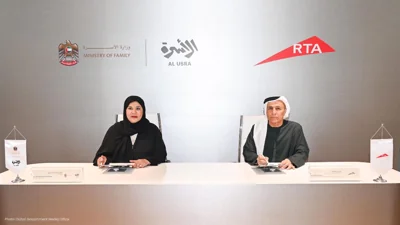
Dubai RTA, Ministry Partner for Family First Programme
Dubai RTA and Ministry of Family partner to enhance transport, urban spaces, and services under Fami

Bank of Baroda Faces Abu Dhabi Legal Battle over NMC Collapse
Bank of Baroda’s involvement in Abu Dhabi litigation tied to the NMC Healthcare collapse raises repu
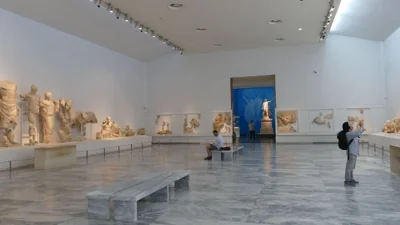
Top Museum Openings of 2026 Set to Transform Global Tourism
From Los Angeles to Abu Dhabi and Brussels, 2026 brings major museum launches—Lucas Museum, Guggenhe

UAE Tour Highlights UAE’s Strength in Hosting Global Sports Events
Abu Dhabi Sports Council says the successful UAE Tour reflects the UAE’s leading role in hosting maj

EU Seeks Clarity from US After Supreme Court IEEPA Ruling
European Commission urges full transparency from the US on steps after Supreme Court ruling, emphasi
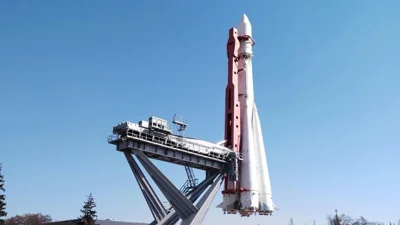
SpaceX Launches 53 New Satellites for Expanding Starlink Network
SpaceX launches 53 Starlink satellites in two Falcon 9 missions, breaking reuse records and expandin

RTA Awards Contract for Phase II of Hessa Street Upgrade in Dubai
Phase II of Hessa Street Development to add bridges, tunnel, and upgraded intersections, doubling ca