Post by : Anis Karim
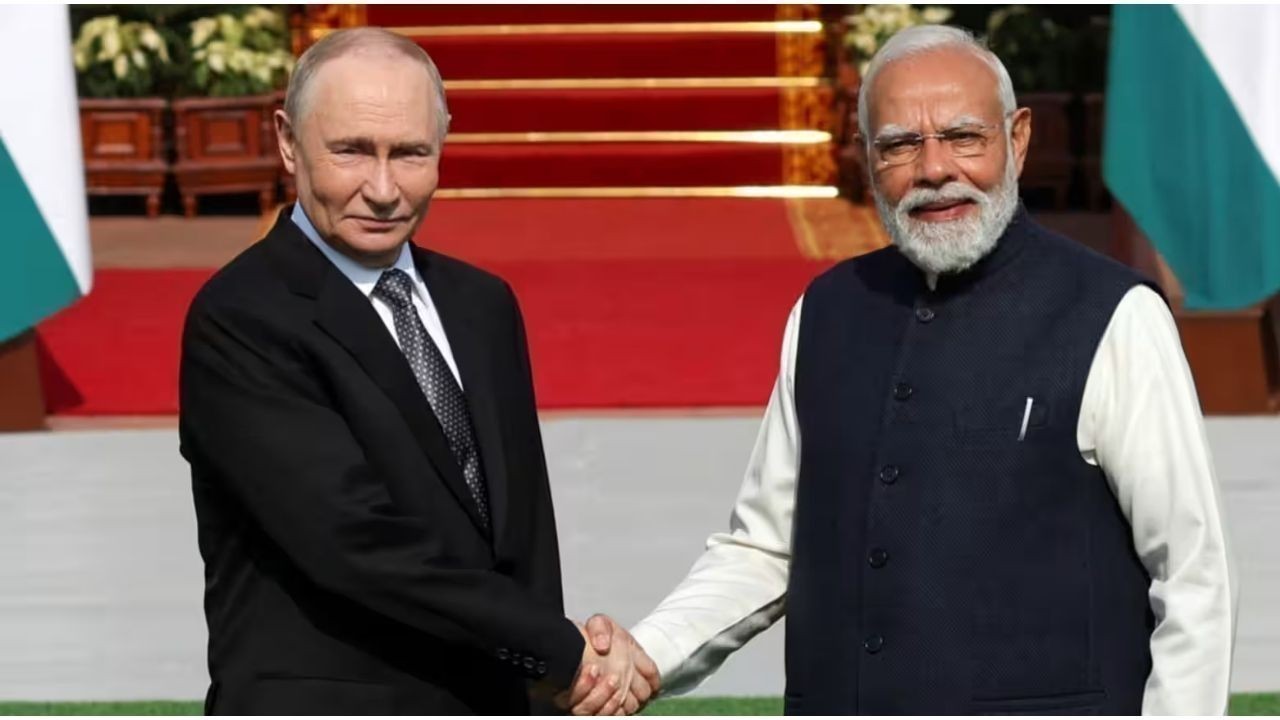
The recent meeting between Prime Minister Narendra Modi and President Vladimir Putin has drawn global attention, not only in political circles but also among business owners, entrepreneurs, and workers across India. While such high-level bilateral engagements typically generate headlines focused on diplomacy and defense cooperation, this round of discussions carries deeper domestic implications. The emerging agreements point toward significant changes in how India sources technology, builds industrial capacity, and strengthens its role in global manufacturing networks.
These developments arrive at a time when India is consolidating its position as a growing economic power. With initiatives encouraging local production, technological independence, and job creation, India has been seeking partnerships that offer both strategic and practical advantages. Russia, navigating its own shifting economic alliances, sees value in expanding industrial cooperation with India. Together, the countries have outlined a framework that could directly influence the lives of millions of workers and entrepreneurs.
High-level international agreements often feel distant to ordinary people. However, the Modi–Putin partnership is uniquely relevant because it touches areas like manufacturing, energy, defense production, and technology transfer — all of which have a direct ripple effect on employment, skill development, and regional economic growth.
Whether someone is working in a factory, running a small business, studying engineering, or seeking new career opportunities, the agreements set the foundation for expanded industrial activity. This means more plants, more production lines, more training centers, and in many cases, better wages driven by skill-intensive jobs.
One of the most prominent areas of India–Russia cooperation has traditionally been defense. What has changed now is the emphasis on local manufacturing over direct imports. By shifting production to India, the country reduces dependency on foreign suppliers while simultaneously generating manufacturing opportunities for Indian workers.
Co-production of equipment, localized spare parts manufacturing, and technological co-development translate into thousands of skilled and semi-skilled jobs. Such collaborations deepen industrial capabilities and nurture a generation of workers familiar with advanced engineering tools and processes.
India’s growing energy demands make energy cooperation crucial. Agreements related to oil, gas, and refining capabilities allow India to secure stable supply channels while expanding domestic processing capacity. New refinery expansions create long-term jobs in logistics, transport, engineering, and operations.
This sector is expected to experience a strong boost in employment as energy firms partner with Russian companies to improve infrastructure, upgrade refining units, and co-develop new technology for cleaner and more efficient operations.
Nuclear power projects supported by Russian expertise remain a hallmark of bilateral cooperation. These projects require a large workforce, from civil engineering to operational management. For local residents, nuclear project sites often become hubs of development — bringing better road connectivity, accommodation facilities, and support services.
Beyond nuclear energy, agreements touching on high-technology sectors such as machinery manufacturing, metals, and industrial automation open pathways for Indian companies to adopt advanced production methods.
Technology transfer remains one of the strongest advantages of India’s growing partnership with Russia. Local companies — especially mid-sized manufacturers — gain access to expertise that would otherwise require heavy investment or years of independent research.
This new access allows them to upgrade machinery, improve productivity, and launch products that meet global quality standards. In sectors like engineering goods, automotive components, and precision tools, such advancements could push Indian manufacturers into newer markets.
One of the biggest challenges for manufacturers today is the unpredictability of global supply chains. The Modi–Putin agreements signal efforts to build long-term, stable industrial cooperation. When suppliers, vendors, and raw material channels become more reliable, manufacturers can plan better, maintain steady output, and avoid production halts.
This stability is essential for micro, small, and medium enterprises (MSMEs), which often struggle the most during disruptions.
Larger projects often act as magnets for smaller businesses. When a major co-production facility is established, dozens of ancillary units — such as component manufacturers, logistics providers, packaging suppliers, and design consultancies — emerge around it.
This cluster effect strengthens local economies and leads to widespread job creation in regions chosen for new facilities.
A major takeaway from these agreements is the increased demand for skilled labor — technicians, machinists, engineers, welders, designers, and quality inspectors. As new plants come up, the workforce will need advanced training, creating opportunities for vocational centers and technical institutes.
This shift benefits youth entering the job market, offering higher-paying roles that require specialization rather than general labor.
Not all jobs created through these agreements will require advanced skills. Large-scale manufacturing still depends on a range of semi-skilled positions such as assembly workers, machine operators, material handlers, and maintenance assistants. These jobs are accessible and can significantly improve household income levels.
Whenever manufacturing expands, service industries benefit as well. Transportation, warehousing, security, hospitality, equipment servicing, facility management, and food services all see job growth. This multiplier effect ensures that residents in the surrounding areas gain employment, even if they are not directly involved in the factories themselves.
Although the bilateral agreements are promising, manufacturers must operate within a global environment shaped by sanctions, trade restrictions, and economic tensions. Navigating this terrain will require careful planning by policymakers and businesses.
One challenge of international cooperation is ensuring that promised technology, training, and methodologies are actually shared. Execution on the ground becomes crucial. If exchange programs, training modules, and infrastructure development lag behind, the projected industrial benefits may slow.
India aims to strengthen domestic production rapidly, but scaling up manufacturing requires skilled workers, advanced machinery, and consistent policy support. The pace of execution at state and local levels will determine how soon results become visible.
Small manufacturers should begin training employees in advanced processes, automation, and materials management. Workers who upskill now will be more competitive when new tenders and contracts open up.
Large factories often outsource components, services, and specialized tasks. MSMEs that position themselves early — by improving quality, obtaining certifications, and upgrading systems — stand a better chance of becoming long-term partners.
Whether it is digitizing records, using modern inventory systems, or implementing efficient workflows, small firms should prepare for higher expectations. As India collaborates with technologically advanced partners, standards will rise across the supply chain.
India's push toward self-reliance depends heavily on the strength of local industries. The Modi–Putin agreements align with national goals to reduce imports, expand exports, and create employment at scale.
In the long run, these collaborations could:
Strengthen India’s position as a global manufacturing hub
Improve the quality and sophistication of locally produced goods
Increase employment in high-skill sectors
Encourage innovation and research
Support regional development in industrial zones
These agreements are not just diplomatic milestones; they could reshape India’s economic landscape for the next decade.
Even though policy moves can seem abstract, the early signs of impact become visible within months — new plants, new hiring drives, new training centers, and new business opportunities. Those who stay informed will be better prepared to take advantage of emerging prospects, whether as job seekers, entrepreneurs, or investors.
Manufacturing is one of the strongest pathways to stable employment and long-term economic improvement. As India builds deeper industrial ties with Russia, many families could see new opportunities opening up within their cities and districts.
The Modi–Putin agreements signal a strong push toward shared industrial growth, mutual technological advancement, and job creation on a large scale. While challenges remain, the potential benefits for local manufacturers and workers are substantial. For millions across India, these developments could mean new employment avenues, better skill training, and stronger economic resilience.
This article is meant for informational purposes only and should not be considered professional financial, political, or economic advice. Readers should evaluate information based on their specific circumstances or consult qualified experts.
Dubai Allows 24/7 Truck Movement to Boost Logistics
Dubai extends 24/7 truck movement to support logistics, excluding key tunnels. Authorities urge driv

BoE Holds Rates at 3.75% as Iran War Fuels Inflation
Bank of England holds rates at 3.75% as Iran war drives oil prices up, raising inflation risks and d

Ananya Panday shines at Lakme Fashion Week 2026
Ananya Panday walked as showstopper for Rahul Mishra at Lakme Fashion Week 2026, wearing an ivory ou

Gold Prices Edge Up, Set for Third Weekly Decline
Gold prices rose slightly but are heading for a third weekly loss as a strong US dollar and Fed tigh

Philippine Airlines Suspends Dubai, Doha Flights Till April 30
Philippine Airlines has suspended Manila-Dubai and Doha flights till April 30 due to Middle East ten
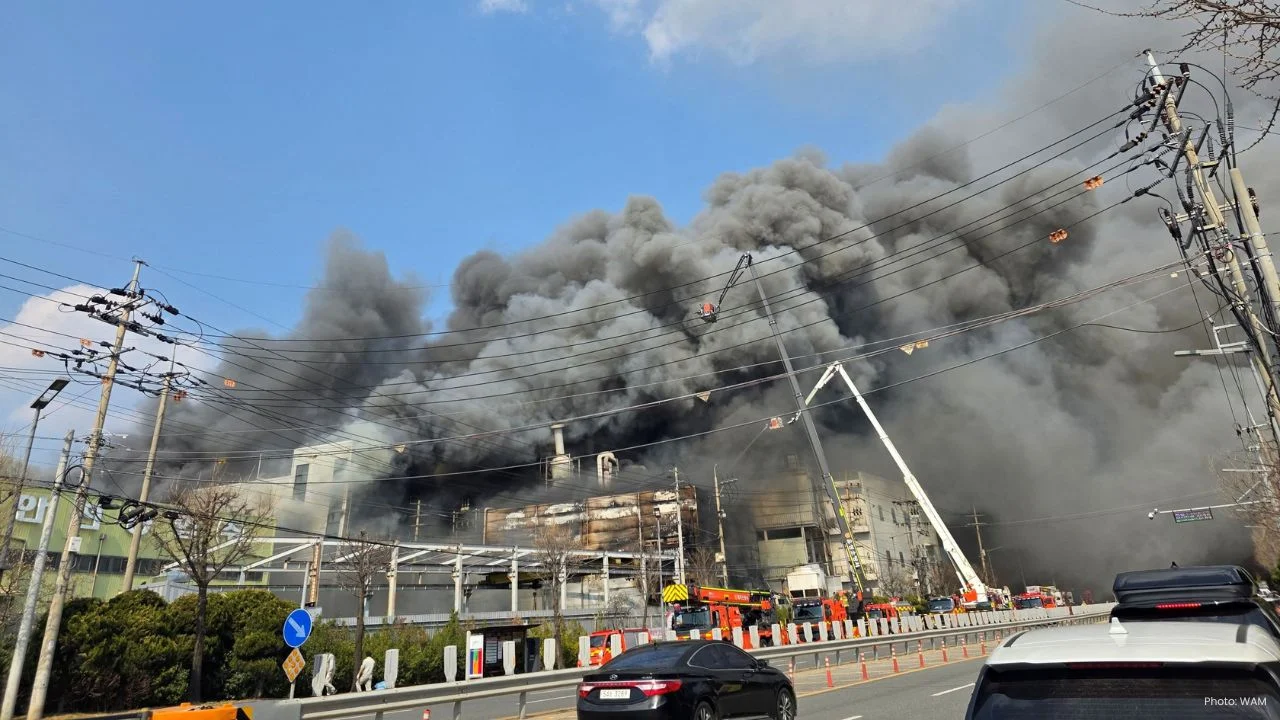
Deadly Factory Fire in Daejeon Kills 11, Several Missing
A massive fire at an auto parts factory in Daejeon, South Korea, has killed 11 people, injured 59, a

Sanofi Opens Innovation Centre in Chengdu China
Sanofi opens its first China Innovation Centre in Chengdu, boosting R&D, clinical trials, and supply


Bank of Baroda Faces Abu Dhabi Legal Battle over NMC Collapse
Bank of Baroda’s involvement in Abu Dhabi litigation tied to the NMC Healthcare collapse raises repu

Top Museum Openings of 2026 Set to Transform Global Tourism
From Los Angeles to Abu Dhabi and Brussels, 2026 brings major museum launches—Lucas Museum, Guggenhe

UAE Tour Highlights UAE’s Strength in Hosting Global Sports Events
Abu Dhabi Sports Council says the successful UAE Tour reflects the UAE’s leading role in hosting maj

EU Seeks Clarity from US After Supreme Court IEEPA Ruling
European Commission urges full transparency from the US on steps after Supreme Court ruling, emphasi
SpaceX Launches 53 New Satellites for Expanding Starlink Network
SpaceX launches 53 Starlink satellites in two Falcon 9 missions, breaking reuse records and expandin

RTA Awards Contract for Phase II of Hessa Street Upgrade in Dubai
Phase II of Hessa Street Development to add bridges, tunnel, and upgraded intersections, doubling ca

UAE Gold Prices Today, Monday 16 February 2026: Dubai & Abu Dhabi Updated Rates
Gold prices in UAE on 16 Feb 2026 updated: 24K around AED 599.75/gm, 22K AED 555.25/gm, and 18K AED

Over 25 Ahmedabad Schools Receive Bomb Threat Email, Authorities Investigate
More than 25 schools in Ahmedabad evacuated after bomb threat emails mentioning Khalistan. Authoriti