Post by : Anis Karim
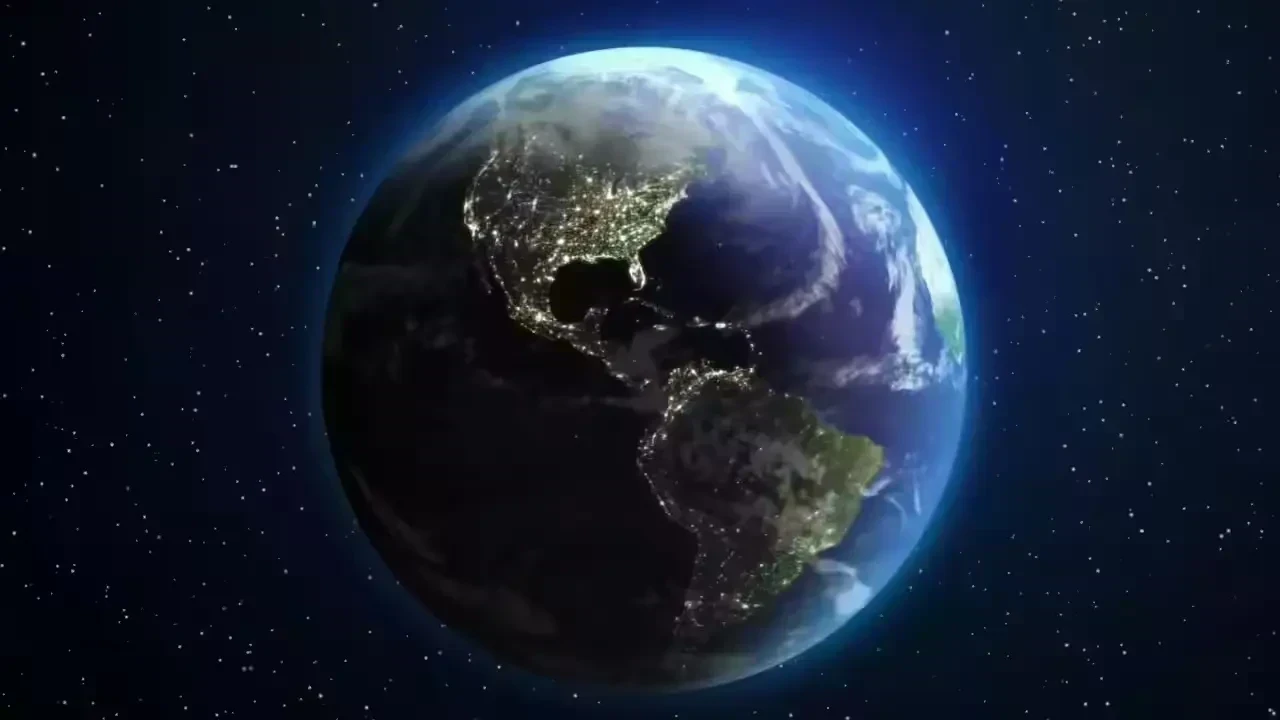
The concept of Earth abruptly ceasing its rotation sounds like something out of a sci-fi movie. Many envision scenes of chaos: people launched into the void, oceans inundating land, and one hemisphere freezing while the other scorches. While these ideas have a grain of truth, the actual repercussions of a cessation of Earth's spin are far more intricate, unsettling, and rooted in science.
Earth spins at about 1,670 kilometres per hour at the equator, a fundamental aspect of life that often goes unnoticed. This motion governs gravity, climate, ocean currents, ecosystems, and even the biological processes of humans. Without it, the familiar world we know would vanish.
This article delves into the real outcomes if Earth were to stop rotating—whether suddenly or gradually—and reveals that the most alarming consequences are not what people typically imagine.
Earth's rotation goes beyond creating day and night; it also alters the nature of gravity itself. The centrifugal force generated by the rotation offsets gravity slightly, especially at the equator, causing the planet to appear as an oblate spheroid rather than a perfect sphere.
If the Earth halted, gravity would start pulling the planet towards a more spherical shape, leading to a reshaping of coastlines, submerging regions, and changing the balance between land and sea.
Additionally, the spin fuels the Coriolis effect, essential for wind and ocean currents. Its absence would disrupt global circulatory systems and lead to severe climate crises.
In an instant halt scenario, inertia becomes Earth's greatest foe. Everything on its surface—air, water, buildings, and life—would still move eastward at the planet's rotational speed.
At the equator, that speed surpasses that of many aircraft, resulting in global destruction:
Tsunamis would devastate coastlines
Supersonic winds would wreak havoc
Cities would face annihilation from kinetic force
Forests would be uprooted all across the planet
This wouldn't be a slow catastrophe—it would transpire within minutes.
However, since an instantaneous stop is virtually impossible, a more relevant inquiry is what transpires if Earth gradually decelerates.
A gradual deceleration avoids immediate devastation but does not shield life from long-term turmoil.
At present, Earth spins completely every 24 hours. With a slowing rotation:
Days would grow longer
Nights would become increasingly severe
Temperature variations would amplify
Eventually, we might see Earth become tidally locked, causing one hemisphere to eternally face the Sun while the opposite remains cloaked in darkness, similar to the Moon's position relative to the Earth.
Life would transition from marking “days” to experiencing contrasting hemispheres of light and shadow.
Weather phenomena arise from uneven heating combined with rotation. Absence of spin would rearrange atmospheric circulation entirely.
Instead of diverse wind patterns and jet streams, Earth would develop a colossal convection system:
Air would ascend on the sunlit side
Soar towards the dark side at high altitudes
Descend into perpetual cold
Return near the Earth's surface
This configuration would spawn relentless megastorms at the border where light meets dark, with winds surpassing any hurricane ever recorded.
Rain would continually drench certain regions while others would experience drought.
Currently, Earth's oceans are unevenly distributed due to rotational forces causing water bulging at the equator. Without this motion, that bulge would dissipate.
Water would migrate toward the poles, laying bare extensive equatorial land and flooding polar regions with vast seas.
The altered geography would feature:
Desertified equatorial landforms
Deep oceans encircling the poles
Wiped coastal ecosystems
Collapse of coral reefs and fish populations
Aquatic life would undergo mass extinction from rapid pressure shifts, temperature extremes, and oxygen depletion.
Earth's magnetic field, produced by molten iron movement in the outer core—a process reliant on planetary rotation—would falter as spin wanes.
Over time:
The magnetic field could collapse
Solar rays would access the atmosphere directly
Atmospheric particles could be stripped away
Exposure to radiation would escalate significantly
While this wouldn't happen abruptly, over vast geological timelines, Earth might start resembling Mars—cold, lifeless, and exposed.
In a gradual slowing scenario, life wouldn't vanish instantly, but adaptive measures would be crucial.
Intense heat
Continuous solar exposure
Severe dehydration risks
Diminished biodiversity
Life might retreat underground or evolve to withstand harsh conditions.
Permanent cold
Oceans locked in ice
Minimal photosynthetic activity
Only extremophiles—organisms adapted to harsh environments—would survive.
The narrow strip between light and shadow would become the most favorable habitat for life, reminiscent of ecosystems thriving around oceanic hydrothermal vents.
Modern civilization is contingent upon:
Predictable weather patterns
Stable agricultural practices
Reliable transport networks
Consistent energy sources
All of these factors hinge on Earth’s rotation.
Agriculture would collapse under chaotic seasonal shifts. Infrastructure would weaken facing climatic upheavals. Migration crises would escalate beyond control.
Even advanced technology would struggle to sustain billions under these dire circumstances.
Earth is not on course to stop spinning arbitrarily. Its angular momentum keeps it in motion. To halt would require a tremendous external force, likely causing total destruction.
Only monumental events such as:
A tremendous planetary collision
A close brush with a rogue celestial body
Interference from a cosmic-scale force
could genuinely affect Earth's spin. All these events would spell extinction long before halting spin could become an issue.
One common misunderstanding is that halting Earth’s rotation would erase gravity. This is incorrect.
Gravity derives from mass, not from motion. Earth would still exert nearly the same gravitational pull minus the rotation.
What would alter is the sensation of gravity, particularly at the equator, where centrifugal force lessens gravity's effect. While humans might feel slightly heavier, that’s among the lesser concerns facing the planet.
This thought experiment doesn’t aim to predict future events, but rather to reveal how finely balanced Earth's systems are.
Rotational motion is crucial for:
Climate equilibrium
Oceanic movement
Atmospheric safeguarding
The very conditions for life
Earth is not merely a space rock; it is a meticulously tuned system where rotational motion sustains life.
The most astonishing realization isn’t how chaotic Earth would become post-spin, but rather how vital that spin is for existence.
A marginally faster rate would lead to intensified storms, while a slower spin would render climate unpredictability. Earth thrives within a slim margin for complexity.
That delicate balance is often overlooked—until one imagines its abrupt absence.
Should Earth stop spinning, it wouldn't result in people flying into space or immediate darkness. Instead, it would unravel the intricate systems that quietly sustain life.
The significant threat lies not in spectacle but in systemic breakdown.
Earth rotates not only to create day and night, but to nourish oceans, shield the atmosphere, regulate weather, and support all life forms. Though Earth would remain, it would no longer resemble the world we know.
Disclaimer:
This content is for educational and informational purposes only. The scenario discussed is speculative and not indicative of any likely planetary event.

Dubai Allows 24/7 Truck Movement to Boost Logistics
Dubai extends 24/7 truck movement to support logistics, excluding key tunnels. Authorities urge driv
BoE Holds Rates at 3.75% as Iran War Fuels Inflation
Bank of England holds rates at 3.75% as Iran war drives oil prices up, raising inflation risks and d

Ananya Panday shines at Lakme Fashion Week 2026
Ananya Panday walked as showstopper for Rahul Mishra at Lakme Fashion Week 2026, wearing an ivory ou
Gold Prices Edge Up, Set for Third Weekly Decline
Gold prices rose slightly but are heading for a third weekly loss as a strong US dollar and Fed tigh

Philippine Airlines Suspends Dubai, Doha Flights Till April 30
Philippine Airlines has suspended Manila-Dubai and Doha flights till April 30 due to Middle East ten
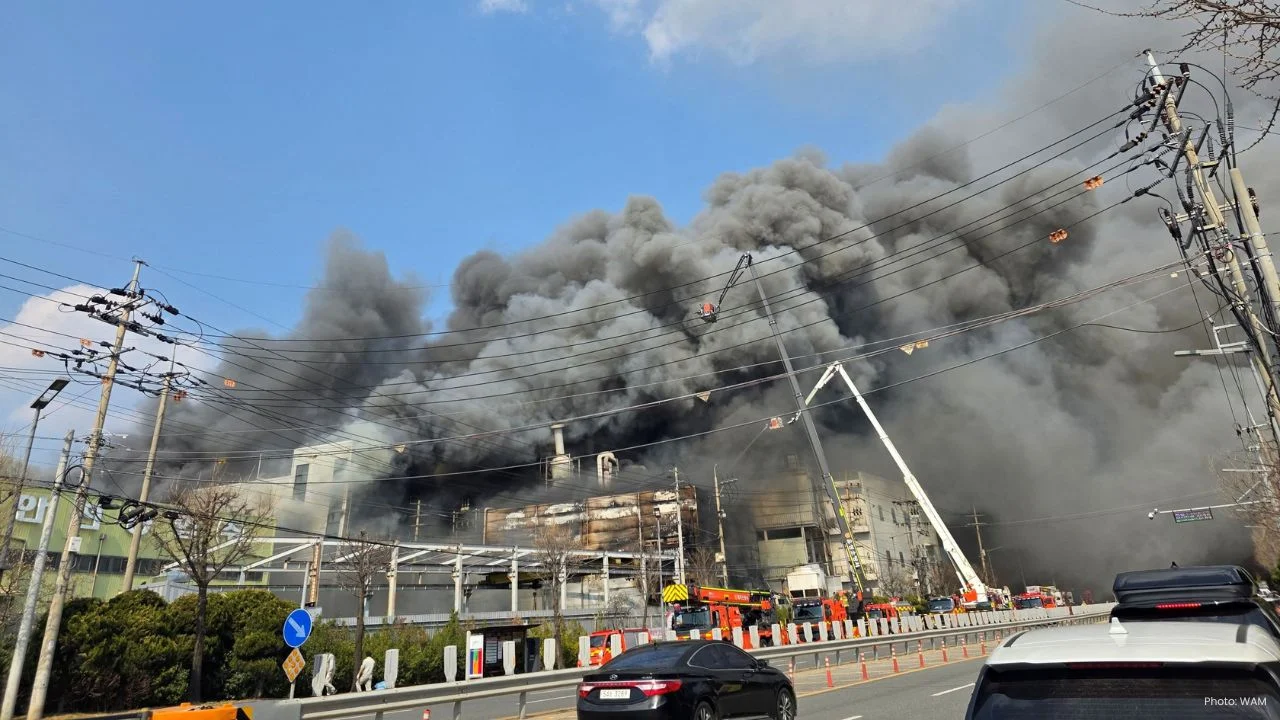
Deadly Factory Fire in Daejeon Kills 11, Several Missing
A massive fire at an auto parts factory in Daejeon, South Korea, has killed 11 people, injured 59, a

Sanofi Opens Innovation Centre in Chengdu China
Sanofi opens its first China Innovation Centre in Chengdu, boosting R&D, clinical trials, and supply


Bank of Baroda Faces Abu Dhabi Legal Battle over NMC Collapse
Bank of Baroda’s involvement in Abu Dhabi litigation tied to the NMC Healthcare collapse raises repu
Top Museum Openings of 2026 Set to Transform Global Tourism
From Los Angeles to Abu Dhabi and Brussels, 2026 brings major museum launches—Lucas Museum, Guggenhe

UAE Tour Highlights UAE’s Strength in Hosting Global Sports Events
Abu Dhabi Sports Council says the successful UAE Tour reflects the UAE’s leading role in hosting maj
EU Seeks Clarity from US After Supreme Court IEEPA Ruling
European Commission urges full transparency from the US on steps after Supreme Court ruling, emphasi
SpaceX Launches 53 New Satellites for Expanding Starlink Network
SpaceX launches 53 Starlink satellites in two Falcon 9 missions, breaking reuse records and expandin

RTA Awards Contract for Phase II of Hessa Street Upgrade in Dubai
Phase II of Hessa Street Development to add bridges, tunnel, and upgraded intersections, doubling ca

UAE Gold Prices Today, Monday 16 February 2026: Dubai & Abu Dhabi Updated Rates
Gold prices in UAE on 16 Feb 2026 updated: 24K around AED 599.75/gm, 22K AED 555.25/gm, and 18K AED

Over 25 Ahmedabad Schools Receive Bomb Threat Email, Authorities Investigate
More than 25 schools in Ahmedabad evacuated after bomb threat emails mentioning Khalistan. Authoriti