Post by : Anis Karim
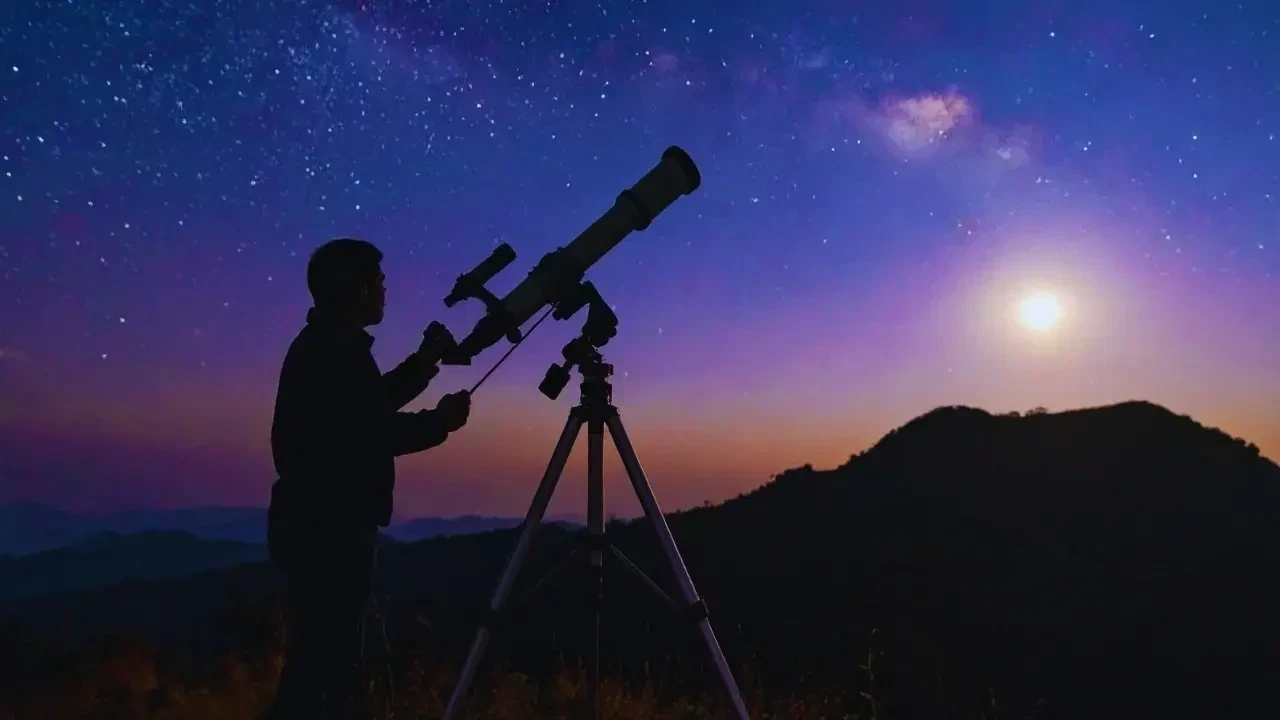
As humanity seeks to explore the vastness of the cosmos, the year 2026 is set to herald a revolutionary epoch in astronomy. With a new wave of innovative space telescopes ready to launch or achieve operational status, we stand on the precipice of a profound shift in our comprehension of the universe.
These upcoming telescopes signal a transition toward high-precision cosmology and large-scale astronomical surveys. Unlike their predecessors, which zeroed in on specialized goals, these missions aim to unravel critical mysteries about dark energy, planetary systems, and galactic formation.
While previous telescopes often conducted focused inquiries, the 2026 missions are geared toward expansive surveys and long-term observations. This enables astronomers to simultaneously analyze vast numbers of stars and galaxies, unveiling grand cosmic patterns rather than isolated events.
These advanced telescopes will not supersede current observatories; instead, they will enhance collaborative efforts to provide a more comprehensive understanding of the cosmos.
A highlight in the upcoming astronomical landscape is the Nancy Grace Roman Space Telescope, an initiative of NASA. Often viewed as a companion to the James Webb Space Telescope, Roman is crafted to conduct extensive sky surveys with exceptional resolution.
Its core mission is to delve into the enigmatic nature of dark energy, the force believed to be accelerating the universe's expansion. By observing a multitude of galaxies, Roman aims to trace how cosmic expansion has evolved.
In addition to studying cosmological phenomena, Roman anticipates discovering thousands of exoplanets through gravitational microlensing, facilitating the identification of planets that might otherwise remain undetected, including those floating freely in space.
The launch of the European Space Agency's PLATO mission represents a significant stride expected in 2026. This mission is dedicated to studying planetary systems beyond our solar system, specifically focusing on identifying Earth-sized candidates orbiting Sun-like stars.
Utilizing precise measurements of stellar oscillations in conjunction with planet detection, PLATO seeks to gauge not only the existence of exoplanets, but also their characteristics, including size and habitability potential.
PLATO’s methodology emphasizes a statistical approach by analyzing thousands of planetary systems instead of a select few, which helps scientists understand the prevalence of Earth-like worlds within the Milky Way.
Wide-field telescopes empower astronomers to examine extensive areas of the sky within a single view, which is vital for understanding cosmic structures like galaxy clusters and dark matter distributions.
The upcoming missions in 2026 prioritize this comprehensive perspective, paving the way for breakthroughs that narrower instruments could not achieve.
Dark energy remains a poorly understood aspect of the universe, believed to constitute a significant portion of its total energy. By accurately measuring galaxy movement and clustering, these forthcoming space telescopes aim to clarify competing theories regarding this mysterious force.
Such revelations could transform our comprehension of physics, gravitational behavior, and the eventual destiny of the universe.
Several anticipated observatories will focus on analyzing the earliest galaxies formed post-Big Bang. By studying faint, distant objects, astronomers hope to unravel how galaxies transitioned from basic structures to the intricate systems we observe today.
These analyses serve to close the gaps between cosmological and galaxy formation theories.
The telescopes designated for 2026 will work in tandem with present platforms like the James Webb Space Telescope, each specializing in various wavelengths and scientific inquiries.
This multi-layered methodology allows for cross-referencing findings, yielding comprehensive insights into cosmic phenomena.
Modern space telescopes employ ultra-stable structures, advanced detectors, and innovative data processing techniques. Enhancements in thermal management, optical quality, and onboard computing have enabled cleaner and more accurate data collection than ever before.
These technological advancements hold equal importance to the missions' scientific aims.
Many telescopes launching around 2026 represent collaborative efforts among various space agencies, educational institutions, and research organizations.
The European Space Agency plays a crucial role in several of these missions, underscoring how contemporary astronomy increasingly relies on pooled expertise and shared resources.
The sheer amount of data generated by the next-generation telescopes will be staggering. Effective processing demands sophisticated algorithms and artificial intelligence techniques.
Machine learning is progressively being utilized to recognize patterns, identify anomalies, and prioritize observations, thus expediting the discovery process.
These future telescopes aim to elevate exoplanet research from mere detection to comprehensive understanding of atmospheres, compositions, and orbital behaviors.
Such advancements bring scientists closer to answering fundamental questions about the possibility of life elsewhere in the universe.
Historically, major space telescope endeavors have sparked an interest in science and engineering. The anticipated discoveries from the 2026 telescopes are likely to captivate the public imagination and motivate youth to venture into space science careers.
Educational outreach initiatives and open-data policies will further enhance this influence.
Despite meticulous planning, space missions inherently involve risks including launch delays and technical issues. Even minor setbacks can lead to significant ramifications.
Nonetheless, experiences from past missions have strengthened reliability measures and contingency strategies.
The telescopes set to debut in 2026 are uniquely positioned to address persistent questions that have lingered for years. By merging expansive surveys with high-precision assessments, they promise to shed light on the universe's composition, origin, and fate.
Few instances in astronomical history present such an extraordinary opportunity for discovery.
As these innovative space telescopes take flight and commence operations in 2026, humanity’s perception of the universe is poised for a dramatic evolution. These observatories will not only broaden our cosmic horizons but also deepen our grasp of fundamental physical laws, planetary systems, and the origins of all that surrounds us.
Ultimately, they reaffirm an immutable truth: every time we enhance our vision of the sky, the universe divulges its astonishing depth and complexity.
This article serves informational and editorial purposes only. Mission timelines, launch dates, and scientific objectives may be subject to change based on regulatory or technical factors. For the latest information, readers should consult official communications from space agencies.

Dubai Allows 24/7 Truck Movement to Boost Logistics
Dubai extends 24/7 truck movement to support logistics, excluding key tunnels. Authorities urge driv

BoE Holds Rates at 3.75% as Iran War Fuels Inflation
Bank of England holds rates at 3.75% as Iran war drives oil prices up, raising inflation risks and d

Ananya Panday shines at Lakme Fashion Week 2026
Ananya Panday walked as showstopper for Rahul Mishra at Lakme Fashion Week 2026, wearing an ivory ou

Gold Prices Edge Up, Set for Third Weekly Decline
Gold prices rose slightly but are heading for a third weekly loss as a strong US dollar and Fed tigh

Philippine Airlines Suspends Dubai, Doha Flights Till April 30
Philippine Airlines has suspended Manila-Dubai and Doha flights till April 30 due to Middle East ten

Deadly Factory Fire in Daejeon Kills 11, Several Missing
A massive fire at an auto parts factory in Daejeon, South Korea, has killed 11 people, injured 59, a

Sanofi Opens Innovation Centre in Chengdu China
Sanofi opens its first China Innovation Centre in Chengdu, boosting R&D, clinical trials, and supply


Bank of Baroda Faces Abu Dhabi Legal Battle over NMC Collapse
Bank of Baroda’s involvement in Abu Dhabi litigation tied to the NMC Healthcare collapse raises repu

Top Museum Openings of 2026 Set to Transform Global Tourism
From Los Angeles to Abu Dhabi and Brussels, 2026 brings major museum launches—Lucas Museum, Guggenhe

UAE Tour Highlights UAE’s Strength in Hosting Global Sports Events
Abu Dhabi Sports Council says the successful UAE Tour reflects the UAE’s leading role in hosting maj

EU Seeks Clarity from US After Supreme Court IEEPA Ruling
European Commission urges full transparency from the US on steps after Supreme Court ruling, emphasi
SpaceX Launches 53 New Satellites for Expanding Starlink Network
SpaceX launches 53 Starlink satellites in two Falcon 9 missions, breaking reuse records and expandin

RTA Awards Contract for Phase II of Hessa Street Upgrade in Dubai
Phase II of Hessa Street Development to add bridges, tunnel, and upgraded intersections, doubling ca

UAE Gold Prices Today, Monday 16 February 2026: Dubai & Abu Dhabi Updated Rates
Gold prices in UAE on 16 Feb 2026 updated: 24K around AED 599.75/gm, 22K AED 555.25/gm, and 18K AED

Over 25 Ahmedabad Schools Receive Bomb Threat Email, Authorities Investigate
More than 25 schools in Ahmedabad evacuated after bomb threat emails mentioning Khalistan. Authoriti