Post by : Zayd Kamal
Shaima, an Emirati student residing in Abu Dhabi, shares her life with her four siblings and parents in a household of seven. Despite this number, she considers her family small compared to her father’s upbringing, where he was one of 12 children in a time when large families were common in the region.
Shaima's experience highlights a significant social shift occurring across the United Arab Emirates (UAE). Over the past few decades, the fertility rate among Emirati women has dramatically decreased. Official data reveals that women today have approximately half the number of children their grandmothers did in 1970. The fertility rate has dropped from 6.7 children per woman in 1970 to around 3.7 by 2017, with more recent figures indicating it was 3.2 in 2021.
This decline in family size has raised concerns among Emiratis, who now find themselves a minority in their own country, with expatriates making up 93.5% of the UAE's approximately 9.5 million population, according to UN statistics. Shaima expresses her frustration with this trend, describing it as "upsetting" and emphasizing the feelings of displacement among Emiratis.
Stay informed with the latest news. Follow DXB News Network on WhatsApp Channel
William Guéraiche, an associate professor at the University of Wollongong in Dubai, points out that the growing demographic imbalance between Emiratis and expatriates is a sensitive issue. He notes that many Emiratis feel increasingly marginalized as the population becomes more diverse. "This imbalance will grow, and Emiratis feel more and more under siege, rightly or not," he said.
The swift decline in fertility rates has sparked concern among UAE authorities, particularly given that the fertility rate could potentially halve again if current trends continue. Luca Maria Pesando, an associate professor of social research and public policy at NYU Abu Dhabi, describes the rapid change as significant for a demographic transition.
While the current rate of 3.2 is above the replacement rate of 2.1 live births per woman—indicating that the number of Emiratis is not decreasing—the government remains focused on encouraging larger families. One former official noted the inevitability of the Emirati population shrinking as a percentage of the total population, stating, “If we attract more people into the country, this automatically diminishes us as a percentage. How do you counter that? Encourage people to have more kids.”
To address these concerns, the UAE government has traditionally offered various subsidies to Emirati families, including financial assistance for housing, weddings, and childcare. Recently, the government introduced the “Emirati Family Growth Support Programme” in Abu Dhabi, which provides incentives for larger families, such as reduced loan debt for families having their fourth, fifth, and sixth children.
Hamad Ali Al Dhaheri, under-secretary of Abu Dhabi’s community development department, emphasized the importance of Emirati families in achieving social stability and preserving national identity. The government is keen to bolster the Emirati population as part of its broader societal goals.
Although comprehensive national statistics on the population composition are not publicly available, data from Dubai—a major business and tourism hub—indicates that the expat population is still growing faster than that of Emiratis. From 2015 to 2023, the number of Emiratis in Dubai increased by 31%, while the expatriate population surged by 46%.
While expatriates primarily occupy transient roles and have limited opportunities for citizenship, the UAE has recently made strides in offering long-term visas and encouraging foreign investment in property and businesses. This move aligns with the country’s ambitious economic plans, which anticipate a further influx of overseas workers.
The rapid growth in the UAE's economy, particularly following the discovery of oil in the 1960s, has transformed the nation from a largely impoverished tribal society to one of the wealthiest in the region. As of 2023, the UAE boasts the second-highest gross domestic product per capita in the Middle East, according to World Bank data.
However, this economic prosperity has contributed to a declining birth rate, as many Emiratis cite rising living costs as a barrier to having larger families. One government employee and mother of one noted that the financial burden of childcare and education deterred her from planning more children.
Moreover, the UAE's success in promoting women's education and employment has led many young Emirati women to delay marriage and childbearing. With a high labor force participation rate of 55% among women aged over 15—compared to an average of 19% across the Middle East and North Africa—many women prioritize their careers.
Huda, a 30-year-old museum researcher whose mother had nine children, expressed her desire for independence, saying, “I wanted to pursue my own path.” This sentiment is echoed by Shaima, who aspires to balance her professional life with motherhood. She envisions having four children but acknowledges the challenges of managing a large family while working.
Despite government initiatives aimed at supporting working mothers, such as extending maternity leave to 60 days, many young Emiratis remain cautious about returning to the large families of the past. Shaima sums up her perspective: “I know I’m going to be a working mum. I need to balance my working life and taking care of my kids, and having a lot of kids is not going to help.”

Summer in Canada: Warmer Ahead, with a Cool Spot
Experts predict a hotter-than-normal summer in 2026 for Canada, except for one area expecting cooler

Crackdown on Illegal Workers in Batam, Indonesia
Indonesia detains six foreign workers in Batam for illegal employment as immigration enforcement int
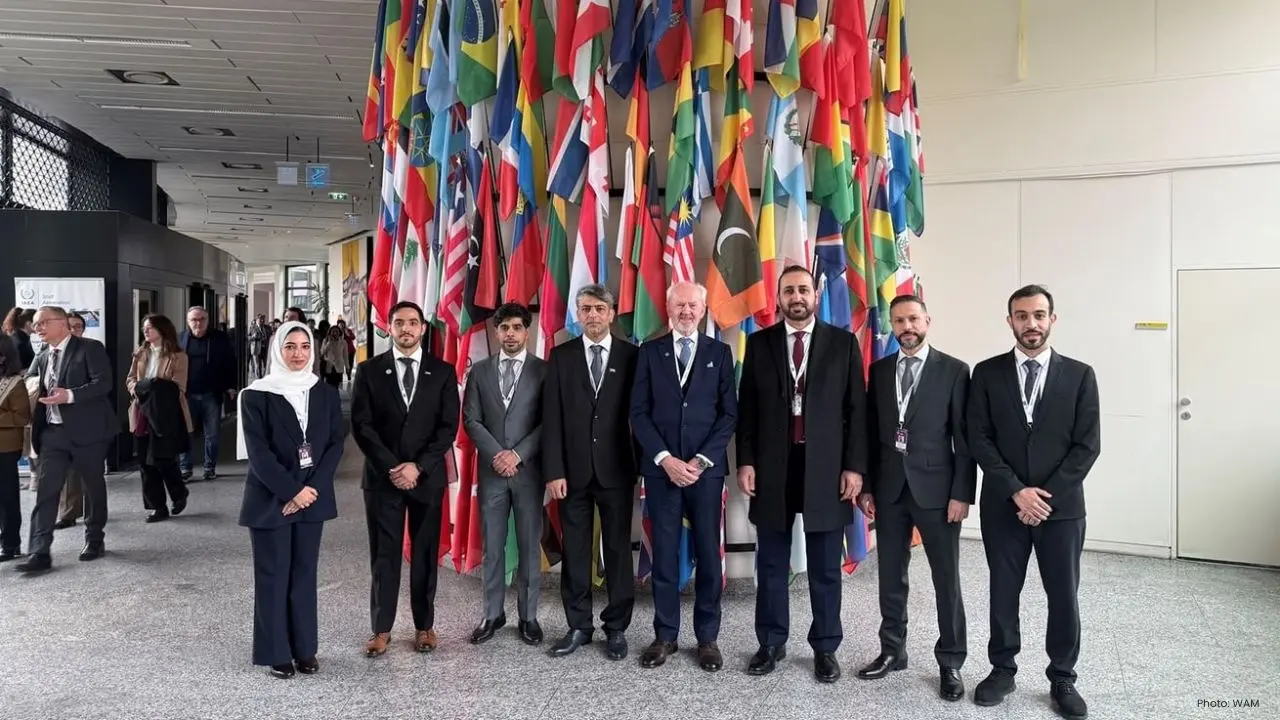
UAE Submits 10th Nuclear Safety Report to IAEA Review
UAE presents its 10th CNS report at IAEA, highlighting Barakah plant success, stronger regulations,

Satellite Insights Transform Tsunami Wave Understanding
New satellite observations redefine tsunami behavior, showing intricate wave patterns that challenge

Spirit Airlines on the Verge of Liquidation Due to Escalating Costs
Spirit Airlines may soon face liquidation amidst escalating fuel prices and ongoing financial losses

Indonesia's Youth Engagement Needs Urgent Attention
With the Youth Pledge centennial approaching, experts emphasize the need for greater youth involveme

Dubai SME–DLD Pact Boosts Emirati Role in Real Estate
Dubai SME and DLD sign MoU to boost Emirati SMEs in real estate, offering access, training, and part


7 Daily Habits to Burn Belly Fat Naturally
Discover 7 simple daily habits to burn belly fat naturally without extreme dieting. Easy, effective

Power of Compounding: How $5,000 Can Grow Into $120,000
Discover how compounding turns $5,000 into $120,000 over time. Learn long-term investing strategies

When to Test Blood Sugar: Morning vs After Breakfast Explained
Should you check blood sugar fasting or after meals? Learn the best time to test glucose levels and

WhatsApp Down Today? Users Report Strange Issue Worldwide
WhatsApp users report message delays and strange issues worldwide. Find out what happened, why it oc

Is Your Phone Spying on You? 6 Android Settings to Turn Off Now
Worried your phone is spying on you? Learn 6 Android settings to turn off now to protect your privac

7 Protein-Rich Indian Foods You Should Add to Your Daily Diet
Discover 7 protein-rich Indian foods to boost your daily protein intake naturally without supplement

Is It Safe to Keep Laptop Plugged In All the Time? Battery Truth Explained
Is it safe to keep your laptop plugged in all day? Learn the truth about battery health, charging ha
Actual Cost of Living in Dubai for a Family : Rent, School Fees & Monthly Expenses
Discover the real cost of living in Dubai for a small family in 2026, including rent, school fees, g