Post by : Bianca Qureshi
Photo: SPA
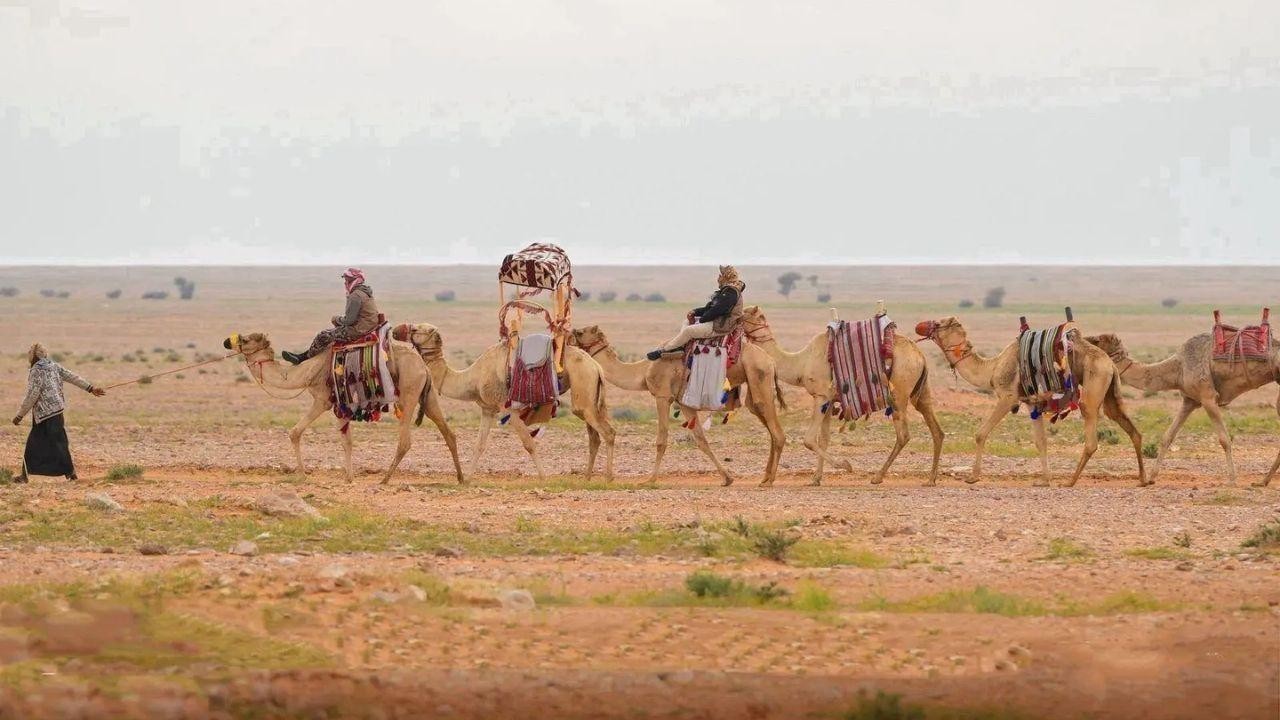
In the vast, hot deserts of the Arabian Peninsula, life has always been tough. Sand dunes stretch far and wide, and temperatures rise very high during the day. For thousands of years, the Bedouin people lived in these deserts. They moved from place to place with their camels to find water, food, and to trade with other tribes. One of the most important things that helped them survive in these harsh lands was a special tool called the shaddad.
What is a Shaddad?
The shaddad is an old handmade invention that has been used for many generations. It is like a strong saddle used on camels. People used it not only to ride camels but also to carry goods across the desert. Imagine a wooden structure shaped to fit the camel’s back perfectly so that it does not hurt the camel. This tool shows the smart thinking and creativity of the Bedouins who made their lives easier using natural materials around them.
Stay informed with the latest news. Follow DXB News Network on WhatsApp Channel
How is the Shaddad Made?
The shaddad is made from curved wood. It has two wooden arcs – one at the front and one at the back. These arcs are fixed on the camel’s back. But to make sure the wood does not hurt the camel, the Bedouins placed a soft cushion between the arcs and the camel’s back. This cushion helped balance the weight and made the journey comfortable for both the camel and the rider.
The wood used to make shaddad was usually taken from local trees. Bedouins carefully shaped it, polished it, and then tied it firmly. They made sure that the shaddad was strong enough to carry heavy loads and comfortable enough for long rides in the desert.
Uses of Shaddad in Bedouin Life
The shaddad was very important in daily Bedouin life. Here is how they used it:
For Riding: One type of shaddad was made for riding camels. Bedouins travelled long distances to visit family, meet friends, or attend important gatherings. Without the shaddad, it would be very hard to sit on the camel for hours.
For Carrying Goods: Another type was designed to carry heavy loads like food supplies, tents, water containers, firewood, and other items needed for survival. This type was wider and stronger to handle big weights.
During Trade Expeditions: Bedouins travelled to faraway places to sell things like dates, spices, or handmade crafts. The shaddad made it possible for them to carry all these items safely across the desert.
For Nomadic Life: As nomads, Bedouins moved their entire homes from place to place. The shaddad helped them transport their belongings, children, and even small animals.
Why Was the Shaddad So Special?
The shaddad was not just a saddle; it was a lifeline. It showed the deep relationship between camels and humans. Camels are called the “ships of the desert” because they can travel long distances without food or water. The shaddad made it easier for people to use camels for riding and transporting things safely.
It also showed how Bedouins used their knowledge of the desert to create tools that fit their needs. They did not have factories or machines. They used their hands, skills, and natural materials around them to make things that lasted long and served many purposes.
Design Variations of Shaddad
Depending on what it was used for, shaddad designs were different:
For Riding: Smaller and lighter, with a curved shape to sit comfortably.
For Carrying Loads: Bigger and stronger to balance heavy items on both sides of the camel.
These variations showed how smartly the Bedouins designed the shaddad for their daily life and needs.
Shaddad in Today’s Modern World
Today, we have cars, buses, and planes. People do not travel on camels like they did before. But the shaddad still has a special place in Arab culture.
Cultural Displays: It is kept in museums, heritage villages, and cultural exhibitions to teach people about Bedouin life.
Decoration: Many people use old shaddads as decoration pieces in their homes, guest rooms, or traditional markets. They remind everyone of their ancestors’ lifestyle and hard work.
Heritage Symbol: The shaddad has become a symbol of strength, patience, and survival. It tells the story of how people lived in harmony with nature and used their intelligence to create useful things without harming the environment.
What Does Shaddad Teach Us?
The story of shaddad teaches us many important lessons:
Resourcefulness: It shows how people used simple things like wood and cloth to create tools that made their lives easier.
Sustainability: They used local materials without damaging the environment, showing respect for nature.
Creativity and Innovation: Even without modern machines, they found solutions to their problems by thinking wisely.
Strong Cultural Identity: Shaddad is a reminder of the deep connection between humans and camels, and the culture of living in deserts.
Value of Heritage: It tells us that our history and old tools should be remembered and respected because they are part of who we are today.
Preserving the Legacy
The shaddad is not just a piece of wood tied to a camel. It is a symbol of Bedouin life, culture, and resilience. Even though times have changed, and modern transportation has replaced camels for travel, the shaddad remains alive in the hearts of people as a memory of their ancestors’ smartness and hard work.
It carries a powerful message – that we should always respect and remember our heritage. By doing this, we can learn how to live better lives today, by being resourceful, innovative, and respectful towards nature, just like the Bedouins who created the shaddad many centuries ago.

GOP Leaders Unveil Plan to End DHS Partial Shutdown
House and Senate GOP leaders propose a two-track plan to fund DHS, aiming to end the record-long shu

Northern California Shaken by Early Morning 4.6 Earthquake
A 4.6 magnitude earthquake struck near Boulder Creek, CA, early Thursday, shaking homes across a 100

Hillhouse Opens Abu Dhabi Office, Strengthens UAE Presence
Hillhouse Investment opens ADGM office with Category 3C license, boosting UAE and GCC investment act

Dubai, China Strengthen Trade & Investment Cooperation
Dubai Chambers meets CCPIT Beijing to enhance trade, investment, and cooperation in digital economy,

Indonesia Earthquake Today: 7.4 Magnitude Quake Triggers Tsunami Warning
A 7.4 magnitude earthquake hits Indonesia, prompting tsunami warnings and emergency evacuations. Get
Malaysia’s Economy Remains Steady Amid Global Tensions
Despite geopolitical risks, Bank Negara highlights Malaysia's strong economic fundamentals and endur
Abu Dhabi Fund Drives Global Development & UAE Export Growth
ADFD’s 2025 report highlights AED 250B financing, global projects, and UAE export support, strengthe


NASA Launches Artemis II Crew for 10-Day Lunar Mission
NASA launches Artemis II with four astronauts for a 10-day Moon mission, marking the first crewed lu
Dubai RTA, Ministry Partner for Family First Programme
Dubai RTA and Ministry of Family partner to enhance transport, urban spaces, and services under Fami

Bank of Baroda Faces Abu Dhabi Legal Battle over NMC Collapse
Bank of Baroda’s involvement in Abu Dhabi litigation tied to the NMC Healthcare collapse raises repu
Top Museum Openings of 2026 Set to Transform Global Tourism
From Los Angeles to Abu Dhabi and Brussels, 2026 brings major museum launches—Lucas Museum, Guggenhe

UAE Tour Highlights UAE’s Strength in Hosting Global Sports Events
Abu Dhabi Sports Council says the successful UAE Tour reflects the UAE’s leading role in hosting maj

EU Seeks Clarity from US After Supreme Court IEEPA Ruling
European Commission urges full transparency from the US on steps after Supreme Court ruling, emphasi
SpaceX Launches 53 New Satellites for Expanding Starlink Network
SpaceX launches 53 Starlink satellites in two Falcon 9 missions, breaking reuse records and expandin

RTA Awards Contract for Phase II of Hessa Street Upgrade in Dubai
Phase II of Hessa Street Development to add bridges, tunnel, and upgraded intersections, doubling ca