Post by : Sam Jeet Rahman
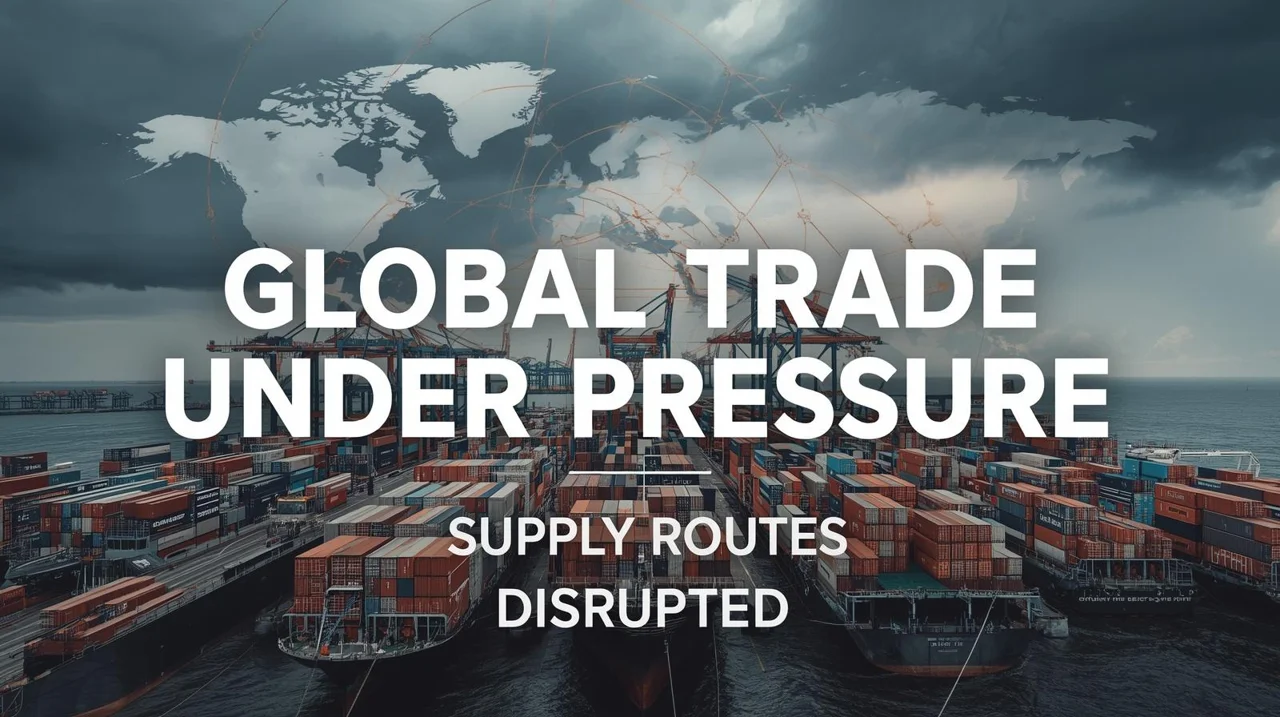
In 2026, global trade routes are under increasing pressure as ongoing disruptions continue to affect the movement of goods worldwide. These routes are the backbone of international trade, connecting countries, industries, and consumers.
When disruptions occur, the impact is felt far beyond shipping—it affects supply chains, prices, and economic stability.
The key question is:
What is causing these disruptions, and how are they affecting global trade?
Several interconnected factors are putting stress on global trade systems.
One of the major causes is geopolitical tensions. Conflicts and political uncertainties in key regions can disrupt shipping lanes and restrict access to important routes.
Another significant factor is port congestion. High volumes of cargo combined with limited infrastructure lead to delays in loading and unloading goods.
There are also logistical challenges, including shortages of containers, labor issues, and inefficiencies in transportation networks.
Environmental factors such as extreme weather conditions are further complicating global shipping, causing delays and rerouting of vessels.
Disruptions in trade routes directly affect global supply chains.
When goods are delayed, businesses struggle to maintain inventory levels, leading to shortages in markets.
Manufacturing industries face challenges as they depend on timely delivery of raw materials.
Companies may need to find alternative routes or suppliers, which often increases costs and reduces efficiency.
These disruptions highlight the vulnerability of global supply systems.
When trade routes face pressure, the cost of transportation increases.
Shipping delays and longer routes lead to higher fuel and operational costs.
Businesses often pass these additional expenses on to consumers, resulting in higher prices for goods.
This contributes to inflation, affecting everyday items such as food, electronics, and household products.
As a result, the overall cost of living increases.
Businesses across various sectors are feeling the impact of disrupted trade routes.
Retail companies may face product shortages or delayed deliveries, affecting customer satisfaction.
Manufacturers may experience production slowdowns due to lack of materials.
Industries that rely heavily on global trade, such as automotive, electronics, and consumer goods, are particularly vulnerable.
To manage these challenges, companies are adjusting their strategies and exploring new supply chain models.
Governments and organizations are taking steps to reduce the impact of disruptions.
Many countries are focusing on diversifying trade routes to reduce dependence on a single pathway.
There is also a push toward local production to minimize reliance on imports.
Investments in infrastructure, such as ports and logistics systems, are being increased to improve efficiency.
International cooperation is also being explored to stabilize global trade systems.
The ongoing disruptions are likely to lead to long-term changes in how trade operates.
Companies may adopt more flexible and resilient supply chain strategies.
There could be a shift toward regional trade partnerships instead of heavy reliance on global networks.
Technology will play a key role in improving tracking, efficiency, and decision-making in logistics.
These changes aim to reduce the impact of future disruptions.
For consumers, the impact of trade disruptions is often indirect but significant.
Higher prices for goods and limited product availability are the most noticeable effects.
Delivery times may also increase, especially for imported items.
Understanding these factors can help consumers plan better and manage expenses.
The pressure on global trade routes in 2026 highlights the challenges facing the interconnected world economy.
Disruptions caused by geopolitical, logistical, and environmental factors are affecting supply chains, businesses, and consumers.
The key takeaway is clear:
Building more resilient and flexible trade systems is essential for future stability.
This article is for informational purposes only. Global trade conditions may change based on geopolitical and economic developments. Readers should stay updated for accurate information.

Sahar Palmer: Unboxing Identity, Intuition, and the Courage to Begin Again
Sahar Palmer shares a powerful journey of loss, self-awareness, and transformation through writing,
Africa Feels Impact of Iran War Fuel Price Surge Crisis
Rising fuel prices linked to the Iran war are hitting African economies hard, increasing living cost

Pope Leo XIV Urges Monaco to Use Wealth for Good
Pope Leo XIV visits Monaco, urging responsible use of wealth and strong commitment to protecting lif

UAE, Uganda Strengthen Ties After Presidential Message
UAE and Uganda reaffirm strong ties as leaders exchange message, focusing on boosting cooperation, d

12-Tonne KitKat Shipment Stolen Ahead of Easter Rush
Nestlé confirms theft of 12 tonnes of KitKat bars in Europe, raising fears of shortages before Easte

UAE Village Races Win UN Tourism Social Impact Award
UAE’s Emirates Villages Running Races win UN Tourism award for social impact, boosting rural tourism

World Cup Play-offs: Heartbreak for Wales, Ireland
Wales and Ireland crash out on penalties, while Italy defeat Northern Ireland to advance. Dramatic p


Bank of Baroda Faces Abu Dhabi Legal Battle over NMC Collapse
Bank of Baroda’s involvement in Abu Dhabi litigation tied to the NMC Healthcare collapse raises repu

Top Museum Openings of 2026 Set to Transform Global Tourism
From Los Angeles to Abu Dhabi and Brussels, 2026 brings major museum launches—Lucas Museum, Guggenhe

UAE Tour Highlights UAE’s Strength in Hosting Global Sports Events
Abu Dhabi Sports Council says the successful UAE Tour reflects the UAE’s leading role in hosting maj

EU Seeks Clarity from US After Supreme Court IEEPA Ruling
European Commission urges full transparency from the US on steps after Supreme Court ruling, emphasi
SpaceX Launches 53 New Satellites for Expanding Starlink Network
SpaceX launches 53 Starlink satellites in two Falcon 9 missions, breaking reuse records and expandin

RTA Awards Contract for Phase II of Hessa Street Upgrade in Dubai
Phase II of Hessa Street Development to add bridges, tunnel, and upgraded intersections, doubling ca

UAE Gold Prices Today, Monday 16 February 2026: Dubai & Abu Dhabi Updated Rates
Gold prices in UAE on 16 Feb 2026 updated: 24K around AED 599.75/gm, 22K AED 555.25/gm, and 18K AED

Over 25 Ahmedabad Schools Receive Bomb Threat Email, Authorities Investigate
More than 25 schools in Ahmedabad evacuated after bomb threat emails mentioning Khalistan. Authoriti