Post by : Bianca Qureshi
Silence once ruled a private Caribbean island known as Prickly Pear East Cay. But today, the sound of tiny footsteps and the rustling of leaves has brought joy to scientists and conservationists. The quiet cay has transformed into a thriving sanctuary for the Lesser Antillean iguana — a critically endangered species once feared to be on the edge of extinction.
This remarkable turnaround is being celebrated by the Anguilla National Trust and global conservation groups. It shows how determined human intervention, careful planning and patience can help revive a species.
A Species on the Brink
The Lesser Antillean iguana, or Iguana delicatissima, was once common on several Caribbean islands thousands of years ago. Indigenous communities lived alongside them for generations. Experts believe the iguanas reached the Caribbean naturally by drifting on broken tree trunks or debris from South American rivers.
However, modern challenges pushed them toward extinction. Habitat loss, invasive predators and competition from the more aggressive green iguana caused their numbers to drop. On many islands, the Lesser Antillean iguana now exists only in memory. They have disappeared entirely from Antigua, Barbuda, St. Kitts, Nevis and St. Martin. Populations have nearly vanished in Guadeloupe, St. Barts and Martinique.
Conservation groups estimate that fewer than 20,000 exist worldwide. For a species spread across multiple islands, this number is extremely low.
A Radical Rescue Plan
Nearly a decade ago, Prickly Pear East Cay had zero Lesser Antillean iguanas. It was quiet, uninhabited and free of predators like dogs, cats and invasive green iguanas — making it the perfect location for a rescue mission.
Scientists in Anguilla decided to create a safe space where the endangered reptiles could live and breed without competition or threats.
Armed with long poles fitted with nooses, conservationists carefully captured iguanas across Anguilla. Residents helped by reporting sightings or sharing pictures.
After a full year of searching, the team found 23 purebred Lesser Antillean iguanas — likely the entire population left on the island.
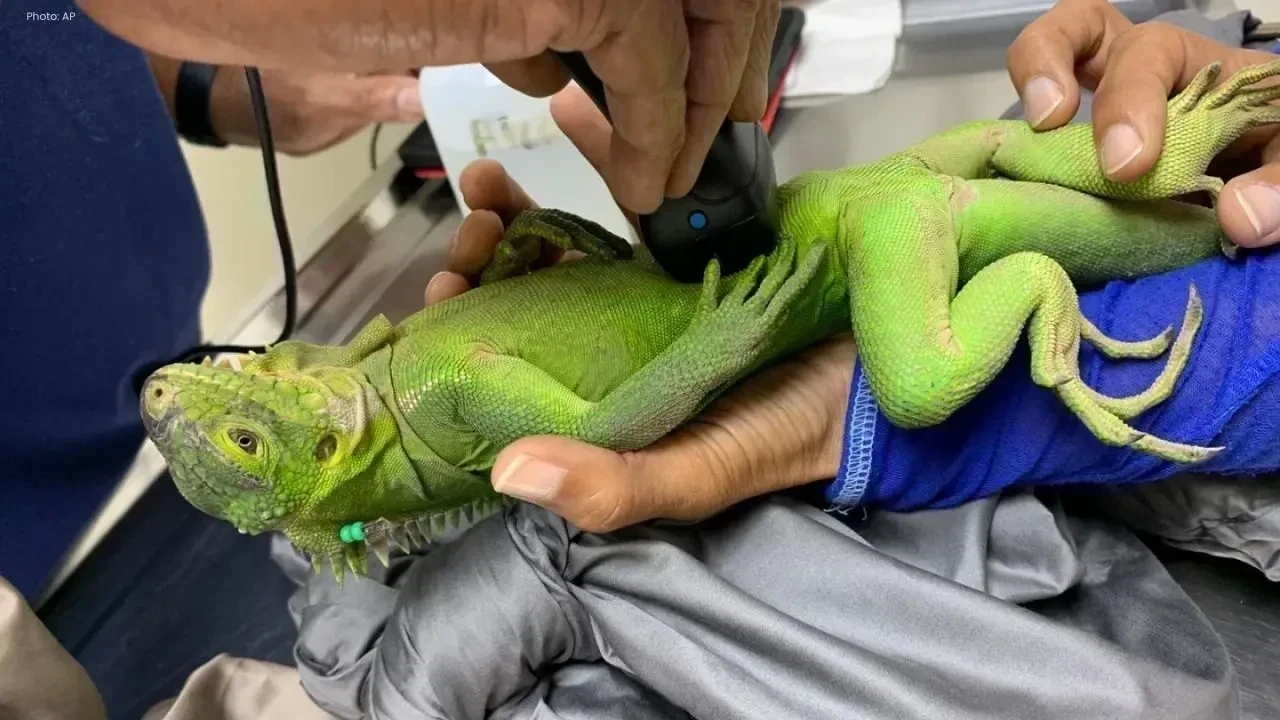
They conducted genetic tests to make sure the iguanas had not mated with green iguanas, which would dilute the species and weaken its chances of long-term survival.
The first batch of 10 iguanas was gently placed in breathable cotton bags and transported by boat to Prickly Pear East Cay. The remaining 13 followed after the first group successfully adapted.
A Population Explosion
The move worked beautifully.
The iguanas settled in quickly. Scientists began noticing signs of new life — burrows, nests and eventually babies. What began with only 10 iguanas has grown to 300 and counting.
Today, Prickly Pear East Cay is one of just five places in the world where the Lesser Antillean iguana is making a comeback. The island has become a symbol of hope for conservation groups, proving that carefully chosen habitats can rebuild wildlife populations.
A Battle Against the Green Iguana
The biggest threat to the Lesser Antillean iguana remains the green iguana, a non-native species introduced to the Caribbean in the 1800s. These iguanas reproduce faster, eat more food and aggressively defend territory. Most importantly, they breed with the Lesser Antillean iguanas, creating hybrids and weakening genetic lines.
This genetic mixing is extremely dangerous. Once a population becomes hybridized, researchers say the original species cannot continue.
This is why relocating pure Lesser Antillean iguanas to predator-free islands was so important.
Strengthening the Bloodline
Despite the success on Prickly Pear East, scientists worried about the limited genetic diversity. A population from only 23 individuals could face long-term problems.
To solve this, researchers looked to Dominica — home to a larger population of pure Lesser Antillean iguanas. But this was not easy.
During the COVID-19 pandemic, Anguilla conservationists traveled to Dominica after quarantining. They built temporary habitats, monitored captured iguanas and tested their DNA to ensure no hybrid mixing.
Some iguanas needed special attention and were hand-fed using syringes. Others were given pumpkins, carrots and flowers.
Eventually, the iguanas were transported in special pillowcase-style carriers and flown to Anguilla. From there, they traveled by boat to Prickly Pear East Cay, joining the growing colony.
Life on the Cay
The island remains uninhabited, except for two small restaurants that welcome visitors. Tourists can enjoy barbecued chicken, lobster and ribs — but iguanas are strictly protected and never part of the menu.
The cay gives the iguanas everything they need:
safe nesting spaces
plenty of vegetation
no predators
no roads or cars
The animals live for over 20 years and change colors as they mature — from bright green youth to slate gray or dusty black adulthood.
A Future of Hope
Today, scientists celebrate every rustle and scurry as proof that endangered wildlife can recover when given the right environment.
Conservationists believe the iguana’s comeback is more than a single-species success story. It is a reminder that biodiversity matters. Every species has a role in keeping ecosystems healthy.
The story of Prickly Pear East Cay proves that humans can fix what humans have harmed — with patience, science and dedication.
From silence to life, from zero to 300, the Lesser Antillean iguana now has a second chance.
And this tiny Caribbean island has become a shining example of what conservation looks like when hope and effort meet.

Ajman University shines in QS Rankings by Subject 2026
Ajman University earns strong global QS 2026 rankings, with Dentistry leading in UAE and multiple su

Khalifa University Ranks 6th in Petroleum Engineering QS
Khalifa University secures 6th rank in Petroleum Engineering QS 2026, with strong gains across engin

ADNOC OMV Form Borouge Global Petrochemical Leader
ADNOC and OMV announce leadership team for Borouge Group International, aiming to build a global pol

Alia Bhatt Shines in Mint Saree at Chennai Event Look
Alia Bhatt dazzles in a mint-green organza saree at a Chennai event. Styled with statement jewellery

Russell Leads Mercedes 1-2 in Suzuka Practice Opener
George Russell leads a Mercedes 1-2 ahead of Antonelli in Suzuka practice, with McLaren close behind

Abu Dhabi Quality of Life Survey Shows Strong Growth
Abu Dhabi’s latest Quality of Life Survey shows rising happiness, safety, and community participatio

DOJ Sues SeaWorld Owner Over Disability Access Policy
The US Justice Department has sued United Parks & Resorts, alleging its ban on rollators violates di


Bank of Baroda Faces Abu Dhabi Legal Battle over NMC Collapse
Bank of Baroda’s involvement in Abu Dhabi litigation tied to the NMC Healthcare collapse raises repu

Top Museum Openings of 2026 Set to Transform Global Tourism
From Los Angeles to Abu Dhabi and Brussels, 2026 brings major museum launches—Lucas Museum, Guggenhe

UAE Tour Highlights UAE’s Strength in Hosting Global Sports Events
Abu Dhabi Sports Council says the successful UAE Tour reflects the UAE’s leading role in hosting maj

EU Seeks Clarity from US After Supreme Court IEEPA Ruling
European Commission urges full transparency from the US on steps after Supreme Court ruling, emphasi

SpaceX Launches 53 New Satellites for Expanding Starlink Network
SpaceX launches 53 Starlink satellites in two Falcon 9 missions, breaking reuse records and expandin

RTA Awards Contract for Phase II of Hessa Street Upgrade in Dubai
Phase II of Hessa Street Development to add bridges, tunnel, and upgraded intersections, doubling ca

UAE Gold Prices Today, Monday 16 February 2026: Dubai & Abu Dhabi Updated Rates
Gold prices in UAE on 16 Feb 2026 updated: 24K around AED 599.75/gm, 22K AED 555.25/gm, and 18K AED

Over 25 Ahmedabad Schools Receive Bomb Threat Email, Authorities Investigate
More than 25 schools in Ahmedabad evacuated after bomb threat emails mentioning Khalistan. Authoriti