Author : Mukesh Kumar
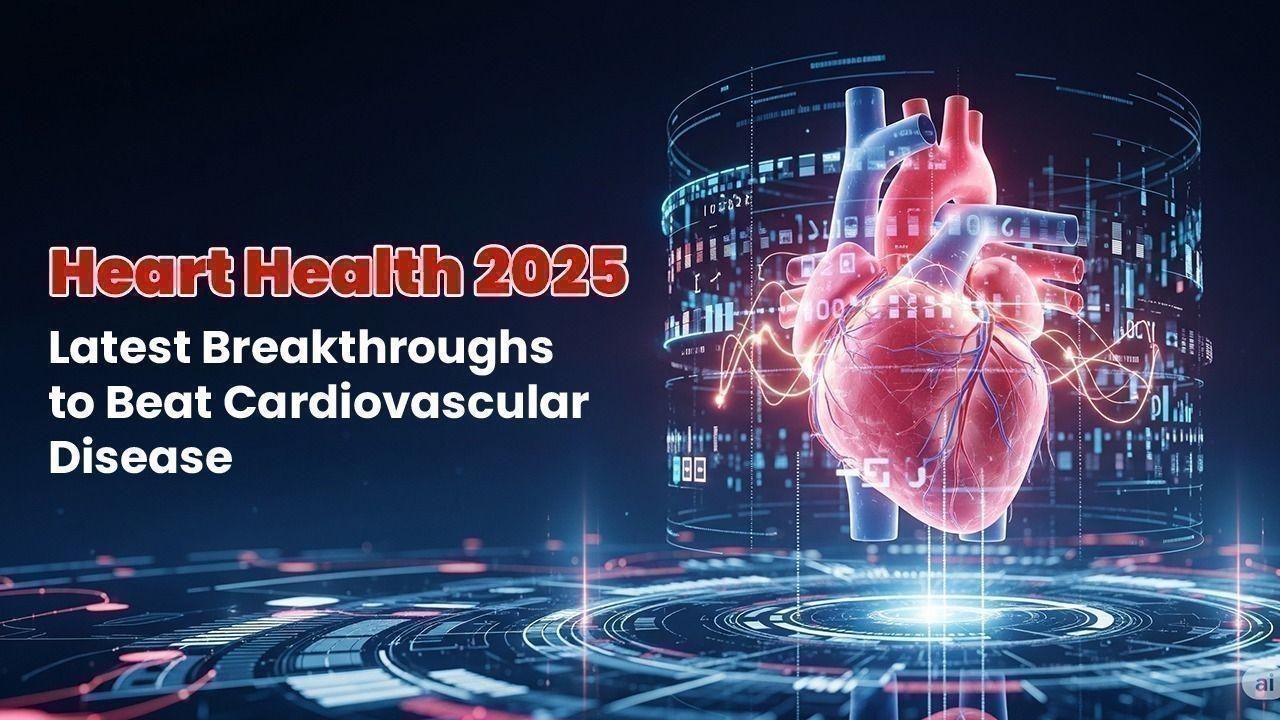
Cardiovascular disease remains the leading cause of death globally. But in 2025, groundbreaking advancements in heart health are transforming how we approach prevention, diagnosis, and treatment. Scientists, doctors, and health tech innovators are working together to improve survival rates and quality of life for millions of people.
This article highlights the most important heart health breakthroughs of 2025—offering insight into how you can protect your heart and benefit from the latest medical innovations.
Until recently, ageing of the heart was considered irreversible. However, researchers now understand that the heart’s decline with age is not only due to weakening cells but also due to damage in the extracellular matrix—a structure that supports heart cells.
By targeting this matrix, scientists have found ways to restore heart function and make older hearts perform more like younger ones. These discoveries are laying the foundation for treatments that could significantly slow or even reverse heart ageing.
Still, proven lifestyle choices remain essential: regular exercise, a healthy diet, quitting smoking, managing stress, and controlling blood pressure and cholesterol.
Since the 1970s, the United States has seen a remarkable 90 percent decrease in heart attack deaths. This success is credited to faster emergency response systems, wider CPR training, advanced medications, and public awareness campaigns.
However, there’s a concerning rise in deaths from other heart conditions—such as heart failure, arrhythmias, and high blood pressure—which have increased by nearly 80 percent. Experts warn that we must broaden our focus to address all forms of heart disease, not just heart attacks.
Traditional cholesterol tests don’t detect all types of harmful fat in the blood. One silent danger is Lipoprotein(a), a type of cholesterol that is largely genetic and not responsive to diet or standard statin treatments.
Recent developments offer hope:
Lepodisiran: A new drug developed by Eli Lilly that reduces Lipoprotein(a) levels by up to 95% with just one injection. Still in clinical trials, but showing great promise.
Solbinsiran: An experimental RNA-based drug designed to lower LDL and triglycerides.
PCSK9 Gene Editing (VERVE-102): A one-time gene therapy that aims to permanently reduce harmful cholesterol by editing liver genes using CRISPR technology.
These treatments could transform how we manage cholesterol and prevent heart disease.
Heart disease is not just about blocked arteries—it’s also about inflammation. For the first time, doctors can directly treat inflammation within blood vessels.
Colchicine, a medication long used for gout, was approved in 2023 for reducing heart attack risk by approximately 30 percent.
Ziltivekimab and Pacibekitug are advanced anti-inflammatory therapies in clinical trials that show promise in lowering key inflammation markers linked to heart disease.
This shift towards treating inflammation marks an important evolution in cardiovascular medicine.
Drugs like Ozempic, Wegovy, and Mounjaro, originally designed to treat type 2 diabetes and obesity, are now being recognized for their heart-protective benefits.
Clinical studies show that these medications:
Lower blood pressure and blood sugar
Support weight loss
Reduce inflammation
Improve vascular health
They are now being used not just for metabolic conditions but also to reduce the risk of heart attack and stroke.
A major breakthrough in 2025 is the ability to predict heart attacks and strokes years before symptoms appear.
New MRI scanning technology can identify early structural changes in the heart, helping doctors assess risk up to 10 years in advance. This allows for earlier interventions and personalized treatment plans that could prevent heart problems before they start.
Heart care is becoming more accessible and efficient thanks to digital health tools:
Wearables such as smartwatches can detect abnormal heart rhythms, monitor heart rate, and even alert users of potential dangers.
Remote monitoring kits allow healthcare providers to track ECGs, blood pressure, and other vital signs from a distance.
Robotics and AR/VR technology are now used in heart surgery, improving precision and reducing recovery time.
These tools make heart care more convenient and can be particularly helpful for people with limited access to in-person medical care.
New therapies are aiming not just to manage symptoms—but to actually repair or reverse damage to the heart.
Stem cell therapy and bioengineered tissue patches are being tested in clinical trials to regenerate heart muscle after a heart attack.
Gene therapy technologies like VERVE-102 are designed to correct faulty genes responsible for high cholesterol.
RNA-based drugs such as Patisiran and Vutrisiran are now available to treat rare but deadly conditions like cardiac amyloidosis.
These advancements offer hope to patients who previously had few treatment options.
New devices are making heart procedures less risky:
Bioresorbable stents open clogged arteries and then dissolve naturally, reducing long-term complications.
AI-powered CT scans now assist doctors in diagnosing blocked arteries quickly and without invasive testing.
These technologies improve patient comfort and provide more accurate, timely diagnosis.
The future of heart care is not just about technology—it’s about early action and informed decisions. Here’s how you can benefit:
Preventive care remains critical: stay active, eat well, and get regular checkups.
Talk to your doctor about new treatments, especially if you have a family history of heart disease.
Use technology to monitor your health and stay connected with your healthcare team.
2025 marks a turning point in cardiovascular medicine. From cutting-edge gene therapy and advanced imaging to revolutionary medications and smart monitoring tools, heart care is entering a new era.
These innovations are not only saving lives but also improving the quality of life for millions around the world. By combining medical progress with personal responsibility, we have the tools to reduce the impact of heart disease and build a healthier future—starting now.

Dubai Launches Commercial Driverless Taxis with Apollo Go
Dubai Taxi Company partners with Baidu’s Apollo Go to launch driverless taxis, advancing Dubai’s sma

Amelia Kerr Leads NZ to Record ODI Run Chase Against SA
Amelia Kerr’s unbeaten 179 powers New Zealand to record-breaking 348-run chase, beating South Africa

Sharjah Issues New Rules for Electric Vehicle Chargers
Sharjah’s Executive Council sets rules for EV charging stations, detailing installation, tariffs, sa

China VC Funding Hits Record on State-Driven Tech Push
China’s venture capital fundraising is set to hit a record in Q1 2026, led by state-backed investors

Russian Military Plane Crash in Crimea Kills 29 People
A Russian An-26 military plane crashed in Crimea, killing 29 onboard. Authorities suspect technical

IBPC Dubai AGM Strengthens India-UAE Economic Ties
IBPC Dubai AGM highlights growth, inclusivity, and upcoming conclaves, reinforcing India-UAE economi

EU Urges Protection of UNIFIL After Peacekeeper Deaths
EU nations demand protection of UNIFIL forces after deadly attacks, urging restraint and warning aga


Bank of Baroda Faces Abu Dhabi Legal Battle over NMC Collapse
Bank of Baroda’s involvement in Abu Dhabi litigation tied to the NMC Healthcare collapse raises repu

Top Museum Openings of 2026 Set to Transform Global Tourism
From Los Angeles to Abu Dhabi and Brussels, 2026 brings major museum launches—Lucas Museum, Guggenhe

UAE Tour Highlights UAE’s Strength in Hosting Global Sports Events
Abu Dhabi Sports Council says the successful UAE Tour reflects the UAE’s leading role in hosting maj

EU Seeks Clarity from US After Supreme Court IEEPA Ruling
European Commission urges full transparency from the US on steps after Supreme Court ruling, emphasi

SpaceX Launches 53 New Satellites for Expanding Starlink Network
SpaceX launches 53 Starlink satellites in two Falcon 9 missions, breaking reuse records and expandin

RTA Awards Contract for Phase II of Hessa Street Upgrade in Dubai
Phase II of Hessa Street Development to add bridges, tunnel, and upgraded intersections, doubling ca

UAE Gold Prices Today, Monday 16 February 2026: Dubai & Abu Dhabi Updated Rates
Gold prices in UAE on 16 Feb 2026 updated: 24K around AED 599.75/gm, 22K AED 555.25/gm, and 18K AED

Over 25 Ahmedabad Schools Receive Bomb Threat Email, Authorities Investigate
More than 25 schools in Ahmedabad evacuated after bomb threat emails mentioning Khalistan. Authoriti