Post by : Michael Darzi
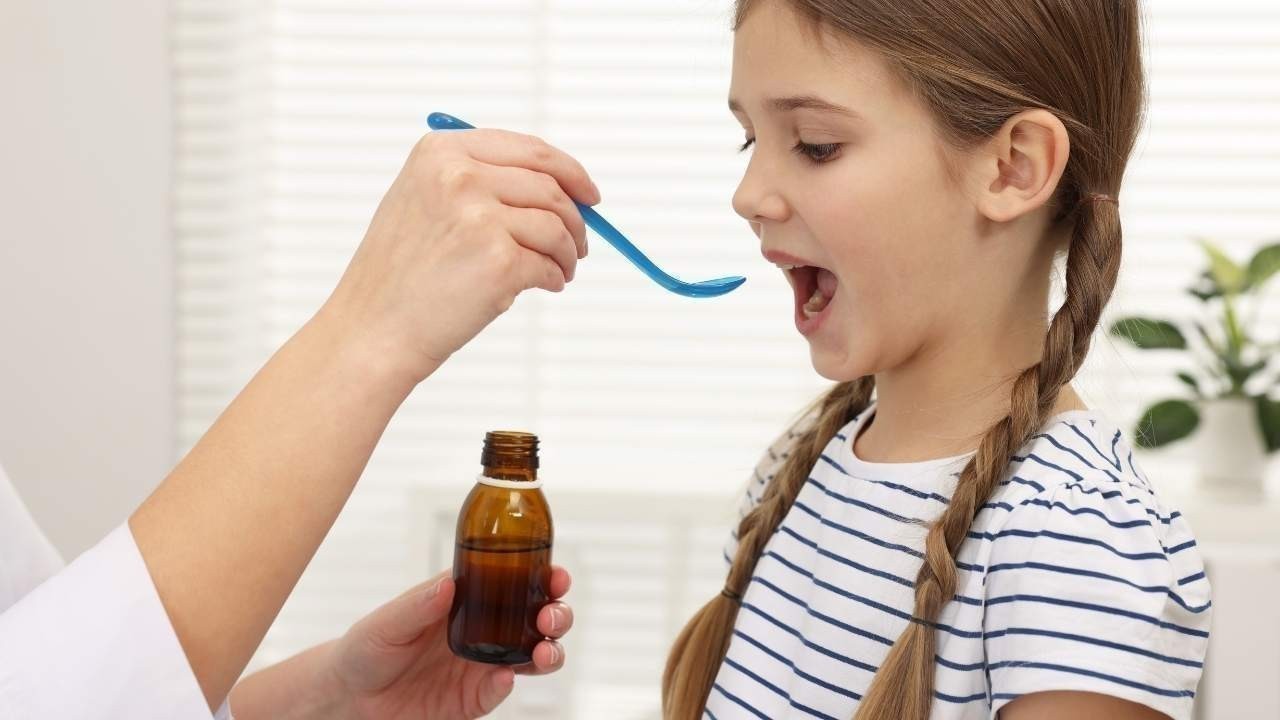
In a major move to protect children’s health, the Directorate General of Health Services (DGHS) has issued new national guidelines that ban the use of cough syrups for infants below one year and advise doctors and parents to be extremely careful when giving such medicines to children under the age of five.
This new rule, called the “No Cough Syrup Policy,” aims to reduce the growing number of health issues and deaths linked to the misuse of cough syrups. Many of these syrups contain ingredients that can be dangerous for small children, especially when given without medical advice.
According to DGHS officials, the goal is to focus on education, prevention, and safer alternatives rather than quick over-the-counter medication. Health experts have welcomed this step, saying it could save hundreds of young lives every year.
The decision comes after a series of tragic reports from different parts of the country where young children became seriously ill—and in some cases, died—after consuming contaminated or unsafe cough syrups.
One of the most alarming incidents took place in Madhya Pradesh, where 14 children under the age of five lost their lives. Investigations suggested that the cough syrup they had consumed was adulterated with harmful chemicals such as diethylene glycol (DEG) and ethylene glycol (EG). Both of these substances are toxic and can damage the kidneys and liver.
In response to these incidents, the Central Government and the DGHS ordered a nationwide investigation. Health authorities began testing syrup samples, inspecting factories, and reviewing the ingredients used in children’s medicines. Officials made it clear that protecting children from unsafe drugs is now a top priority.
The DGHS has outlined several important measures that must be followed by parents, doctors, and pharmacies:
Cough syrups should never be given to babies below one year of age. Infants have underdeveloped organs, which means even a small dose of medicine can cause serious harm or toxicity.
For children between 1 and 5 years old, cough syrups should be given only after a doctor’s prescription. The DGHS reminds caregivers that most coughs in small children are caused by viral infections, which usually get better on their own with simple home care.
The DGHS has advised against fixed-dose combinations—that is, syrups that contain more than one drug. Some of these include ingredients like dextromethorphan or sedating antihistamines, which can cause side effects such as sleepiness, breathing trouble, or an irregular heartbeat in children.
Drug controllers in all states have been asked to check manufacturing units, ensure companies follow Good Manufacturing Practices (GMP), and conduct random quality tests. Pharmacies must not sell cough syrups without prescriptions and should keep clear records of their stock.
Hospitals and clinics have been directed to report any unusual illness patterns among children. This will help authorities detect contaminated medicines early and remove them from the market before more harm is done.
The DGHS has also instructed state governments to start public awareness campaigns. These will teach parents about safe ways to manage coughs—like giving fluids, rest, and warm soups—and warn them not to self-medicate their children with over-the-counter syrups.
The new rules affect every part of the healthcare chain—from families to hospitals to drug shops.
Parents are now advised not to give any kind of cough syrup to babies or toddlers without a doctor’s advice. Instead, they can try safe home remedies such as warm water, saline drops, steam, and a humid environment to ease the cough.
Doctors are being asked to prescribe cough syrups only when absolutely necessary. Pediatricians should also explain to parents that most coughs in young children don’t require medicine and can be treated with rest and hydration.
Pharmacists have been told not to sell cough syrups for infants at all. For children under five, they must check for a doctor’s prescription before selling any syrup. They are also expected to make sure all products on their shelves come from approved and verified manufacturers.
Regulators have been instructed to carry out surprise checks on pharmacies and manufacturing units. Companies that do not meet safety standards or try to bypass rules will face strict penalties.
Several states have already begun implementing these measures. In Kerala, the sale of cough syrups without a doctor’s prescription has been completely banned. In Gujarat, the government has ordered the suspension of production at two pharmaceutical companies after irregularities were found during inspections.
While the decision has been widely appreciated, it comes with certain challenges.
Lack of Awareness: In many rural areas, families often treat coughs at home without consulting a doctor. This habit will take time to change.
Illegal Sales: Some local chemists might continue to sell syrups secretly if strict monitoring is not maintained.
Limited Access to Safe Alternatives: Families need access to safe and affordable alternatives like saline sprays, vaporizers, and herbal remedies.
Differing Medical Opinions: Some doctors believe that in severe cases, such as bronchitis or asthma, certain cough syrups might still help if used responsibly.
Even with these challenges, experts believe that stricter enforcement and continuous education will make a big difference in protecting children’s health.
Children’s bodies are very different from adults. Their liver and kidneys are not fully developed, which means they cannot process strong chemicals properly. Even a small overdose can be dangerous.
Medical studies have shown that most cough syrups offer little benefit for young children. Instead, they often cause unwanted side effects like vomiting, drowsiness, or allergic reactions.
India has also faced similar issues before. In The Gambia and Uzbekistan, contaminated Indian-made syrups led to the deaths of several children. Learning from these tragedies, the DGHS has taken a preventive approach to ensure that no such incident happens again in India. A Safer Tomorrow
The “No Cough Syrup” policy is not just another rule—it’s a message. It reminds everyone that a medicine meant to heal should never become a reason for harm.
By combining awareness, education, and strict supervision, India is moving toward a more responsible and safer healthcare system for its youngest citizens.
Health officials say that the best way to handle a mild cough in children is through care, comfort, and patience—not a syrup bottle. With parents, doctors, and pharmacies working together, this new guideline could become a turning point in how child healthcare is managed in India.
This article by DXB News Network is intended for general informational purposes only. It is not a substitute for professional medical advice, diagnosis, or treatment. Readers are strongly advised to consult a qualified healthcare provider for personalized guidance regarding child health, medication, or any related medical concerns.
New York City Ends TikTok Ban For Official Use Again
New York City lifts its TikTok ban, allowing agencies to post again under strict security rules to i

Iraq Qualify for World Cup After 40 Years With 2-1 Win
Iraq secured a historic World Cup spot after defeating Bolivia 2-1 in playoffs, marking their return

Creative Lab Hosts Spring Media Workshops for Youth
Creative Lab hosted spring workshops in Abu Dhabi, training young students in storytelling, scriptwr

China’s Strategy in Asia 2026: Threat or Opportunity for Global Trade?
Explore China’s new strategy in Asia, its impact on global trade, Belt and Road Initiative, economic

UAE Issues Alert for Rough Seas, Strong Winds Till Apr 3
UAE weather authority warns of rough seas, 40 km/h winds, and rain until April 3, with possible heav

UAE Entry Rules Tightened for Iranian Nationals
Emirates bans Iranian nationals from UAE entry and transit, while Flydubai allows Golden Visa holder

ADEED Platform Boosts UAE Supply Chain Resilience Efforts
ADEED platform launched by 7X and Abu Dhabi partners to enhance supply chain resilience, ensure trad


Bank of Baroda Faces Abu Dhabi Legal Battle over NMC Collapse
Bank of Baroda’s involvement in Abu Dhabi litigation tied to the NMC Healthcare collapse raises repu

Top Museum Openings of 2026 Set to Transform Global Tourism
From Los Angeles to Abu Dhabi and Brussels, 2026 brings major museum launches—Lucas Museum, Guggenhe

UAE Tour Highlights UAE’s Strength in Hosting Global Sports Events
Abu Dhabi Sports Council says the successful UAE Tour reflects the UAE’s leading role in hosting maj

EU Seeks Clarity from US After Supreme Court IEEPA Ruling
European Commission urges full transparency from the US on steps after Supreme Court ruling, emphasi

SpaceX Launches 53 New Satellites for Expanding Starlink Network
SpaceX launches 53 Starlink satellites in two Falcon 9 missions, breaking reuse records and expandin

RTA Awards Contract for Phase II of Hessa Street Upgrade in Dubai
Phase II of Hessa Street Development to add bridges, tunnel, and upgraded intersections, doubling ca

UAE Gold Prices Today, Monday 16 February 2026: Dubai & Abu Dhabi Updated Rates
Gold prices in UAE on 16 Feb 2026 updated: 24K around AED 599.75/gm, 22K AED 555.25/gm, and 18K AED

Over 25 Ahmedabad Schools Receive Bomb Threat Email, Authorities Investigate
More than 25 schools in Ahmedabad evacuated after bomb threat emails mentioning Khalistan. Authoriti