Post by : Naveen Mittal
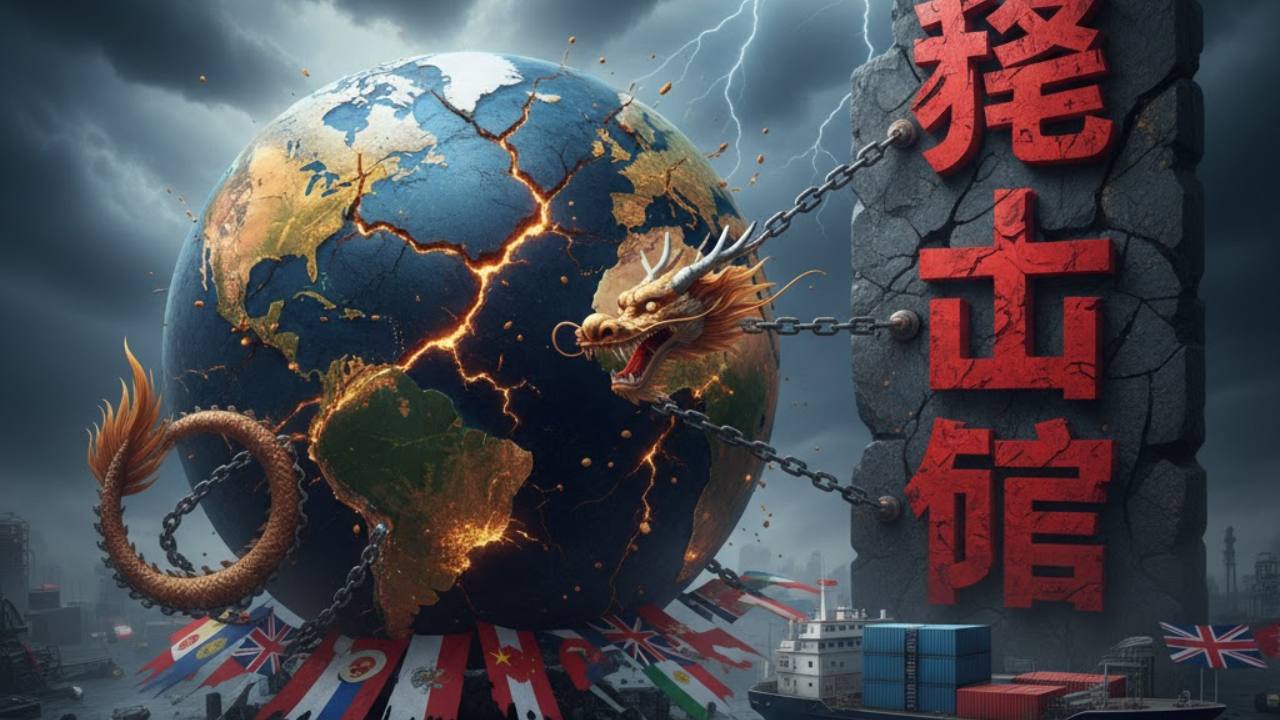
The global economy is once again feeling the tremors of China’s geopolitical muscle—this time not through tariffs or tech bans, but through control of the minerals that power modern life. In early October 2025, Beijing announced new export restrictions on rare earth elements, citing national security and “resource sustainability.” Within hours, the world’s supply chains—from EV makers in Europe to semiconductor fabs in Taiwan—were on high alert.
These rare earth materials, though little-known outside specialist circles, are essential to nearly every modern technology: smartphones, electric vehicles, wind turbines, military radar, and advanced microchips. China’s move has revived an old fear—that control of raw materials could once again become a strategic weapon in global trade.
Rare earths are a group of 17 elements with exotic names—neodymium, dysprosium, yttrium—that serve as the building blocks of high-tech components. Despite their name, they’re not actually “rare” in nature; the challenge lies in extracting and refining them economically and safely.
And that’s where China dominates. The country controls nearly 70% of global rare earth mining and over 85% of processing capacity. For years, the world has depended on China for these critical materials because it invested heavily in the refining infrastructure others ignored.
Now, with Beijing tightening its export policies, the balance of industrial power is once again tilting toward the East.
China’s government insists the new export rules are about “environmental protection and national security.” However, the timing suggests a deeper economic and strategic motive.
The restrictions come amid heightened global competition in semiconductors, defense technologies, and electric mobility—all sectors where rare earths are indispensable. By asserting control over supply, China is sending a subtle message: dependence has consequences.
The move mirrors earlier export curbs on gallium and germanium, which disrupted chip production in Japan and South Korea. Analysts view the latest decision as part of a broader “resource sovereignty” strategy—leveraging minerals as a counterweight to Western restrictions on China’s access to advanced technology.
The announcement hit global markets immediately. Tech and renewable energy stocks slid, while mining shares soared. Analysts predict prices for certain rare earth elements could rise by as much as 40% in the next quarter.
For industries already struggling with post-pandemic supply instability, the impact could be severe:
Electric vehicle manufacturers may face delays in magnet production.
Wind turbine makers could see higher component costs.
Defense contractors in the U.S. and Europe, reliant on Chinese materials for advanced sensors and missile systems, will have to scramble for alternatives.
Even beyond manufacturing, this move has raised concerns about inflationary pressure, as higher input costs ripple through global supply chains.
For decades, Western economies outsourced mining and refining of rare earths to China due to environmental and regulatory hurdles. That decision now looks dangerously shortsighted.
Governments and corporations are responding with urgency. The U.S., EU, Australia, and India are accelerating plans to develop independent rare earth supply chains. The Biden administration has allocated billions for domestic mining and refining projects, while the European Commission recently finalized the Critical Raw Materials Act, aimed at reducing dependency on China.
Japan, once burned by a similar embargo in 2010, is quietly stockpiling rare earth reserves and partnering with Australia’s Lynas Corporation to stabilize future supply.
Still, such projects will take years to bear fruit—and until then, China’s grip remains firm.
The rare earth controversy also exposes a paradox in the global push for clean energy. Green technologies like EVs and wind turbines depend heavily on these very materials, yet their extraction is energy-intensive and environmentally damaging.
China’s move could, ironically, push other countries to revive domestic mining—including reopening environmentally sensitive sites. The question becomes: how do nations balance sustainability with sovereignty?
This tension may define the next decade of industrial policy, as governments weigh environmental promises against the hard reality of strategic independence.
The rare earth episode underscores a new truth about global economics: the next great battles may not be fought over oil, data, or territory—but over critical materials buried in the ground.
As the energy transition accelerates, nations that control the supply of lithium, nickel, and rare earths will wield influence akin to the oil powers of the 20th century. China recognized this early, investing billions in global mining projects and refining capacity while others hesitated.
Now, it’s using that foresight as leverage in a world increasingly defined by strategic interdependence—a world where even a mineral can be a weapon.
The coming months will reveal whether China’s restrictions are a temporary show of strength or the start of a longer policy shift. Either way, the message is clear: global trade is no longer just about goods and capital—it’s about control of the elements that power the future.
For businesses, investors, and policymakers, the rare earth shock is a reminder that globalization’s foundation isn’t digital or financial—it’s geological. And whoever owns the minerals may just own the modern world.
Disclaimer:
This article is for informational purposes only. It reflects ongoing global economic and geopolitical developments. Readers should consult verified industry and policy sources for the latest updates and analyses.

Iran Issues Warnings as US Plans Naval Blockade
Iran cautions that Gulf ports face threats as the US readies a blockade, escalating tensions and jeo

Kuala Lumpur Pays Tribute to Adibah Amin
Kuala Lumpur honors Adibah Amin as RM100,000 raised for her medical care during legacy book launch e
Lane Closures Initiated on Highway 417 This Summer
Expect delays on Highway 417 as lane closures start for summer construction in Ottawa, affecting tra

Tragic Fatality as SkyTrain Strikes Man in Vancouver
A man was fatally injured by a SkyTrain in Vancouver, a police investigation indicates the tragedy i

New Setbacks in Gaza Ceasefire as Israeli Fire Claims Three Lives
Tensions soar as Israeli forces kill three Palestinians, jeopardizing Gaza ceasefire negotiations an

Singapore Prohibits Gaza Symbols at Public Gathering
Organisers at Hong Lim Park's Speakers’ Corner are warned against any displays related to the Israel

Trump Hits Back at Pope Leo XIV Over Iran Remarks
Trump's social media attack on Pope Leo XIV highlights rising tensions over Iran and foreign policy


Actual Cost of Living in Dubai for a Family : Rent, School Fees & Monthly Expenses
Discover the real cost of living in Dubai for a small family in 2026, including rent, school fees, g

Asha Bhosle Legacy (1933–2026): Iconic Songs, Life Story & 8 Decades of Indian Music
Explore the legendary journey of Asha Bhosle, her timeless songs, struggles, achievements, and impac

What Are Some High-Income Skills I Can Learn From Home?
Learn high-income skills from home like writing, digital marketing, and design to start earning onli

What Happens If You Skip Breakfast Every Day? The Silent Damage Your Body Feels
Skipping breakfast daily? Discover how it affects your energy, mood, metabolism, and eating habits i

Asha Bhosle: The Untold Life Story of India’s Most Versatile Voice and Her Final Goodbye
Discover the complete life story of Asha Bhosle, her struggles, career, personal journey, and legacy
Wired vs Wireless Charging: Which Is Better for Speed and Battery Health?
Wired vs wireless charging explained. Learn which is faster, safer for battery life, and better for

Sent Email by Mistake? Easy Ways to Unsend or Fix It Fast
Sent an email by mistake? Learn how to unsend, recall, or fix emails quickly with simple tips to pre

Foods You Should Avoid in Summer to Stay Safe in the Heat
Avoid harmful foods in summer heat. Learn what not to eat to stay cool, hydrated, and healthy with s