Post by : Anis Karim
Over the last week, sharp spikes in smog levels across major urban centres reignited an old but increasingly urgent conversation: is city living becoming unsustainable? What began as scattered social media posts about worsening air quality quickly spiralled into a public debate on whether it is still safe, sensible, or even desirable to live in densely populated metropolitan spaces.
For many, the smog surge wasn’t just another pollution episode—it was a wake-up call. People started questioning daily routines, long-term health, economic choices, and even the basic promise that cities are the ideal places for growth and opportunity. As pollution monitors flashed alarming numbers, the “leave the city” sentiment strengthened online and offline, shaping both public mood and municipal planning discussions.
City planners rarely respond to social sentiment alone, yet this time, the wave was strong enough to force multiple local governments to re-evaluate their priorities. What unfolded over the week was a rapid shift in perception: the idea that a temporary smog event could fundamentally reshape how people imagine the future of urban living.
While smog episodes are not new, several factors made this one particularly impactful. First, it arrived earlier than many expected, catching commuters, schools, and workplaces off guard. Second, health agencies reported a sudden rise in respiratory discomfort complaints, especially among children and elderly individuals. Finally, real-time air-quality dashboards—now widely used thanks to smartphone penetration—made the crisis impossible to ignore.
Families began discussing weekend relocation plans. Middle-aged workers reconsidered their long commutes. Students voiced concerns about outdoor activities. Even those who had grown accustomed to yearly smog cycles admitted this week's spike felt heavier and more suffocating than previous events.
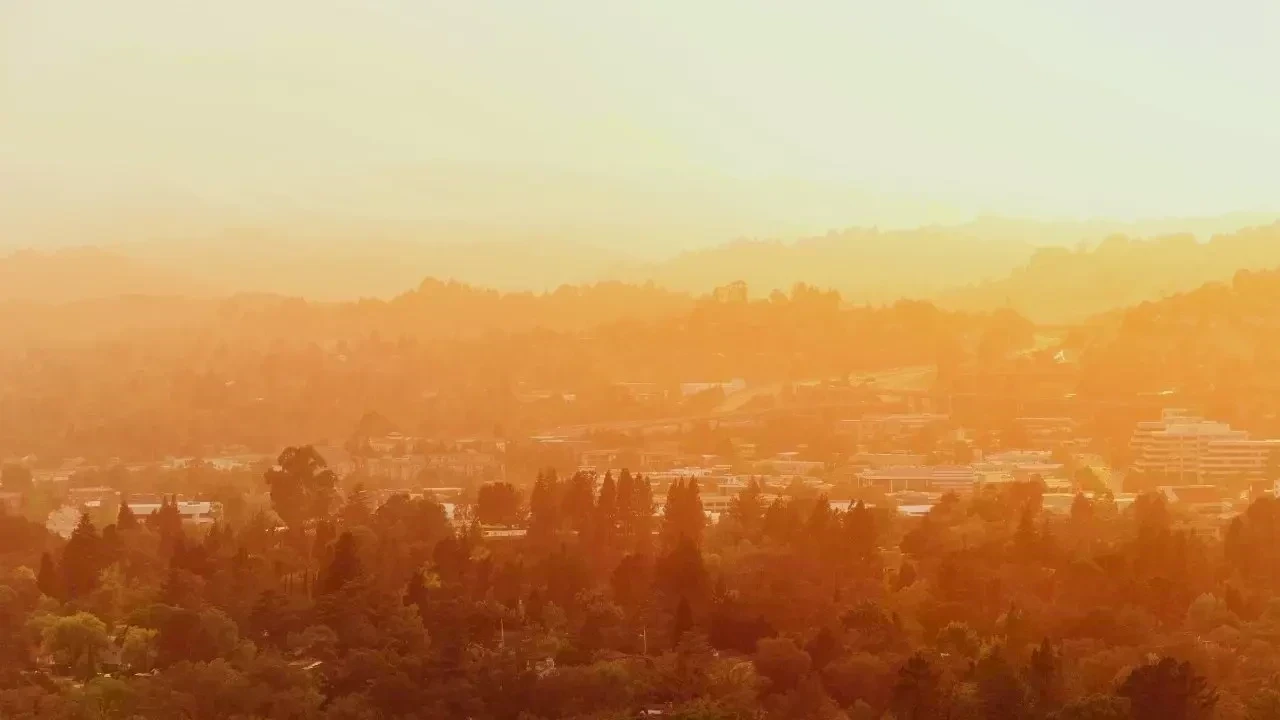
The psychological impact was also notable. Visual smog, thick enough to blur skylines, created an atmosphere of unease. Many city dwellers expressed that it no longer felt like a livable environment, sparking conversations that went beyond just health—conversations about mental well-being, quality of life, and the emotional toll of city living.
As pollution data circulated rapidly, households across different socioeconomic groups found themselves having similar conversations. Some considered temporary escapes to nearby towns. Others debated long-term relocation to tier-2 or tier-3 cities, lured by the promise of cleaner air and quieter lifestyles.
Three major themes emerged among families grappling with the idea:
Parents worried about children’s exposure to toxic air during school hours. Many sought home-based learning days, even if temporary, to minimise outdoor time.
The smog spike forced families to reconsider whether the high cost of living in urban centres was justified when environmental conditions had become unpredictable.
People increasingly questioned whether traffic, noise, and pollution outweighed the convenience and opportunities that cities offered.
Even though not everyone can relocate immediately, the emotional desire for cleaner surroundings gained remarkable momentum within days.
Urban planning bodies, previously criticised for slow environmental responses, suddenly found themselves under pressure. Smog spikes this severe create logistical challenges—restricted movement, declining productivity, cancelled outdoor events, and heightened medical burdens.
This week’s crisis accelerated conversations in planning boards about:
Updating green zoning policies
Expanding clean-transport corridors
Implementing stricter industrial guidelines
Accelerating electric vehicle infrastructure
Introducing seasonal pollution-control mechanisms
Municipal governments began revisiting long-pending projects intended to expand green cover. Proposals that once seemed ambitious—like large-scale solar integration or redesigning traffic systems—were now being treated as necessities instead of luxuries.
Real-estate agents across suburban belts noticed increased inquiries as the smog news spread. Many families who had earlier dismissed suburban migration due to commute times began re-evaluating their priorities.
Why the sudden shift?
Tier-2 cities and suburban towns tend to have less industrial congestion, often resulting in comparatively healthier air.
People reported feeling mentally drained by the smog episode, reinforcing interest in quieter locales.
With remote and hybrid work becoming more common, living away from crowded hubs suddenly seems more practical.
While not everyone will make the move, the desire alone is enough to influence regional planning and housing trends.
The corporate world reacted more swiftly than expected. Several organisations temporarily relaxed attendance rules, encouraged hybrid workdays, or recommended flexible working hours to avoid peak pollution periods. Air purifiers became a renewed corporate priority, and some offices even distributed masks to employees who needed to commute.
HR teams began reassessing wellness policies, including:
Allowing work-from-home days during severe pollution
Offering air-quality allowances
Organising respiratory health check-ups
Providing counselling support for stress linked to environmental discomfort
Workplace policies have become an unexpected but important part of the larger discussion about whether cities are prepared to handle future pollution cycles.
Young adults, especially those in their 20s, responded strongly to the smog episode. Many are openly exploring the possibility of shifting to smaller towns with growing job hubs. This generation values mental peace, flexible work environments, and outdoor leisure—elements severely compromised during smog emergencies.
Students, too, expressed frustration as outdoor sports and physical activities were cancelled due to hazardous air. For a group that relies heavily on active social lives, being forced indoors felt especially restrictive.
These sentiments, amplified online, continue to influence how cities think about recreational infrastructure and public health planning.
Smog influences daily routines in subtle yet significant ways:
Early morning walkers avoiding parks
Public transport users wearing masks again
Parents adjusting pick-up and drop-off schedules
Citizens shopping less at open markets
Cafés and restaurants seeing lower footfall in outdoor sections
These behavioural changes, when accumulated across a population, directly impact economic and social rhythms.
The events of this week revealed a fundamental truth: people are no longer willing to compromise their health for the sake of city convenience. The “leave the city” debate may not result in mass migration immediately, but it has undeniably reshaped how authorities view urban living.
The challenge for planners is clear:
How can cities ensure long-term health and safety?
What measures can meaningfully reduce pollution rather than temporarily mask it?
Can green mobility, sustainable housing, and decentralised development become mainstream?
These questions will determine whether smog episodes continue to spark anxiety or become an opportunity for genuine urban transformation.
The desire is strong, but long-term relocation requires financial, social, and career-related adjustments. Many will stay, but with new expectations. They will demand cleaner air, better policies, greener spaces, and more transparent communication from authorities.
Cities that fail to adapt risk losing their attractiveness. Those that innovate may emerge stronger.
Either way, this week’s smog spike has permanently altered the mindset of millions, nudging them toward a future where health and sustainability sit at the forefront of urban planning.
The recent smog surge was more than a passing event—it was a trigger that exposed deep-rooted anxieties about modern urban living. It forced citizens, planners, and policymakers to look beyond short-term fixes and confront the reality of environmental decline. The “leave the city” debate, once a fringe sentiment, has now entered mainstream discourse, shaping the trajectory of urban planning for years to come.
DISCLAIMER:
This article is based on current observations, expert opinions, and recent environmental developments. It is intended for informational purposes only and should not be taken as medical or legal advice.
Family Wins “Family of the Year 2026” at Noor Al Quran Event in Ras Al Khaimah
A family honored at the Noor Al Quran initiative in Ras Al Khaimah for Quran memorization and strong

US Approves $16.5B Arms Deal Amid Iran War Escalation
US approves $16.5B arms sale to Gulf allies and $7B to UAE, boosting defence amid Iran tensions whil

UAE Busts Hezbollah-Iran Terror Network, Members Held
UAE authorities have broken a terror network linked to Hezbollah and Iran, arresting members accused

Swiatek Stunned by Linette in Miami Open Upset Shock
Iga Swiatek suffered a shocking defeat to Magda Linette at the Miami Open, marking her first opening

UAE Orphan Fund Raises AED 3.3 Billion in Ramadan Drive
UAE’s Mother of the Nation Orphan Fund raises AED 3.3B in Ramadan, boosting support for education, h

Ramadan in the UAE: Reflections on Humanity, Leadership, and Lasting Values
A heartfelt Ramadan reflection by Osama Regaah on UAE’s spirit of humility, unity, and leadership, a

Dhurandhar 2 Opens Big, Crosses ₹100 Cr on Day 1
Ranveer Singh starrer Dhurandhar 2 earns ₹102 Cr on day one despite delays, beating past Bollywood o


Bank of Baroda Faces Abu Dhabi Legal Battle over NMC Collapse
Bank of Baroda’s involvement in Abu Dhabi litigation tied to the NMC Healthcare collapse raises repu
Top Museum Openings of 2026 Set to Transform Global Tourism
From Los Angeles to Abu Dhabi and Brussels, 2026 brings major museum launches—Lucas Museum, Guggenhe

UAE Tour Highlights UAE’s Strength in Hosting Global Sports Events
Abu Dhabi Sports Council says the successful UAE Tour reflects the UAE’s leading role in hosting maj
EU Seeks Clarity from US After Supreme Court IEEPA Ruling
European Commission urges full transparency from the US on steps after Supreme Court ruling, emphasi
SpaceX Launches 53 New Satellites for Expanding Starlink Network
SpaceX launches 53 Starlink satellites in two Falcon 9 missions, breaking reuse records and expandin
RTA Awards Contract for Phase II of Hessa Street Upgrade in Dubai
Phase II of Hessa Street Development to add bridges, tunnel, and upgraded intersections, doubling ca

UAE Gold Prices Today, Monday 16 February 2026: Dubai & Abu Dhabi Updated Rates
Gold prices in UAE on 16 Feb 2026 updated: 24K around AED 599.75/gm, 22K AED 555.25/gm, and 18K AED

Over 25 Ahmedabad Schools Receive Bomb Threat Email, Authorities Investigate
More than 25 schools in Ahmedabad evacuated after bomb threat emails mentioning Khalistan. Authoriti