
Post by : Anis Karim
For many years, everyday items like medicines and clean water were deemed safe. A cough syrup served as a remedy; antibiotics were cures; fresh air was synonymous with health. However, our confidence in these essentials is beginning to fade.
Now, alarming reports are emerging about antibiotic resistance, contaminated medication, and air pollution contributing to health issues. What was once a safeguard has transformed into a latent threat.
These dangers don't announce themselves; they seep progressively into our lives — whether from a child's medicine, daily commutes, or our food choices. What seems familiar could harbor unseen perils.
This article aims not to spark fear but to enhance vigilance.
For the most significant threats today, we often look in the wrong places.
Antibiotics revolutionized healthcare. Once upon a time, minor infections were deadly. Antibiotics emerged, significantly reducing mortality rates.
However, this triumph led to overconfidence.
These miracle drugs began to be misused — taken without doctor recommendations, discontinued prematurely, used against viral infections, and fed to livestock to boost growth.
As a result, bacteria evolved.
Now, we face a hidden health crisis — antibiotic resistance.
Normal infections are becoming increasingly resistant. Standard treatments fail, recovery times lengthen, and the risk of death rises.
Hospitals are witnessing cases where:
Minor injuries refuse to heal
Common fevers lead to severe complications
Routine surgeries turn perilous
Recurrent infections become a norm
This situation is not chance; it’s a consequence of misuse and a lack of understanding.
India leads the globe in antibiotic consumption.
Many pharmacies dispense antibiotics without prescription. Online consultations promote hasty use rather than thorough testing. Livestock often receive antibiotics as feed.
But bacteria don't recognize convenience.
They mutate swiftly.
India, with its dense populations and rising health challenges, has turned into a hotspot for drug-resistant infections.
Faced with drug failures, hospitals depend on last-resort antibiotics — medications once reserved for the terminally ill.
If these treatments fail, options are critically limited.
What was designed for relief instead caused sorrow.
Reports from various countries highlight child fatalities linked to tainted cough syrups.
The culprits? Industrial chemicals not fit for human consumption.
Such substances — intended for manufacturing processes — tainted medicines due to compromised quality control.
In the production realm:
Incorrect alternatives were used in formulations
Safety testing was overlooked
Supplier verification was neglected
Overseeing authorities failed their duties
Children became victims of negligence.
Trusting parents were let down by faulty labels.
The pharmaceutical supply chain is vast.
Numerous intermediaries.
Global sourcing.
Cross-border components.
Private laboratories testing samples.
When systems weaken, safety falters.
In many less-developed regions:
Testing facilities lag behind
Regulatory actions are sluggish
Whistleblowers live in fear
Profit motives overshadow caution
The issue goes beyond isolated incidents.
It arises from a fractured safety system.
Drug safety relies heavily on strict enforcement.
And that requires investment, expertise, and commitment.
When regulatory bodies falter:
Inspections are infrequent
Licenses remain intact despite violations
Penalties for non-compliance are minimal
Testing is often seen as optional
Self-regulation is commonplace
Trust erodes when oversight diminishes.
Children’s bodies are not merely scaled-down versions of adults.
They:
Absorb harmful substances more rapidly
Process toxins less effectively
Possess less efficient detoxification systems
Are in critical growth phases, making them more vulnerable to harm
A dosage safe for adults can prove fatal to infants.
This is why incidents involving contaminated syrups have rattled parents worldwide.
Childhood should naturally embody safety.
Visible toxins in medicine are one thing, but air pollution remains unseen.
Each year, it claims more lives than wars, natural disasters, and accidents combined.
Regions worldwide frequently register air quality metrics that compromise human health.
Particulate pollutants infiltrate the bloodstream.
Pollution never knocks.
It sneaks in unannounced.
Tainted air doesn’t confine itself to your lungs.
It:
Enters the bloodstream
Disrupts heart rhythms
Elevates blood pressure
Compromises immune responses
Increases susceptibility to cancer
Triggers respiratory ailments in children
Accelerates biological aging
Air pollution isn’t just an irritant.
It is a slow-motion life thief.
Cities in India top global pollution charts.
Contributing factors include:
Vehicle emissions
Coal-fired power plants
Incineration of waste
Dust from construction
Industrial discharge
Burning of crop residues
The repercussions are alarming.
Children diagnosed with asthma at age four.
Adults suffering cardiac issues as young as thirty-five.
Elderly individuals grappling with respiratory illnesses without a smoking history.
Produce sprayed with chemicals.
Fruits treated with wax.
Fish adulterated with toxins.
Milk mixed with harmful substances.
Food, too, is emerging as a health hazard.
Chemicals meant to enhance crop yield are now contaminating our meals.
Rinsing no longer guarantees safety.
Cooking cannot neutralize all harmful agents.
Because toxins reside in the tissues of crops, not just on their surfaces.
Current supply chains cross numerous borders.
Components originating in one nation undergo processing in another before being sold worldwide.
When regulatory norms vary:
Safety declines
Accountability diminishes
Documentation becomes ambiguous
Quality control falters
No single entity governs the entire chain.
Each segment operates independently.
Collectively, when weak, they fail.
Health oversight organizations are present.
Governments supervise manufacturing plants.
Testing laboratories analyze products.
Yet, staffing shortages and overwhelming workloads lead to selective enforcement.
Automation is often lacking.
Funding remains sparse.
Sanctions for violations are minimal.
Regulations tend to react to crises rather than prevent them.
Avoid self-medication.
Complete antibiotic treatments as directed.
Never reuse outdated prescriptions.
Do not pressure healthcare professionals for quick drugs.
Inappropriate storage can compromise drug efficiency.
High temperatures can spoil syrups.
Humidity can ruin tablet quality.
Avoid acquiring antibiotics sans prescriptions.
Responsible pharmacists are key.
Use air purifiers if possible.
Open windows during safe times.
Regularly remove dust, especially near traffic areas.
Refrain from burning waste.
Smoke from plastics can have long-term adverse effects.
Boiling water mitigates microbial hazards.
Using filters can eliminate heavy metal concerns.
Contaminated water serves as chronic poisoning.
Minimize processed food consumption.
Prioritize natural food sources.
Evaluate food origins more carefully.
Children breathe with greater intensity.
They consume smaller food portions with a higher chance of toxicity.
Their protection is paramount.
Science isn’t flawed.
Systems are.
Markets fail.
Oversight diminishes.
Discipline wanes.
Education falters.
Families bear the hidden costs.
Health safety isn't guaranteed by labels today.
It’s protected by active awareness.
Society increasingly grapples with:
Anxiety regarding medications
Skepticism towards product labels
Concerns about food safety
Fears surrounding air quality
This uncertainty adversely impacts mental health.
Doubts cloud our perceptions of former safeguards.
The repercussions extend beyond physical health; they touch our emotional wellbeing.
Healthcare systems can't be merely reactive.
They must take proactive steps to:
Enhance pharmaceutical testing procedures
Modernize testing facilities
Increase unannounced inspections
Implement price controls
Ban harmful substances
Implement severe penalties for violators
Public health must override private interests.
Compromise is not an option.
Ethics shouldn't be negotiable.
Prioritizing speed over quality can lead to disaster.
Gains made through compromised health are not profit; they are exploitative.
Consumers must reject:
Deceptive labels
Economical shortcuts
Unknown or unfamiliar brands
Contraband imports
When consumers demand safety, suppliers are compelled to comply.
There are no dramatic alerts.
No explosions or emergencies.
No evacuations take place.
Instead, we face continuous harm.
It unfolds gradually, unnoticed.
Cumulatively.
Today's landscape requires us to recognize:
Medicines can harm
Food can deliver toxins
Air quality can diminish life
Trust in safety must be continuously validated
This isn’t fiction.
It’s our current reality.
However, change is still within reach.
With parental vigilance.
With government accountability.
With corporate ethics.
The future of health relies not only on physical resources.
It’s rooted in collective responsibility.
Disclaimer:
This article is meant for informational purposes and does not substitute for professional medical advice. Always consult healthcare professionals for health matters.
Family Wins “Family of the Year 2026” at Noor Al Quran Event in Ras Al Khaimah
A family honored at the Noor Al Quran initiative in Ras Al Khaimah for Quran memorization and strong

US Approves $16.5B Arms Deal Amid Iran War Escalation
US approves $16.5B arms sale to Gulf allies and $7B to UAE, boosting defence amid Iran tensions whil

UAE Busts Hezbollah-Iran Terror Network, Members Held
UAE authorities have broken a terror network linked to Hezbollah and Iran, arresting members accused

Swiatek Stunned by Linette in Miami Open Upset Shock
Iga Swiatek suffered a shocking defeat to Magda Linette at the Miami Open, marking her first opening

UAE Orphan Fund Raises AED 3.3 Billion in Ramadan Drive
UAE’s Mother of the Nation Orphan Fund raises AED 3.3B in Ramadan, boosting support for education, h
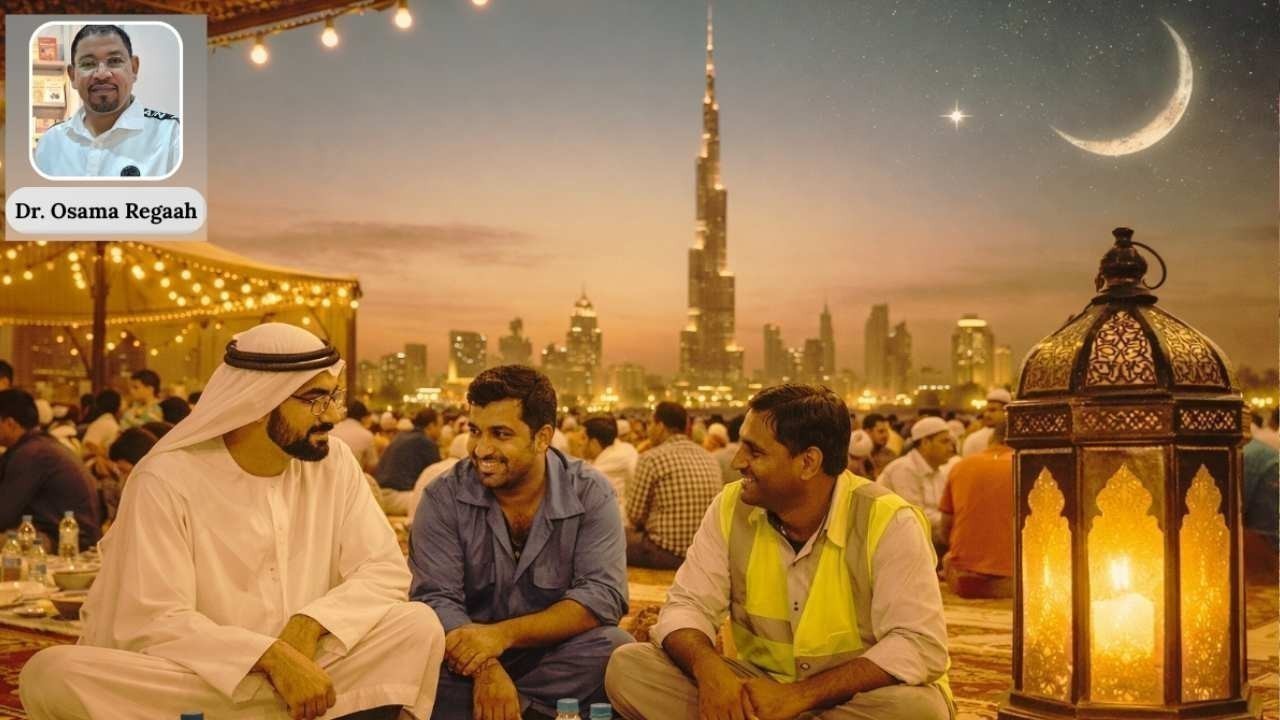
Ramadan in the UAE: Reflections on Humanity, Leadership, and Lasting Values
A heartfelt Ramadan reflection by Osama Regaah on UAE’s spirit of humility, unity, and leadership, a

Dhurandhar 2 Opens Big, Crosses ₹100 Cr on Day 1
Ranveer Singh starrer Dhurandhar 2 earns ₹102 Cr on day one despite delays, beating past Bollywood o


Bank of Baroda Faces Abu Dhabi Legal Battle over NMC Collapse
Bank of Baroda’s involvement in Abu Dhabi litigation tied to the NMC Healthcare collapse raises repu

Top Museum Openings of 2026 Set to Transform Global Tourism
From Los Angeles to Abu Dhabi and Brussels, 2026 brings major museum launches—Lucas Museum, Guggenhe

UAE Tour Highlights UAE’s Strength in Hosting Global Sports Events
Abu Dhabi Sports Council says the successful UAE Tour reflects the UAE’s leading role in hosting maj

EU Seeks Clarity from US After Supreme Court IEEPA Ruling
European Commission urges full transparency from the US on steps after Supreme Court ruling, emphasi

SpaceX Launches 53 New Satellites for Expanding Starlink Network
SpaceX launches 53 Starlink satellites in two Falcon 9 missions, breaking reuse records and expandin

RTA Awards Contract for Phase II of Hessa Street Upgrade in Dubai
Phase II of Hessa Street Development to add bridges, tunnel, and upgraded intersections, doubling ca

UAE Gold Prices Today, Monday 16 February 2026: Dubai & Abu Dhabi Updated Rates
Gold prices in UAE on 16 Feb 2026 updated: 24K around AED 599.75/gm, 22K AED 555.25/gm, and 18K AED

Over 25 Ahmedabad Schools Receive Bomb Threat Email, Authorities Investigate
More than 25 schools in Ahmedabad evacuated after bomb threat emails mentioning Khalistan. Authoriti