Post by : Anis Karim
This week, a manipulated video spread rapidly across social platforms, sparking heated arguments, emotional reactions, and widespread confusion. For several hours, people debated its authenticity—some convinced it was real, others certain it had been tampered with. Only after digital experts clarified that it was, in fact, a deepfake did the conversation shift to something far more important:
Do everyday people know how to identify deepfakes before believing or sharing them?
The incident made one thing very clear—deepfakes are no longer rare or restricted to tech-savvy circles. They can emerge from any corner of the internet and spread faster than fact-checkers can intervene. And because they often feature familiar public figures, news-like settings, or emotionally charged moments, people fall for them easily.
This article breaks down, in simple and relatable terms, how anyone can detect deepfakes using practical steps. No technical background needed—just awareness, observation, and patience. And in a week where millions were misled for hours, these steps have become more essential than ever.
Before learning how to spot a deepfake, it’s important to understand what it actually is.
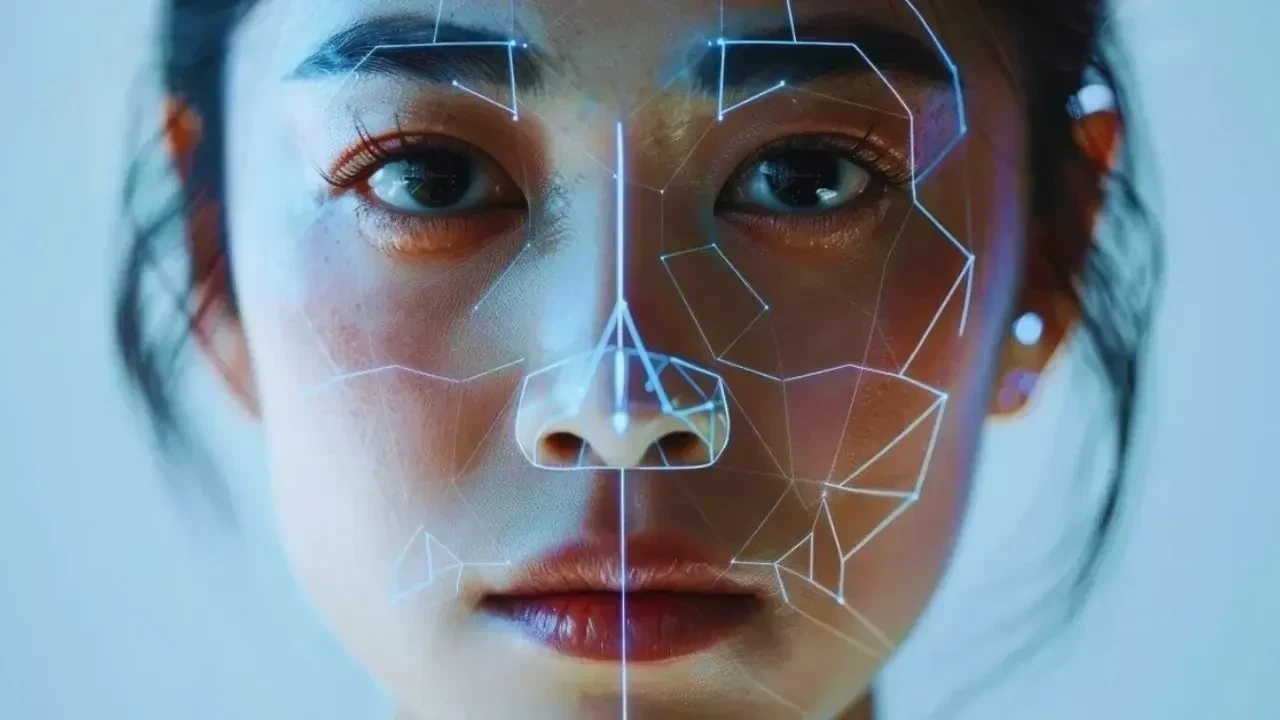
Deepfakes are synthetic videos created using artificial intelligence. They replace a real person’s face or voice with manipulated versions—making it appear as if someone said or did something they never actually did. Some deepfakes are amateurish and easy to spot; others are sophisticated enough to fool even sharp-eyed viewers.
They tend to spread during:
Heated political moments
Celebrity controversies
Breaking news cycles
Social-media trends
Emotional events
Because deepfakes tap into curiosity and shock value, they get shared instantly—bypassing skepticism.
But with the right awareness, anyone can learn to identify them.
This week’s viral incident highlighted the first major giveaway—the eyes felt “off.”
Deepfake creators still struggle to perfect:
Natural blinking
Eye movement that matches head movement
Light reflections on the cornea
Smooth tracking
Watch carefully for:
Long stretches without blinking
Rapid, unnatural blinking
Eyes that don’t focus on anything
Pupils that look flat or “pasted on”
Humans rarely keep their eyes perfectly static—deepfakes often do.
Lip-syncing is another area where deepfakes slip.
Look for:
Words that don’t align with mouth shapes
Delayed lip movement
Stiff jaw motions
Teeth that look smudged or unnaturally bright
Too-smooth or rubbery lips
This week’s deepfake incident showed slight lag around the mouth—an early sign many viewers missed.
Lighting on the edges of the face is often inconsistent in deepfakes.
Check the:
Jawline
Hairline
Neck area
Ears
If any of these appear:
Blurry
Flickering
Sharper than the rest
Slightly displaced
Surrounded by mismatched lighting
…it’s likely fake.
Deepfake overlays often fail at blending hair strands, shadow angles, and skin transitions perfectly.
Human skin contains:
Pores
Lines
Shine variation
Tiny imperfections
Deepfakes often look:
Too smooth
Too airbrushed
Too uniform
Inconsistent under changing light
A “plastic” or “CGI” look is a strong indicator.
Deepfakes sometimes make heads:
Tilt in unnatural angles
Move differently from shoulders
Pivot too smoothly or too sharply
If the head looks slightly disconnected from the body—almost floating—it’s a red flag.
Humans express emotions with:
Micro-expressions
Muscle tightening
Forehead creases
Eye narrowing
Deepfakes struggle to replicate these subtle shifts.
If the emotional tone of the voice doesn’t match the face—or the person seems “emotionally flat”—your suspicion should rise.
Deepfake creators often only manipulate the face, not the rest of the body.
Look for:
Natural arm movement
Posture consistency
Hand gestures matching speech patterns
Reflex reactions
If the body looks stiff or the gestures feel mismatched, the facial overlay may be artificial.
A major giveaway in many deepfakes is incorrect lighting.
Compare:
Shadows on the face
Shadows in the room
Light direction
Reflections
If the lighting on the face doesn’t match the environment, the video was modified.
Pause the video and watch frame by frame (if possible).
Common artifacts include:
Glitches around the mouth
Melting edges
Flickering pixels
Ghost-like outlines
Color shifts
Even advanced deepfakes occasionally leave such traces.
Deepfake voices often:
Miss emotional tone
Have flat pitch
Lack breathing sounds
Feel robotic when sentences shift
Sound disconnected from room acoustics
If the voice feels overly clean, monotone, or strangely synthetic, question it.
Bonus tip:
If the voice sounds real but the mouth doesn’t match—it’s almost certainly a manipulation.
Creators often focus on the face and forget the surroundings.
Watch the:
Background blur
Object movement
Shadow consistency
Reflections
If background elements warp or move unnaturally when the person moves, it’s suspicious.
Even if the video looks real, always cross-check:
Did any credible source report it?
Has the person or official representative commented?
Is the video contextually believable?
Are multiple versions circulating?
Does the clip feel intentionally dramatic or divisive?
Deepfakes thrive on emotional triggers.
This week’s incident spread because people reacted first and verified later—the exact trap deepfake creators rely on.
Deepfakes are engineered to provoke reactions before rational thought kicks in.
Timing is often strategic.
Deepfakes exploit familiarity to amplify confusion.
Compression inconsistencies are major hints.
You don’t need to be an expert—just aware.
People this week used simple online tools to detect anomalies:
Reverse video search
Frame-by-frame scrubbing
Audio analysis apps
Metadata checkers
Slow-motion playback
These tools don’t guarantee accuracy, but they help identify suspicious elements.
Deepfake technology is getting better every month. While detection tools improve, so do manipulation techniques.
This week proved that even a moderately convincing deepfake can:
Damage reputations
Trigger arguments
Influence public opinion
Spread misinformation
Manipulate emotions
Generate panic or outrage
Being able to identify deepfakes is no longer optional—it's part of digital survival.
Always wait for credible verification
Avoid sharing emotionally charged videos instantly
Train your eye to spot inconsistencies
Educate friends and family who may be less aware
Follow official channels for clarification
Stay updated on common manipulation techniques
Digital literacy is a community responsibility—not an individual one.
This week’s circulating deepfake incident wasn’t just another viral moment—it was a wake-up call. It showed how easily manipulated videos can infiltrate public conversations, influence emotions, and shape narratives in minutes. But it also showed that awareness spreads just as quickly.
By learning to spot deepfakes through small visual cues, background inconsistencies, emotional mismatch, and simple verification steps, everyday people can protect themselves—and others—from falling into misinformation traps.
Deepfakes will keep evolving, but so will human awareness. And the more we question, observe, and pause before reacting, the stronger our digital immunity becomes.
This article is for general informational purposes only. Deepfake detection may require professional tools in complex cases. Always verify sensitive content with credible sources before drawing conclusions.

Family Wins “Family of the Year 2026” at Noor Al Quran Event in Ras Al Khaimah
A family honored at the Noor Al Quran initiative in Ras Al Khaimah for Quran memorization and strong

US Approves $16.5B Arms Deal Amid Iran War Escalation
US approves $16.5B arms sale to Gulf allies and $7B to UAE, boosting defence amid Iran tensions whil
UAE Busts Hezbollah-Iran Terror Network, Members Held
UAE authorities have broken a terror network linked to Hezbollah and Iran, arresting members accused

Swiatek Stunned by Linette in Miami Open Upset Shock
Iga Swiatek suffered a shocking defeat to Magda Linette at the Miami Open, marking her first opening
UAE Orphan Fund Raises AED 3.3 Billion in Ramadan Drive
UAE’s Mother of the Nation Orphan Fund raises AED 3.3B in Ramadan, boosting support for education, h

Ramadan in the UAE: Reflections on Humanity, Leadership, and Lasting Values
A heartfelt Ramadan reflection by Osama Regaah on UAE’s spirit of humility, unity, and leadership, a

Dhurandhar 2 Opens Big, Crosses ₹100 Cr on Day 1
Ranveer Singh starrer Dhurandhar 2 earns ₹102 Cr on day one despite delays, beating past Bollywood o


Bank of Baroda Faces Abu Dhabi Legal Battle over NMC Collapse
Bank of Baroda’s involvement in Abu Dhabi litigation tied to the NMC Healthcare collapse raises repu

Top Museum Openings of 2026 Set to Transform Global Tourism
From Los Angeles to Abu Dhabi and Brussels, 2026 brings major museum launches—Lucas Museum, Guggenhe

UAE Tour Highlights UAE’s Strength in Hosting Global Sports Events
Abu Dhabi Sports Council says the successful UAE Tour reflects the UAE’s leading role in hosting maj

EU Seeks Clarity from US After Supreme Court IEEPA Ruling
European Commission urges full transparency from the US on steps after Supreme Court ruling, emphasi

SpaceX Launches 53 New Satellites for Expanding Starlink Network
SpaceX launches 53 Starlink satellites in two Falcon 9 missions, breaking reuse records and expandin

RTA Awards Contract for Phase II of Hessa Street Upgrade in Dubai
Phase II of Hessa Street Development to add bridges, tunnel, and upgraded intersections, doubling ca

UAE Gold Prices Today, Monday 16 February 2026: Dubai & Abu Dhabi Updated Rates
Gold prices in UAE on 16 Feb 2026 updated: 24K around AED 599.75/gm, 22K AED 555.25/gm, and 18K AED

Over 25 Ahmedabad Schools Receive Bomb Threat Email, Authorities Investigate
More than 25 schools in Ahmedabad evacuated after bomb threat emails mentioning Khalistan. Authoriti