Post by : Anis Karim
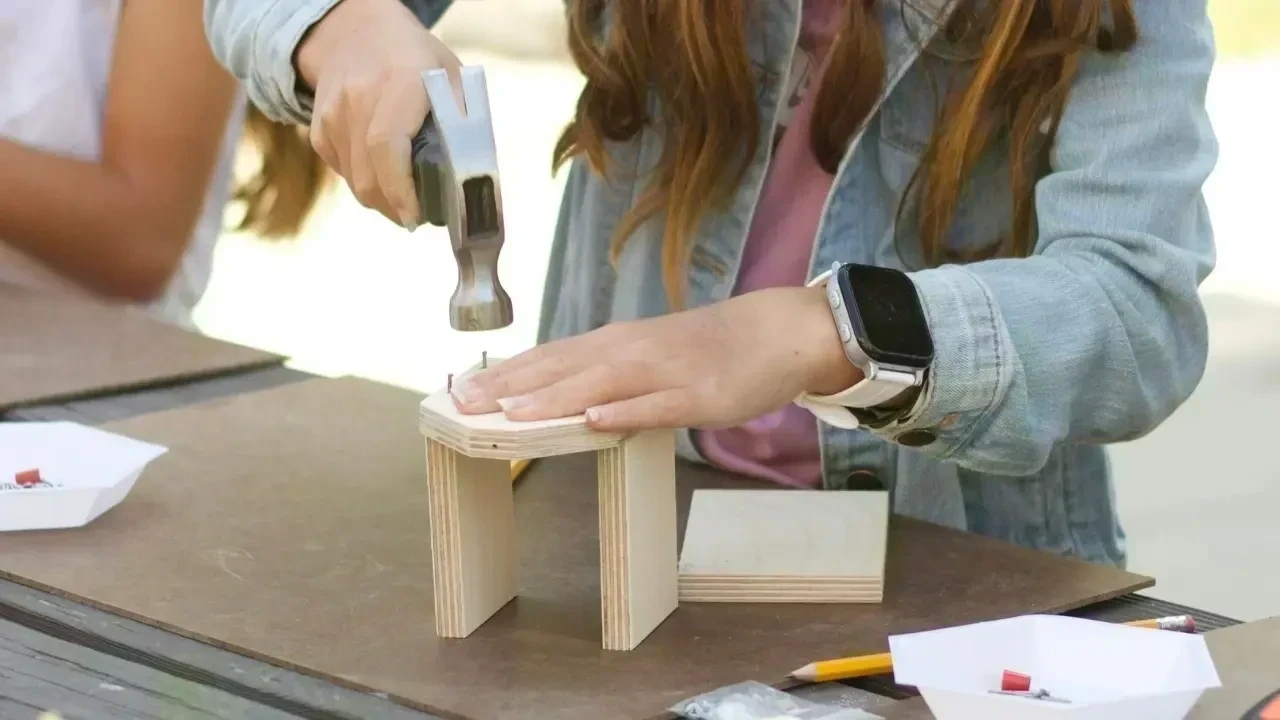
For ages, education followed a standard formula: students went to school, teachers delivered lessons, and knowledge was managed by institutions. That paradigm is now shifting dramatically. Millions are opting for self-directed, do-it-yourself education over traditional classrooms worldwide.
DIY education encompasses self-motivated learning that is flexible and often informal, ranging from online courses and video tutorials to peer learning groups and independent studies. What once was supplementary is increasingly taking center stage, especially for adults and younger learners.
This trend isn't merely a rejection of schools; it's a response to technological advancements, evolving job markets, escalating educational costs, and an emerging belief that learning should be personalized and continuous.
The growth of DIY education stems from systemic changes rather than fleeting trends, where access to knowledge has been transformed. With smartphones, affordable internet, and digital platforms, information previously confined to institutions is now universally available.
Economic factors significantly influence this shift. In various countries, formal education costs have soared while its reliability in securing stable jobs has diminished. Degrees are no longer synonymous with employment, prompting learners to pursue directly applicable skills. DIY education reduces costs and offers expedited learning experiences.
There's also a cultural shift at play. Learners are increasingly seeking autonomy in their education. They desire control over their learning pace, content, and application. Traditional educational institutions, often sluggish to adapt, struggle to meet this demand for flexibility.
The internet has broken down many traditional educational barriers. Tutorials, courses, and communal learning opportunities now transcend geographical limitations, allowing even those in remote locations to access the same materials as city dwellers.
This democratization empowers learners to create personalized education routes. Rather than adhering to a predetermined curriculum, they're assembling insights from diverse sources, adapting as their aspirations change.
Additionally, DIY education nurtures lifelong learning. As career trajectories become less linear, individuals need to continually reskill, something traditional educational systems, which focus on early-life schooling, are poorly designed to accommodate. DIY learning fills that void.
Today's learners are focused on outcomes. They seek educational experiences that yield real-world results: employment, innovation, independence, or expertise in specific skills. DIY education aligns with these aspirations by prioritizing application over mere qualifications.
Learning preferences are evolving as well, with many now favoring modular, bite-sized content over lengthy academic courses. Immediate feedback and practical relevance are increasingly sought by learners. DIY platforms cater to these preferences, while traditional education frequently struggles to keep pace.
This doesn't imply that learners dismiss structure; rather, they desire a flexible framework that accommodates their individual rhythms and interests, eschewing rigid timelines.
A significant driver behind DIY education is the evolving skills economy. Employers now favor demonstrable skills over conventional qualifications. Portfolios, projects, and hands-on experience increasingly outweigh formal degrees.
DIY learners concentrate on skills like programming, design, digital marketing, data analysis, effective communication, and entrepreneurship. With skill requirements rapidly changing, traditional curricula often fall behind.
Conversely, DIY education permits continuous skills upgrades, allowing learners to pivot swiftly to meet changing job demands and maintain a competitive advantage.
As DIY education gains credibility, universities and colleges face mounting pressure. Enrollment trends are shifting, particularly amongst adult learners who now question the return on investment of traditional degrees.
Responses from institutions vary; some are adopting hybrid learning models, while others offer micro-credentials and condensed programs. However, such changes often lag behind evolving learner expectations.
The traditional monopoly of educational institutions on knowledge is waning. Their value now increasingly lies in community building, mentorship, research, and accreditation rather than just content delivery.
The influence of DIY education extends beyond adult learners. Younger students are also exploring alternative educational avenues, such as homeschooling, unschooling, and blended learning.
Parents are often turning to online resources to either supplement or completely replace conventional schooling, especially when traditional systems fall short in addressing individual needs. DIY education allows for tailored learning according to pace, interests, and styles.
However, this trend raises important concerns regarding equity and support. While DIY education empowers autonomy, it also demands self-discipline, guidance, and digital literacy. Conventional schools continue to play a vital role in providing structure, social interaction, and foundational skills.
Despite offering numerous advantages, DIY education presents its own set of challenges. Self-directed learning requires motivation, critical evaluation, and the ability to assess information quality effectively; not all learners are equipped for this responsibility.
Furthermore, there's the matter of credential recognition. While skills are essential, many sectors and professions still value formal qualifications. DIY education can complement but not universally replace traditional paths.
Access inequalities remain a hurdle. Although digital education is pervasive, not everyone has reliable internet or adequate devices. Without robust policy support, DIY education risks exacerbating existing disparities.
As the DIY education movement grows, the role of teachers is evolving. They are transitioning from mere information providers to facilitators, mentors, and guides.
In this changing landscape, educators help learners navigate information, foster critical thinking, and apply knowledge ethically. Their contribution lies in context, feedback, and personal interaction rather than just content delivery.
Traditional schools that adapt to this new role can remain relevant, while those resistant to change risk alienating and losing the trust of learners.
One of the pressing challenges for conventional schools is assessment. DIY education tends to emphasize learning over testing, while traditional systems heavily rely on standardized evaluations.
As alternative credentials become more embraced, innovative assessment methods are emerging, including project-based evaluations, peer reviews, and skill demonstrations.
This shift is compelling schools to rethink their strategies for measuring learning outcomes, as rigid exams may struggle to accurately reflect real-world competencies.
Education has transitioned from being viewed as a finite phase to a lifelong journey. DIY education reinforces this perspective, normalizing ongoing learning throughout life.
This cultural shift influences how societies perceive credentials, career trajectories, and success, with learning transforming into a personal journey rather than a standardized path.
Traditional schools must align with this mindset by nurturing curiosity, adaptability, and lifelong learning habits instead of focusing solely on completion.
The global workforce is undergoing transformation due to automation, AI, and remote work trends. DIY education enables individuals to respond more swiftly than institutional systems.
Governments and employers are increasingly recognizing informal learning. Some are incorporating DIY credentials into hiring and training frameworks, reducing reliance on traditional degrees.
This evolution pressures educational institutions to align their offerings with economic realities without compromising quality and in-depth learning.
The rise of DIY education doesn’t signal the demise of traditional schools; rather, it invites transformation. Schools that adopt flexibility, personalization, and collaboration can coexist with DIY learning.
By forming partnerships with digital platforms, institutions can broaden their reach and relevance. Updating curricula, emphasizing experiential learning, and centering student needs can help restore trust in formal education.
Crucially, schools must listen to students. Understanding the motivations behind the shift to DIY education is the first step towards effective reform.
The future lies not in a choice between DIY education and traditional schools but in a hybrid ecosystem where self-directed learning, formal institutions, and digital platforms coexist.
DIY education will continue growing as it fulfills genuine needs, while traditional schools remain essential for providing structure, equity, and community features.
The upcoming challenge is integration. Education systems must evolve to encourage autonomy while ensuring guidance, quality, and inclusivity.
Disclaimer:
This article is intended for informational and educational purposes only. Perspectives on educational systems may differ based on regional, policy, and cultural contexts.
Family Wins “Family of the Year 2026” at Noor Al Quran Event in Ras Al Khaimah
A family honored at the Noor Al Quran initiative in Ras Al Khaimah for Quran memorization and strong

US Approves $16.5B Arms Deal Amid Iran War Escalation
US approves $16.5B arms sale to Gulf allies and $7B to UAE, boosting defence amid Iran tensions whil

UAE Busts Hezbollah-Iran Terror Network, Members Held
UAE authorities have broken a terror network linked to Hezbollah and Iran, arresting members accused

Swiatek Stunned by Linette in Miami Open Upset Shock
Iga Swiatek suffered a shocking defeat to Magda Linette at the Miami Open, marking her first opening
UAE Orphan Fund Raises AED 3.3 Billion in Ramadan Drive
UAE’s Mother of the Nation Orphan Fund raises AED 3.3B in Ramadan, boosting support for education, h

Ramadan in the UAE: Reflections on Humanity, Leadership, and Lasting Values
A heartfelt Ramadan reflection by Osama Regaah on UAE’s spirit of humility, unity, and leadership, a

Dhurandhar 2 Opens Big, Crosses ₹100 Cr on Day 1
Ranveer Singh starrer Dhurandhar 2 earns ₹102 Cr on day one despite delays, beating past Bollywood o


Bank of Baroda Faces Abu Dhabi Legal Battle over NMC Collapse
Bank of Baroda’s involvement in Abu Dhabi litigation tied to the NMC Healthcare collapse raises repu

Top Museum Openings of 2026 Set to Transform Global Tourism
From Los Angeles to Abu Dhabi and Brussels, 2026 brings major museum launches—Lucas Museum, Guggenhe

UAE Tour Highlights UAE’s Strength in Hosting Global Sports Events
Abu Dhabi Sports Council says the successful UAE Tour reflects the UAE’s leading role in hosting maj

EU Seeks Clarity from US After Supreme Court IEEPA Ruling
European Commission urges full transparency from the US on steps after Supreme Court ruling, emphasi

SpaceX Launches 53 New Satellites for Expanding Starlink Network
SpaceX launches 53 Starlink satellites in two Falcon 9 missions, breaking reuse records and expandin

RTA Awards Contract for Phase II of Hessa Street Upgrade in Dubai
Phase II of Hessa Street Development to add bridges, tunnel, and upgraded intersections, doubling ca

UAE Gold Prices Today, Monday 16 February 2026: Dubai & Abu Dhabi Updated Rates
Gold prices in UAE on 16 Feb 2026 updated: 24K around AED 599.75/gm, 22K AED 555.25/gm, and 18K AED

Over 25 Ahmedabad Schools Receive Bomb Threat Email, Authorities Investigate
More than 25 schools in Ahmedabad evacuated after bomb threat emails mentioning Khalistan. Authoriti