Post by : Anis Karim
For a long time, receiving a phone call meant hearing a genuine human voice. However, the lines have begun to blur as technological advancements have made it possible for machines to mimic human speech more convincingly than ever.
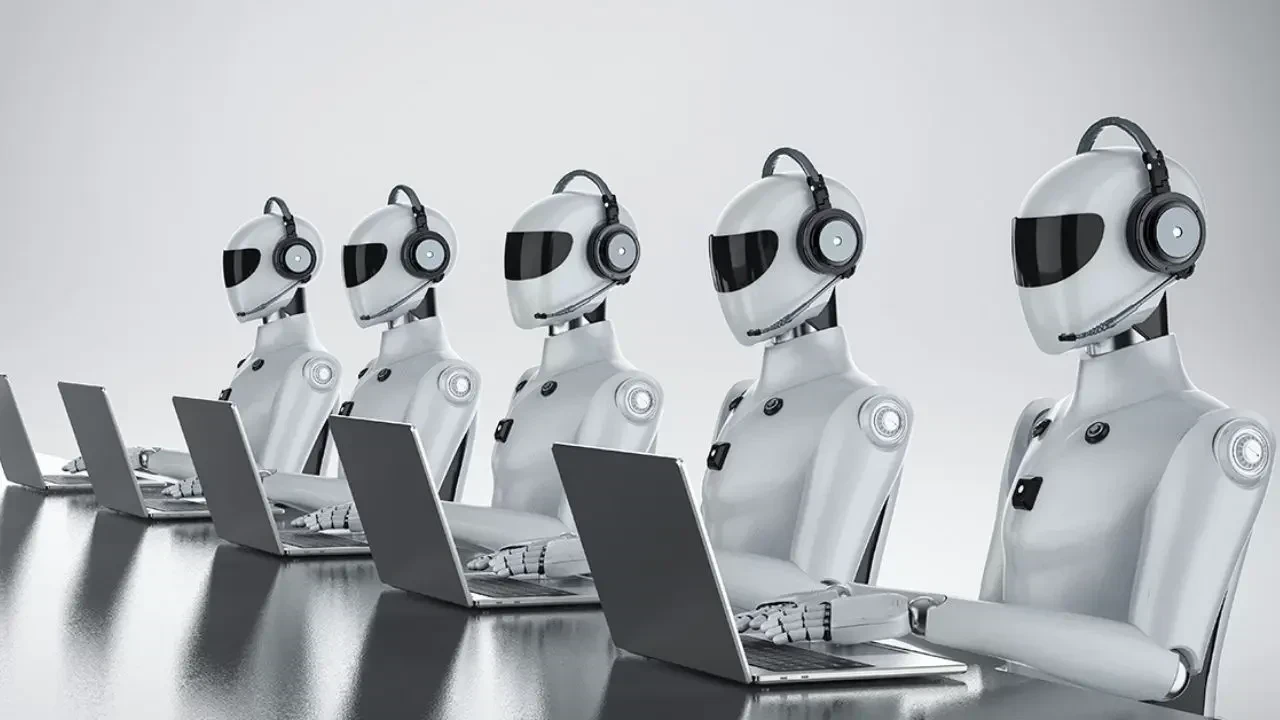
Modern AIs can reproduce voices with remarkable emotional accuracy, mimicking everything from warmth to concern. This technology has already seeped into customer service operations.
Whenever you get a reminder about your bank or a delivery, a pressing question arises:
Is it a real person or just an automated voice?
AI voice cloning is a cutting-edge software that can replicate human voices using artificial intelligence. With adequate voice data, it can generate speech that closely mirrors a person’s unique tone and emotional nuances.
Instead of simply playing back recordings, the technology synthesizes speech dynamically based on input, resulting in real-time interactions.
This real-time capability means:
Dynamic dialogue
Memory of prior conversations
Shifts in emotional tone
Adaptability to various languages
Ongoing engagement
What you hear is no longer just a robotic voice; it’s a voice simulation engineered for engagement.
The process involves analyzing how a person speaks through mathematical algorithms. It captures:
Tone and pitch
Pace and rhythm
Emphasis nuances
Gaps in conversation
Responses to stress
Emotional fluctuations
Once its training is complete, the AI can generate speech on its own, convincingly speaking in the chosen voice.
The customer service industry often faces hefty expenses.
Companies invest considerable funds into call centers, needed infrastructure, and workforce training. AI voice solutions promise to drastically reduce these expenditures.
Businesses are attracted to voice cloning for reasons like:
Instant scalability
Continuous availability
No need for pay or breaks
Consistent, calm interactions
Safe adherence to scripts
Ability to manage multiple inquiries at once
Resilience against fatigue
From a business standpoint, it appears to be an ideal answer.
But from a human point of view, it raises unsettling concerns.
Traditional robotic systems often frustrate users.
Press this, choose that, and repeat.
Voice cloning solutions offer a more natural interaction.
They seamlessly handle:
Inquiries
Concerns
Unstructured inquiries
Language transitions
Emotional responses
This capability propels companies to adopt the technology swiftly.
The impression sounds human.
The interaction feels human.
The pace is, however, machine-like.
The very aspect that makes voice cloning effective also poses risks.
Humans naturally trust familiar voices.
A well-known voice may reduce defenses.
A calm tone can increase compliance.
When machines replace human interactions, listeners often lower their suspicions.
Especially in customer service roles, people usually expect credibility.
When a voice claims to be from a trusted source, like a bank, it may trigger immediate compliance.
Humans have adapted to spotting fake visuals, but auditory deception is far more complex.
Our brains naturally trust spoken language.
When we perceive:
Breath patterns
Emotional tone
Natural pauses
The authenticity assumption kicks in.
Voice cloning takes advantage of these deep-rooted psychological tendencies.
Criminals are quick to adopt innovations.
Voice cloning scams are emerging worldwide.
Scam calls now:
Imitate familiar voices
Pretend to be company representatives
Mirror bosses' voices
Simulate officials
Create faux emergencies
A scammer might impersonate a loved one and call, spinning a tale of distress.
Familiarity breeds panic, leading to hasty actions like money transfers.
Such deceptions can be highly effective.
Text messages can easily be verified.
Emails provide room for scrutiny.
In contrast, voices carry emotional weight.
When receiving a call from someone who sounds like a close relative, doubt is quickly dispelled.
This is where fear steps in.
Voice cloning sparks emotional reactions that text cannot.
Organizations often tout that voice cloning enhances service.
In certain instances, it may do just that.
Advantages can include:
Reduced wait times
Enhanced multilingual services
Consistent quality of service
24/7 operations
Capacity to handle high call volumes
However, authentic emotional responses are not something a machine can replicate safely.
An algorithm lacks comprehension of human distress.
That distinction is significant.
Human representatives notice:
Changes in tone
Signs of hesitation
Confusion indicators
Visible fear
Emotional breakdowns
AI focuses solely on the words.
It misses the depth of human experience.
In critical situations, subtleties can be lifesaving.
Automated voices might falter here.
Effective customer service is built on one essential element:
Trust.
As synthetic conversations proliferate, this trust diminishes.
When clients can’t discern:
Who is genuine
Who represents a business
Who is a potential fraud
The phone becomes a hostile environment.
People will hesitate answering calls.
Support lines risk losing their credibility.
Even legitimate businesses can fall under suspicion.
Rampant voice cloning could potentially compromise public trust in voice communication as a whole.
Voice cloning predominantly operates in murky legal waters.
Key questions remain unresolved:
Who possesses rights to an individual's voice?
Can it be utilized without consent?
Who bears responsibility for any damage caused by cloned voices?
How can misuse be proven?
How does one report identity theft when faced with synthetic identities?
The law tends to move at a slow pace.
Yet technology races ahead.
Victims often find themselves caught in between.
Traditionally, identity theft relied on documentation.
Now, it extends into the realm of voice.
Your voice could become a password.
And it can be stolen without your awareness.
Trust in communication is deteriorating.
People increasingly question:
Unknown callers
Automated communications
Recorded alerts
Digital narratives
Communication anxiety is on the rise.
The phone no longer feels like a safe tool.
The moment a voice appears too perfect, discomfort follows.
We are silently edging towards a state of digital paranoia.
Voice cloning itself isn’t inherently malevolent.
It's a formidable tool.
But, like all powerful technologies, it demands regulations.
Responsible usage means:
Obtaining consent from voice owners
Ensuring clear communication for users
Avoiding impersonation
Implementing robust fraud detection
Establishing transparent protocols
Offering opt-out mechanisms for users
If a voice is artificial, users deserve full disclosure.
Silence equates to deception.
When companies state:
“This call employs synthetic voice technology for assistance,”
trust prevails.
It’s secrecy that erodes credibility.
Individuals must learn to approach calls with caution.
Helpful steps for safety include:
Always verify urgent requests received via phone
Check queries through authorized applications
Consider hanging up and redialing known numbers
Create verification codes for family
Do not share OTPs or account information
Stay composed and avoid emotional reactions during calls
Question any calls demanding rapid financial actions
Trusting blindly is a thing of the past.
The majority of people remain unaware of the complexities behind advanced AI voices.
Educational institutions don’t cover it.
Work environments fail to explain it.
Family discussions often overlook it.
This knowledge rift is troubling.
Digital literacy must evolve to encompass audio awareness.
It's not merely about Internet safety anymore.
Regulatory measures often lack speed.
Yet harm occurs at alarming rates.
Legislators should:
Prohibit identity voice cloning
Enforce transparency rules
Sanction misuse effectively
Set strict authentication benchmarks
Create consent protocols
When technology progresses without laws, chaos ensues.
And the intimate nature of voice needs robust protection.
Internal messaging will also face transformations.
Voice cloning could serve in:
Meeting summaries
Training resources
Guidance calls
Client messaging
But it could also be misused for:
Fabricated managerial orders
Internal scams
Identity impersonation
Corporate subversion
Businesses must secure voice authorization systems similar to password protection.
Potentially.
Humans adapt.
However, that acceptance may come with unease.
People might grow accustomed to uncertainty regarding voice authenticity.
This isn't genuine progress.
It's a retreat from certainty.
Technological advancements should enhance human experiences, not complicate them.
Voice cloning presents opportunities for:
Assistive technologies for those with disabilities
Support systems for the elderly
Facilitated language access
Effective emergency management
However, its misuse can:
Erode identity
Manipulate trust
Facilitate fraud
Incite fear
The technology itself remains neutral.
Its application, however, is anything but.
The world currently lags behind.
This gap exists legally, socially, and emotionally.
Voice cloning arrived unexpectedly.
It crept in, masquerading as convenience.
Yet, hidden in this comfort is a heavy cost.
Until safeguards are implemented, trust will continue to diminish.
And once trust vanishes...
The fabric of communication unravels.
Voice cloning stands to be a pivotal subject in the tech discussions of this decade.
What remains sacred when voices are no longer trusted?
DISCLAIMER
This article serves educational purposes only and does not offer legal, cybersecurity, or technical guidance. Seek professional advice for matters concerning security and stay informed on relevant regulations regarding AI technologies.
Family Wins “Family of the Year 2026” at Noor Al Quran Event in Ras Al Khaimah
A family honored at the Noor Al Quran initiative in Ras Al Khaimah for Quran memorization and strong

US Approves $16.5B Arms Deal Amid Iran War Escalation
US approves $16.5B arms sale to Gulf allies and $7B to UAE, boosting defence amid Iran tensions whil

UAE Busts Hezbollah-Iran Terror Network, Members Held
UAE authorities have broken a terror network linked to Hezbollah and Iran, arresting members accused

Swiatek Stunned by Linette in Miami Open Upset Shock
Iga Swiatek suffered a shocking defeat to Magda Linette at the Miami Open, marking her first opening

UAE Orphan Fund Raises AED 3.3 Billion in Ramadan Drive
UAE’s Mother of the Nation Orphan Fund raises AED 3.3B in Ramadan, boosting support for education, h

Ramadan in the UAE: Reflections on Humanity, Leadership, and Lasting Values
A heartfelt Ramadan reflection by Osama Regaah on UAE’s spirit of humility, unity, and leadership, a

Dhurandhar 2 Opens Big, Crosses ₹100 Cr on Day 1
Ranveer Singh starrer Dhurandhar 2 earns ₹102 Cr on day one despite delays, beating past Bollywood o


Bank of Baroda Faces Abu Dhabi Legal Battle over NMC Collapse
Bank of Baroda’s involvement in Abu Dhabi litigation tied to the NMC Healthcare collapse raises repu

Top Museum Openings of 2026 Set to Transform Global Tourism
From Los Angeles to Abu Dhabi and Brussels, 2026 brings major museum launches—Lucas Museum, Guggenhe

UAE Tour Highlights UAE’s Strength in Hosting Global Sports Events
Abu Dhabi Sports Council says the successful UAE Tour reflects the UAE’s leading role in hosting maj
EU Seeks Clarity from US After Supreme Court IEEPA Ruling
European Commission urges full transparency from the US on steps after Supreme Court ruling, emphasi

SpaceX Launches 53 New Satellites for Expanding Starlink Network
SpaceX launches 53 Starlink satellites in two Falcon 9 missions, breaking reuse records and expandin

RTA Awards Contract for Phase II of Hessa Street Upgrade in Dubai
Phase II of Hessa Street Development to add bridges, tunnel, and upgraded intersections, doubling ca

UAE Gold Prices Today, Monday 16 February 2026: Dubai & Abu Dhabi Updated Rates
Gold prices in UAE on 16 Feb 2026 updated: 24K around AED 599.75/gm, 22K AED 555.25/gm, and 18K AED

Over 25 Ahmedabad Schools Receive Bomb Threat Email, Authorities Investigate
More than 25 schools in Ahmedabad evacuated after bomb threat emails mentioning Khalistan. Authoriti