Post by : Anis Karim
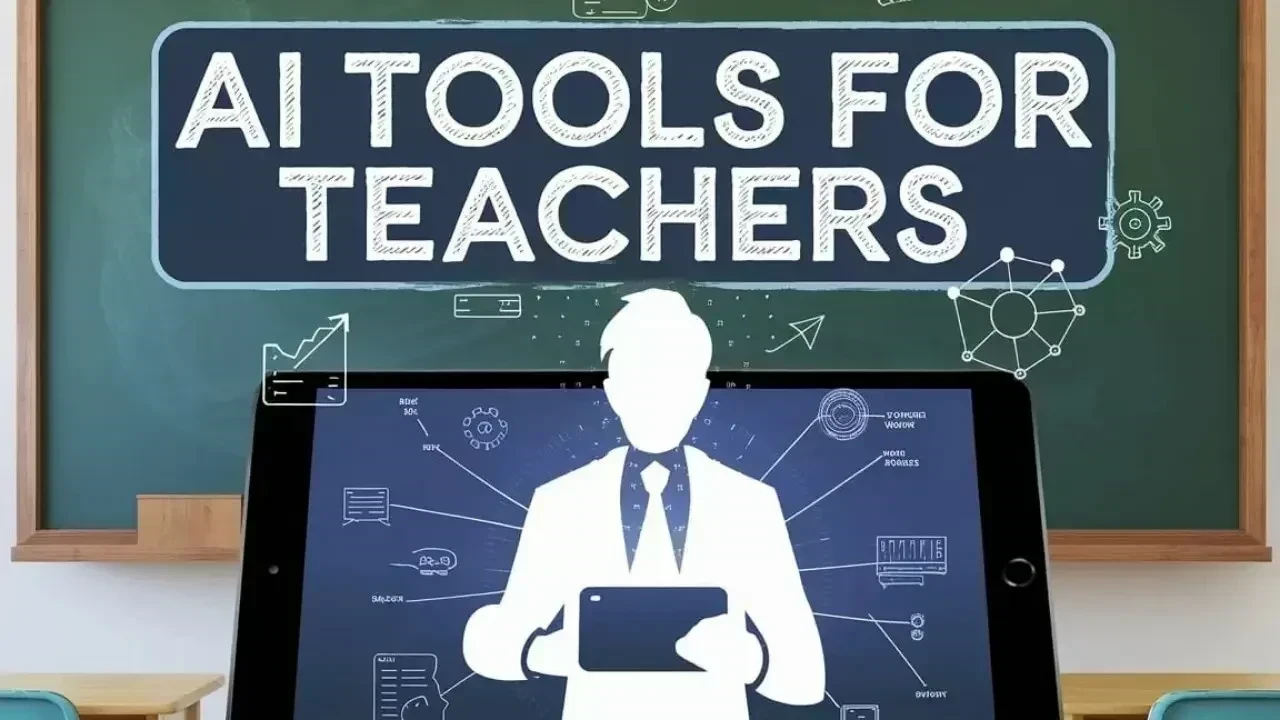
The landscape of education technology has evolved, commencing with digital classrooms and advancing through various iterations such as learning management systems and adaptive platforms. Now, we witness a pivotal change—where teachers take center stage. Artificial Intelligence tailored specifically for educators is emerging as a groundbreaking force in the educational sphere.
Unlike earlier technologies that primarily catered to students, teacher-focused AI addresses the more laborious and repetitive aspects of teaching. Tasks such as lesson planning, assessments, feedback, and administrative duties are being revolutionized by AI-driven solutions. This shift is not merely an upgrade; it fundamentally alters the structure of educational roles and responsibilities.
Historically, education tech has emphasized student engagement—think adaptive quizzes and interactive apps aimed at enhancing learning outcomes. While these innovations offer value, they often overload teachers, necessitating additional learning and management of new technologies without adequate support.
As a result, teachers have often felt like facilitators of technology rather than beneficiaries, leading to burnout amidst the proliferation of digital tools.
Teaching transcends mere knowledge delivery; it incorporates planning, empathy, assessments, and nuanced communication—all under time constraints. AI’s capabilities can alleviate routine burdens, thus enhancing human decision-making processes.
The integration of AI for educators transforms EdTech from being tools that educators must utilize, to becoming supportive assistants that enhance teaching.
AI in education isn’t about generic chatbots or generic automation—it's about purpose-built systems designed around educational standards and classroom dynamics.
These sophisticated AI systems recognize grade levels, learning targets, assessment guidelines, and varied student needs, aligning perfectly with the daily realities faced by educators.
Rather than replacing educators, AI serves as a collaborative partner by providing suggestions, drafting materials, and analyzing data, while educators maintain ultimate control and oversight.
Creating lesson plans that meet curriculum standards can consume considerable time. AI solutions can quickly provide structured outlines aligned with pedagogical objectives, enabling teachers to personalize these plans much faster.
AI enables the generation of diverse lesson versions catering to varying learning paces. This means advanced students and those needing additional support can access tailored materials, significantly lightening the educators' workload.
Grading often leads to considerable teacher fatigue. AI systems can assess assignments, quizzes, and written work based on criteria set by educators.
Teachers can subsequently review AI-generated evaluations, ensuring meticulousness and fairness in grading.
AI can produce nuanced feedback related to students’ mistakes while suggesting improvements, allowing teachers to provide quality responses to even large classes, thus saving immense time.
By analyzing engagement, assignment performance, and attendance, AI can pinpoint which students require additional assistance and the reasons why. This shift enables proactive support rather than reactive solutions.
AI can recommend adjustments in pacing and teaching strategies by tracking comprehension trends and participation, encouraging reflective practices grounded in actionable insights.
The process of drafting emails and progress reports can consume substantial time for educators. AI can generate tailored communication that teachers can review and personalize, promoting clarity without added workload.
AI can automate tedious but necessary compliance reporting and documentation, ensuring high accuracy and freeing up educators to focus on teaching.
AI tools facilitate the development of accommodations for students with various learning differences, such as language barriers or special education needs. Suggestions can include alternative formats and visual aids, enhancing effective inclusion.
AI can assist educators in crafting accessible materials supporting universal design principles without requiring advanced technical skills.
AI can serve as a private coach, aiding teachers in seeking pedagogical advice and strategies at their convenience.
By monitoring lesson outcomes and student progress, AI prompts critical reflection and guides educators towards professional development resources.
The current education landscape is plagued by teacher shortages. AI directly combats obstacles related to workload and stress, making its integration crucial.
Unlike traditional methods that require increased staffing or reduced class sizes, AI expands effortlessly, providing support across countless educators in various educational environments.
AI's functionality hinges on sensitive data concerning students and teachers. Robust frameworks are essential to maintain security and trust.
Without careful design, AI could reflect biases from training data. Educators must maintain a critical engagement with AI outputs.
AI’s role should support, not supplant, educators' professional judgment, emphasizing systems that enhance autonomy.
Futuristic classrooms will see AI embedded within existing platforms, enhancing teaching processes without disruption.
As AI assumes routine tasks, educators can devote more time to fostering creativity, mentoring, and impactful relationships with students.
AI adoption enhances educational effectiveness without proportionate increases in budget, an attractive prospect in financially constrained environments.
Empowering teachers leads to system-wide advantages—better student learning outcomes, enhanced engagement from parents, and streamlined institutional operations.
Comprehending AI’s capabilities is imperative. Educators who adapt to work collaboratively with AI will find themselves at an advantage.
Teacher input during the design and testing phases of AI technologies is essential, ensuring tools genuinely meet educational demands.
AI for teachers signals a significant shift in educational technology, adapting tools to fit educator needs rather than forcing educators to adjust to technology. By lessening administrative pressures, facilitating personalized learning, and promoting professional growth, AI is set to redefine the teaching landscape in the 21st century.

Family Wins “Family of the Year 2026” at Noor Al Quran Event in Ras Al Khaimah
A family honored at the Noor Al Quran initiative in Ras Al Khaimah for Quran memorization and strong

US Approves $16.5B Arms Deal Amid Iran War Escalation
US approves $16.5B arms sale to Gulf allies and $7B to UAE, boosting defence amid Iran tensions whil

UAE Busts Hezbollah-Iran Terror Network, Members Held
UAE authorities have broken a terror network linked to Hezbollah and Iran, arresting members accused

Swiatek Stunned by Linette in Miami Open Upset Shock
Iga Swiatek suffered a shocking defeat to Magda Linette at the Miami Open, marking her first opening

UAE Orphan Fund Raises AED 3.3 Billion in Ramadan Drive
UAE’s Mother of the Nation Orphan Fund raises AED 3.3B in Ramadan, boosting support for education, h

Ramadan in the UAE: Reflections on Humanity, Leadership, and Lasting Values
A heartfelt Ramadan reflection by Osama Regaah on UAE’s spirit of humility, unity, and leadership, a

Dhurandhar 2 Opens Big, Crosses ₹100 Cr on Day 1
Ranveer Singh starrer Dhurandhar 2 earns ₹102 Cr on day one despite delays, beating past Bollywood o


Bank of Baroda Faces Abu Dhabi Legal Battle over NMC Collapse
Bank of Baroda’s involvement in Abu Dhabi litigation tied to the NMC Healthcare collapse raises repu

Top Museum Openings of 2026 Set to Transform Global Tourism
From Los Angeles to Abu Dhabi and Brussels, 2026 brings major museum launches—Lucas Museum, Guggenhe

UAE Tour Highlights UAE’s Strength in Hosting Global Sports Events
Abu Dhabi Sports Council says the successful UAE Tour reflects the UAE’s leading role in hosting maj

EU Seeks Clarity from US After Supreme Court IEEPA Ruling
European Commission urges full transparency from the US on steps after Supreme Court ruling, emphasi
SpaceX Launches 53 New Satellites for Expanding Starlink Network
SpaceX launches 53 Starlink satellites in two Falcon 9 missions, breaking reuse records and expandin

RTA Awards Contract for Phase II of Hessa Street Upgrade in Dubai
Phase II of Hessa Street Development to add bridges, tunnel, and upgraded intersections, doubling ca

UAE Gold Prices Today, Monday 16 February 2026: Dubai & Abu Dhabi Updated Rates
Gold prices in UAE on 16 Feb 2026 updated: 24K around AED 599.75/gm, 22K AED 555.25/gm, and 18K AED

Over 25 Ahmedabad Schools Receive Bomb Threat Email, Authorities Investigate
More than 25 schools in Ahmedabad evacuated after bomb threat emails mentioning Khalistan. Authoriti