Post by : Sam Jeet Rahman
Dubai is often marketed as a city of big paychecks, luxury living, and tax-free income. On paper, salaries look attractive compared to many global cities. Yet a common feeling among residents—especially expats—is that money disappears faster than expected. Even people earning what would be considered a high income elsewhere often feel financially stretched in Dubai.
This disconnect exists because salary figures alone don’t tell the full story. The structure of expenses, lifestyle expectations, and hidden costs make living in Dubai feel expensive, even when earnings are strong. Understanding these factors is essential to managing money realistically in the city.
A high salary does not automatically translate into high purchasing power.
Many Dubai salaries appear impressive when converted into home-country currency. However, local pricing is designed for high-income consumption, meaning everyday expenses absorb a large share of earnings.
The absence of income tax often gives a false sense of financial comfort. Instead of taxes, residents pay indirectly through:
High housing costs
Expensive private services
Premium-priced utilities and transport
Out-of-pocket healthcare and education
The money saved on tax is often redistributed into daily living costs.
Housing is the primary reason Dubai feels expensive.
Rent commonly takes 30–45% of monthly income, especially in central or well-connected areas. Premium locations command global-level rents despite limited tenant protections.
Many landlords require rent to be paid in one or a few cheques annually. This creates:
Cash flow pressure
Forced savings discipline
Upfront financial stress
Even with a good salary, large lump-sum payments feel heavy.
Beyond rent, residents pay:
Maintenance charges
Chiller or cooling fees
Parking costs
Municipality fees
These costs are often underestimated during relocation planning.
Dubai is designed to encourage spending.
The city’s infrastructure revolves around:
Malls instead of public spaces
Dining out instead of home entertainment
Paid experiences instead of free leisure
Daily life naturally involves spending money to exist socially.
Dubai has a strong comparison culture driven by:
Visible luxury
Social media influence
Professional image expectations
People often upgrade cars, phones, clothing, and dining habits faster than planned.
Convenience is premium-priced:
Food delivery
Cleaning services
Ride-hailing
Same-day services
These small expenses compound into significant monthly outflows.
For families, Dubai’s expense perception increases sharply.
Public schooling options for expats are limited, making private education mandatory.
School fees rise annually
Extra costs include uniforms, transport, activities, and trips
Education alone can rival housing costs for families.
From daycare to extracurriculars, children’s expenses are priced at international premium levels.
Unlike many countries, Dubai does not subsidize:
Education
Childcare
Family healthcare
Families must self-fund everything.
Healthcare quality is excellent, but affordability depends on insurance.
Employer-provided insurance may:
Exclude certain treatments
Require co-payments
Limit hospital networks
Out-of-pocket expenses still arise frequently.
Dental, mental health, and specialist consultations often come with significant additional charges.
Healthcare costs don’t hit monthly—but when they do, they feel heavy.
Dubai is car-dependent.
Public transport exists but is not always practical for work-life routines. Car ownership brings:
Fuel costs
Insurance
Salik tolls
Parking fees
Maintenance
Even moderate car choices lead to ongoing expenses.
Taxis and ride-hailing services are convenient but become expensive if used daily.
One key reason Dubai feels expensive is salary stagnation.
Rent, school fees, utilities, and services rise regularly, while many salaries:
Remain flat for years
Increase below inflation
Are renegotiated infrequently
This creates a slow squeeze where expenses grow faster than income.
Job security is tied to contracts and visas. This discourages aggressive salary negotiations and encourages conservative financial behavior.
Dubai’s transient population shapes financial psychology.
Many residents think in short-term horizons:
“I’ll save later”
“I’m here for experience”
“I might leave soon”
This mindset encourages consumption over long-term financial planning.
Without mandatory pension systems for expats, individuals must self-manage long-term savings. Those who don’t plan early feel financial pressure later.
Dubai imports almost everything.
Food, goods, and materials are imported, making prices sensitive to:
Global inflation
Fuel costs
Currency fluctuations
Even basic groceries can feel expensive compared to local-production economies.
Dubai’s expense perception is also psychological.
When people earn more, expectations rise. Spending that would feel acceptable at a lower income suddenly feels excessive.
Seeing constant luxury creates the illusion that others are managing better—even when many are equally stretched.
Those who thrive financially in Dubai usually do a few things differently.
They prioritize affordability over prestige and choose areas with:
Lower rent
Good connectivity
Reasonable service charges
They consciously limit:
Dining out frequency
Impulse upgrades
Subscription overload
Savings are automated and treated as non-negotiable expenses.
They plan exits, investments, and financial goals beyond Dubai.
Dubai doesn’t hide its costs. It simply prices everything transparently, without subsidies. The city rewards:
Financial discipline
Conscious spending
Long-term planning
Those expecting high salaries to automatically create comfort feel the pressure most.
Living in Dubai feels expensive because the city combines high income potential with high self-funded living costs. Without taxes, the responsibility shifts entirely to the individual. Those who understand this early adapt better, while those who rely on salary alone feel constant financial stress.
Dubai is not unaffordable—but it demands awareness, structure, and intentional money management.
This article is for informational purposes only and reflects general cost-of-living trends and financial experiences. Individual expenses vary based on lifestyle, family size, location, and employment terms. It does not constitute financial or relocation advice. Readers should assess personal circumstances or consult qualified professionals before making financial or relocation decisions.

Philippine Airlines Suspends Dubai, Doha Flights Till April 30
Philippine Airlines has suspended Manila-Dubai and Doha flights till April 30 due to Middle East ten
Deadly Factory Fire in Daejeon Kills 11, Several Missing
A massive fire at an auto parts factory in Daejeon, South Korea, has killed 11 people, injured 59, a

Sanofi Opens Innovation Centre in Chengdu China
Sanofi opens its first China Innovation Centre in Chengdu, boosting R&D, clinical trials, and supply

Jordan, Egypt Condemn Terror Plot Targeting UAE
Jordan and Egypt strongly condemn a terror plot targeting the UAE’s economy, reaffirming support for
Elon Musk Found Liable in Twitter Investor Case
A US jury found Elon Musk liable for misleading Twitter investors in 2022 deal, awarding up to $2.1

BTS Comeback Concert Draws 260K Fans in Seoul
BTS holds a mega comeback concert in Seoul with 260,000 fans, marking their first album in 3 years a
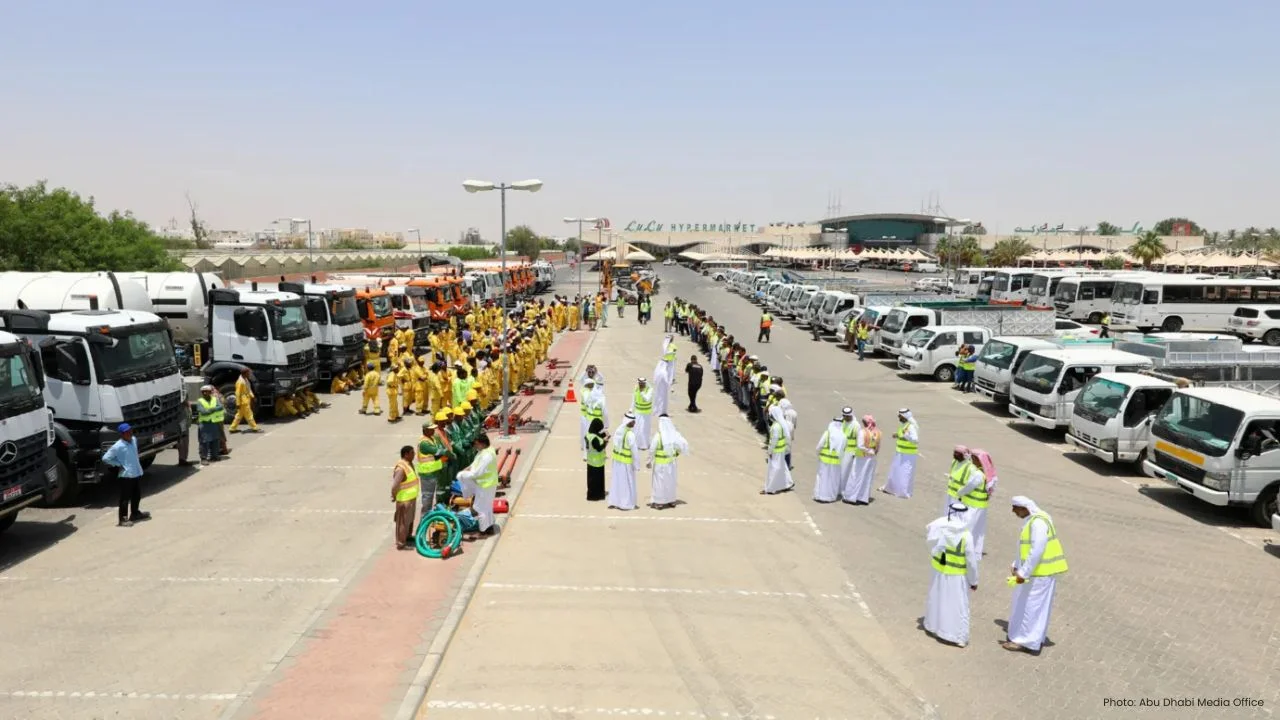
UAE DMT Prepares for Weather Alert March 21–27
Abu Dhabi’s DMT activates emergency plans, deploys teams, and urges public caution as unstable weath


Bank of Baroda Faces Abu Dhabi Legal Battle over NMC Collapse
Bank of Baroda’s involvement in Abu Dhabi litigation tied to the NMC Healthcare collapse raises repu
Top Museum Openings of 2026 Set to Transform Global Tourism
From Los Angeles to Abu Dhabi and Brussels, 2026 brings major museum launches—Lucas Museum, Guggenhe

UAE Tour Highlights UAE’s Strength in Hosting Global Sports Events
Abu Dhabi Sports Council says the successful UAE Tour reflects the UAE’s leading role in hosting maj
EU Seeks Clarity from US After Supreme Court IEEPA Ruling
European Commission urges full transparency from the US on steps after Supreme Court ruling, emphasi

SpaceX Launches 53 New Satellites for Expanding Starlink Network
SpaceX launches 53 Starlink satellites in two Falcon 9 missions, breaking reuse records and expandin
RTA Awards Contract for Phase II of Hessa Street Upgrade in Dubai
Phase II of Hessa Street Development to add bridges, tunnel, and upgraded intersections, doubling ca

UAE Gold Prices Today, Monday 16 February 2026: Dubai & Abu Dhabi Updated Rates
Gold prices in UAE on 16 Feb 2026 updated: 24K around AED 599.75/gm, 22K AED 555.25/gm, and 18K AED

Over 25 Ahmedabad Schools Receive Bomb Threat Email, Authorities Investigate
More than 25 schools in Ahmedabad evacuated after bomb threat emails mentioning Khalistan. Authoriti