Post by : Anis Karim
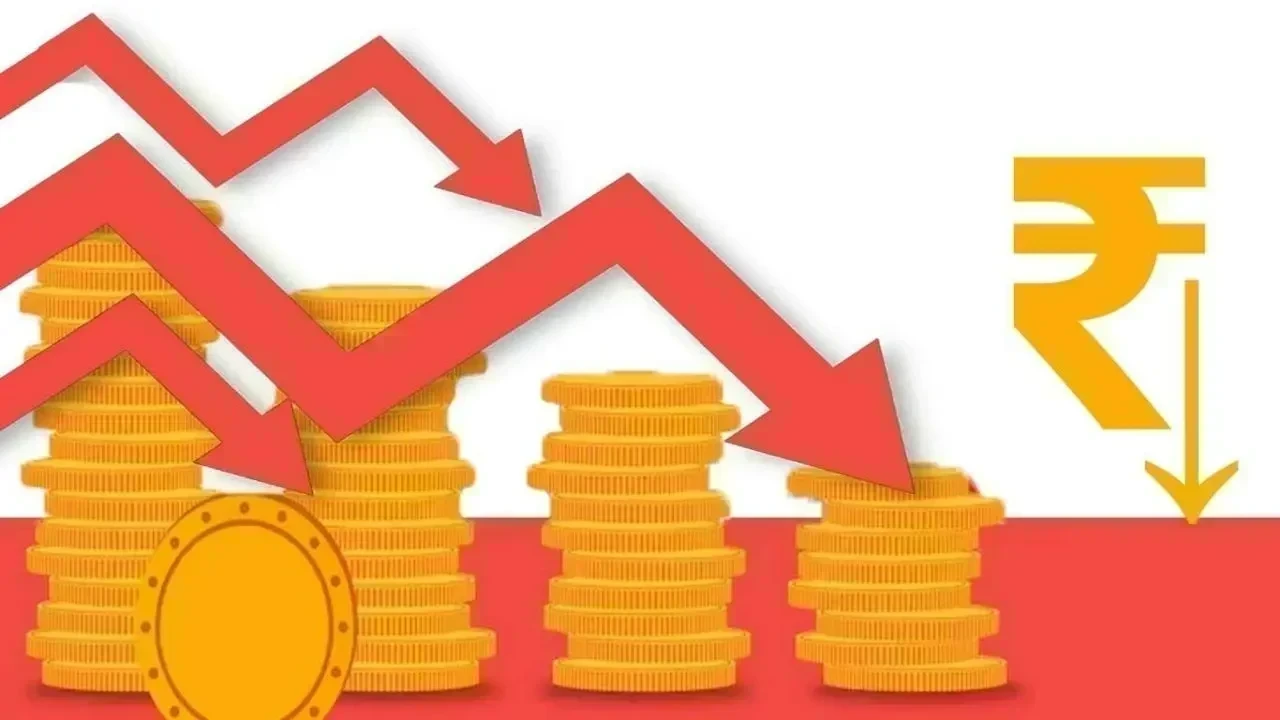
Indian households have long adhered to a simple rule of investments: a rising market equates to increasing wealth. Yet today, the landscape seems tumultuous. While equity indices are reaching new peaks, the rupee is on a downward slope, creating conflicting signals regarding import costs and foreign investments that fill headlines. For many families, this situation resembles a confusing riddle from the economic realm.
On one side, stories of unprecedented stock market valuations and flourishing portfolios emerge. Conversely, the rupee’s decline against the dollar acts as a cautionary signal. Rising grocery prices, more expensive foreign travel, and higher costs for imports are palpable realities impacting households.
This juxtaposition unsettles investors significantly more than explicit negative news. Generally, when a negative market trend is apparent, people adjust their spending. When the atmosphere is entirely positive, they may splurge. However, mixed signals from the economy heighten uncertainty, resulting in indecision that poses the real danger.
Grasping the underlying factors at play—and recognizing that both trends can coexist—is vital for maintaining financial peace. It is crucial to note that a depreciating currency and a thriving market are not always in conflict; at times, they narrate different chapters of the same economic story.
The rupee's descent stems from a mix of numerous influences—both global and domestic in nature.
The US dollar, a dominant global currency, often strengthens during periods of international uncertainty, whether stemming from high interest rates or geopolitical tensions. As investors flock to safer dollar assets, the rupee feels the strain.
Many Indian families may not directly experience the dollar's sway, yet its strength significantly impacts prices for everything from oil to electronics.
Global investors tend to pull back towards safer assets during times of market anxiety. Even if India’s economic fundamentals remain robust, foreign capital may exit simply to realign global investment portfolios.
This capital flight exacerbates the rupee's struggles by enhancing the dollar’s demand.
India's dependency on imported goods—fuel, machinery, and raw materials—means that a weaker rupee results in higher costs in dollar terms, contributing to domestic inflation.
The Reserve Bank of India seeks to ensure currency stability but must tread carefully. Excessive intervention to support the rupee can deplete foreign reserves, while inaction risks inflation problems.
Often, the bank opts for careful management, allowing a gradual decline that avoids drastic fluctuations.
At first glance, one might expect stocks and currency to move in tandem, yet they frequently react to different stimuli.
India’s corporate sector continues to perform well, with manufacturing and technology sectors showing robust growth. Regardless of the rupee's depreciation, businesses are still achieving impressive profits.
For equity markets, it’s this corporate profitability that truly matters, not the dollar’s value.
The Indian market has increasingly become less reliant on foreign investment. Numerous middle-class families now regularly invest via systematic plans and digital platforms, providing a buffer against foreign withdrawal.
Local investment alleviates some of the pressure from global exit trends.
When the rupee weakens, Indian exporters benefit, earning more rupees in exchange for their dollar income. Businesses in IT, pharmaceuticals, and specialized manufacturing directly profit from currency declines.
With projections of forthcoming interest rate peaks globally, investors gravitate toward equities, fueled by future growth expectations. The market thrives not solely on present conditions but also on anticipatory enthusiasm.
The dual narratives of a rising market and a falling currency can perplex households, but recognizing the ramifications can help restore clarity.
The weakening rupee may escalate inflation, eroding the real worth of savings over time. Fixed deposits might seem secure, but their purchasing power could dwindle if inflation outstrips interest earned.
Products with foreign components, such as smartphones and medications, become more expensive. Families will feel these impacts in expenses like schooling, travel abroad, and online services.
Attending schools abroad incurs significantly higher costs. Fees, housing, and daily living expenses will rise in rupee terms, affecting overall family budgets.
In a weaker currency environment, industries focused on exports tend to outperform, while import-dependent sectors face substantial cost pressures.
Employees in technology, pharmaceuticals, and manufacturing often enjoy job stability more than those in sectors impacted by increased material costs.
Market fluctuations stir emotional responses: fear from currency drops and greed from market surges. Acting on these emotions often leads to losses.
Discipline in investments triumphs over impulsive reactions.
Regular investments help sidestep timing errors. Higher markets yield smaller purchases, while dips allow for wider accumulation.
Concentrating wealth in a single area invites volatility. Ensuring a balanced portfolio spread across equities, bonds, gold, and cash yields long-term peace of mind.
As inflation rises, so too should the safety net. What covered three months of expenses last year might not suffice today.
Traditionally, gold serves as India’s protective measure against uncertainty. As the rupee weakens, the value of gold often increases in local markets.
Households possessing gold gain a form of protection during currency depreciation, although gold itself does not generate growth.
The patterns of currency weakness are cyclical, just as markets correct and economies make adjustments.
Historical evidence reveals that staying invested over time outweighs panic-driven reactions.
Those who maintain their positions during currency downturns often realize greater gains, while those who jump in and out suffer from emotional strain.
Transitory capital movements are the norm.
Today, domestic demand has a greater influence on India’s economy than foreign investments. Even with foreign institutional investors withdrawing, Indian markets adapt.
For anyone with foreign loans, the rupee’s weakening heightens the repayment burden.
Wise strategies to consider include:
Prepay whenever feasible
Secure exchange rates as needed
Limit reliance on foreign debt during unstable periods
Loans from local lenders generally remain unaffected.
Globally, central banks strategically adjust interest rates to maintain inflation and growth equilibrium.
The US Federal Reserve has a significant bearing on currency trajectories. As it tightens its policies, the dollar strengthens, while easing often supports emerging markets.
Investment losses stem not from market downturns but from panic-induced selling during perceived downturns.
The currency may fluctuate today, while markets may react tomorrow, but panic exacerbates both.
Calmness leads to sustainable profits.
India's economic fundamentals remain robust:
Demographic advantages
Robust infrastructure investment
Accelerated digital transformation
Rising manufacturing capabilities
Increased consumption patterns
Short-term currency fluctuations do not negate long-term economic progress.
Wealth typically grows over extended periods, not through rapid news cycles.
Inflation related to foreign imports can creep in unnoticed. Minimizing unnecessary expenses on international products can foster financial security over time.
If foreign education or travel plans are on the horizon, it’s wise to plan early and secure favorable rates as the rupee rarely rebounds swiftly.
Healthcare costs tend to rise more quickly than lifestyle costs. With the right insurance policies, families can safeguard their financial health in uncertain times.
Fear rapidly depletes wealth, often more ruthlessly than inflation.
Those who remain composed during turbulent times are likely to accumulate significant returns.
All economies experience cycles of growth and decline.
The survivors of these cycles typically see greater prosperity.
The falling rupee and flourishing markets coexist not in contradiction, but as distinct narratives in the financial landscape.
One reacts to global dynamics; the other reflects domestic resilience.
For ordinary households, the cornerstone lies in maintaining emotional steadiness.
Stay invested.
Stay diversified.
Stay patient.
Investors reap rewards by navigating uncertainty rather than chasing after immediate clarity.
True wealth accumulates quietly amid the noise.
Disclaimer:
The content provided serves informative purposes and should not replace professional financial advisement. Market fluctuations entail risks, and individuals should consult certified financial experts prior to making significant investment choices.

Family Wins “Family of the Year 2026” at Noor Al Quran Event in Ras Al Khaimah
A family honored at the Noor Al Quran initiative in Ras Al Khaimah for Quran memorization and strong

US Approves $16.5B Arms Deal Amid Iran War Escalation
US approves $16.5B arms sale to Gulf allies and $7B to UAE, boosting defence amid Iran tensions whil

UAE Busts Hezbollah-Iran Terror Network, Members Held
UAE authorities have broken a terror network linked to Hezbollah and Iran, arresting members accused

Swiatek Stunned by Linette in Miami Open Upset Shock
Iga Swiatek suffered a shocking defeat to Magda Linette at the Miami Open, marking her first opening

UAE Orphan Fund Raises AED 3.3 Billion in Ramadan Drive
UAE’s Mother of the Nation Orphan Fund raises AED 3.3B in Ramadan, boosting support for education, h

Ramadan in the UAE: Reflections on Humanity, Leadership, and Lasting Values
A heartfelt Ramadan reflection by Osama Regaah on UAE’s spirit of humility, unity, and leadership, a

Dhurandhar 2 Opens Big, Crosses ₹100 Cr on Day 1
Ranveer Singh starrer Dhurandhar 2 earns ₹102 Cr on day one despite delays, beating past Bollywood o


Bank of Baroda Faces Abu Dhabi Legal Battle over NMC Collapse
Bank of Baroda’s involvement in Abu Dhabi litigation tied to the NMC Healthcare collapse raises repu

Top Museum Openings of 2026 Set to Transform Global Tourism
From Los Angeles to Abu Dhabi and Brussels, 2026 brings major museum launches—Lucas Museum, Guggenhe

UAE Tour Highlights UAE’s Strength in Hosting Global Sports Events
Abu Dhabi Sports Council says the successful UAE Tour reflects the UAE’s leading role in hosting maj

EU Seeks Clarity from US After Supreme Court IEEPA Ruling
European Commission urges full transparency from the US on steps after Supreme Court ruling, emphasi

SpaceX Launches 53 New Satellites for Expanding Starlink Network
SpaceX launches 53 Starlink satellites in two Falcon 9 missions, breaking reuse records and expandin

RTA Awards Contract for Phase II of Hessa Street Upgrade in Dubai
Phase II of Hessa Street Development to add bridges, tunnel, and upgraded intersections, doubling ca

UAE Gold Prices Today, Monday 16 February 2026: Dubai & Abu Dhabi Updated Rates
Gold prices in UAE on 16 Feb 2026 updated: 24K around AED 599.75/gm, 22K AED 555.25/gm, and 18K AED

Over 25 Ahmedabad Schools Receive Bomb Threat Email, Authorities Investigate
More than 25 schools in Ahmedabad evacuated after bomb threat emails mentioning Khalistan. Authoriti