Post by : Naveen Mittal
Moving to the UAE as an expatriate offers world-class opportunities, including access to exceptional healthcare. However, navigating the mandatory insurance requirements and understanding the actual costs is essential for a smooth transition. This guide breaks down what you need to know about healthcare costs and the crucial new mandatory regulations taking effect in 2025.
The most significant change in the UAE's healthcare landscape is the expansion of mandatory employer-provided health insurance across all seven Emirates starting from January 1, 2025. Previously limited primarily to Dubai and Abu Dhabi, this federal mandate ensures universal basic coverage for all private-sector employees and domestic workers.
Employer Obligation: All employers are now legally required to provide at least a basic level of health insurance to their staff as a prerequisite for issuing or renewing a residency permit.
The Basic Package: A government-sponsored basic insurance policy, such as the new nationwide package priced competitively around AED 320 per year, is available. This ensures low-income workers and dependents receive essential care. Crucially, this basic plan offers coverage for chronic diseases and pre-existing conditions without a waiting period.
Dependent Responsibility: While the employer must cover the employee, in most cases, expats remain responsible for purchasing health insurance for their family members (spouse, children, and parents). This is a critical factor to include in your annual budget.
The cost of your health insurance will vary significantly based on your needs, but you can expect premiums to fall into distinct tiers:
Basic Coverage (Essential Benefits): These plans are designed to meet the mandatory legal minimum, with prices typically ranging from AED 500 to AED 1,500 annually. They have limited network access and generally involve higher co-payments for services.
Mid-Range Plans: These plans are the most common choice for general expats, offering broader access to specialists and a wider network of hospitals and clinics (both local and regional). Premiums usually fall between AED 3,000 and AED 7,000 per year. They include better coverage for inpatient and outpatient care.
Premium/Comprehensive Plans: For those seeking the highest level of care, including access to top-tier private hospitals, worldwide emergency coverage, and benefits like dental, optical, or comprehensive maternity care, annual premiums start from AED 8,000 and can exceed AED 20,000.
Family Cost: If you are insuring a family of four, you should budget for annual costs that range from AED 17,000 to AED 33,500 for a comprehensive family plan.
While the UAE boasts excellent public hospitals, the healthcare system is structured such that expatriates primarily rely on the private sector.
Public System Access: Expats can access public facilities, but they must first obtain an annual Health Card (for a small fee) and still pay subsidized fees. The public system is primarily subsidized for UAE nationals.
Private Sector Preference: The vast majority of expats choose private healthcare due to its numerous advantages: minimal waiting times, a greater number of multilingual staff, the latest medical technology, and a higher general standard of luxury and comfort.
Out-of-Pocket Costs: Without a robust insurance plan, the costs of private care are substantial. A general practitioner consultation can cost between AED 300 and AED 500, while an emergency room visit may cost AED 500 to AED 1,500. A single hospital stay or surgery can quickly result in a bill that far surpasses the cost of your annual premium.
A critical factor affecting your budget is the high rate of medical inflation in the UAE, which often outpaces the global average.
Premium Hikes: Medical costs and claims are rising, forcing insurance providers to increase premiums. In recent years, premium hikes have been observed from 8% to over 25% for some international and comprehensive policies.
Causes of Inflation: This escalation is driven by several factors, including the high cost of imported medical technology and pharmaceuticals, the profit-driven structure of many private healthcare providers, and high utilization of services.
The Result: You must factor in annual premium increases when budgeting, and understand that a cheaper policy often translates to a much higher co-payment (your portion of the cost, sometimes up to 30%) or a higher deductible (the amount you pay before the insurance starts covering costs).
To manage your healthcare budget effectively, follow these key steps:
Review the EBP: Understand the exact limitations of your employer's Essential Benefits Plan (EBP). It is the minimum, not necessarily the best fit for your needs.
Prioritize Dependent Coverage: Secure a dedicated policy for your family, as this is your legal responsibility. Use a comparison platform to evaluate plans based on network and co-payment limits, not just the premium price.
Check for Exclusions: If you need services like maternity, dental, or vision care, confirm they are explicitly included. They are often optional riders or completely excluded from basic plans.
Factor in the Unexpected: Even with insurance, you will have out-of-pocket expenses via co-payments and deductibles. Have an emergency fund dedicated to unexpected medical costs.
Disclaimer: This article provides general financial guidance based on current UAE regulations and market trends for expatriates. Healthcare costs and insurance laws are subject to change. Always consult with a licensed insurance provider and relevant governmental authorities in the specific Emirate (e.g., DHA in Dubai, DoH in Abu Dhabi) to confirm current legal requirements and obtain personalised advice before making any financial or medical decisions.

GOP Leaders Unveil Plan to End DHS Partial Shutdown
House and Senate GOP leaders propose a two-track plan to fund DHS, aiming to end the record-long shu

Northern California Shaken by Early Morning 4.6 Earthquake
A 4.6 magnitude earthquake struck near Boulder Creek, CA, early Thursday, shaking homes across a 100
Hillhouse Opens Abu Dhabi Office, Strengthens UAE Presence
Hillhouse Investment opens ADGM office with Category 3C license, boosting UAE and GCC investment act
Dubai, China Strengthen Trade & Investment Cooperation
Dubai Chambers meets CCPIT Beijing to enhance trade, investment, and cooperation in digital economy,

Indonesia Earthquake Today: 7.4 Magnitude Quake Triggers Tsunami Warning
A 7.4 magnitude earthquake hits Indonesia, prompting tsunami warnings and emergency evacuations. Get
Malaysia’s Economy Remains Steady Amid Global Tensions
Despite geopolitical risks, Bank Negara highlights Malaysia's strong economic fundamentals and endur
Abu Dhabi Fund Drives Global Development & UAE Export Growth
ADFD’s 2025 report highlights AED 250B financing, global projects, and UAE export support, strengthe


NASA Launches Artemis II Crew for 10-Day Lunar Mission
NASA launches Artemis II with four astronauts for a 10-day Moon mission, marking the first crewed lu
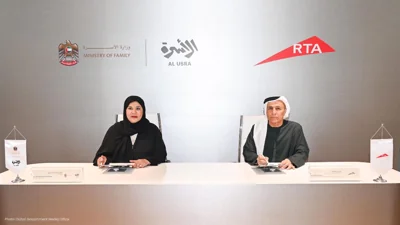
Dubai RTA, Ministry Partner for Family First Programme
Dubai RTA and Ministry of Family partner to enhance transport, urban spaces, and services under Fami

Bank of Baroda Faces Abu Dhabi Legal Battle over NMC Collapse
Bank of Baroda’s involvement in Abu Dhabi litigation tied to the NMC Healthcare collapse raises repu

Top Museum Openings of 2026 Set to Transform Global Tourism
From Los Angeles to Abu Dhabi and Brussels, 2026 brings major museum launches—Lucas Museum, Guggenhe

UAE Tour Highlights UAE’s Strength in Hosting Global Sports Events
Abu Dhabi Sports Council says the successful UAE Tour reflects the UAE’s leading role in hosting maj

EU Seeks Clarity from US After Supreme Court IEEPA Ruling
European Commission urges full transparency from the US on steps after Supreme Court ruling, emphasi

SpaceX Launches 53 New Satellites for Expanding Starlink Network
SpaceX launches 53 Starlink satellites in two Falcon 9 missions, breaking reuse records and expandin

RTA Awards Contract for Phase II of Hessa Street Upgrade in Dubai
Phase II of Hessa Street Development to add bridges, tunnel, and upgraded intersections, doubling ca