Post by : Sam Jeet Rahman
“Safe investments” are often marketed as stress-free, low-risk, and ideal for uncertain times. Fixed deposits, government bonds, savings accounts, traditional insurance plans, and similar instruments are usually placed in this category. They promise capital protection, predictable returns, and peace of mind. Because of this perception, many people put most—or all—of their money into these options believing they are making the smartest possible choice.
What is rarely explained clearly is that safety in investing is not absolute. While these instruments may protect you from market volatility, they expose you to hidden risks that can quietly damage your long-term financial health. These risks do not show up as sudden losses, which makes them harder to notice—but often more dangerous over time.
This article breaks down the real, often-ignored risks of so-called safe investments, explains why they can fail to protect your future, and helps you understand how to think about safety in a more realistic, informed way.
Most people define safety using one simple idea: “I won’t lose my principal.”
Common examples include:
Fixed deposits
Savings accounts
Government bonds
Traditional endowment or guaranteed insurance plans
Treasury-backed instruments
These options feel safe because they offer stability, familiarity, and predictability. However, financial safety has more dimensions than just capital protection.
Inflation is the biggest silent enemy of safe investments.
If your investment earns 5–6% annually while inflation runs at 6–7%, your money is technically growing—but your purchasing power is shrinking.
Over time, this means:
Savings buy fewer goods and services
Long-term goals cost much more than planned
Retirement funds fall short
Emergency funds lose effectiveness
This erosion happens slowly, which is why many people don’t notice it until years later.
Guaranteed returns feel comforting, but they come with a trade-off.
To offer guarantees, institutions invest conservatively and cap upside potential. This means:
Returns rarely beat inflation meaningfully
Long-term wealth creation becomes difficult
Opportunity cost increases over time
You are trading growth for predictability—and often paying more than you realize for that predictability.
Many “safe” investments work only for the current term.
When your deposit or bond matures:
Interest rates may be lower
New returns may not match old ones
Income planning becomes uncertain
This is especially risky for retirees or those relying on interest income.
Taxes reduce real returns more than most investors expect.
Interest income is often fully taxable
Tax is paid yearly, not deferred
Higher tax slabs reduce net gains sharply
After tax and inflation, real returns can approach zero—or turn negative.
Safe investments are often described as liquid, but liquidity comes with conditions.
Penalties for early withdrawal
Lock-in periods
Reduced interest on premature exit
Processing delays
In emergencies, these limitations can force people to borrow at high interest instead.
Putting all your money into “safe” assets creates a different kind of risk.
No exposure to growth assets
Poor diversification
Increased vulnerability to inflation cycles
Long-term financial stagnation
Safety without balance leads to fragility, not strength.
This risk is rarely discussed but extremely important.
Because returns are low:
Savings may not last through retirement
Rising healthcare costs become unaffordable
Dependence on family increases
Financial independence weakens
Living longer with insufficient growth is a serious financial threat.
Safe investments create emotional comfort—but sometimes that comfort delays action.
People avoid learning about better options
Financial planning gets postponed
Asset allocation is ignored
Inflation impact is underestimated
By the time awareness hits, recovery becomes harder.
Even regulated institutions are not risk-free.
Deposit insurance has limits
Institutions can face operational stress
Policy changes can impact returns
While rare, these risks are not zero—and ignoring them is dangerous.
Opportunity cost is not visible on statements, but it compounds quietly.
Missing long-term compounding
Lower retirement corpus
Reduced financial flexibility
Fewer choices later in life
The cost of missed growth often exceeds the fear of short-term volatility.
A critical concept many people miss is that safety is time-dependent.
Capital protection matters more for near-term goals.
Inflation protection and growth matter more for long-term goals.
An investment that is safe for one goal can be risky for another.
True financial safety means:
Protection from inflation
Adequate liquidity
Diversification across asset types
Growth aligned with goals
Flexibility during life changes
Safety is not about avoiding all risk—it’s about managing the right risks at the right time.
You don’t need aggressive strategies to be smarter.
Separate short-term and long-term money
Avoid keeping long-term savings only in low-growth assets
Review returns after tax and inflation
Diversify instead of concentrating
Reassess “safe” choices periodically
Small changes make a big difference over time.
Safe investments feel calm because they don’t fluctuate daily. But lack of visibility does not equal lack of risk. The most damaging financial risks are often slow, silent, and ignored.
Understanding these hidden risks doesn’t mean abandoning safety—it means upgrading your definition of it.
There is nothing wrong with safe investments. The problem begins when they are treated as risk-free, universal solutions. Financial security comes from balance, awareness, and alignment—not from hiding from risk entirely.
The goal is not to chase returns, but to ensure your money can support your future life—not just sit quietly in the present.
This article is intended for informational and educational purposes only and should not be considered financial or investment advice. Investment risks, returns, and suitability vary based on individual financial goals, timelines, and market conditions. Readers are advised to consult a certified financial advisor before making investment decisions.

Philippine Airlines Suspends Dubai, Doha Flights Till April 30
Philippine Airlines has suspended Manila-Dubai and Doha flights till April 30 due to Middle East ten
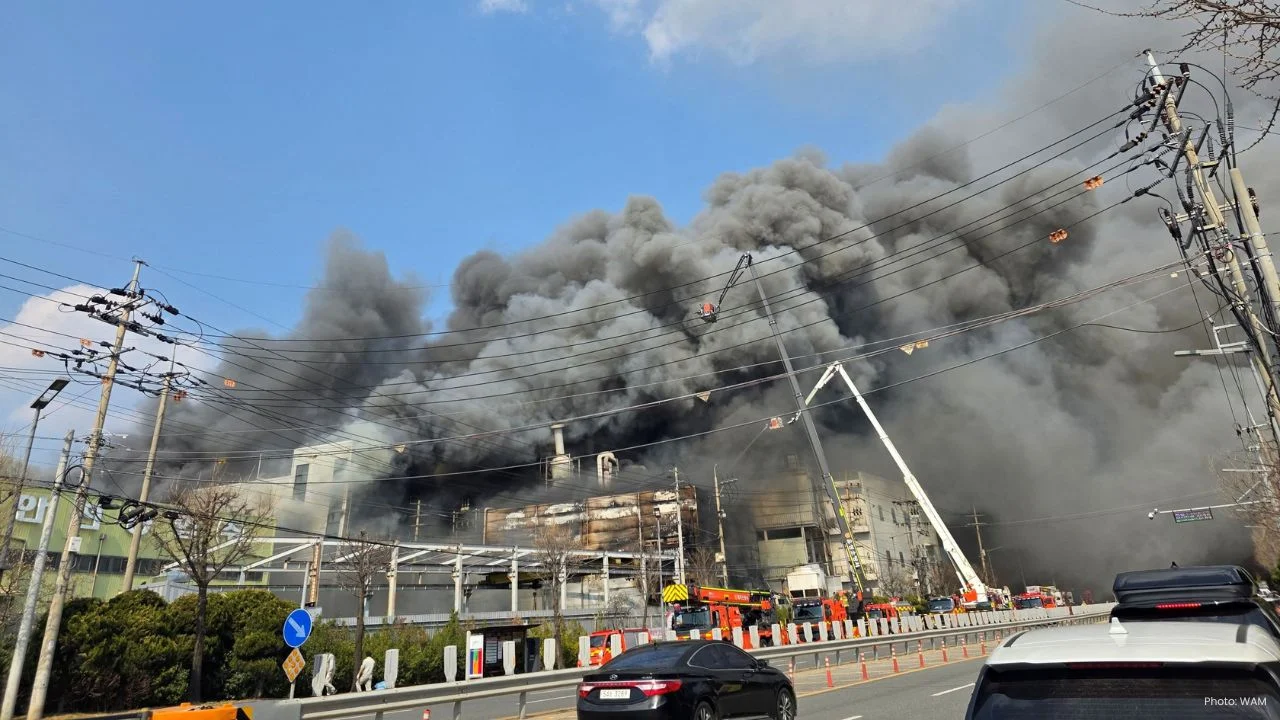
Deadly Factory Fire in Daejeon Kills 11, Several Missing
A massive fire at an auto parts factory in Daejeon, South Korea, has killed 11 people, injured 59, a
Sanofi Opens Innovation Centre in Chengdu China
Sanofi opens its first China Innovation Centre in Chengdu, boosting R&D, clinical trials, and supply

Jordan, Egypt Condemn Terror Plot Targeting UAE
Jordan and Egypt strongly condemn a terror plot targeting the UAE’s economy, reaffirming support for

Elon Musk Found Liable in Twitter Investor Case
A US jury found Elon Musk liable for misleading Twitter investors in 2022 deal, awarding up to $2.1

BTS Comeback Concert Draws 260K Fans in Seoul
BTS holds a mega comeback concert in Seoul with 260,000 fans, marking their first album in 3 years a

UAE DMT Prepares for Weather Alert March 21–27
Abu Dhabi’s DMT activates emergency plans, deploys teams, and urges public caution as unstable weath


Bank of Baroda Faces Abu Dhabi Legal Battle over NMC Collapse
Bank of Baroda’s involvement in Abu Dhabi litigation tied to the NMC Healthcare collapse raises repu

Top Museum Openings of 2026 Set to Transform Global Tourism
From Los Angeles to Abu Dhabi and Brussels, 2026 brings major museum launches—Lucas Museum, Guggenhe

UAE Tour Highlights UAE’s Strength in Hosting Global Sports Events
Abu Dhabi Sports Council says the successful UAE Tour reflects the UAE’s leading role in hosting maj
EU Seeks Clarity from US After Supreme Court IEEPA Ruling
European Commission urges full transparency from the US on steps after Supreme Court ruling, emphasi

SpaceX Launches 53 New Satellites for Expanding Starlink Network
SpaceX launches 53 Starlink satellites in two Falcon 9 missions, breaking reuse records and expandin

RTA Awards Contract for Phase II of Hessa Street Upgrade in Dubai
Phase II of Hessa Street Development to add bridges, tunnel, and upgraded intersections, doubling ca

UAE Gold Prices Today, Monday 16 February 2026: Dubai & Abu Dhabi Updated Rates
Gold prices in UAE on 16 Feb 2026 updated: 24K around AED 599.75/gm, 22K AED 555.25/gm, and 18K AED

Over 25 Ahmedabad Schools Receive Bomb Threat Email, Authorities Investigate
More than 25 schools in Ahmedabad evacuated after bomb threat emails mentioning Khalistan. Authoriti