Post by : Anis Karim
The promise of quantum cryptography — the idea that data could be secured by the fundamental laws of physics rather than just mathematical complexity — has captured the imagination of technologists, security experts and regulators alike. With major investments flowing into quantum computing and quantum networks, the question for the many is not if quantum cryptography will matter, but when.
In everyday life, encryption underpins everything from your mobile banking app to your private messaging, medical records, and national infrastructure. Many of those protections rest today on mathematical problems assumed too hard to solve with classical computers. Enter quantum computing, which threatens to invalidate many of those assumptions. In response, quantum cryptography and post-quantum cryptography are emerging as defence mechanisms.
This article takes you through the essentials: what quantum cryptography is, how it differs from current encryption, where we stand now, what barriers remain, how soon it might arrive in mainstream use and what individuals, organisations and society need to know to prepare.
Quantum cryptography is a class of techniques that use quantum-mechanical phenomena to perform cryptographic tasks. The best known method is quantum key distribution (QKD), where two parties use quantum states (for example, individual photons) to generate a shared, secret key. The key benefit: if an eavesdropper tries to intercept or measure the quantum states, the laws of quantum physics ensure the act of measuring will change the state, alerting the communicating parties to the presence of the interception.
Unlike traditional cryptography, whose security rests on assumptions about computational difficulty, quantum cryptography offers information-theoretic security under certain models. In other words, it becomes—at least in theory—inherently unbreakable by classical or quantum computers.
There are other quantum cryptographic primitives beyond QKD—quantum coin-flipping, quantum digital signatures—but the mainstream discussion is focused on QKD and post-quantum cryptography (PQC). PQC is somewhat different: it designs new mathematical algorithms to resist quantum-computer attacks, rather than relying on quantum physics directly.
The encryption you use today may be vulnerable in future. A message encrypted now and stored could be intercepted, saved and decrypted later once quantum computers become capable. This “harvest-now, decrypt-later” risk means that data with long confidentiality lifetimes—medical records, state secrets, personal archives—are at special risk.
National infrastructure—power grids, financial networks, transport systems—relies on cryptography. A breakthrough quantum computer could, in theory, break many of the key systems that secure identity, authentication and signatures. Quantum cryptography then becomes not just a specialist niche but a foundational element of the digital economy.
As more everyday devices connect—smart homes, wearables, connected cars—the cryptographic burden rises. Traditional encryption may be challenged not immediately, but the trend and the timeline matter. If quantum-safe techniques become standard before vulnerabilities arrive, consumer data, identity, banking and privacy are better protected.
While quantum cryptography remains primarily in research labs and specialist deployments, concrete progress is visible.
There are early QKD networks running at metropolitan scale and even across countries. Some fibre-optic networks and satellite-based quantum links have demonstrated quantum key exchange over substantial distances. These prototypes prove the physics works in real-world environments.
At the same time, bodies responsible for cryptographic standards are advancing. They are preparing new algorithms designed to resist quantum-computer attacks, and some are already being integrated into software and hardware platforms. This dual approach—quantum cryptography + PQC—is becoming the norm.
Large organisations, governments and cloud providers are beginning migration programmes. They are auditing cryptographic assets, planning transition strategies and exploring hybrid schemes (classical + quantum-safe) to prepare for the arrival of quantum threats. The message from industry watchers is clear: preparation must begin now, even if full commercial quantum encryption is years away.
QKD and other quantum cryptography systems have restrictions: photon losses, noise, distance limitations, need for specialised hardware (quantum repeaters, satellites). Scaling them to every device or every network remains a major engineering challenge.
Quantum hardware still faces error correction and coherence issues. The quantum computers required to defeat current encryption (and thus justify quantum cryptography broadly) may require millions of logical qubits, a feat still years away. Similarly, quantum networks for key distribution must handle large volumes, integrate with classical networks and maintain reliability.
Standards for quantum-safe algorithms and quantum networks are emerging—but widespread alignment and deployment will take time. Organisations must ensure backward compatibility, upgrade paths and interoperability between classical and quantum-safe systems.
Deploying quantum cryptography in consumer devices, small businesses or developing countries is expensive and technically complex. Until costs fall and hardware becomes commoditised, mass adoption remains difficult.
Estimating timelines for quantum cryptography is fraught with uncertainty—but expert surveys, industry blueprints and realistic roadmaps offer guidance.
Many analysts refer to “Q-Day”—the moment when a quantum computer can break current public-key cryptography. Some estimates place this between the early to mid-2030s or later. For example, surveys suggest a significant probability that Q-Day could occur before 2035.
The implication: quantum cryptography (and quantum-safe encryption) must be in widespread use before that moment.
Increased pilot and regional QKD networks (metropolitan, national) becoming operational.
Widespread implementation of post-quantum cryptography in enterprise, government and cloud infrastructure.
Early consumer applications of quantum-safe algorithms (software updates, secure hardware) for critical applications.
Broader availability of quantum key distribution services (perhaps subscription models) for enterprise and high-value sectors.
Integration of quantum cryptographic techniques into mainstream telecom, banking and IoT ecosystems.
Clear migration off legacy encryption standards; most new deployments quantum-safe.
True quantum networks with end-to-end quantum key exchange among devices globally.
Consumer-grade quantum cryptography baked into mobile devices, smart appliances, connected vehicles.
Legacy data encrypted under classical systems either re-encrypted or considered insecure.
In summary: while fully ubiquitious quantum cryptography in everyday devices may still be a decade or more away, meaningful adoption in critical systems is very likely by the early 2030s.
Expect software and hardware updates labelled “quantum-safe” or “post-quantum”.
Sensitive personal data (medical, financial) should be held under services that advertize quantum readiness.
Be aware of long-term data confidentiality—what you encrypt now may be vulnerable decades later if you don’t use quantum-safe systems.
Audit current cryptographic assets: what keys, what algorithms, what data longevity?
Develop crypto-agility: systems should be able to transition algorithms and keys without full redesign.
Consider hybrid encryption strategies: classical + post-quantum now, quantum cryptography when feasible.
Prioritise long-lived data—if you store secrets that must remain safe for 10+ years, migration urgency is higher.
Set standards for quantum-safe algorithms and certification of quantum cryptographic systems.
Incentivise migration and help smaller organisations with cost and expertise.
Build national quantum networks or quantum-safe infrastructure for critical services and sovereignty.
Educate citizens and industries—quantum readiness is not just a tech issue, but a foundational trust and security issue.
Secure messaging platforms upgrading to quantum-safe encryption under-the-hood so that chat histories remain private.
Banking and payment systems adopting quantum-safe key exchange for financial transactions and digital wallets.
Telecommunications deploying quantum key distribution to secure 5G/6G networks and undersea fibre links.
IoT and connected devices where manufacturers start integrating post-quantum cryptography into smart home hubs, vehicles and devices.
Cloud providers offering quantum-safe encryption as part of their service for enterprise data, archives and backups.
Hardware bottlenecks: quantum repeaters, fault-tolerant qubits and network infrastructure are still immature.
Cost & economics: unless cost falls significantly, widespread consumer access remains limited.
Standards & regulation: mismatch of international standards could slow interoperability and rollout.
Legacy systems inertia: large global infrastructure relies on current cryptography; migrating is expensive, risky and complex.
Awareness & readiness gap: many organisations assume quantum cryptography is decades away and postpone action—but that creates vulnerability.
Quantum cryptography holds the promise of fundamentally secure communication—a shift from computational difficulty to physical law. Yet the journey from laboratory to everyday use is long and complex. While consumer-level full quantum encryption may still take more than a decade, the foundations are being laid today. Pilots are underway, standards are being established, and migration strategies are in motion.
If one has to pick a practical timeline: by the early 2030s we are likely to see quantum-safe encryption standard in many critical systems, and by the mid-2030s to 2040s we can expect broader availability for everyday consumer devices. The key takeaway: the time to prepare is now. Because once quantum computers reach maturity, encryption that isn’t quantum-safe will be vulnerable, making today’s data tomorrow’s exposure.
This article is provided for informational purposes only and does not constitute technical, legal, or investment advice. Readers should consult qualified cybersecurity professionals, cryptographic experts or regulatory guidance when assessing quantum-security readiness for specific systems or data.

Dubai Launches Commercial Driverless Taxis with Apollo Go
Dubai Taxi Company partners with Baidu’s Apollo Go to launch driverless taxis, advancing Dubai’s sma

Amelia Kerr Leads NZ to Record ODI Run Chase Against SA
Amelia Kerr’s unbeaten 179 powers New Zealand to record-breaking 348-run chase, beating South Africa
Sharjah Issues New Rules for Electric Vehicle Chargers
Sharjah’s Executive Council sets rules for EV charging stations, detailing installation, tariffs, sa
China VC Funding Hits Record on State-Driven Tech Push
China’s venture capital fundraising is set to hit a record in Q1 2026, led by state-backed investors

Russian Military Plane Crash in Crimea Kills 29 People
A Russian An-26 military plane crashed in Crimea, killing 29 onboard. Authorities suspect technical

IBPC Dubai AGM Strengthens India-UAE Economic Ties
IBPC Dubai AGM highlights growth, inclusivity, and upcoming conclaves, reinforcing India-UAE economi

EU Urges Protection of UNIFIL After Peacekeeper Deaths
EU nations demand protection of UNIFIL forces after deadly attacks, urging restraint and warning aga


Bank of Baroda Faces Abu Dhabi Legal Battle over NMC Collapse
Bank of Baroda’s involvement in Abu Dhabi litigation tied to the NMC Healthcare collapse raises repu

Top Museum Openings of 2026 Set to Transform Global Tourism
From Los Angeles to Abu Dhabi and Brussels, 2026 brings major museum launches—Lucas Museum, Guggenhe

UAE Tour Highlights UAE’s Strength in Hosting Global Sports Events
Abu Dhabi Sports Council says the successful UAE Tour reflects the UAE’s leading role in hosting maj
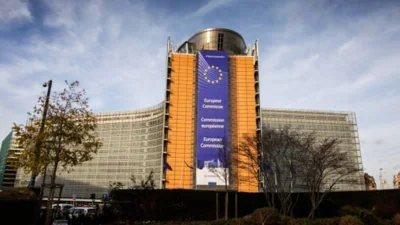
EU Seeks Clarity from US After Supreme Court IEEPA Ruling
European Commission urges full transparency from the US on steps after Supreme Court ruling, emphasi
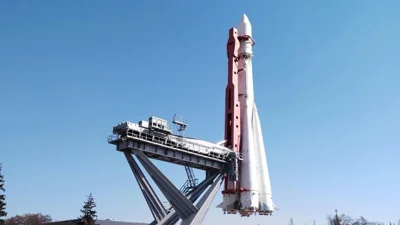
SpaceX Launches 53 New Satellites for Expanding Starlink Network
SpaceX launches 53 Starlink satellites in two Falcon 9 missions, breaking reuse records and expandin

RTA Awards Contract for Phase II of Hessa Street Upgrade in Dubai
Phase II of Hessa Street Development to add bridges, tunnel, and upgraded intersections, doubling ca

UAE Gold Prices Today, Monday 16 February 2026: Dubai & Abu Dhabi Updated Rates
Gold prices in UAE on 16 Feb 2026 updated: 24K around AED 599.75/gm, 22K AED 555.25/gm, and 18K AED
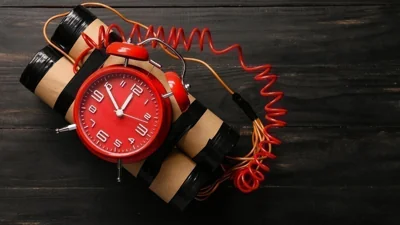
Over 25 Ahmedabad Schools Receive Bomb Threat Email, Authorities Investigate
More than 25 schools in Ahmedabad evacuated after bomb threat emails mentioning Khalistan. Authoriti