Post by : Anis Karim
On January 12, 2026, a significant mission failure was reported by the Indian Space Research Organisation (ISRO) as the PSLV-C62 rocket did not achieve its intended orbit, resulting in the loss of the vital DRDO’s hyperspectral imaging satellite EOS-N1 (also referred to as Anvesha) along with 15 additional satellites that included advanced technologies. This was anticipated to be India’s inaugural orbital launch of the year, but the mission ended abruptly after an anomaly disrupted the rocket’s trajectory during the critical third stage.
The implications of this failure are vast, impacting national strategic capabilities, international customer trust, and the expanding Indian private space sector. In this report, we analyze what transpired, why it’s significant, and what lies ahead for ISRO and its collaborators.
The PSLV-C62 mission took off from the Satish Dhawan Space Centre’s First Launch Pad in Sriharikota, Andhra Pradesh, carrying 16 satellites in total, including both strategic payloads and commercial units from domestic and international sources.
The main payload was the EOS-N1 (Anvesha) Earth observation satellite developed with the Defence Research and Development Organisation (DRDO). As a hyperspectral imaging satellite, EOS-N1 was planned to enhance surveillance capabilities—vital for defence and civilian uses such as agriculture, environmental monitoring, and urban planning.
In addition to EOS-N1, several co-passenger payloads from space startups and international partners were included, showcasing innovative disruptive technologies in fields like on-orbit refuelling, artificial intelligence, and Earth imaging.
The vehicle was the PSLV-DL variant, which is known for its combination of solid and liquid stages alongside two strap-on boosters. This type represents one of India’s most dependable launch vehicles, designed to securely place its cargo into a sun-synchronous orbit at about 505–512 kilometers.
Initially, the rocket's ascent appeared sound, with both the first and second stages functioning as expected. However, complications arose during the third stage (PS3) burn, as telemetry indicated an unexpected disturbance and pressure drop, which caused a deviation from the predetermined flight path.
ISRO Chairman Dr. V. Narayanan confirmed that a significant anomaly occurred late in the third stage, hindering the vehicle from attaining the required orbital velocity and insertion. Consequently, none of the satellites on board could be deployed into their planned orbits.
Such a failure during the third stage is particularly challenging, given the critical operational stage when the rocket accelerates toward orbital velocity. A slight deviation can lead to severe consequences, as evidenced in this case.
ISRO has initiated a thorough analysis to uncover the root cause of the anomaly. Engineers and specialists are examining ground-station telemetry, system logs, and component data from all rocket stages to determine whether the issue was linked to manufacturing tolerances, integration challenges, or propulsion inconsistencies.
The agency has committed to transparency in its investigation and will publish detailed findings once the Failure Analysis Committee has completed its review.
EOS-N1, also known as Anvesha, aimed to be a hyperspectral Earth-observation satellite capable of capturing images across a wide range of wavelengths—far surpassing traditional optical or infrared systems. Its potential applications included:
Strategic defence surveillance
Monitoring borders and maritime areas
Assessing agricultural output and crop health
Conducting environmental and urban research
Losing this satellite poses a major setback for India’s defence space strategy, which aimed to bolster situational awareness and intelligence abilities.
In addition to EOS-N1, the mission carried 15 satellites designed by private and international partners, including payloads from Indian startups like Dhruva Space, TakeMe2Space, and Eon Space Labs—each showcasing innovative technologies with significant commercial and scientific implications.
Some of the payloads aimed to demonstrate concepts such as:
Experiments with on-orbit refuelling
Space-based AI processing
Multispectral Earth imaging
Research and educational missions with universities
Collaborative international projects with partners from France, Nepal, Brazil, and the UK
The loss of their satellites not only disrupts their technological progress but also undermines investor confidence and future launch prospects.
India’s private space industry has rapidly expanded in recent years, with startups involved in satellite development, launch services, and innovative space technologies. The PSLV-C62 mission symbolized one of the nation’s most ambitious collaborations between ISRO and private firms.
The failure raises concerns among investors and partners regarding launch reliability, especially for smaller firms depending on rideshare opportunities. While individual companies remain optimistic and ready to adapt, a review of insurance frameworks, risk management strategies, and launch contracts is anticipated shortly.
Beyond commercial repercussions, the mission failure carries broader policy implications. Space assets are crucial for national security, communications, disaster response, and scientific exploration. Losing a strategic asset like EOS-N1 highlights the necessity for:
Redundancy in critical space systems
Thorough mission risk evaluations
Enhanced quality control for all launch components
Both the Indian government and ISRO are expected to reexamine risk management methodologies and possibly implement policy reforms aimed at facilitating satellite recovery and replacement missions.
The Polar Satellite Launch Vehicle (PSLV) has been a cornerstone of India’s space endeavors. Since its introduction in the 1990s, it has successfully launched numerous satellites, enabling missions from Earth observation to interplanetary exploration. Its record includes notable launches like the Chandrayaan, Mars Orbiter Mission, and Aditya-L1 observatory.
However, recent consecutive failures—including the prior PSLV-C61 mission in 2025—have raised alarms regarding persistent third-stage anomalies and the reliability of essential propulsion subsystems. Engineers are investigating whether immediate enhancements are needed in design standards, manufacturing practices, or integration protocols.
Despite these challenges, India’s space community and leadership assert that setbacks are part of space exploration and that robust corrective actions will pave the way for enhanced future missions. The PSLV’s extensive history of successes and lessons learned through years of operation form a strong foundation for recovery.
Clear communication regarding technical discoveries and corrective actions will be crucial for restoring confidence among global partners and stakeholders heavily invested in India’s space landscape.
Following this setback, ISRO has enacted:
A thorough failure analysis managed by senior engineers and external reviewers
Assessment of telemetry and component data from all rocket stages
Independent verification of manufacturing and integration records
Strategic reviews of launch protocols and design parameters
These actions aim not only to resume flights but also to strengthen India’s reputation for precision and reliability in space endeavors.
Mission planners and stakeholders, including DRDO and private partners, are already evaluating replacement options for their lost satellites, potentially involving:
New satellite development with updated specifications
Alternative launch options
Enhanced risk assessments and backup payloads
Private firms are also exploring insurance claims and modified timelines, while international partners are closely analyzing developments before committing to future launches in India.
The PSLV-C62 mission failure denotes a notable technical and strategic setback for India’s space aspirations, emphasizing the challenges involved in orbital missions and the need for stringent safeguards. The loss of DRDO’s advanced satellite and numerous disruptive payloads illustrates the risks and rewards inherent in space exploration.
However, historical setbacks in space exploration—from global superpowers to emerging nations—have often catalyzed innovation and resilience. India’s space programme, backed by a rich legacy of scientific accomplishments and a flourishing private space sector, is well-positioned to learn from this experience and progress on a more robust path forward.
Disclaimer This article is based on information obtained from multiple news and official sources at the time of writing. The details of the mission, technical insights, and investigation results may evolve as additional information becomes available and formal reports are released.
Family Wins “Family of the Year 2026” at Noor Al Quran Event in Ras Al Khaimah
A family honored at the Noor Al Quran initiative in Ras Al Khaimah for Quran memorization and strong

US Approves $16.5B Arms Deal Amid Iran War Escalation
US approves $16.5B arms sale to Gulf allies and $7B to UAE, boosting defence amid Iran tensions whil
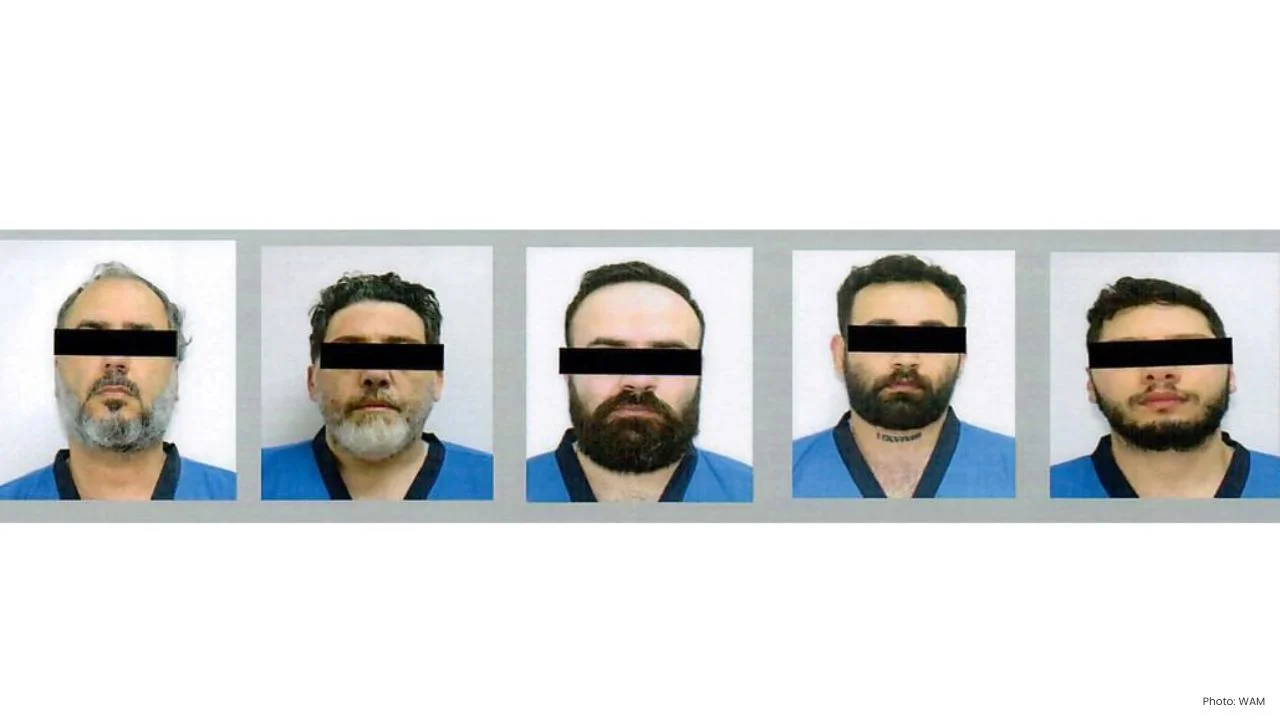
UAE Busts Hezbollah-Iran Terror Network, Members Held
UAE authorities have broken a terror network linked to Hezbollah and Iran, arresting members accused

Swiatek Stunned by Linette in Miami Open Upset Shock
Iga Swiatek suffered a shocking defeat to Magda Linette at the Miami Open, marking her first opening

UAE Orphan Fund Raises AED 3.3 Billion in Ramadan Drive
UAE’s Mother of the Nation Orphan Fund raises AED 3.3B in Ramadan, boosting support for education, h

Ramadan in the UAE: Reflections on Humanity, Leadership, and Lasting Values
A heartfelt Ramadan reflection by Osama Regaah on UAE’s spirit of humility, unity, and leadership, a

Dhurandhar 2 Opens Big, Crosses ₹100 Cr on Day 1
Ranveer Singh starrer Dhurandhar 2 earns ₹102 Cr on day one despite delays, beating past Bollywood o


Bank of Baroda Faces Abu Dhabi Legal Battle over NMC Collapse
Bank of Baroda’s involvement in Abu Dhabi litigation tied to the NMC Healthcare collapse raises repu

Top Museum Openings of 2026 Set to Transform Global Tourism
From Los Angeles to Abu Dhabi and Brussels, 2026 brings major museum launches—Lucas Museum, Guggenhe

UAE Tour Highlights UAE’s Strength in Hosting Global Sports Events
Abu Dhabi Sports Council says the successful UAE Tour reflects the UAE’s leading role in hosting maj

EU Seeks Clarity from US After Supreme Court IEEPA Ruling
European Commission urges full transparency from the US on steps after Supreme Court ruling, emphasi
SpaceX Launches 53 New Satellites for Expanding Starlink Network
SpaceX launches 53 Starlink satellites in two Falcon 9 missions, breaking reuse records and expandin

RTA Awards Contract for Phase II of Hessa Street Upgrade in Dubai
Phase II of Hessa Street Development to add bridges, tunnel, and upgraded intersections, doubling ca

UAE Gold Prices Today, Monday 16 February 2026: Dubai & Abu Dhabi Updated Rates
Gold prices in UAE on 16 Feb 2026 updated: 24K around AED 599.75/gm, 22K AED 555.25/gm, and 18K AED
Over 25 Ahmedabad Schools Receive Bomb Threat Email, Authorities Investigate
More than 25 schools in Ahmedabad evacuated after bomb threat emails mentioning Khalistan. Authoriti