Post by : Anis Karim
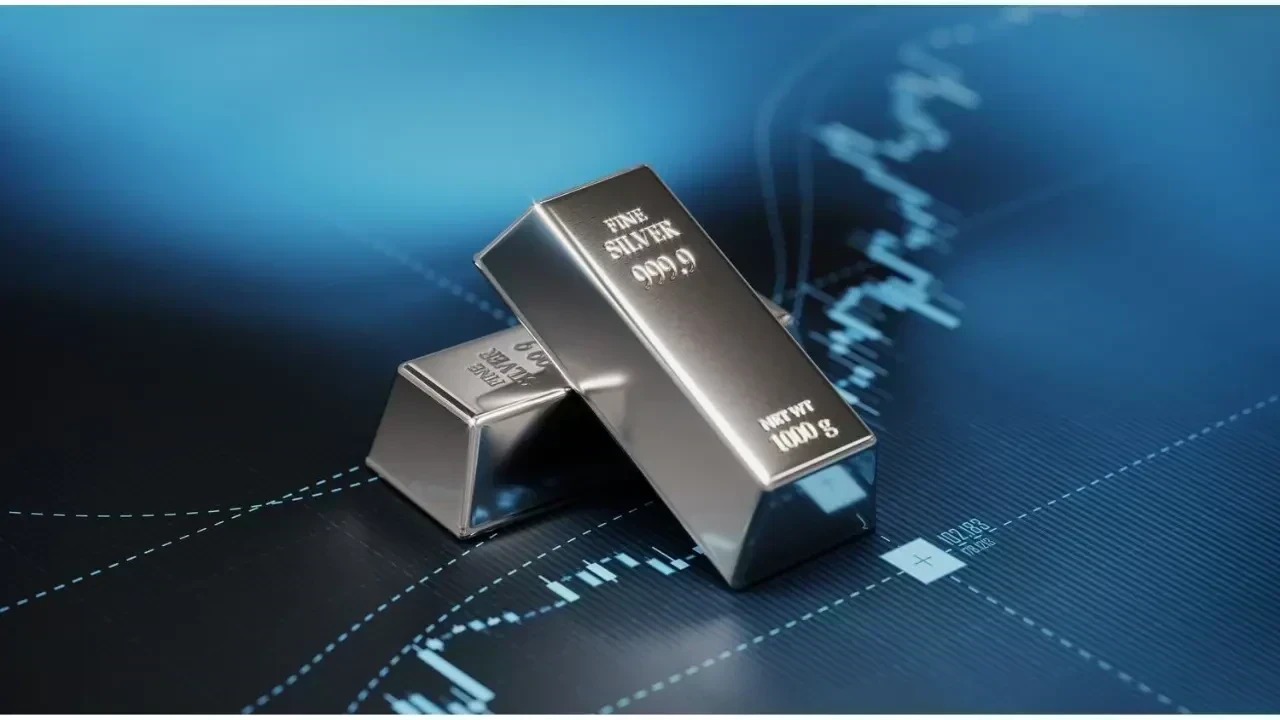
The dramatic decline in silver exchange-traded funds (ETFs) has left many investors in Dubai bewildered and anxious. On January 22, 2026, various silver ETFs in India experienced a staggering drop of between 15 percent and 24 percent, in sharp contrast to the relatively minor ~4 percent fall in MCX silver futures noted at the same time. This significant disparity between ETF movements and the actual commodity market underscores the complex trading mechanics and risks involved with ETFs, especially those tied to volatile commodities like silver. To comprehend the reasons behind this anomaly, one must delve into factors like speculative premiums, market sentiment, pricing structures, and liquidity conditions that spurred disproportionate selling of ETFs.
On the Multi-Commodity Exchange (MCX), silver futures experienced a decrease of around 4 percent, reflecting a moderate price correction as global sentiment shifted. Conversely, Indian silver ETFs—such as Tata Silver ETF, Edelweiss Silver ETF, Mirae Asset Silver ETF, 360 ONE Silver ETF, and Nippon India Silver ETF—suffered losses nearing 24 percent at specific points in the trading session. This unusual behavior attracted considerable scrutiny from market analysts and investors alike.
The discrepancy was primarily driven by many ETF units trading at significant premiums to their Indicative Net Asset Value (iNAV) before the crash occurred. When market sentiment shifted, those premiums evaporated swiftly as investors hastily exited, compelling ETF prices to sharply realign with their underlying fair values.
An exchange-traded fund (ETF) serves as a pooled investment vehicle intent on tracking the price of an underlying asset or index—silver in this instance. ETF units trade on stock exchanges, and their pricing reflects both the value of the underlying asset and the dynamics of supply/demand in the fund's market. The iNAV provides a real-time estimate of an ETF's fair value based on current asset prices.
Under normal circumstances, the market price of an ETF remains close to its iNAV, driven by arbitrage activity from authorized traders. However, during periods of high volatility, the premiums or discounts can widen significantly, causing the ETF’s market price to deviate sharply from that of the underlying asset.
Prior to the crash, silver ETFs were trending strongly upwards, paralleling the increase in precious metal prices. This attracted investors, pushing ETF unit prices up and creating premiums over their iNAV. Such premiums are typical when ETF unit demand exceeds the rate at which fund managers can create new units or deliver physical silver to markets.
However, ETFs trading at steep premiums are inherently at risk of instability. As sentiment shifted—partly due to easing geopolitical concerns and profit-taking—the supply of units quickly caught up with demand, causing the premium to compress. Unlike the slower adjustments seen in futures markets, ETF pricing dynamics led to a rapid downward correction as premiums dissolved.
The remarkable surge in silver prices leading up to the correction, bolstered by retail investment and global demands for safe-haven assets, drew a mix of investors, many taking on marginal positions. Such speculative activity can artificially inflate asset prices and ETF premiums compared to the larger market.
When the prices began to slip, speculative leverage and stop-loss actions amplified selling pressure. This forced selling, particularly for leveraged positions that had to be unwound, exacerbated the decline in ETF values relative to the more stable futures market.
Market analysts have indicated that panic selling and forced liquidations significantly contributed to the downturn. With silver ETF prices varying from the underlying spot and futures prices, retail investors who had benefitted from the rally began exiting positions rapidly, often incurring heavy losses. Furthermore, margin calls on leveraged positions necessitated additional selling.
These conditions can lead to feedback loops: as ETF prices fall quicker than futures, more investors hit stop-loss thresholds or decide to exit, precipitating further sell-offs. In contrast, futures markets—operating on longer hours and greater liquidity—tend to manage such pressure more steadily, resulting in fewer drastic price changes.
Driving the volatility in silver ETFs and futures are transformations in risk sentiment. Precious metals generally see price increases in response to geopolitical tensions or heightened risk-off climates. The demand for safe-haven assets can push metals like silver and gold upward. However, when geopolitical issues alleviate or macroeconomic indicators improve, investors often gravitate back toward riskier assets, diminishing demand for safe havens.
A key catalyst for the recent shift was a softening of geopolitical risk perceptions, spurred by US policy signals that alleviated fears of tariffs or military conflict in pivotal areas. This reduction in market anxiety contributed to the downturn in precious metal price momentum, leading to sell-offs across silver ETFs.
Fluctuations within the broader commodities realm and in the US dollar also play a significant role in influencing silver prices. An advancing dollar often pushes down commodity prices—especially precious metals quoted in dollars—as they become more costly for foreign currency holders. Further, when commodity markets stabilize or equities appear more appealing, funds tend to flow out of safe-haven assets like silver in favor of higher-risk investments.
In the UAE context, silver futures on MCX—reflecting both global and local supply-demand—shifted slightly when compared to the exaggerated volatility observed in ETFs, which are influenced by unique pricing mechanisms and local trading behaviors.
Unlike futures contracts that derive their worth directly from underlying commodities, ETFs can face pricing disconnects during periods of sharp sentiment shifts. Various factors, including premium compression, liquidity limitations, and erratic market exits contribute to wider price fluctuations in ETFs than in their underlying markets.
This emphasizes the necessity for investors to appreciate that ETFs encompass both commodity price exposure and market liquidity risks. Price dislocations can be particularly marked in ETFs amid less liquid markets or periods of severe volatility.
A pivotal concept for ETF investors is the Indicative Net Asset Value (iNAV)—a fair value estimate of ETF holdings based on present asset prices. When ETF units trade at major deviations from the iNAV, it signals potential mispricing. In the recent spate involving silver, ETF values plummeted as they adjusted back toward the iNAV following the swift disappearance of premiums.
Investors who acquired ETF units while at elevated premiums experienced disproportionately significant losses during the correction, even though the actual drop in silver futures remained modest. This illustrates how ETF pricing can amplify risk during robust rallies and collapse swiftly in downturns.
Silver has long been known as a volatile commodity, influenced by both industrial requirements and safe-haven inflows. Its prices can swing more dramatically than other commodities, owing in part to diminished market liquidity and heavy speculation during price surges.
Investors engaged with silver—through futures, physical assets, or ETFs—should brace for fast shifts in sentiment and price. The recent ETF crash highlights the dangers tied to leveraged or speculative positions in erratic markets.
For those contemplating ETF investments in commodities like silver:
Watch for Premiums and Discounts: ETF units trading at large premiums to iNAV may represent higher risks, particularly in overheated markets.
Comprehend Liquidity Mechanics: Market conditions with lower liquidity can lead to more abrupt ETF price movements.
Risk Oversight: Incorporate position sizing, stop-loss orders, and diversification to mitigate sudden corrections.
Maintain a Long-Term View: Emphasize long-term fundamentals instead of succumbing to short-term price volatility driven by speculation.
The sharp rise in silver ETF prices—up to 24 percent—amidst a comparatively mild 4 percent decrease in silver futures on MCX illustrates the delicate balance between market sentiment, speculative behaviors, ETF pricing mechanisms, and risk factors. While futures markets tend to mirror the core fundamentals of the commodity, ETFs can react more dramatically to shifts in investor sentiment, deviations from fair value, and forced sell-offs in turbulent periods. Gaining a nuanced understanding of these elements is vital for investors navigating the ETF landscape and effectively managing their risk.
Disclaimer: This article is for informational purposes only and should not be construed as financial or investment advice. Markets are subject to rapid changes, and readers should perform their own research or consult a financial advisor before making any investment decisions.

Abu Dhabi Opens Two New Bridges to Cut Traffic by 60%
DMT launches two high-capacity bridges linking Al Reem Island to E‑12, reducing travel time by 15 mi

Family Wins “Family of the Year 2026” at Noor Al Quran Event in Ras Al Khaimah
A family honored at the Noor Al Quran initiative in Ras Al Khaimah for Quran memorization and strong
US Approves $16.5B Arms Deal Amid Iran War Escalation
US approves $16.5B arms sale to Gulf allies and $7B to UAE, boosting defence amid Iran tensions whil

UAE Busts Hezbollah-Iran Terror Network, Members Held
UAE authorities have broken a terror network linked to Hezbollah and Iran, arresting members accused

Swiatek Stunned by Linette in Miami Open Upset Shock
Iga Swiatek suffered a shocking defeat to Magda Linette at the Miami Open, marking her first opening

UAE Orphan Fund Raises AED 3.3 Billion in Ramadan Drive
UAE’s Mother of the Nation Orphan Fund raises AED 3.3B in Ramadan, boosting support for education, h

Ramadan in the UAE: Reflections on Humanity, Leadership, and Lasting Values
A heartfelt Ramadan reflection by Osama Regaah on UAE’s spirit of humility, unity, and leadership, a


Bank of Baroda Faces Abu Dhabi Legal Battle over NMC Collapse
Bank of Baroda’s involvement in Abu Dhabi litigation tied to the NMC Healthcare collapse raises repu

Top Museum Openings of 2026 Set to Transform Global Tourism
From Los Angeles to Abu Dhabi and Brussels, 2026 brings major museum launches—Lucas Museum, Guggenhe

UAE Tour Highlights UAE’s Strength in Hosting Global Sports Events
Abu Dhabi Sports Council says the successful UAE Tour reflects the UAE’s leading role in hosting maj

EU Seeks Clarity from US After Supreme Court IEEPA Ruling
European Commission urges full transparency from the US on steps after Supreme Court ruling, emphasi

SpaceX Launches 53 New Satellites for Expanding Starlink Network
SpaceX launches 53 Starlink satellites in two Falcon 9 missions, breaking reuse records and expandin

RTA Awards Contract for Phase II of Hessa Street Upgrade in Dubai
Phase II of Hessa Street Development to add bridges, tunnel, and upgraded intersections, doubling ca
UAE Gold Prices Today, Monday 16 February 2026: Dubai & Abu Dhabi Updated Rates
Gold prices in UAE on 16 Feb 2026 updated: 24K around AED 599.75/gm, 22K AED 555.25/gm, and 18K AED

Over 25 Ahmedabad Schools Receive Bomb Threat Email, Authorities Investigate
More than 25 schools in Ahmedabad evacuated after bomb threat emails mentioning Khalistan. Authoriti