Post by : Anis Karim
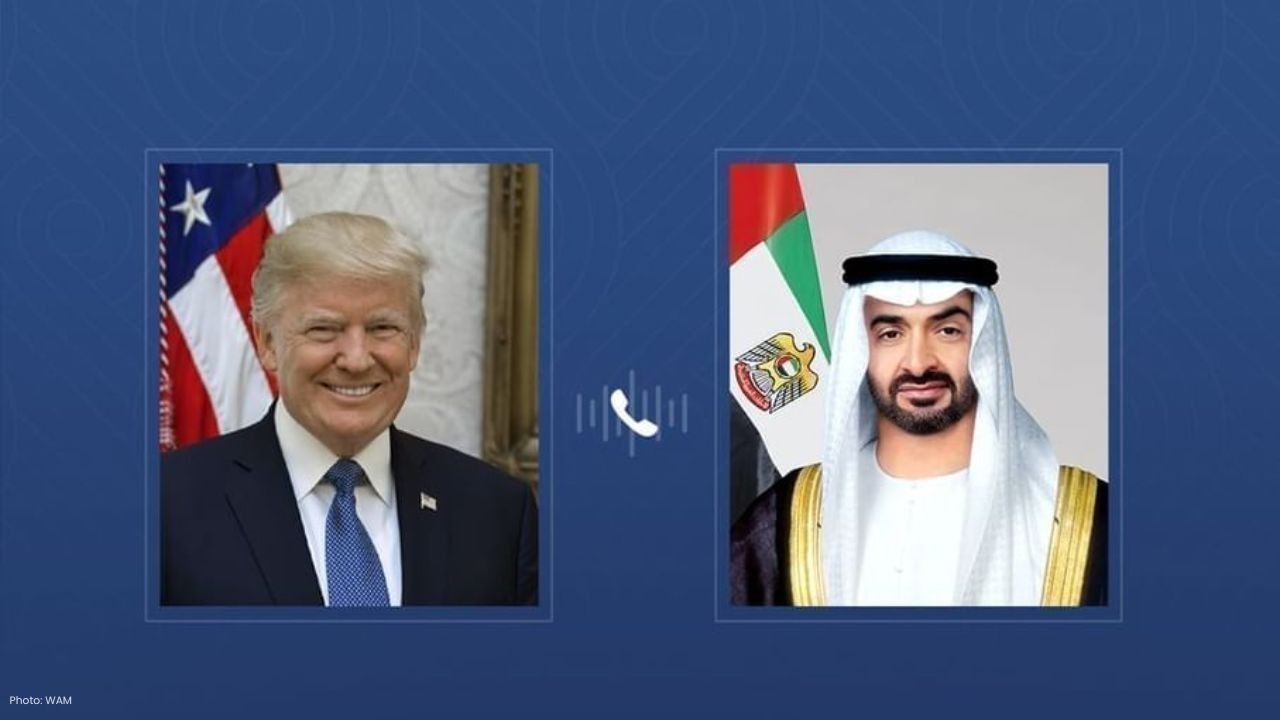
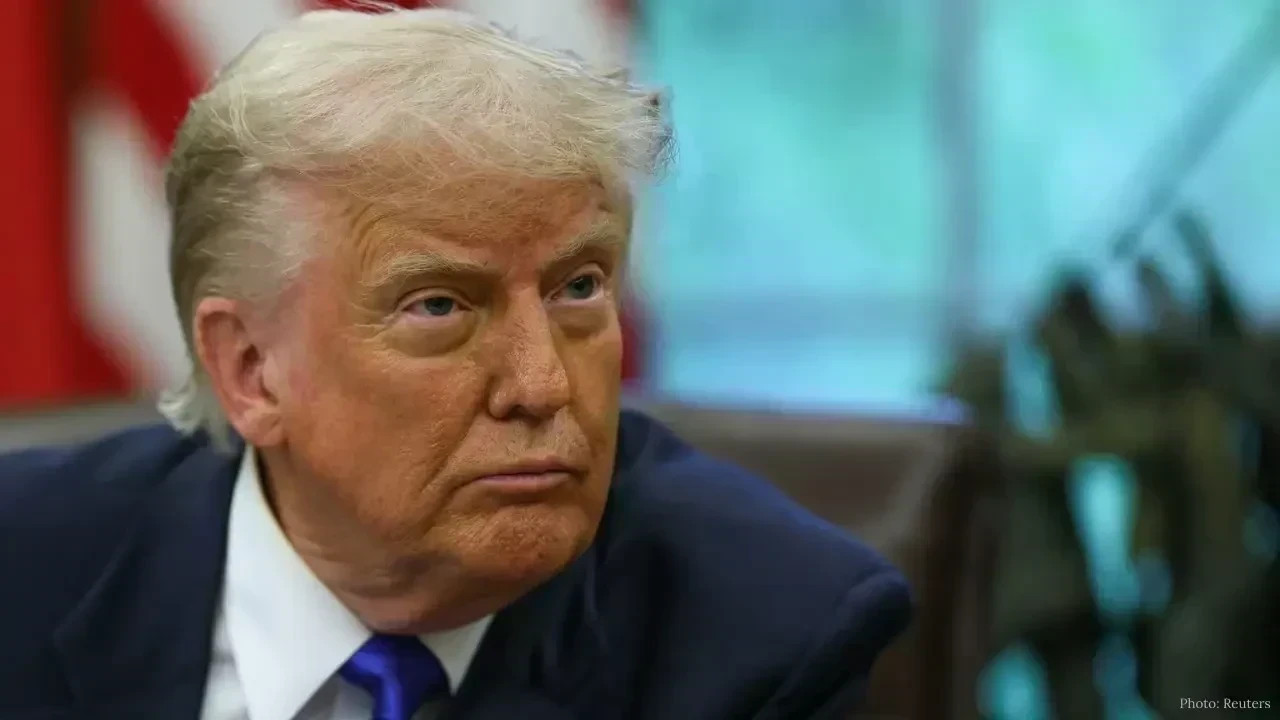
The stock markets in Dubai and globally are witnessing significant declines today. Key benchmarks, including the Dubai Financial Market General Index, are facing downward pressure, prompting investors to offload shares. Unlike an economic downturn or corporate setbacks, these declines are mainly attributed to escalating fears regarding trade tariffs and heightened political tensions, specifically concerning a recent tariff proposal associated with former U.S. President Donald Trump.
Tariffs are duties imposed on imported goods, and any abrupt changes in these rules can trigger negative responses in the stock markets. The current downturn reflects the substantial impact that investor fears—whether based on confirmed events or mere speculation—can have on market performance.
This article delves into the reasons behind today’s stock market decline, the interplay between global political dynamics and investor sentiment, the impact on export-driven sectors, as well as projections for the future.
At the heart of today’s market downturn is the announcement surrounding a potential tariff proposal championed by Donald Trump. This legislation could impose extraordinarily high import taxes—up to 500%—on Russian oil and products from countries conducting business with Russia.
The intention is to penalize nations that continue their imports of Russian oil. As the bill awaits legislative review, the ambiguity of future trade policies has investors on edge. The mere possibility of such extensive tariffs is unsettling to traders for several reasons:
Higher costs for imported and exported goods could burden companies.
Trade partners might retaliate with their own tariffs.
A potential slowdown in global trade could negatively impact corporate profits.
Such tariff apprehensions have resulted in intense selling across financial markets worldwide.
Investment professionals remember the ramifications of tariffs initiated during the Trump administration. For instance, in 2025, sweeping trade policies led to a notable global market downturn, exemplified by a drop in major indices such as the NASDAQ, Dow Jones, and S&P 500.
This historical backdrop contributes to today’s market jitters—traders recognize that trade policy shifts can suddenly alter risk assessments and economic growth forecasts.
In the Dubai market, indices have faced considerable losses amid escalating tariff concerns. Over the past several days, indices have significantly declined, erasing substantial investor value.
Globally, shares in the U.S., Asia, and Europe also display weakness, as traders tend to sell first and inquire later amidst rising geopolitical risks.
Foreign portfolio investors (FPIs) have been net sellers in the Dubai markets lately. The outflow paired with a stronger dollar typically signifies risk aversion, amplifying downward pressure on indices.
The concern that tariffs may hinder global growth leads international investors to avoid emerging markets, including equities in Dubai.
Export-driven firms are particularly vulnerable as tariff fears mount. Shares of local textile manufacturers and agricultural exporters have witnessed steep declines as traders factor in diminishing foreign demand and inflated operational expenses.
Such sectors are vital to the Dubai market, meaning the overall indices are negatively affected when these stocks tumble.
Increased tariffs elevate costs for goods crossing borders and can lead companies to pass these expenses onto consumers, thus squeezing profit margins and stalling economic activity.
Investors typically react preemptively to potential earnings downturns, leading to index-wide sell-offs.
The tariff discussions are a global concern that resonates far beyond Dubai. Traders in the U.S. and Asia are closely monitoring developments, recognizing that increased tariffs could adversely affect global GDP projections.
Additionally, markets are looking ahead to significant upcoming events, such as:
A U.S. jobs report that may shape Federal Reserve interest rate expectations.
A U.S. Supreme Court decision regarding tariff powers that could either ameliorate or exacerbate market concerns.
Many investors are currently factoring in both possible outcomes, leading to increased market volatility.
In financial markets, uncertainty drives selling pressures. Even if the tariff proposals do not pass, markets frequently react negatively in anticipation of adverse outcomes, demonstrating the phenomenon known as the anticipation effect.
The anxiety further heightens due to:
Potential tariffs being enacted via several legal avenues.
Targets on countries with extensive trading ties.
Indefinite timelines for enforcement.
These unknown factors leave traders feeling apprehensive.
Analyzing different sectors reveals varied responses:
Industries such as:
Textiles
Chemicals
Agricultural products
Seafood
have undergone intense selling. Should tariffs rise on exported goods to primary markets, it could drastically reduce international orders and, consequently, earnings.
Even large-cap companies—particularly in the metals, energy, and finance sectors—are feeling the pressure. Generally, these stocks provide market stability, but they are also experiencing declines due to the prevailing negative sentiment.
Investor aversion typically bolsters the U.S. dollar and bond yields as capital shifts from equities to safer assets. A stronger dollar makes imports cheaper for the U.S., yet exacerbates challenges for global equities, contributing to the weakness seen in commodity prices and emerging market currencies, including the Dirham.
Analysts characterize today’s downturn as a risk-averse response triggered by political and trade apprehensions rather than immediate corporate profit drops or shifts in consumer demands.
Some believe markets could overshoot downward before stabilizing, particularly if tariff news remains unfavorable. Conversely, favorable economic data or clarifications regarding tariffs could catalyze a swift market recovery, exemplifying the classic “sell the rumor, buy the fact” scenario.
Nevertheless, widespread anxiety results in cautious trading behavior and a focus on risk management.
For those attempting to navigate this market movement, key considerations include:
Anticipate larger price fluctuations as traders react to political and trade developments.
While short-term volatility might feel extreme, long-term investment strategies should be driven by fundamentals like cash flow and earnings, rather than just headlines.
Maintaining a diverse portfolio across different sectors and asset types can mitigate the impact of pronounced market swings.
The evolving narrative surrounding tariffs—whether it becomes stricter, more lenient, or experiences delays—will greatly affect market confidence.
The Dubai stock market is facing declines today due to mounting concerns over a potential tariff proposal backed by Donald Trump. While this bill is yet to be enacted, the anticipated ramifications for global trade, corporate performance, and investor sentiment have led to widespread selling. Export-centric stocks, shifts in foreign investment, and uncertainty at a global level further amplify the ongoing market weaknesses.
Increasing tariffs imply a trend towards trade protectionism, historically linked to rising costs, diminished trade volumes, and heightened investor unease. Until greater clarity emerges regarding tariff realities and global economic signals, expect continued stock market volatility.
Disclaimer:
This article is intended for informational purposes only and does not serve as financial, investment, or trading advice. Markets can change rapidly, and investors are encouraged to consult licensed financial professionals before making investment decisions.
Family Wins “Family of the Year 2026” at Noor Al Quran Event in Ras Al Khaimah
A family honored at the Noor Al Quran initiative in Ras Al Khaimah for Quran memorization and strong
US Approves $16.5B Arms Deal Amid Iran War Escalation
US approves $16.5B arms sale to Gulf allies and $7B to UAE, boosting defence amid Iran tensions whil

UAE Busts Hezbollah-Iran Terror Network, Members Held
UAE authorities have broken a terror network linked to Hezbollah and Iran, arresting members accused

Swiatek Stunned by Linette in Miami Open Upset Shock
Iga Swiatek suffered a shocking defeat to Magda Linette at the Miami Open, marking her first opening

UAE Orphan Fund Raises AED 3.3 Billion in Ramadan Drive
UAE’s Mother of the Nation Orphan Fund raises AED 3.3B in Ramadan, boosting support for education, h

Ramadan in the UAE: Reflections on Humanity, Leadership, and Lasting Values
A heartfelt Ramadan reflection by Osama Regaah on UAE’s spirit of humility, unity, and leadership, a

Dhurandhar 2 Opens Big, Crosses ₹100 Cr on Day 1
Ranveer Singh starrer Dhurandhar 2 earns ₹102 Cr on day one despite delays, beating past Bollywood o

Bank of Baroda Faces Abu Dhabi Legal Battle over NMC Collapse
Bank of Baroda’s involvement in Abu Dhabi litigation tied to the NMC Healthcare collapse raises repu

Top Museum Openings of 2026 Set to Transform Global Tourism
From Los Angeles to Abu Dhabi and Brussels, 2026 brings major museum launches—Lucas Museum, Guggenhe

UAE Tour Highlights UAE’s Strength in Hosting Global Sports Events
Abu Dhabi Sports Council says the successful UAE Tour reflects the UAE’s leading role in hosting maj
EU Seeks Clarity from US After Supreme Court IEEPA Ruling
European Commission urges full transparency from the US on steps after Supreme Court ruling, emphasi
SpaceX Launches 53 New Satellites for Expanding Starlink Network
SpaceX launches 53 Starlink satellites in two Falcon 9 missions, breaking reuse records and expandin
RTA Awards Contract for Phase II of Hessa Street Upgrade in Dubai
Phase II of Hessa Street Development to add bridges, tunnel, and upgraded intersections, doubling ca

UAE Gold Prices Today, Monday 16 February 2026: Dubai & Abu Dhabi Updated Rates
Gold prices in UAE on 16 Feb 2026 updated: 24K around AED 599.75/gm, 22K AED 555.25/gm, and 18K AED

Over 25 Ahmedabad Schools Receive Bomb Threat Email, Authorities Investigate
More than 25 schools in Ahmedabad evacuated after bomb threat emails mentioning Khalistan. Authoriti