
Post by : Anis Karim
For many years, bank frauds have posed a serious challenge within India’s financial framework. Issues such as corporate defaults, loan misappropriations, cyber incidents, and regulatory oversights have periodically undermined public trust in banking institutions. However, recent statistics indicating a decrease in fraud cases are garnering attention across the financial landscape, from policymakers to investors.
At first glance, a reduction in fraud cases seems to signal a healthier financial system. Yet, in the multifaceted banking sector, figures alone may not tell the full story. A closer examination of structural changes, regulatory advancements, tech integration, and altering fraud trends is essential for a clearer picture.
Recent reports indicate not only a reduction in the number of bank fraud incidents but also in the monetary sums involved. This marks a significant departure from earlier periods where fewer incidents often concealed considerable corporate frauds.
Public sector banks, which traditionally bore the brunt of fraud incidents, have shown marked improvements. Private banks are also evolving, with heightened early-warning mechanisms and quicker resolutions.
The Reserve Bank of India has been pivotal in enhancing fraud monitoring controls. In recent times, it has imposed stricter reporting deadlines, refined data-sharing protocols, and demanded early identification of red flags in loan settings.
Banks must now report suspicious transactions and identify distressed accounts much sooner, mitigating the chances for fraud to spiral out of control.
Previously, regulatory actions were often reactive, coming post-fraud incidents. The current focus is on prevention through stricter governance, regular audits, and increased oversight of banking executives.
One critical factor in reducing fraud has been the rigorous tightening of credit evaluation standards. In the wake of the non-performing asset crisis a decade ago, banks have become increasingly judicious in their lending practices, especially towards large corporates.
Improved due diligence, effective project viability assessments, and centralized credit decisions have minimized opportunities for fraud.
A prolonged period of asset recovery efforts, including write-offs and debt recovery initiatives, has led banks to maintain healthier balance sheets. As a result, the potential for fund misappropriation has diminished.
Modern analytical tools and AI are now utilized for real-time surveillance of banking transactions. Suspicious activities and high-risk accounts are flagged automatically, lowering reliance on manual processes.
This technological evolution complicates patterns for fraudsters, making it difficult for them to exploit delays in system oversight.
Although the onset of digital banking initially birthed an upsurge in cyber frauds, enhancements in security measures, multi-factor authentication, and customer awareness initiatives are beginning to show positive results.
Public banks were once notorious for their vulnerabilities to fraud. Nowadays, many have revamped internal controls, modernized IT infrastructures, and improved accountability metrics.
Increased oversight from higher management has curtailed branch-level freedoms in high-value lending scenarios.
The integration of risk committees, independent directors, and accountability-linked performance metrics has gradually enriched the governance culture in state-owned banks.
Adopting technology-rich solutions, private banks have prioritized early fraud detection over post-event damage control. This strategy has been effective in containing losses, even amid fraud attempts.
Their focus on data analytics and client profiling has set industry standards.
Analysts caution against equating a drop in fraud incidents with a completely safe banking sector. Evolving fraud schemes suggest that fewer reported cases might represent delayed detection rather than true success.
Declining corporate lending levels have also led to a decrease in exposure to major frauds naturally.
While traditional loan-related fraud appears to be on the wane, frauds targeting retail customers via digital platforms remain formidable challenges. Scams like phishing, identity theft, and social engineering are prevalent.
Although these types of fraud involve lower monetary sums, they affect a wider audience, causing widespread anxiety among consumers.
Banks are increasingly expected to bear responsibility for customer losses from system vulnerabilities, prompting greater investment in cybersecurity and training.
Implementing insolvency and recovery laws has strengthened banks' ability to reclaim dues and deter fraudulent borrowers. Prompt resolution timelines also serve as a psychological deterrent to intentional defaults.
Improved collaboration among banks, regulatory bodies, and enforcement agencies has bolstered fraud detection and prosecution, though some legal delays are still a concern.
The decline in fraud cases is fostering trust among depositors and investors, especially following a series of banking scandals. In the realm of finance, confidence remains an invaluable asset.
Strengthened stability also boosts India's attractiveness to international investors monitoring the health of its banking environment.
Bank fraud continues to be a pervasive issue worldwide, particularly with the rise of digital transactions. India's strides in minimizing high-value institutional fraud place it more favorably than many emerging markets.
Conversely, developed countries lead in tackling cyber fraud through sophisticated regulatory-tech amalgamation.
Some experts express concern that banks might delay or stagger fraud reports to shield their reputation. Regulators are responding with stricter deadlines and penalties for delayed disclosures.
Transparency is crucial for maintaining trust.
Fraud prevention is not solely reliant on technology. Banks are focusing on training their staff, adhering to ethical standards, and establishing whistleblower mechanisms to enhance the human aspect of defense.
Incentive structures are also being revised to mitigate reckless decision-making.
Historically, economic downturns tend to trigger a rise in fraud as financially distressed borrowers may resort to unethical actions. Sustained vigilance is essential given ongoing global uncertainties.
The true test of the banking framework's resilience will emerge during the next economic cycle.
Regulators are increasingly focused on developing predictive models that can detect financial distress before it escalates into fraud or defaults.
Initiatives are underway to strengthen shared fraud registries among banks, hindering repeat offenders from exploiting opportunities within isolated systems.
Fraudsters continually adapt to security innovations. Banks must persistently upgrade their systems to keep pace.
Even when frauds are quickly identified, protracted legal processes can weaken the deterrent effect. Swift judicial processes are a focal point for reform.
The decline in bank fraud incidents signals substantial advancements in governance, regulatory practices, and technological application. It suggests that lessons from prior crises have borne fruit.
However, this does not indicate exemption from future risks. The nature of fraud is shifting, necessitating continuous vigilance.
As India's banking sector transitions from crisis management to a focus on stability, maintaining this trend demands consistent regulation, institutional responsibility, and public trust.
Preventing fraud should be viewed as an ongoing endeavor rather than a singular achievement. The latest decline is promising, but only sustained efforts will determine if this marks a long-term shift.
The reduction in bank fraud statistics presents a unique positive narrative for India’s financial sector, indicating enhanced controls and oversight. Nevertheless, genuine health lies in sustained transparency, early detection, and readiness to adapt to emerging risks.
If financial institutions and regulators continue to advance alongside new threats, this trend could signal the dawn of a more resilient and trustworthy system—built not only on statistics but on ethical integrity.
This article serves solely for informational and editorial purposes. Financial trends and data are subject to change based on regulatory updates, market conditions, and reporting practices. Readers should refrain from interpreting this content as financial or investment advice.

Sanofi Opens Innovation Centre in Chengdu China
Sanofi opens its first China Innovation Centre in Chengdu, boosting R&D, clinical trials, and supply

Jordan, Egypt Condemn Terror Plot Targeting UAE
Jordan and Egypt strongly condemn a terror plot targeting the UAE’s economy, reaffirming support for

Elon Musk Found Liable in Twitter Investor Case
A US jury found Elon Musk liable for misleading Twitter investors in 2022 deal, awarding up to $2.1

BTS Comeback Concert Draws 260K Fans in Seoul
BTS holds a mega comeback concert in Seoul with 260,000 fans, marking their first album in 3 years a

UAE DMT Prepares for Weather Alert March 21–27
Abu Dhabi’s DMT activates emergency plans, deploys teams, and urges public caution as unstable weath

Dubai Property Market Faces War-Driven Slowdown
Dubai’s real estate market shows early slowdown as Iran war impacts investor confidence, with fallin

Trump Hints at Ending Military Ops as US Eases Iran Oil Sanctions
Trump may soon end US military action in the Middle East as Iran attacks continue. US temporarily ea


Bank of Baroda Faces Abu Dhabi Legal Battle over NMC Collapse
Bank of Baroda’s involvement in Abu Dhabi litigation tied to the NMC Healthcare collapse raises repu

Top Museum Openings of 2026 Set to Transform Global Tourism
From Los Angeles to Abu Dhabi and Brussels, 2026 brings major museum launches—Lucas Museum, Guggenhe

UAE Tour Highlights UAE’s Strength in Hosting Global Sports Events
Abu Dhabi Sports Council says the successful UAE Tour reflects the UAE’s leading role in hosting maj
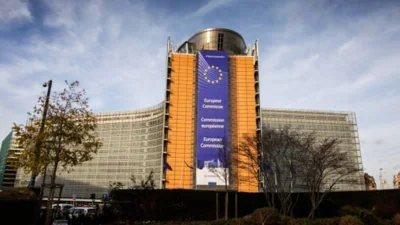
EU Seeks Clarity from US After Supreme Court IEEPA Ruling
European Commission urges full transparency from the US on steps after Supreme Court ruling, emphasi

SpaceX Launches 53 New Satellites for Expanding Starlink Network
SpaceX launches 53 Starlink satellites in two Falcon 9 missions, breaking reuse records and expandin

RTA Awards Contract for Phase II of Hessa Street Upgrade in Dubai
Phase II of Hessa Street Development to add bridges, tunnel, and upgraded intersections, doubling ca

UAE Gold Prices Today, Monday 16 February 2026: Dubai & Abu Dhabi Updated Rates
Gold prices in UAE on 16 Feb 2026 updated: 24K around AED 599.75/gm, 22K AED 555.25/gm, and 18K AED

Over 25 Ahmedabad Schools Receive Bomb Threat Email, Authorities Investigate
More than 25 schools in Ahmedabad evacuated after bomb threat emails mentioning Khalistan. Authoriti