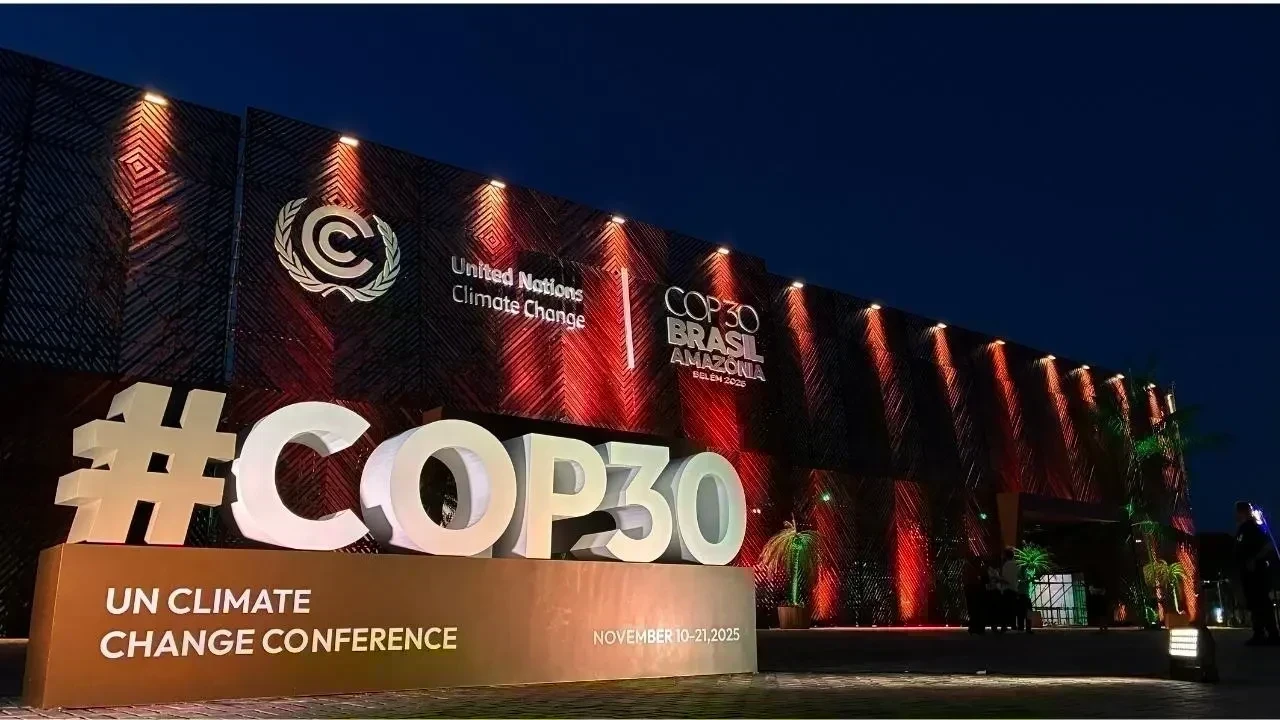
Post by : Anis Karim
Photo: COP30
Every year, global climate summits bring headlines filled with terms like "historic" and "transformative." COP30 was no different. With leaders and experts gathering for discussions, the world’s focus momentarily returned to urgent climate issues, from warming oceans to deforested landscapes.
Yet, for countless individuals suffering from extreme weather, rising food costs, and unpredictable climates, the essential query persists: what real changes arise from these conferences?
For farmers facing erratic rainfall, coastal families anxious about rising tides, and city dwellers sweating through heat waves, grand promises feel detached. The negotiations often resemble a performative display, while everyday lives turn into a struggle against escalating dangers.
As COP30 closes, it’s crucial to assess beyond the optimistic statements and formal speeches.
The Conference of the Parties, or COP, was established to unite nations in the fight against climate change through a collaborative negotiating platform. The premise is straightforward yet bold: the global community must unite since environmental issues transcend boundaries.
Pollutants from one nation influence all countries. Disasters strike regions that contribute least to global warming. Climate change exemplifies modern inequality.
COP gatherings aim to address this inequity by:
Setting legally binding emissions targets
Facilitating financial aid from wealthier nations to developing countries
Supporting transitions to clean technology
Fostering collaboration rather than rivalry
Every summit promises advancement, yet reality often proves challenging.
COP30 concluded with various resolutions and agreements that sound promising on paper. However, the stark truth is this: signing documents is easy; transforming economies is not.
Declarations of intent signify ambition, yet without actual enforcement, such ambition is fragile.
Governments announced long-term targets, often decades ahead, while current leaders will have moved on. Goals for the years 2040 and 2050 may seem impressive but defer present challenges. Coal plants are still operational; forests continue to be cleared; urban areas expand without adaptation strategies.
At COP30, reaffirmations regarding emission reductions filled the air, but reaffirmation does not equal action.
Addressing climate change intertwines with finance.
Shifting to a clean energy economy demands significant investment, technological innovations, and robust infrastructure. Renewable energy sources, efficient transportation, cleaner technologies, and resilient urban design require substantial capital.
COP30 spotlighted financial matters, with developing nations posing a crucial question: who finances this transition?
Countries most affected by climatic catastrophes typically contribute the least to pollution. They seek equity and justice, not mere charity.
Nonetheless, climate finance remains one of the most contentious and unresolved areas in international discussions. Pledges from wealthier nations abound, yet actual funding lags, leading to a disconnect between commitment and reality.
For communities grappling with floods and droughts, conference funding discussions hold little weight unless tangible support reaches them.
A significant point of contention at COP30 was the issue of loss and damage—acknowledging the irreversible nature of some climate impacts.
When a village is irrevocably submerged, coastlines erode, or ecosystems collapse, the term "adaptation" becomes irrelevant. Such losses necessitate reparations and assistance.
However, frameworks for funding loss and damage remain murky. While agreements exist on paper, their enactment hangs in the balance.
Those affected by climate change await not for sympathy but for survival.
While reducing emissions is vital, the need for adaptation—assisting communities in coping with unavoidable climate realities—receives comparatively limited attention.
The climate crisis is not solely about averting disaster anymore; it also involves learning to coexist with it:
Cities resilient to flooding
Homes built for heat tolerance
Agricultural practices that adapt to changing climates
Enhanced water management systems
Robust coastal protections
These solutions are not luxuries; they are essentials.
Though COP30 made extensive mentions of resilience, the pertinent issue is the pace of action.
By the time policies emerge, climate events have already redefined lives.
Each summit is marked by familiar phrases:
"Urgent action"
"Global collaboration"
"Shared responsibility"
"Historic opportunity"
"Common future"
These expressions no longer incite enthusiasm; their overuse has dulled their impact.
Trust erodes when language outpaces the truth.
People measure success not by rhetoric, but in terms of energy costs, food availability, and water security.
Businesses hold significant influence over emissions yet are also pivotal in fostering innovation. At COP30, many companies touted their sustainability initiatives and green investments.
However, businesses often operate on two contrasting levels:
Onstage: climate pledges.
Offstage: ongoing environmental degradation.
Marketing has commodified "green" as a trendy label, while greenwashing remains a prevalent issue. Companies claim carbon neutrality while continuing harmful practices.
Without rigorous oversight, corporate involvement risks becoming superficial rather than revolutionary.
Young climate activists descended upon COP30, their emotions running high with urgency and passion. Their message: they will inherit a less hospitable planet.
Yet decision-making remains predominantly in the hands of older generations.
The applause for youth perspectives contrasts sharply with unchanged systems.
This generational divide characterizes the landscape of climate politics: the future expresses itself while the past calls the shots.
Climate dialogues frequently reflect a quiet tug-of-war over development and accountability.
Developing nations assert: "We deserve growth too."
Wealthier nations counter: "The planet cannot sustain it."
Both perspectives hold validity.
Justice requires a balance between ambition and accountability.
COP30 did little to close this fundamental divide.
Despite commitments to clean energy, fossil fuels still hold a firm grasp. Coal plants fuel economies, oil revenues dominate policy discussions, and gas is still deemed a "transition fuel" even as the climate crisis intensifies.
The shift toward renewable energy is real but slower than what is crucial.
Energy change transcends technology; it is fundamentally political.
One frequently overlooked aspect of climate change is its connection to rising costs of living.
Drought inflates food costs.
Storms damage infrastructure.
Heat waves elevate electricity consumption.
Floods disrupt supply chains.
Climate change has evolved into not just an environmental challenge but a household concern.
Yet, discussions at COP30 often missed the link between climatic actions and real-world financial impacts.
People desire solutions over empty slogans.
COP30 struggled to:
Establish enforceable targets
Ensure financial commitments
Implement penalties for inaction
Clearly phase out fossil fuel reliance
Deliver solid legal frameworks
In essence, it perpetuated a cycle of negotiations lacking firm consequences.
On a positive note, some advancements were made:
Increased renewable energy pledges
Numerous nations raised their climate ambitions
Adaptation received heightened focus
Loss and damage stayed on the agenda
Recognition for climate-related education
However, progress unsupported by action remains potential, not solace.
Increasing skepticism among citizens has emerged.
Climate conferences seem increasingly disconnected from:
Everyday realities
Cost of living
Employment opportunities
Healthcare access
Housing conditions
When climate dialogue fails to reflect real life, people tune out.
If COP meetings genuinely aimed at making a difference, they would prioritize:
Immediate limits on emissions
Legally binding climate financing
Transparent funding pathways
Community-based adaptation initiatives
Transformative infrastructure projects
Support for job transitions
Achieving climate success necessitates tangible results, not mere symbolism.
Endless warnings devoid of practical solutions wear people down.
Fear alone cannot sustain motivation for change indefinitely. Hope must evolve into tangible action.
Despite delays in political response, the power of individuals remains significant.
Minimize waste
Conserve resources
Support eco-conscious brands
Insist on accountability
Make climate-centric voting choices
Inform local communities
No single person can resolve climate change.
But united communities can influence systemic change.
Despite the setbacks, terminating global dialogues would only exacerbate the situation.
The climate challenge is too significant to abandon negotiations.
Yet, COP demands transformation.
Less spectacle.
More urgency.
Increased responsibility.
COP30 didn’t fail.
But it also didn’t wholly succeed.
It evolved into the typical pattern of these summits: a generator of promises.
The Earth doesn’t operate on promises.
It adheres to scientific principles.
Carbon doesn’t engage in negotiations.
Oceans resist compromise.
Heat doesn't wait for agreements.
True advancement arises when strategies become practices, when speeches translate into funding, and when words manifest in tangible outcomes like infrastructure, renewable resources, and protective measures.
Until that time, COP meetings will continue to yield declarations, while the planet will bear the consequences.
This article serves general informational purposes. It reflects an analysis of publicly available climate discussions and does not depict official policies or negotiated results.
Family Wins “Family of the Year 2026” at Noor Al Quran Event in Ras Al Khaimah
A family honored at the Noor Al Quran initiative in Ras Al Khaimah for Quran memorization and strong

US Approves $16.5B Arms Deal Amid Iran War Escalation
US approves $16.5B arms sale to Gulf allies and $7B to UAE, boosting defence amid Iran tensions whil

UAE Busts Hezbollah-Iran Terror Network, Members Held
UAE authorities have broken a terror network linked to Hezbollah and Iran, arresting members accused

Swiatek Stunned by Linette in Miami Open Upset Shock
Iga Swiatek suffered a shocking defeat to Magda Linette at the Miami Open, marking her first opening

UAE Orphan Fund Raises AED 3.3 Billion in Ramadan Drive
UAE’s Mother of the Nation Orphan Fund raises AED 3.3B in Ramadan, boosting support for education, h

Ramadan in the UAE: Reflections on Humanity, Leadership, and Lasting Values
A heartfelt Ramadan reflection by Osama Regaah on UAE’s spirit of humility, unity, and leadership, a

Dhurandhar 2 Opens Big, Crosses ₹100 Cr on Day 1
Ranveer Singh starrer Dhurandhar 2 earns ₹102 Cr on day one despite delays, beating past Bollywood o


Bank of Baroda Faces Abu Dhabi Legal Battle over NMC Collapse
Bank of Baroda’s involvement in Abu Dhabi litigation tied to the NMC Healthcare collapse raises repu

Top Museum Openings of 2026 Set to Transform Global Tourism
From Los Angeles to Abu Dhabi and Brussels, 2026 brings major museum launches—Lucas Museum, Guggenhe

UAE Tour Highlights UAE’s Strength in Hosting Global Sports Events
Abu Dhabi Sports Council says the successful UAE Tour reflects the UAE’s leading role in hosting maj
EU Seeks Clarity from US After Supreme Court IEEPA Ruling
European Commission urges full transparency from the US on steps after Supreme Court ruling, emphasi
SpaceX Launches 53 New Satellites for Expanding Starlink Network
SpaceX launches 53 Starlink satellites in two Falcon 9 missions, breaking reuse records and expandin

RTA Awards Contract for Phase II of Hessa Street Upgrade in Dubai
Phase II of Hessa Street Development to add bridges, tunnel, and upgraded intersections, doubling ca

UAE Gold Prices Today, Monday 16 February 2026: Dubai & Abu Dhabi Updated Rates
Gold prices in UAE on 16 Feb 2026 updated: 24K around AED 599.75/gm, 22K AED 555.25/gm, and 18K AED

Over 25 Ahmedabad Schools Receive Bomb Threat Email, Authorities Investigate
More than 25 schools in Ahmedabad evacuated after bomb threat emails mentioning Khalistan. Authoriti